If you have ever searched for a milan kovac tesla biography, you are likely trying to understand who is actually steering Tesla's Autopilot and Full Self-Driving (FSD) programs — and whether the technology those teams ship is worth trusting in the real world. Kovac is not a household name the way Elon Musk is, but within Tesla's engineering org and among EV buyers who pay close attention to ADAS (advanced driver-assistance systems), he is one of the most consequential figures in the company. This profile traces Kovac's career, explains what his teams have delivered for the 2026 model year, and grounds Tesla's driver-assist claims in hard specs, EPA data, and IRS rules so you can decide whether a 2026 Tesla is the right buy.
Who Is Milan Kovac? A Career Built on Perception and Robotics
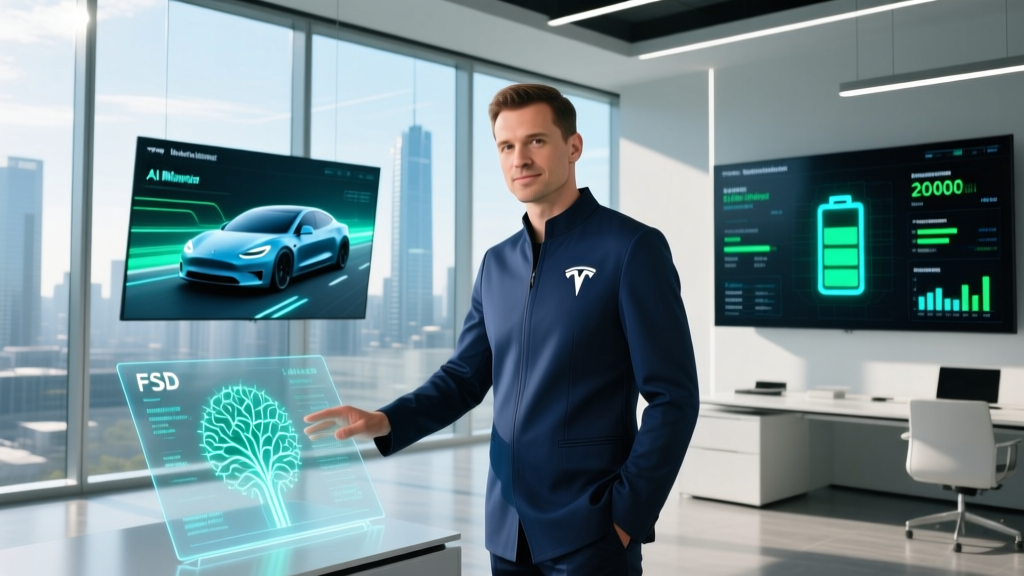
Milan Kovac joined Tesla in 2013 as a software engineer focused on computer vision and the early Autopilot stack. Before Tesla, he worked on perception and machine-learning systems in robotics, and his academic background centers on applied ML — exactly the skill set Tesla needed as it pivoted away from Mobileye-supplied vision toward an in-house neural-net approach. By the late 2010s Kovac had moved into a leadership role on the Autopilot software team, and in 2022 he was publicly named Director of Autopilot Software, reporting into Tesla's AI and autonomy leadership. He has appeared at Tesla AI Day events and in NHTSA correspondence, often explaining Tesla's vision-only architecture and end-to-end neural-net strategy.
For EV buyers, the relevant takeaway is this: the Autopilot and FSD (Supervised) features you interact with in a 2026 Model 3, Model Y, Model S, or Model X were shaped by a team that Kovac has led through some of Tesla's most controversial and most technically ambitious transitions — including the removal of radar and ultrasonic sensors in favor of a pure-vision "Tesla Vision" stack.
What Kovac's Teams Ship: 2026 Tesla Autopilot & FSD Feature Set
Under Kovac's direction, the 2026 Tesla driver-assist suite is organized into three tiers. Every new Tesla ships with Basic Autopilot (Traffic-Aware Cruise Control and Autosteer) at no extra cost. Enhanced Autopilot (EAP, ~$6,000 add-on) layers in Navigate on Autopilot, Auto Lane Change, Autopark, Summon, and Smart Summon. FSD (Supervised) (~$8,000 one-time or ~$99/month in 2026) adds traffic-light/stop-sign control and city-street autosteer on mapped and unmapped roads, using Tesla's end-to-end v13/v14 neural-net architecture.
The practical reality on the road: FSD (Supervised) in 2026 is smoother and more assertive than the 2023–2024 versions, with fewer phantom-braking events and better unprotected-left-turn behavior. It still struggles in construction zones, heavy rain, and faded-lane scenarios. The cabin camera continues to enforce driver monitoring, and Tesla's safety scoring system still gates some feature access for newer drivers.
Real-World Range, Battery, and Efficiency on 2026 Teslas
Kovac's work does not directly set range, but driver-assist behavior strongly affects efficiency — aggressive FSD acceleration and braking can shave 5–10% off EPA numbers, while smooth highway Autopilot cruising can match or beat them. Here is what the 2026 lineup looks like at the trim most buyers cross-shop.
| Spec | Value |
|---|---|
| EPA Range | 363 miles |
| Real-World Highway (70 mph, 65°F) | ~300–320 miles |
| Cold-Weather (32°F, mixed) | ~260–290 miles |
| Battery Capacity (usable) | ~79 kWh, NMC |
| Efficiency | 132 MPGe / 25 kWh/100 mi |
| Peak DC Fast Charge | 250 kW (V3 Supercharger) |
| 10–80% DC Time | ~27 minutes |
| Level 2 Home Charge (11.5 kW / 48A) | ~44 mi/hr |
| 0–60 mph | 4.2 seconds |
| Horsepower | 346 hp (dual motor AWD) |
| Cargo (trunk + frunk) | 23 cu ft rear + 3 cu ft frunk |
| Rear Legroom | 35.3 in |
Charging Speed and Network: Where Kovac's Software Meets the Plug
One of the under-discussed parts of Kovac's portfolio is how Autopilot integrates with navigation-based battery preconditioning. When you navigate to a Supercharger in a 2026 Tesla, the car warms the pack to the optimal temperature window so you hit peak charge rate on arrival — often 240–250 kW within the first 3–5 minutes on a V3 stall. Without preconditioning (e.g., arriving at a non-navigated charger on a cold morning), peak rate can be cut in half.
| Level | Power | Miles Added per Hour |
|---|---|---|
| Level 1 (120V / 12A) | ~1.4 kW | ~5 mi/hr |
| Level 2 (240V / 48A Wall Connector) | 11.5 kW | ~44 mi/hr |
| DC Fast (V3 Supercharger) | up to 250 kW | ~215 mi in 15 min (peak) |
| DC Fast (NACS at non-Tesla networks*) | up to 350 kW on compatible stalls | Varies by station |
*As of 2026, Tesla's NACS connector is the de facto U.S. standard; most legacy CCS vehicles now ship with or offer NACS adapters. Tesla vehicles can use Electrify America, EVgo, and other networks via their NACS-compatible stalls where deployed.
Pricing, Trims, and the 2026 Federal EV Tax Credit
Tesla's 2026 U.S. pricing (before destination) sits roughly as follows, though trims shift mid-year:
- Model 3 RWD: ~$38,990
- Model 3 Long Range AWD: ~$45,990
- Model 3 Performance: ~$54,990
- Model Y Long Range AWD: ~$48,990
- Model S / X: above $80,000 (sedan/SUV MSRP caps apply)
| Requirement | 2026 Rule |
|---|---|
| Max Credit | Up to $7,500 ($3,750 battery + $3,750 critical minerals) |
| MSRP Cap (sedans like Model 3) | ≤ $55,000 |
| MSRP Cap (SUVs/trucks like Model Y) | ≤ $80,000 |
| Buyer AGI Cap (single / HOH / joint) | $150k / $225k / $300k |
| Battery & Critical-Mineral Sourcing | Must meet FEOC + allied-country sourcing thresholds |
| Point-of-Sale Transfer | Allowed — dealer reduces price at delivery, claims credit |
Bottom line: A 2026 Model 3 Long Range AWD at ~$45,990 MSRP typically qualifies for the full $7,500 for buyers under the AGI caps, bringing the effective price near ~$38,490 before state incentives. Model Y Long Range also qualifies in most trims. Always verify current eligibility on IRS.gov §30D and fueleconomy.gov — sourcing rules tighten periodically.
Warranty, Ownership Costs, and Who This Car Actually Suits
Tesla's 2026 warranty structure is unchanged from recent years: 4-year/50,000-mile basic, 8-year/120,000-mile battery & drive unit on Model 3/Y (150k on S/X), with a contractual 70% minimum capacity retention threshold. Real-world degradation on NMC packs averages ~8–10% over 100,000 miles based on fleet data, with LFP packs showing slower fade but more variance in SoC estimation.
Insurance remains a sore spot: Tesla premiums in 2026 are typically 15–30% higher than segment averages (IIHS and NHTSA safety scores are strong, but repair-cost data drives the underwriting). Home Level 2 installation with a Tesla Wall Connector runs ~$800–$2,000 depending on panel capacity; older homes often need a $1,500–$3,500 panel upgrade to support a 60A circuit.
- Class-leading Supercharger network reliability
- Strong EPA efficiency (25 kWh/100 mi on LR AWD)
- Smooth, increasingly capable FSD (Supervised) for long highway commutes
- Over-the-air updates add features post-purchase
- Point-of-sale §30D credit reduces out-of-pocket price
- FSD is still SAE Level 2 — supervision required at all times
- Insurance premiums above segment average
- Vision-only stack can struggle in heavy rain, fog, construction zones
- Minimalist interior isn't for every buyer (no stalks on 2026 Model 3)
- Rear-seat comfort trails Hyundai Ioniq 6 and BMW i4
Is a 2026 Tesla Worth It vs. Key Competitors?
The honest comparison: a 2026 Hyundai Ioniq 6 SE Long Range offers ~361 mi EPA at a lower starting price and excellent 800V charging (~10–80% in ~18 min at 350 kW), but cannot match Tesla's Supercharger footprint. The BMW i4 eDrive40 is more refined and quieter, with comparable range, but costs ~$10k more before credits. For buyers who road-trip more than twice a year, Tesla's network advantage is still decisive. For city commuters who charge at home and want the lowest monthly payment, the Ioniq 6 or a refreshed Chevrolet Bolt often wins on total cost of ownership.
Choose a competitor if: you prioritize interior refinement (BMW i4), 800V charging speed (Hyundai/Kia), or lowest absolute price under $30k after credits (Chevrolet Bolt, Nissan Leaf successor).
Frequently Asked Questions
What is the real-world range of a 2026 Tesla Model 3 Long Range?
EPA-rated at 363 miles; expect ~300–320 miles at 70-mph highway speeds in mild weather, and ~260–290 miles in freezing temperatures.
How fast does a 2026 Tesla charge on DC fast and at home?
Peak DC rate is 250 kW on V3 Superchargers, with 10–80% in ~27 minutes when preconditioned. Home Level 2 at 11.5 kW adds ~44 miles per hour, easily covering a daily commute overnight.
How much does a 2026 Tesla cost after federal tax credits?
A Model 3 Long Range AWD at ~$45,990 MSRP typically nets the full $7,500 §30D credit for eligible buyers, landing near ~$38,490 before state incentives. Verify current rules at IRS.gov.
Does the 2026 Tesla Model 3 qualify for the federal EV tax credit?
Yes, in most trims — the Model 3 is below the $55,000 sedan MSRP cap and currently meets critical-mineral and battery-sourcing thresholds. Buyer AGI must be under $150k (single) / $300k (joint).
Is Milan Kovac still leading Tesla's Autopilot/FSD work in 2026?
Kovac has been Tesla's Director of Autopilot Software since 2022 and has publicly represented the FSD vision-only strategy through 2024–2025 AI Day updates. Executive roles at Tesla can shift; check Tesla's current press and engineering announcements for the latest org structure.
Is Tesla FSD actually self-driving?
No. FSD (Supervised) is an SAE Level 2 system that requires continuous driver attention. Level 4 driverless service in the U.S. is currently offered only by Waymo in limited metros.