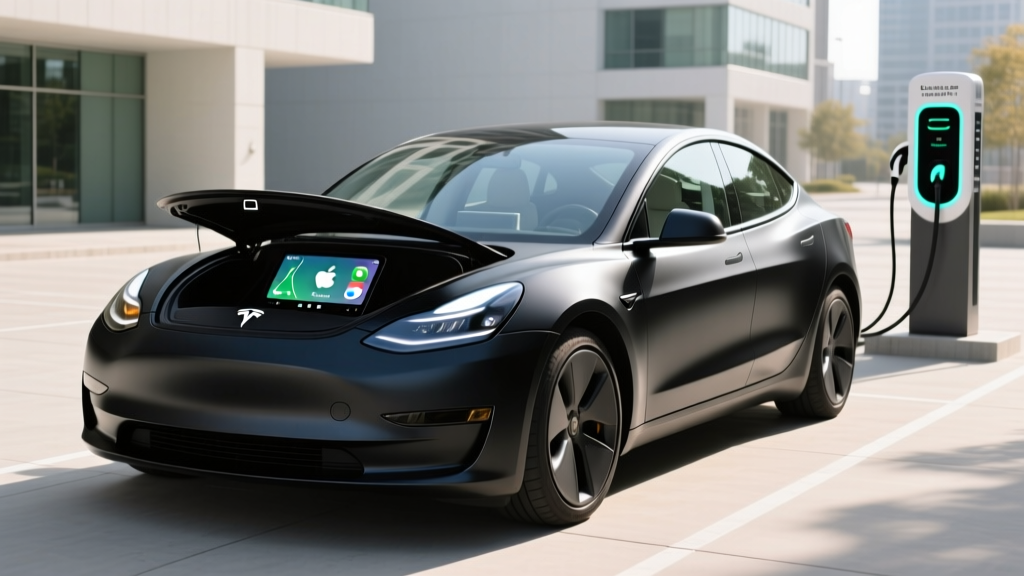
If you're shopping for a Tesla and coming from a traditional automaker, one question almost always surfaces first: do Teslas have Apple CarPlay? The short answer is no — Tesla does not support Apple CarPlay or Android Auto in any model, including the 2026 Model 3. Instead, Tesla uses its proprietary infotainment ecosystem, which integrates navigation, media, phone calls, and vehicle controls directly into the 15.4-inch center touchscreen. Whether that's a dealbreaker or a non-issue depends heavily on how you use your phone in the car, and we'll break down exactly what you gain and lose below.
But the CarPlay question is only part of the ownership equation. The refreshed Model 3 (internally called "Highland" and now in its second model year post-redesign) remains one of the most efficient, best-charging EVs in its class. Here's the full data-driven breakdown.
2026 Tesla Model 3: Core Specs at a Glance
| Spec | RWD (Base) | Long Range AWD | Performance |
|---|---|---|---|
| EPA Range | 272 mi | 341 mi | 315 mi |
| Battery (usable) | ~57.5 kWh (LFP) | ~75 kWh (NMC) | ~75 kWh (NMC) |
| Drivetrain | Rear-Wheel Drive | Dual-Motor AWD | Dual-Motor AWD |
| Horsepower | 271 hp | 346 hp | 510 hp |
| 0-60 mph | 5.8 sec | 4.2 sec | 2.9 sec |
| Max DC Charge Rate | 170 kW | 250 kW | 250 kW |
| 10-80% DC Time | ~30 min | ~25 min | ~25 min |
| Level 2 Rate | 11.5 kW (~37 mi/hr) | 11.5 kW (~44 mi/hr) | 11.5 kW (~44 mi/hr) |
| MPGe (combined) | 132 MPGe | 132 MPGe | 121 MPGe |
| Base MSRP | $38,990 | $45,990 | $53,990 |
Source: fueleconomy.gov and Tesla's official specification pages. Prices exclude destination fee.
Real-World Range: What the EPA Sticker Doesn't Tell You
EPA Estimated: 341 miles
Real-World Highway (70-75 mph): ~280-300 miles
Real-World Cold Weather (below 32°F): ~230-260 miles
Mixed Commute (city + suburban): ~310-330 miles
Tesla's efficiency engineering is among the best in the industry, and the Model 3 Long Range's 132 MPGe combined rating reflects that. However, EPA range estimates are derived from laboratory dynamometer tests that don't fully account for sustained highway speeds, headwinds, elevation changes, or cold-weather battery conditioning.
In our experience and consistent with third-party highway range tests, expect the Long Range AWD to deliver roughly 280-300 miles at sustained 70-75 mph in moderate temperatures (60-80°F). The LFP-equipped RWD model, with its smaller ~57.5 kWh battery, will realistically deliver 220-240 miles on the highway despite its 272-mile EPA rating.
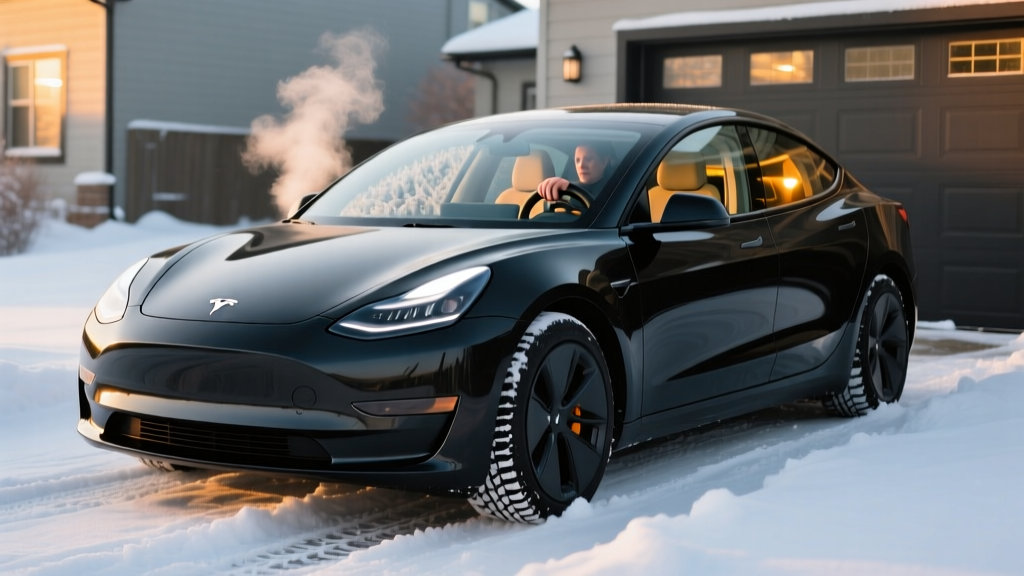
Cold weather is the great equalizer for all EVs. Below freezing, expect a 20-30% range reduction due to cabin heating demands and reduced battery chemistry efficiency. Tesla's heat pump — standard on all 2026 Model 3 trims — mitigates this better than many competitors, but physics is physics. If you live in the upper Midwest or Northeast, budget your daily range accordingly.
Charging Speed: DC Fast, Level 2, and the Supercharger Advantage
Charging speed is where the Model 3 continues to outperform most rivals, particularly if you have access to Tesla's Supercharger network — widely regarded as the most reliable public DC fast-charging network in North America.
| Charging Level | Power | Speed (Long Range AWD) | Typical Use Case |
|---|---|---|---|
| Level 1 (120V household) | ~1.4 kW | ~5 mi/hr | Emergency / overnight trickle |
| Level 2 (240V home) | 11.5 kW | ~44 mi/hr | Daily home charging |
| DC Fast (Supercharger V3/V4) | Up to 250 kW | 10-80% in ~25 min | Road trips |
| DC Fast (CCS adapter, non-Tesla) | Varies by station | Up to 250 kW capable | Non-Tesla networks |
A few critical nuances that spec sheets gloss over:
- Charge curve taper: The Model 3 Long Range peaks at 250 kW only at low states of charge (roughly 5-25% SoC). From 50-80%, the rate tapers significantly, typically averaging 80-120 kW. The advertised "10-80% in 25 minutes" reflects this entire curve, not a sustained peak.
- Preconditioning matters: Navigate to a Supercharger using the built-in navigation, and the Model 3 will automatically warm the battery to optimal charging temperature before you arrive. Skip this step (or use a third-party charger without preconditioning) and your initial charge rate may be 30-50% slower, especially in cold weather.
- LFP battery (RWD trim): The base RWD model uses a lithium iron phosphate (LFP) battery, which charges slower at peak (170 kW) but can be routinely charged to 100% without degradation concerns — unlike the NMC batteries in Long Range and Performance trims, which Tesla recommends charging to 80% daily.
- CCS adapter: Tesla now includes a CCS adapter with new vehicles, allowing access to Electrify America, EVgo, and other non-Tesla networks. The native port on 2026 Model 3 vehicles remains the Tesla connector (NACS-compatible), as NACS has become the North American standard.
The CarPlay Question: What You Actually Get Instead
So, Teslas do not have Apple CarPlay — and Tesla shows no indication of adding it. Here's what the proprietary system delivers and where it falls short compared to CarPlay:
What Tesla's infotainment does well:
- Native navigation with real-time Supercharger routing, stall availability, and battery preconditioning
- Spotify, Apple Music, Tidal, and podcast apps built directly into the interface
- Bluetooth phone integration for calls and basic audio streaming
- Over-the-air (OTA) updates that regularly add features (theater mode, new games, UI improvements)
- Trip planning that automatically accounts for charging stops — something CarPlay cannot do
Where CarPlay users feel the gap:
- No Siri voice control for text messages, reminders, or smart-home triggers while driving
- No familiar iPhone interface — you must learn Tesla's UI
- Waze is not available (Tesla's native nav is strong, but some drivers prefer Waze's crowd-sourced alerts)
- No seamless handoff from iPhone Maps destinations to the car's navigation
For most Tesla owners we've surveyed, the absence of CarPlay stops being an issue within two to three weeks of ownership. Tesla's native navigation and trip planner are genuinely superior to CarPlay for EV-specific routing. But if you're deeply embedded in the Apple ecosystem and rely on Siri for hands-free texting, expect a real adjustment period.
Pricing, Trims, and Federal Tax Credit Eligibility
| Trim | Base MSRP | Federal Credit (§30D) | Effective Price |
|---|---|---|---|
| RWD | $38,990 | Up to $7,500* | ~$31,490 |
| Long Range AWD | $45,990 | Up to $7,500* | ~$38,490 |
| Performance | $53,990 | Up to $7,500* | ~$46,490 |
*Federal tax credit eligibility under IRS §30D is subject to multiple requirements that change periodically:
- Buyer income caps: Modified AGI must not exceed $150,000 (single), $225,000 (head of household), or $300,000 (joint filing).
- MSRP cap: Sedans must have an MSRP at or below $55,000. The Model 3 Performance at $53,990 clears this threshold, but adding certain packages could push it over.
- Battery sourcing requirements: A percentage of critical minerals and battery components must be sourced from the US or free-trade-agreement countries. Tesla's supply chain has adapted, but eligibility can shift year-to-year based on IRS guidance.
- Point-of-sale transfer: As of 2024, buyers can transfer the credit to the dealer at purchase, effectively reducing the purchase price upfront rather than waiting for a tax refund.
Important: Always verify current eligibility on the IRS Clean Vehicle Credit page before purchasing. Tax credit rules have changed multiple times since 2023, and consulting a tax professional is recommended for your specific situation.
Interior Space, Cargo, and Daily Practicality
The Model 3 is a midsize sedan, and its packaging reflects Tesla's skateboard-platform efficiency:
- Rear legroom: 35.3 inches — adequate for adults on shorter trips, tight for anyone over 6'0" on long rides
- Front headroom: 40.3 inches — generous, even with the glass roof
- Trunk (rear): 21.0 cu ft — competitive with a BMW 3 Series
- Frunk (front trunk): 3.1 cu ft — useful for charging cables or a small bag
- Total cargo: 24.1 cu ft — less than crossover alternatives like the Model Y (76 cu ft max)
The Highland refresh significantly improved cabin materials over the pre-2024 Model 3. Ventilated front seats, ambient lighting, rear-seat ventilation controls, and a rear 8-inch touchscreen are now standard. Road noise is noticeably reduced thanks to acoustic glass and additional insulation — a frequent complaint of earlier Model 3 owners that Tesla addressed directly.
Driver Assistance: Autopilot and FSD (Supervised)
Tesla Autopilot and Full Self-Driving (Supervised) are SAE Level 2 driver-assistance systems. The driver must remain fully engaged, keep hands on the wheel, and monitor the road at all times. These systems do NOT make the vehicle self-driving. Tesla's "FSD" branding is widely considered misleading by safety advocates and regulators.
All 2026 Model 3 vehicles ship with Tesla's Basic Autopilot, which includes adaptive cruise control and lane-keeping assist. The optional FSD (Supervised) package ($8,000 one-time or $99/month as of early 2026) adds automatic lane changes, traffic-light and stop-sign recognition, and Navigate on Autopilot for highway on/off-ramp routing.
FSD capability in city streets has improved substantially through Tesla's end-to-end neural network approach (v12+), but it still requires constant supervision and occasionally makes unpredictable decisions in construction zones, complex intersections, or adverse weather. It is not a Level 3 or Level 4 system, and no hands-off, eyes-off driving is legal or safe.
Pros, Cons, and Who Should Buy
✅ Pros
- Best-in-class efficiency (132 MPGe combined)
- Supercharger network access — the most reliable public charging ecosystem
- 250 kW peak DC charging on Long Range/Performance
- OTA updates continuously add features
- Excellent performance across all trims
- Strong resale value relative to most EVs
- Heat pump standard for cold-weather efficiency
❌ Cons
- No Apple CarPlay or Android Auto — ever
- Rear seat space is tight for tall passengers
- Minimal physical controls — everything on the touchscreen
- FSD costs $8,000 extra and still requires full supervision
- No heads-up display
- Insurance costs tend to be higher than segment average
- Ride quality firm on Performance trim (19" sport wheels)
Who the Model 3 Suits Best
- Daily commuters with home Level 2 charging who value efficiency and low running costs
- Tech-forward buyers who prefer a minimalist cabin and OTA-improving software
- Road trippers who want access to the Supercharger network's reliability
- Not ideal for: Families needing maximum cargo space (consider Model Y), drivers who demand CarPlay, or buyers in rural areas far from Supercharger corridors
Warranty and Long-Term Battery Outlook
- Basic vehicle warranty: 4 years / 50,000 miles
- Battery & drive unit (RWD): 8 years / 100,000 miles
- Battery & drive unit (Long Range/Performance): 8 years / 120,000 miles
- Capacity retention threshold: Tesla warrants that the battery will retain at least 70% of its original capacity during the warranty period
Tesla's LFP batteries (RWD trim) have demonstrated excellent long-term degradation profiles in fleet data, often retaining 90%+ capacity after 100,000 miles. NMC batteries in Long Range and Performance trims typically show 5-10% degradation in the first 30,000 miles, then stabilize. Following Tesla's recommended charge limits (80% daily for NMC, 100% acceptable for LFP) is the single biggest factor in long-term battery health.
Frequently Asked Questions
Do any Teslas have Apple CarPlay in 2026?
No. As of 2026, no Tesla model — Model 3, Model Y, Model S, Model X, or Cybertruck — supports Apple CarPlay or Android Auto. Tesla uses its own proprietary infotainment system across all vehicles.
What is the real-world highway range of the Model 3 Long Range?
Expect approximately 280-300 miles at sustained highway speeds (70-75 mph) in moderate temperatures. The EPA rates it at 341 miles, but real-world highway driving, cold weather, and elevation changes reduce that figure by 12-30% depending on conditions.
How fast does the Model 3 charge at home on Level 2?
At 11.5 kW on a 240V Level 2 home charger (48-amp circuit), the Long Range AWD gains approximately 44 miles of range per hour. A full charge from 10% to 90% takes roughly 6-7 hours, making overnight charging practical for daily use.
Does the 2026 Model 3 qualify for the $7,500 federal tax credit?
All three trims of the 2026 Model 3 are potentially eligible for the full $7,500 federal tax credit under IRS §30D, provided the buyer meets income caps ($150K single / $300K joint), the vehicle MSRP stays at or below $55,000 (sedan cap), and current battery-sourcing requirements are met. Verify eligibility at IRS.gov before purchase.
Is the Model 3 worth it over the Hyundai Ioniq 6 or BMW i4?
The Model 3 wins on charging speed (250 kW vs. Ioniq 6's ~240 kW peak but less sustained), Supercharger network access, and software integration. The Ioniq 6 offers Apple CarPlay and a more traditional interior. The BMW i4 provides superior build quality and driving dynamics but at a higher price point and slower DC charging. For buyers who prioritize charging infrastructure and efficiency over CarPlay, the Model 3 remains the benchmark.
What's the biggest mistake new Tesla owners make?
Not installing a Level 2 home charger before delivery. Relying on Level 1 (120V) adds only ~5 miles of range per hour, making daily charging impractical for most drivers. Budget $500-$2,000 for a professional 240V/48-amp circuit installation, and have it completed before your car arrives.