The Short Answer: No, Tesla Does Not Have Dealerships
If you're searching for a Tesla dealer near you, you won't find one — at least not in the traditional sense. Tesla abandoned the franchise dealership model entirely, selling every vehicle directly to consumers through its website and company-owned galleries. This approach eliminates haggling, dealer markups, and the typical F&I office upsell cycle. But it also means no trade-in negotiations across a lot, no test drives on demand at a suburban strip mall, and a service experience that differs sharply from legacy automakers.
Understanding do Tesla have dealerships matters because the buying process shapes your entire ownership experience — from pricing transparency to service access. Below, we break down exactly how purchasing a Tesla works, using the 2026 Model Y (Tesla's best-selling vehicle) as our reference point, with every spec, price, and tax-credit detail you need to make an informed decision.
How Tesla's Direct Sales Model Actually Works
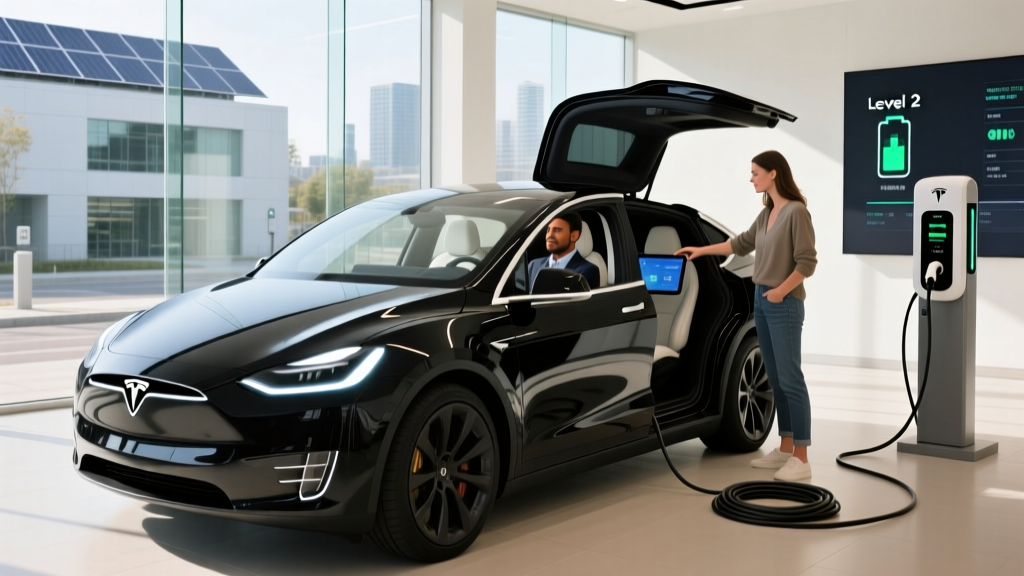
Tesla sells vehicles through three channels: its website (tesla.com), company-owned galleries in high-foot-traffic retail areas, and service centers that sometimes double as delivery locations. Here's what that means practically:
- Fixed pricing: The MSRP you see online is the price you pay. No negotiation, no dealer add-ons, no doc fees inflated beyond reason.
- Online configuration: You select your paint, wheels, interior, and software packages (like FSD Supervised) directly on Tesla's site. Delivery estimates update in real time based on your zip code and configuration.
- Delivery options: Pick up at a local service center or opt for touchless doorstep delivery in eligible areas.
- Trade-ins: Tesla accepts trade-ins via an online appraisal tool, though offers tend to run below CarMax or private-party values.
- No franchise protection: Tesla's direct model has faced legal challenges in states with franchise laws that prohibit manufacturers from selling direct. Tesla has largely navigated these through "galleries" where staff educate but don't technically "sell."
The trade-off? You can't walk into a Tesla location and drive off the same day in most cases. Inventory is build-to-order or sourced from in-transit vehicles, and delivery timelines typically range from two to eight weeks depending on configuration and region.
2026 Tesla Model Y: Full Review & Specifications
The 2026 Model Y received a significant refresh (internally dubbed "Juniper") that updated its exterior styling, interior materials, suspension tuning, and noise isolation. It remains a five-passenger electric crossover competing against the Hyundai Ioniq 5, Ford Mustang Mach-E, and BMW iX3. Here are the hard numbers:
| Specification | Long Range AWD | Performance |
|---|---|---|
| EPA Range | 320 miles | 295 miles |
| Battery Capacity | 78.1 kWh usable (NMC) | 78.1 kWh usable (NMC) |
| Drivetrain | Dual Motor AWD | Dual Motor AWD |
| Horsepower | 384 hp | 456 hp |
| 0–60 mph | 4.8 seconds | 3.5 seconds |
| Peak DC Fast Charge | 250 kW | 250 kW |
| 10–80% DC Charge Time | ~25 minutes | ~25 minutes |
| Level 2 Home Charge Rate | 11.5 kW (~44 mi/hr) | 11.5 kW (~44 mi/hr) |
| MPGe (Combined) | 122 MPGe | 111 MPGe |
| Efficiency | 28 kWh/100 mi | 30 kWh/100 mi |
| Cargo Volume (rear seats up) | 30.2 cu ft | 30.2 cu ft |
| Cargo Volume (rear seats folded) | 72.1 cu ft | 72.1 cu ft |
| Rear Legroom | 41.6 inches | 41.6 inches |
| Base MSRP | $44,990 | $51,490 |
| Battery/Drive Unit Warranty | 8 yr / 120,000 mi | 8 yr / 120,000 mi |
Source: fueleconomy.gov and Tesla's official 2026 spec sheets.
Charging Speed: DC Fast Charging & Home Setup
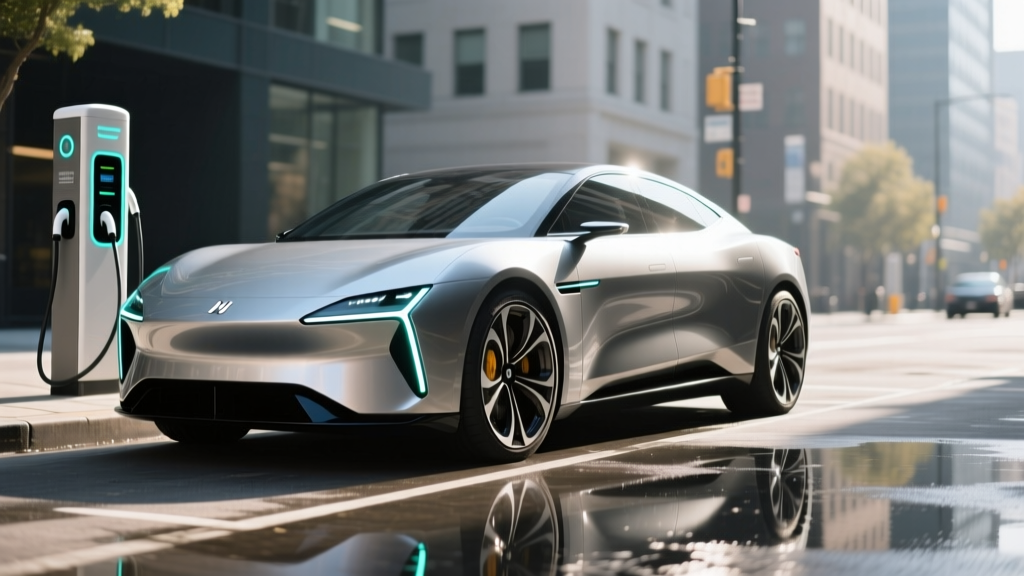
Tesla's Supercharger network remains one of the most reliable public DC fast-charging ecosystems in North America, with over 6,000 stalls in the U.S. alone as of 2026. But how fast does the Model Y actually charge?
| Charging Level | Power | Speed (Miles Added) | Typical Use Case |
|---|---|---|---|
| Level 1 (120V household) | ~1.4 kW | ~5 miles/hour | Emergency/overnight trickle |
| Level 2 (240V home wall connector) | 11.5 kW | ~44 miles/hour | Daily home charging |
| DC Fast (Supercharger V3/V4) | Up to 250 kW peak | Up to ~1,000 mi/hr (peak) | Road trips |
Charging curve reality check: The Model Y peaks at 250 kW only at low states of charge (roughly 10–30% SoC). By 50% SoC, the rate tapers to approximately 150 kW, and above 80% it drops below 60 kW. A 10–80% session takes roughly 25 minutes at a V3 Supercharger, but charging from 80–100% adds another 25+ minutes. For road-trip efficiency, Tesla's navigation system automatically preconditions the battery when routing to a Supercharger, warming the pack to optimize charge acceptance.
Home charging cost: Installing a Tesla Wall Connector on a dedicated 60-amp circuit typically costs $500–$1,500 for the equipment and electrician labor (assuming your electrical panel has capacity). If you need a panel upgrade from 100A to 200A, add $1,500–$3,000. At the national average electricity rate of $0.16/kWh, a full 78.1 kWh charge costs approximately $12.50 — yielding a cost-per-mile of roughly $0.045, compared to $0.12–$0.15/mile for a 28 MPG gas vehicle at $3.50/gallon.
Pricing, Tax Credits, and What You'll Actually Pay
Tesla's direct-sales model means the MSRP is the MSRP — no dealer markups, but also no negotiating down. Here's what the 2026 Model Y lineup costs and how federal incentives apply:
| Trim | MSRP | Destination | §30D Credit Eligibility | Effective Price (if eligible) |
|---|---|---|---|---|
| Long Range AWD | $44,990 | $1,390 | Up to $7,500 | ~$38,880 |
| Performance | $51,490 | $1,390 | Up to $7,500 | ~$45,380 |
Federal tax credit rules (§30D) — critical caveats:
- MSRP cap: SUVs must be under $80,000 MSRP. Both Model Y trims qualify.
- Income cap: Adjusted gross income must not exceed $150,000 (single), $225,000 (head of household), or $300,000 (married filing jointly).
- Battery sourcing: The credit splits into two halves — $3,750 for meeting critical-minerals requirements and $3,750 for battery-component sourcing. Tesla's supply chain has progressively shifted to comply, but eligibility can change as IRS guidance updates. Always verify current eligibility on the IRS website or with a tax professional before purchase.
- Point-of-sale transfer: As of 2024, buyers can transfer the credit to the dealer (or Tesla) at purchase, receiving the benefit as a down-payment reduction rather than waiting for tax filing.
Technology, Driver Assistance, and Interior
The refreshed Model Y interior ditches the stark minimalism of earlier years for a slightly warmer aesthetic: ventilated front seats, ambient lighting, a rear-seat touchscreen for passengers, and improved acoustic glass that noticeably reduces highway noise.
Infotainment: A 15.4-inch center touchscreen handles navigation, media, climate, and vehicle settings. No Apple CarPlay or Android Auto — Tesla's proprietary system handles everything, including a built-in browser, Netflix/YouTube (while parked), and over-the-air software updates that regularly add features.
Driver assistance: Every Model Y ships with Tesla's Basic Autopilot (adaptive cruise control + lane centering). The optional Full Self-Driving (Supervised) package adds automatic lane changes, traffic-light recognition, and city-street navigation. However, this is an SAE Level 2 system — you must remain attentive, keep your hands on the wheel, and supervise at all times. It is not autonomous driving.
Notable drawbacks: The Model Y still lacks a traditional instrument cluster (all info is on the center screen), turn-signal stalks were removed in favor of steering-wheel buttons (a divisive change), and the panoramic glass roof provides no shade — you'll want the optional sunshade accessory for summer months.
Who the Model Y Suits Best
Choose the Model Y Long Range AWD if:
- You commute 30–60 miles daily and can charge at home overnight.
- You need a practical family vehicle with strong cargo capacity (30.2 cu ft behind the rear seats) and reasonable efficiency.
- You take road trips 2–4 times per year and want access to Tesla's Supercharger network for hassle-free long-distance travel.
- You value over-the-air updates and a tech-forward ownership experience.
Look elsewhere if:
- You tow frequently — the Model Y's 3,500-lb tow rating is adequate for small trailers but trails competitors like the Rivian R1S or Ford F-150 Lightning.
- You prefer physical buttons, a traditional gauge cluster, or Apple CarPlay integration.
- You live in an apartment without home-charging access and your area lacks reliable public DC fast chargers.
- You need third-row seating — the Model Y is strictly a five-passenger vehicle.
Pros
- Class-leading efficiency (122 MPGe combined)
- Access to Supercharger network (6,000+ U.S. stalls)
- Transparent fixed pricing — no dealer haggling
- Strong real-world range (~260–280 mi highway)
- Regular OTA updates add new features post-purchase
- Spacious cargo area (72.1 cu ft seats folded)
Cons
- No Apple CarPlay or Android Auto
- Turn signals via steering-wheel buttons (learning curve)
- Service center wait times can stretch weeks in some regions
- 250 kW peak charge rate trails Hyundai/Kia's 350 kW capability
- Glass roof lacks built-in shade
- No third-row option for larger families
Frequently Asked Questions
Do Tesla have dealerships in any state?
No. Tesla operates company-owned galleries and service centers across all 50 states, but these are not franchise dealerships. You cannot negotiate price at a Tesla location, and most purchases are completed online with delivery arranged afterward. Some states with strict franchise laws have required Tesla to structure galleries as "educational" spaces rather than point-of-sale locations, but the buying experience is functionally the same: configure online, pay fixed MSRP, schedule delivery.
Can I test-drive a Tesla before buying?
Yes. Tesla offers demo drives through its galleries and service centers, typically booked via the Tesla website or app. Availability depends on your location — rural buyers may need to travel to a metro-area gallery. Some markets also offer at-home demo drives where a Tesla advisor brings the vehicle to you.
What is the real-world range of the 2026 Model Y?
The EPA rates the Long Range AWD at 320 miles. In mixed real-world driving, owners typically see 270–290 miles. Sustained highway driving at 75 mph drops this to roughly 260–280 miles, and cold-weather conditions (below freezing) can reduce range to 210–240 miles due to battery chemistry limitations and cabin-heating energy demands.
How fast does the Model Y charge at home?
On a Level 2 Tesla Wall Connector (48-amp, 240V circuit), the Model Y charges at up to 11.5 kW, adding approximately 44 miles of range per hour. A full charge from near-empty takes roughly 7–8 hours — ideal for overnight charging. On a standard 120V household outlet (Level 1), you'll add only about 5 miles per hour, suitable only for emergencies or very low-mileage drivers.
Does the 2026 Model Y qualify for the federal EV tax credit?
The Model Y Long Range AWD and Performance both fall under the $80,000 MSRP cap for SUVs. Eligibility for the full $7,500 credit depends on your income (AGI caps apply), the battery's critical-mineral and component sourcing at the time of delivery, and your tax liability. The credit can be transferred at point of sale to reduce your purchase price directly. Verify current eligibility on IRS.gov before committing.
Is the Model Y worth buying over competitors?
The Model Y remains the segment benchmark for efficiency, charging-network access, and software integration. The Hyundai Ioniq 5 charges faster (up to 350 kW peak) and offers a more conventional interior with physical controls. The Ford Mustang Mach-E provides a sportier driving feel but trails in efficiency. If Supercharger access and over-the-air updates matter most, the Model Y wins. If you prioritize charging speed or a traditional cockpit layout, cross-shop the Ioniq 5 and Mach-E before ordering.
How does Tesla service work without dealerships?
Tesla operates dedicated service centers and mobile service vans that handle most repairs at your home or workplace. Routine maintenance is minimal (cabin air filter, tire rotation, wiper fluid). However, body repair and complex drivetrain work require a service center visit, and wait times for appointments can stretch to several weeks in high-population areas. Tesla's app-based service scheduling is convenient, but the limited service-center footprint remains a pain point for some owners.