If you're shopping for an electric vehicle and wondering about the exhaust system, here's the short answer: pure battery-electric vehicles (BEVs) do not have catalytic converters. A catalytic converter is an emissions-control device that scrubs harmful gases from an internal combustion engine's exhaust. Since a BEV has no engine, burns no fuel, and produces no tailpipe emissions, there is simply no exhaust system — no muffler, no catalytic converter, no oxygen sensors, no exhaust manifold.
That said, plug-in hybrids (PHEVs) and conventional hybrids (HEVs) do have catalytic converters because they still carry a gasoline engine. If you're cross-shopping a Toyota RAV4 Prime (PHEV) against a Tesla Model Y (BEV), the hybrid still has the full exhaust system with a catalytic converter, while the EV does not. This distinction carries real implications for maintenance costs, theft risk, and long-term ownership.
Why Gas Cars Need Catalytic Converters (and EVs Don't)
A catalytic converter sits in the exhaust stream between the engine and the muffler. Inside it, precious metals — platinum, palladium, and rhodium — act as catalysts to convert carbon monoxide (CO), unburned hydrocarbons (HC), and nitrogen oxides (NOx) into less harmful carbon dioxide (CO₂), water vapor, and nitrogen gas. The U.S. Environmental Protection Agency has mandated catalytic converters on all gasoline passenger vehicles since the 1975 model year, and EPA emissions regulations continue to require them on every new internal combustion vehicle sold in the United States.
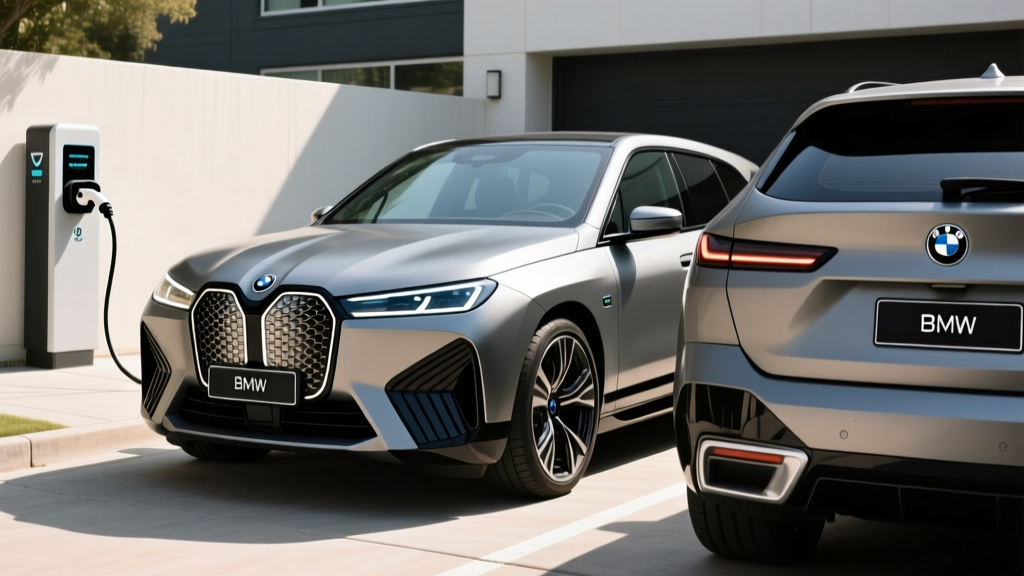
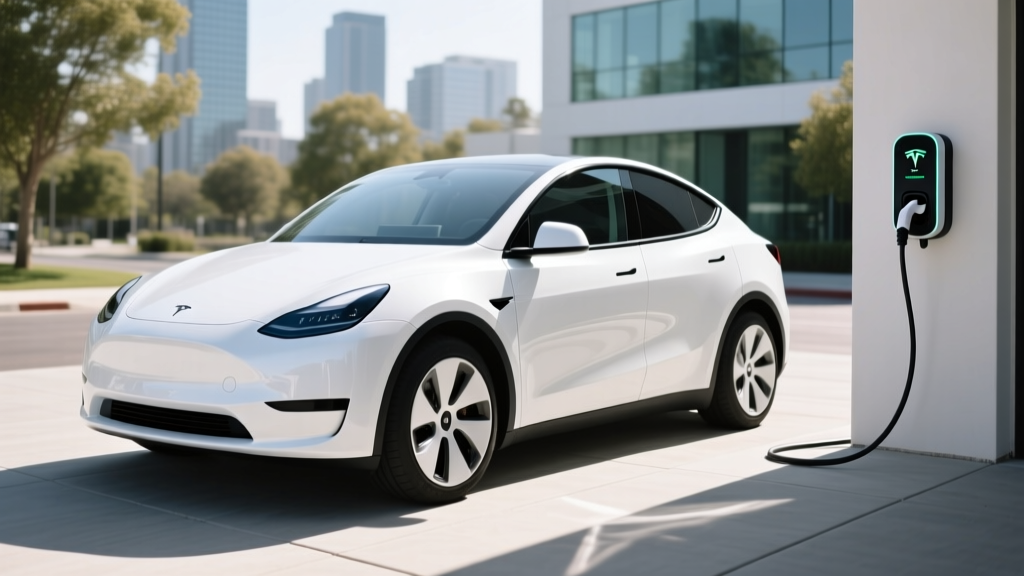
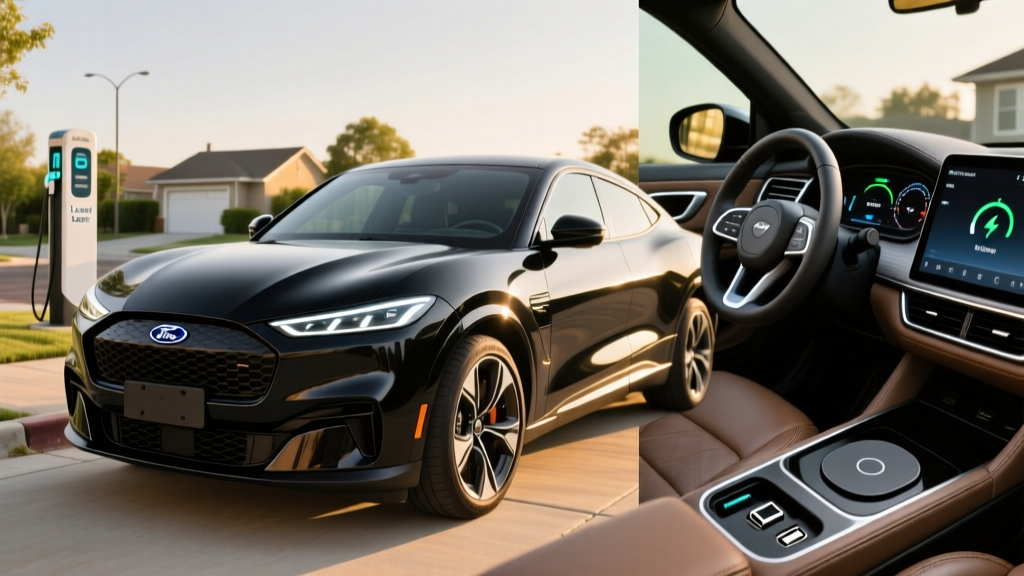
A battery-electric vehicle like the 2026 Hyundai Ioniq 5, Tesla Model 3, or Ford Mustang Mach-E generates propulsion entirely from an electric motor drawing energy from a lithium-ion battery pack. There is no combustion, no exhaust gas, and therefore no need for any emissions aftertreatment. The "exhaust" of an EV is simply the heat rejected from the battery thermal management system and the cabin HVAC.
EV vs Gas: The Exhaust-System Maintenance Gap
Eliminating the exhaust system removes several maintenance and failure points that gas-car owners deal with regularly. Here's a concrete look at what EV owners never have to service or replace:
| Component | Gas Car | BEV | Typical Replacement Cost (Gas) |
|---|---|---|---|
| Catalytic converter | Required | None | $900–$3,500+ |
| Oxygen (O2) sensors | Required (2–4 per vehicle) | None | $200–$600 per sensor |
| Muffler / resonator | Required | None | $300–$1,200 |
| Exhaust manifold / gaskets | Required | None | $400–$1,500 |
| EGR valve | Required | None | $200–$600 |
| Spark plugs | Replace every 30k–100k mi | None | $150–$500 |
According to fueleconomy.gov, the U.S. Department of Energy estimates that EV owners spend roughly $0.061 per mile on maintenance compared to $0.101 per mile for gasoline vehicles. Over a 150,000-mile ownership cycle, that's a maintenance savings of approximately $6,000 — and the absence of the entire exhaust system (including the catalytic converter) is a meaningful part of that gap.
The Catalytic Converter Theft Problem — and Why EVs Are Immune
Catalytic converter theft has been a persistent problem across the United States. Thieves target them because the precious metals inside — particularly rhodium, which has traded above $4,000 per troy ounce at peak market prices — can be extracted and sold to scrap recyclers. A thief with a reciprocating saw can remove a catalytic converter in under 60 seconds, leaving the vehicle owner with a $1,000–$3,500 repair bill and a car that's undriveable (and illegally loud) without it.
The National Insurance Crime Bureau (NICB) reported over 64,000 catalytic converter thefts in a single recent year, with certain models — especially the Toyota Prius, Honda CR-V, and trucks with high ground clearance — disproportionately targeted. Hybrids are particularly attractive to thieves because their catalytic converters contain higher concentrations of precious metals (the engine cycles on and off, so the converter runs cooler and retains more of the catalyst material).
Myths vs. Facts: EV Exhaust and Emissions Misconceptions
| Myth | Fact |
|---|---|
| "EVs still produce emissions, so they must have a catalytic converter." | BEVs produce zero tailpipe emissions. Upstream emissions from electricity generation occur at the power plant, which has its own emissions controls regulated separately by the EPA. No catalytic converter exists on the vehicle. |
| "All electrified cars are the same — hybrids and EVs both skip the exhaust." | Only pure BEVs eliminate the exhaust system. Hybrids (HEVs) and plug-in hybrids (PHEVs) retain a gasoline engine and therefore a full exhaust system including a catalytic converter. |
| "EVs need emissions testing." | In most U.S. states that require emissions inspections, BEVs are exempt. Some states still require a safety inspection, but there's no tailpipe test for a vehicle with no tailpipe. |
| "Without a catalytic converter, EVs are somehow less regulated." | BEVs are certified under EPA Tier 3 Bin 0 (or equivalent zero-emission vehicle standards). They exceed emissions compliance by definition — there are no tailpipe pollutants to measure. |
| "EVs need oil changes and exhaust work like regular cars." | BEVs have no engine oil, no transmission fluid (most use a single-speed reduction gear), and no exhaust system. Routine service is limited to cabin air filters, brake fluid checks, tire rotations, and windshield washer fluid. |
Total Ownership Cost: EV vs Gas (with Exhaust-System Savings Factored In)
The absence of a catalytic converter is one piece of a broader ownership-cost advantage for BEVs. Here's a five-year, 75,000-mile cost comparison between a representative BEV (2026 Tesla Model 3 Long Range, $42,490 MSRP) and a comparable gas sedan (2026 Toyota Camry LE, $28,400 MSRP):
| Cost Category (5 yr / 75k mi) | Tesla Model 3 LR (BEV) | Toyota Camry LE (Gas) |
|---|---|---|
| Purchase price (MSRP) | $42,490 | $28,400 |
| Federal tax credit (§30D, if eligible) | –$7,500* | $0 |
| Effective purchase price | $34,990 | $28,400 |
| Fuel / electricity (75,000 mi) | $3,375** | $8,250*** |
| Maintenance (5 years) | $1,800 | $3,750 |
| Insurance (5-year avg) | $10,500 | $7,800 |
| Total 5-year cost | $50,665 | $48,200 |
* §30D credit eligibility depends on buyer income caps ($150k single / $300k joint MAGI), vehicle MSRP caps ($55,000 for sedans), and battery critical-mineral/sourcing requirements per current IRS rules. Verify your eligibility before purchase.
** Assumes home charging at $0.15/kWh average and 28 kWh/100mi efficiency.
*** Assumes $3.30/gal regular gasoline and 32 MPG combined.
The gap narrows significantly when you factor in the tax credit, fuel savings, and reduced maintenance — and that maintenance figure already accounts for the fact that the EV owner will never face a $2,000 catalytic converter replacement or a $400 O2 sensor failure. Over 10 years and 150,000 miles, the EV's maintenance advantage widens further as exhaust components on the gas car age and corrode.
What About Hybrids and PHEVs? The Middle Ground
If you're considering a plug-in hybrid like the 2026 Toyota RAV4 Prime (42 miles EPA electric-only range, 94 MPGe combined) or the 2026 Jeep Wrangler 4xe (22 miles electric-only), you get partial EV benefits — daily electric-only commuting with no tailpipe emissions on short trips — but you still carry the full gasoline powertrain, exhaust system, and catalytic converter.
That means PHEV owners should:
- Still budget for exhaust-related maintenance — though the catalytic converter on a PHEV may last longer because the engine runs less frequently, reducing thermal cycling and contamination.
- Be aware of theft risk — hybrid catalytic converters remain theft targets, especially on higher-riding SUVs like the RAV4 Prime.
- Still pass emissions inspections in states that require them, unlike BEV owners who are typically exempt.
For buyers who want the full zero-exhaust, zero-catalytic-converter experience, only a BEV delivers that. For buyers who need gas-engine range for frequent long road trips through charging deserts, a PHEV is a practical compromise — just know that the exhaust system comes with it.
Decision Framework: What This Means for Your EV Purchase
Choose a BEV (no catalytic converter, no exhaust) if:
- You have access to home Level 2 charging (240V) or reliable workplace charging.
- Your daily driving is under 250 miles, and you're comfortable planning DC fast-charge stops for longer road trips.
- You want to eliminate exhaust-system maintenance, emissions testing, and catalytic converter theft risk entirely.
- You qualify for the §30D federal tax credit (check income and vehicle sourcing requirements on irs.gov).
Choose a PHEV (catalytic converter still present) if:
- You lack reliable home or workplace charging but want some electric-only driving for short commutes.
- You regularly drive 300+ miles through areas with sparse DC fast-charging infrastructure.
- You're willing to accept exhaust-system maintenance and catalytic converter theft risk in exchange for unlimited gas-engine range.
Stick with a gas car (catalytic converter required) if:
- You live in an apartment with no charging access and no realistic path to install a Level 2 charger.
- Your budget is strictly under $25,000 and you're buying used without access to the $4,000 used-EV credit.
- You tow heavy loads frequently (over 5,000 lbs) in extreme cold climates where EV range loss of 20–30% is unacceptable.
Frequently Asked Questions
Can someone steal a catalytic converter from a Tesla or other EV?
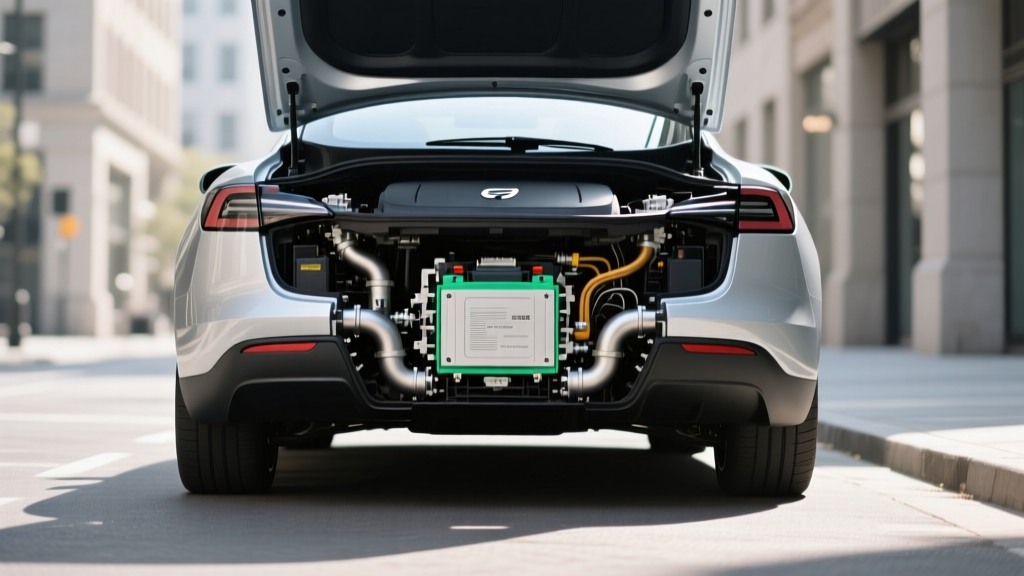
No. Tesla vehicles, along with every other pure BEV (Hyundai Ioniq 5, Ford Mustang Mach-E, Chevrolet Equinox EV, Rivian R1S, etc.), have no catalytic converter to steal. There is no exhaust system underneath a BEV — just the battery pack, electric motor(s), and suspension components.
Do hybrids like the Prius have catalytic converters?
Yes. All hybrids (HEVs) and plug-in hybrids (PHEVs) have gasoline engines and therefore require catalytic converters. The Toyota Prius, in fact, has been one of the most targeted vehicles for catalytic converter theft because its hybrid system causes the engine to cycle on and off frequently, leaving the catalytic converter cooler and richer in unreacted precious metals.
Will I save money on maintenance by going EV?
Yes — the U.S. Department of Energy estimates EV maintenance costs at roughly $0.061/mile versus $0.101/mile for gas vehicles. Over 100,000 miles, that's a $4,000 savings. The elimination of the exhaust system (no catalytic converter, no O2 sensors, no muffler, no EGR valve) is a meaningful part of that savings, alongside the absence of oil changes, spark plugs, and transmission service.
Do EVs need to pass emissions inspections?
In most U.S. states with emissions testing programs, BEVs are exempt because they have no tailpipe and no emissions to measure. Some states still require an annual safety inspection (brakes, lights, tires), but the emissions portion is waived for electric vehicles. Check your state's DMV or NHTSA resources for local requirements.
What about hydrogen fuel-cell vehicles — do they have catalytic converters?
No, not in the traditional sense. Fuel-cell electric vehicles (FCEVs) like the Toyota Mirai generate electricity from a hydrogen fuel cell, and the only byproduct is water vapor. There is no combustion and no need for a catalytic converter. However, FCEVs are currently available only in limited markets (primarily California) due to sparse hydrogen refueling infrastructure.