The Short Answer: Yes, EV-Specific Tires Are Worth It
Electric cars do not require special tires to operate, but EV-specific tires deliver measurably better results in three areas that matter to EV owners: range (up to 5-8% more miles per charge), noise reduction (2-4 dB quieter cabin), and load capacity to handle the 500-1,000 lb weight penalty EVs carry over comparable gas cars. Standard all-season tires will fit and function, but expect faster wear, reduced range, and more road noise. A set of four EV-optimized tires typically costs $900-$1,600 installed, versus $600-$1,000 for standard equivalents — a $300-$600 premium that most owners recoup through longer tread life and recovered range.
Why EVs Put Unique Demands on Tires
Electric vehicles stress tires in ways that internal-combustion vehicles simply do not. Understanding the physics explains why tire manufacturers like Michelin, Continental, Hankook, and Pirelli have developed dedicated EV tire lines since 2022.
Weight: 500-1,000 lbs Heavier Than Gas Equivalents
A 2026 Hyundai Ioniq 5 (Long Range AWD) weighs approximately 4,500 lbs. A similarly sized gas-powered Hyundai Tucson AWD tips the scales at roughly 3,600 lbs. That ~900 lb difference comes almost entirely from the 77.4 kWh battery pack. More weight means more force pressing the tire contact patch into the road, which accelerates tread wear and generates more heat during sustained highway driving.
EV tires carry higher load index ratings to compensate. Where a gas crossover might use a 101 load index tire (1,819 lbs per tire), an EV variant of the same size often requires a 105 or 108 rating (2,039-2,205 lbs per tire). Mounting a lower-load-index tire on a heavy EV doesn't just wear faster — it can compromise handling safety under emergency braking.
Instant Torque Wears Treads Faster
Electric motors deliver peak torque from 0 RPM. A 2026 Tesla Model Y Long Range produces 375 lb-ft of torque instantly at launch, whereas a gas-powered Toyota RAV4 (203 hp) must rev to ~4,400 RPM to reach its 184 lb-ft peak. This instant torque application, combined with EV weight, scrubs tread rubber significantly during acceleration — particularly for drivers who frequently use the throttle aggressively or live in hilly terrain.
Industry testing by Tire Rack has shown that EVs can wear through standard touring tires 20-30% faster than comparable gas vehicles under similar driving conditions. A tire rated for 60,000 miles on a gas sedan might deliver only 40,000-48,000 miles on an EV of similar size.
Rolling Resistance Directly Impacts Range
Every watt-hour matters when your total energy budget is a fixed battery capacity. Tire rolling resistance accounts for roughly 15-25% of an EV's total energy consumption at highway speeds. EV-specific tires use specialized rubber compounds and tread patterns that reduce rolling resistance by 10-20% compared to standard all-season tires.
On a 2026 Chevrolet Equinox EV (EPA-estimated 315 miles of range, 85 kWh usable battery), switching from a standard all-season tire to a low-rolling-resistance EV tire can recover approximately 15-25 miles of range per full charge. That's meaningful on road trips where DC fast-charging stops add 18-25 minutes each.
Noise: No Engine to Mask Road Sound
Without an internal combustion engine providing ambient noise, tire roar becomes the dominant sound in an EV cabin above 35 mph. EV-specific tires incorporate foam inserts bonded to the inner tire liner (Michelin calls this "Acoustic Technology," Continental uses "ContiSilent") that absorb cavity resonance and reduce interior noise by 2-4 decibels. Because the decibel scale is logarithmic, a 3 dB reduction represents roughly a 50% perceived reduction in tire noise.
EV Tires vs. Standard Tires: Cost and Performance Compared
| Metric | EV-Specific Tire (e.g., Michelin e.Primacy, Hankook iON evo) | Standard All-Season (e.g., Michelin Defender 2, Continental CrossContact LX25) |
|---|---|---|
| Price per tire (installed) | $250-$380 | $170-$250 |
| Set of 4 (installed, with alignment) | $1,050-$1,600 | $730-$1,080 |
| Treadwear warranty | 40,000-50,000 miles | 50,000-70,000 miles (on gas car) |
| Expected life on an EV | 35,000-50,000 miles | 25,000-40,000 miles |
| Rolling resistance reduction | 10-20% vs. standard | Baseline |
| Range impact (315-mi EPA EV) | +15 to +25 miles vs. standard | Baseline |
| Noise reduction | 2-4 dB (foam-lined options) | None |
| Load index (typical) | 105-108 (EV-rated) | 101-105 |
| Cost per 1,000 miles (on EV) | $21-$46 | $18-$43 |
The per-mile cost gap narrows significantly when you account for the shorter life standard tires experience on heavy, high-torque EVs. A $1,400 set of EV tires lasting 45,000 miles costs $31 per 1,000 miles. A $900 set of standard tires lasting 30,000 miles on the same EV costs $30 per 1,000 miles — virtually identical, but you sacrifice range, noise comfort, and the assurance of proper load rating.
Real-World Ownership Considerations for EV Tires
Your Driving Pattern Determines Priority
Not every EV owner benefits equally from EV-specific tires. A commuter who drives 20 miles each way on flat suburban roads at 45 mph will see less benefit than a road-tripper covering 400 highway miles weekly at 75 mph. High-speed driving amplifies both rolling resistance losses and noise, making EV tires more valuable for frequent highway drivers.
Climate and Seasonal Swaps
EV range drops 20-35% in freezing temperatures due to battery chemistry limitations and cabin heating demand. Adding high-rolling-resistance all-season tires in winter compounds this loss. Many EV owners in northern climates run dedicated winter tires (like the Nokian Hakkapeliitta R5 EV) from November through March, then switch to EV-specific summer or all-season tires. Budget for two sets of wheels and tires — roughly $2,200-$3,200 total — if you live where winter tires are necessary or legally required.
Home Charging Access and Range Recovery
If you charge at home with a Level 2 charger (7-11 kW, adding 25-45 miles of range per hour of charging), the 15-25 mile range gain from low-rolling-resistance tires means less time plugged in and more buffer for unexpected detours. For apartment dwellers relying on public DC fast charging, those recovered miles translate to fewer charging stops on road trips — each avoided stop saves 18-30 minutes and $8-$15 in charging fees.
Common EV Tire Myths — Addressed with Data
| Myth | Fact |
|---|---|
| "You must buy EV-branded tires or your warranty is voided." | False. No EV manufacturer voids your vehicle warranty for using non-EV-branded tires, provided the tire meets the OEM-specified size, load index, and speed rating listed on your door jamb placard. However, using an under-rated tire can affect handling and may complicate insurance claims in an accident. |
| "EV tires are just a marketing upsell — they're the same as regular tires." | False. EV tires use demonstrably different compounds (higher silica content for lower rolling resistance), reinforced sidewalls for heavier loads, and optional acoustic foam liners. Independent testing confirms measurable differences in range, noise, and wear rate. |
| "Low-rolling-resistance tires have terrible wet grip." | Outdated. Early-generation eco tires (circa 2012-2018) did compromise wet traction. Modern EV tires like the Hankook iON evo and Michelin Pilot Sport EV score well in independent wet-braking tests, often within 2-4 feet of standard performance tires from 60 mph. |
| "I can just put any tire on my EV as long as the size matches." | Partially true but risky. The physical size may fit, but ignoring load index and speed rating can result in tire failure under the sustained heavy loads EVs produce, especially on long highway trips in hot weather. Always match or exceed your door jamb placard specifications. |
| "EV tires cost twice as much as regular tires." | Exaggerated. The premium is typically $60-$130 per tire, or 30-50% more — not double. Over the life of the tire, the per-mile cost is comparable when you factor in the faster wear standard tires experience on EVs. |
Total Tire Cost in Context: EV vs. Gas Car Ownership
Tire costs represent a small but real portion of EV ownership. To put the EV tire premium in perspective, consider the 5-year operating cost comparison between a 2026 Hyundai Ioniq 5 SEL ($46,700 MSRP) and a gas-powered 2026 Hyundai Tucson SEL AWD ($33,500 MSRP):
| Cost Category | 2026 Ioniq 5 SEL (EV) | 2026 Tucson SEL AWD (Gas) | Difference |
|---|---|---|---|
| Purchase price (MSRP) | $46,700 | $33,500 | +$13,200 EV |
| Federal tax credit (§30D, if eligible) | -$3,750 to -$7,500* | $0 | -$3,750 to -$7,500 EV |
| Fuel / charging (75,000 mi) | $2,400-$3,600** | $7,500-$9,000*** | -$3,900 to -$6,600 EV |
| Tires (1 replacement set) | $1,100-$1,500 | $750-$1,000 | +$350-$500 EV |
| Maintenance (oil, filters, brakes) | $400-$700 | $2,200-$3,000 | -$1,500 to -$2,600 EV |
| Insurance (avg.) | $9,000-$11,000 | $7,000-$8,500 | +$1,500-$3,000 EV |
*Federal §30D credit eligibility depends on MSRP caps ($55,000 for SUVs), buyer income limits ($150,000 single / $300,000 joint AGI), battery sourcing requirements, and point-of-sale transfer rules. Verify current eligibility at IRS.gov before purchasing. Credit amounts vary by vehicle battery sourcing compliance.
**EV charging costs assume $0.13-$0.17/kWh home charging and 3.5 mi/kWh efficiency. Public DC fast charging costs significantly more ($0.30-$0.50/kWh).
***Gas costs assume $3.40-$3.80/gallon and 28 MPG combined, per fueleconomy.gov data.
The EV tire premium of $350-$500 over five years is dwarfed by fuel savings ($3,900-$6,600) and maintenance savings ($1,500-$2,600). Even factoring in higher insurance, the Ioniq 5 owner saves thousands over 75,000 miles — and the tire cost is a rounding error in that equation.
What First-Time EV Buyers Should Know About Tires
Check Your Door Jamb Placard
Before shopping for tires, photograph the placard on your driver's-side door jamb. It lists the OEM tire size, recommended cold inflation pressure (often 36-42 PSI for EVs, higher than gas cars), load index, and speed rating. Any replacement tire must meet or exceed these specifications.
Don't Ignore Tire Pressure
EVs are sensitive to under-inflation because of their weight. Running 4 PSI below recommendation can reduce range by 2-4% and accelerate shoulder wear. Check pressure monthly with a quality gauge — tire pressure monitoring systems (TPMS) only alert you when pressure drops 25% or more, long after efficiency losses begin.
Rotation Intervals Matter More on EVs
Because EVs wear tires faster and often have different front/rear weight distribution (battery packs mounted low, motors on one or both axles), rotate tires every 5,000-6,000 miles rather than the 7,500-10,000 mile interval common for gas cars. Some AWD EVs with dual motors wear front and rear tires at similar rates; single-motor RWD EVs like the 2026 Tesla Model 3 Long Range wear rear tires noticeably faster due to torque delivery.
Alignment After Purchase
Get a four-wheel alignment when installing new tires. EVs' heavier weight means even minor misalignment accelerates wear more aggressively than on lighter gas cars. Budget $100-$150 for a precision alignment.
Decision Framework: Should You Buy EV-Specific Tires?
Use this guide to decide based on your situation:
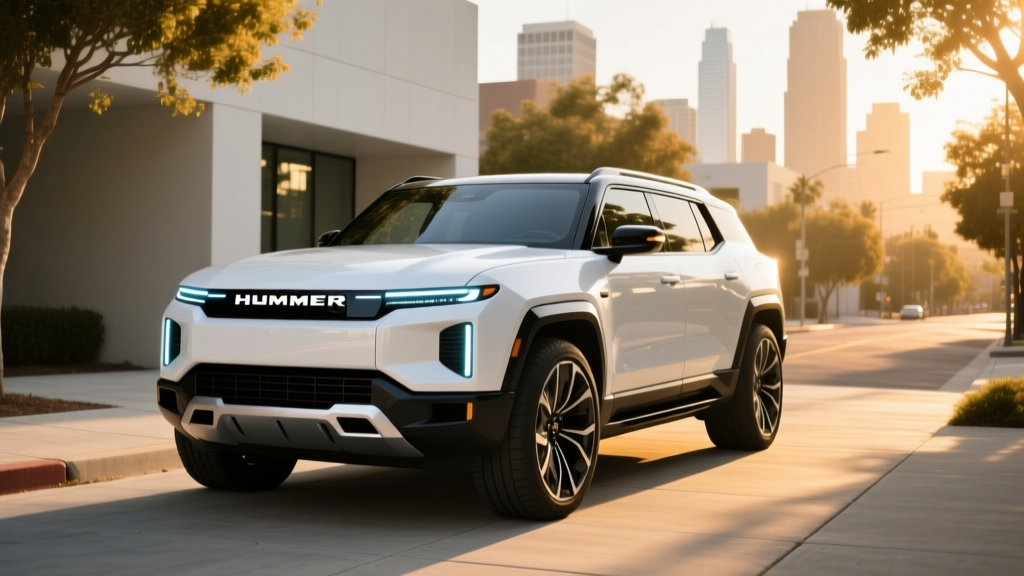
- Choose EV-specific tires if: You drive more than 12,000 miles per year, frequently take highway road trips, value cabin quietness, live in a warm/moderate climate where one tire set suffices year-round, or own a heavy EV over 5,000 lbs (Rivian R1S, GMC Hummer EV, Tesla Model X).
- Choose standard all-season tires (with correct load index) if: You drive under 8,000 miles per year mostly in the city, you're budget-constrained and plan to sell the EV within 2 years, or you can't find an EV-specific tire in your required size.
- Choose dedicated winter tires + EV summer tires if: You live where temperatures regularly drop below 40°F, you experience snow/ice, or you want maximum range and grip in each season. Budget for two wheel-and-tire sets.
- Always prioritize load index over brand marketing. A correctly-rated standard tire outperforms an under-rated "EV" tire every time. Match your door jamb placard specs at minimum.
Top EV Tire Picks for 2026 (by Category)
Best Overall: Hankook iON evo (and iON evo SUV)
Developed specifically for EVs from the ground up. Low rolling resistance, acoustic foam liner, and high-load construction. Original equipment on several 2025-2026 Hyundai, Kia, and Genesis EVs. Available in 18-22 inch sizes. Price: ~$280-$360 per tire.
Best for Range Maximization: Michelin e.Primacy
Michelin claims this is the lowest rolling resistance tire in its lineup, optimized for EV efficiency. Best suited for drivers prioritizing maximum miles per kWh over sporty handling. Available in 17-20 inch sizes. Price: ~$260-$340 per tire.
Best for Performance EVs: Michelin Pilot Sport EV
OE tire on the Tesla Model 3 Performance and several Porsche Taycan variants. Balances grip, rolling resistance, and noise. Not as quiet as touring-focused EV tires but handles the torque of 500+ hp EVs confidently. Price: ~$320-$420 per tire.
Best Value: Continental CrossContact LX25
Not marketed as an EV-specific tire, but carries sufficient load ratings for most EV crossovers and delivers strong wet/dry performance. A solid choice if EV-branded tires aren't available in your size. Price: ~$200-$270 per tire.
Frequently Asked Questions
Can I put regular tires on my Tesla, Hyundai Ioniq 5, or Ford Mustang Mach-E?
Yes, as long as the tire matches the size, load index, and speed rating on your door jamb placard. You won't void your warranty. However, you'll likely experience faster wear, slightly reduced range (5-8%), and more road noise compared to EV-optimized tires.
How often do EV tires need to be replaced?
Most EV owners replace tires every 30,000-50,000 miles depending on tire type, driving style, and vehicle weight. Aggressive acceleration, heavy EVs (over 5,000 lbs), and frequent highway driving push wear toward the lower end. Rotate every 5,000-6,000 miles to maximize life.
Do EV tires improve my EPA range rating?
No. Your EPA range estimate was calculated with the OEM tire. Aftermarket EV tires with lower rolling resistance may recover range compared to worn or higher-resistance replacement tires, but they won't exceed the EPA sticker. Expect real-world range of 80-90% of EPA on the highway regardless, per fueleconomy.gov testing methodology.
Are foam-lined tires worth the extra cost?
If cabin noise bothers you, yes. The 2-4 dB reduction is clearly perceptible on an EV where tire noise dominates. Foam-lined tires add roughly $30-$60 per tire over non-lined equivalents. Note: some tire shops cannot repair punctures in foam-lined tires — ask before purchasing.
Will using non-EV tires affect my regenerative braking?
Not directly. Regen braking is controlled by the motor and battery management system. However, tires with less grip may trigger traction control interventions during aggressive regen on slippery surfaces, reducing the effectiveness of one-pedal driving.
Do I need to tell my insurance company I changed tires?
Generally no, as long as you maintain the OEM-specified size and load rating. If you change wheel/tire diameter significantly (e.g., upsizing to 22-inch wheels), inform your insurer — it may affect coverage in a claim.