Quick Answer: Do Electric Cars Last Longer Than Gas?
Yes — on the drivetrain side. Electric motors have roughly 20 moving parts versus 2,000+ in an internal combustion engine (ICE). There's no timing belt, no head gasket, no transmission fluid, and no exhaust system to fail. Most modern EV battery packs are engineered to retain 70–80% of original capacity after 150,000–200,000 miles, backed by a federally mandated 8-year/100,000-mile warranty (10 years/150,000 miles in CARB states).
However, "lasting longer" depends on how you define longevity. EVs can outlive gas cars mechanically, but battery replacement costs ($5,000–$20,000+) remain the single biggest longevity risk once the warranty expires. A well-maintained gas car can also reach 200,000+ miles — it just costs significantly more in maintenance to get there.
EV vs. Gas Powertrain Longevity: What the Numbers Show
The fundamental advantage of an electric powertrain is mechanical simplicity. A typical gasoline engine relies on hundreds of precision-machined components operating under extreme heat and pressure — pistons, valves, camshafts, turbochargers, fuel injectors, catalytic converters — all wearing over time. An EV's electric motor converts electrical energy to motion with far less friction and heat stress.
| Component | Electric Vehicle (BEV) | Gasoline Vehicle (ICE) |
|---|---|---|
| Moving parts in drivetrain | ~20 | 2,000+ |
| Transmission | Single-speed reduction gear | 6–10 speed auto / CVT (complex) |
| Oil changes | None | Every 5,000–10,000 mi (~$40–$80 each) |
| Timing belt / chain | None | Replace at 60k–100k mi ($500–$1,500) |
| Exhaust system | None | Catalytic converter, O2 sensors, muffler |
| Brake pad life | 100,000+ mi (regen braking) | 30,000–70,000 mi typical |
| Coolant system | Battery thermal management (sealed) | Radiator, water pump, hoses, thermostat |
| Expected drivetrain life | 200,000–500,000 mi | 150,000–250,000 mi (with maintenance) |
The electric motor itself rarely fails before 500,000 miles. Tesla's 2025 Impact Report noted that their Model 3 and Model Y drive units show failure rates below 1% at 200,000 miles. Hyundai and Kia back their EV powertrains with 10-year/100,000-mile warranties, reflecting manufacturer confidence in durability.
The gas car can match EV longevity, but only with disciplined maintenance. Neglect an oil change interval or ignore a coolant leak, and a $5,000 engine replacement becomes likely well before 150,000 miles.
The Battery Question: Degradation Data and Replacement Costs
The traction battery is the one component where EV longevity faces legitimate scrutiny. All lithium-ion batteries degrade over time and charge cycles, but modern packs degrade far slower than early-generation EVs like the 2011–2017 Nissan Leaf.
Real-World Degradation Numbers
Data from fueleconomy.gov and fleet studies show typical degradation patterns for 2025–2026 model-year EVs:
- Tesla Model 3/Y (NMC chemistry): ~12% capacity loss at 200,000 miles (based on Tesla fleet data)
- Hyundai Ioniq 5 (NMC): ~8–10% capacity loss at 100,000 miles in fleet testing
- Ford Mustang Mach-E (NMC): ~7% loss at 100,000 miles (Recurrent Auto data)
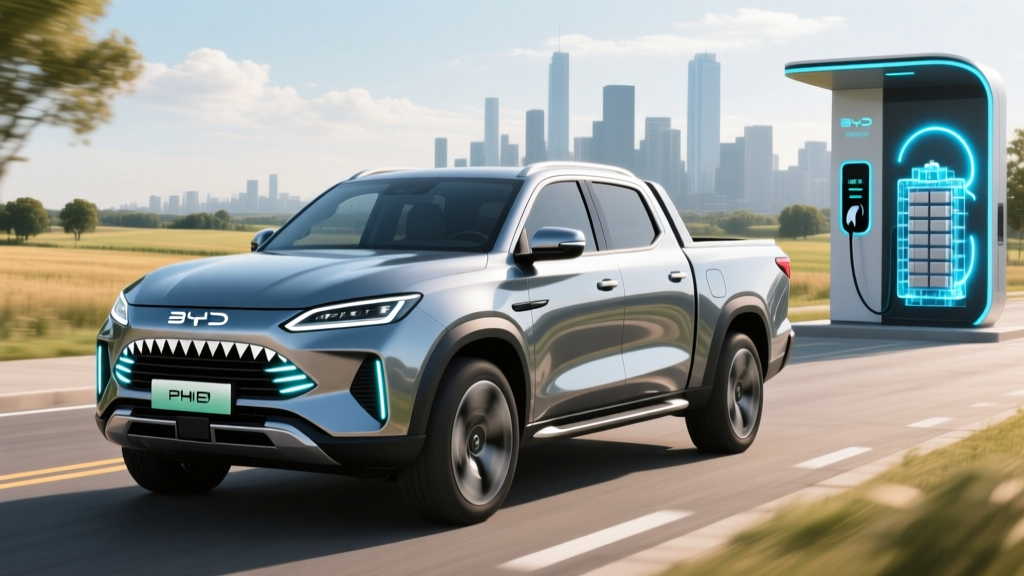
- BYD / LFP-equipped models: LFP (lithium iron phosphate) chemistry shows slower degradation — often under 5% at 100,000 miles, with 3,000+ full charge cycles before hitting 80% capacity
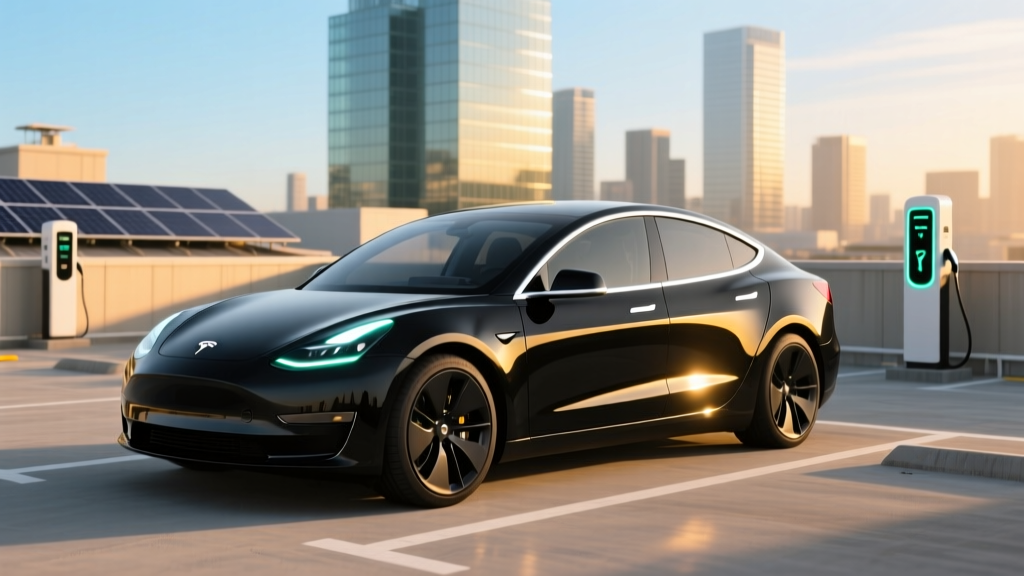
What this means practically: A 2026 Tesla Model 3 Long Range with an EPA range of 341 miles would likely deliver ~300 miles of real-world range at 200,000 miles of driving — still highly usable for daily commuting and road trips.
Battery Replacement: The Worst-Case Scenario
If a battery fails outside warranty, replacement costs remain steep:
- Tesla Model 3/Y: $12,000–$16,000 (pack + labor)
- Hyundai Ioniq 5: $14,000–$18,000
- Ford F-150 Lightning: $20,000–$30,000 (larger 131 kWh pack)
- Chevrolet Bolt EV (smaller 65 kWh pack): $8,000–$12,000
The silver lining: battery prices continue declining. BloombergNEF reports pack-level costs fell below $100/kWh in 2025, meaning replacement costs should continue dropping through the late 2020s. Additionally, independent shops now offer module-level repairs — replacing individual degraded cells rather than the full pack — for $2,000–$5,000.
Battery Warranty Coverage
Under federal law, every EV sold in the U.S. must carry a battery warranty of at least 8 years / 100,000 miles. In CARB states (California, New York, Massachusetts, Oregon, Washington, and others), that extends to 10 years / 150,000 miles. Most manufacturers guarantee the battery will retain at least 70% of original capacity during the warranty period. Some, like Hyundai, guarantee 70% or better; Tesla guarantees 70% retention.
Total Cost of Ownership: 5-Year EV vs. Gas Comparison
Longevity isn't just about whether the car still runs — it's about what you spend keeping it on the road. Here's a realistic 5-year / 75,000-mile comparison using a 2026 Tesla Model 3 Long Range (base MSRP $42,490) versus a comparably equipped 2026 Toyota Camry SE (base MSRP $30,995).
| Cost Category | 2026 Tesla Model 3 LR (BEV) | 2026 Toyota Camry SE (ICE) |
|---|---|---|
| Purchase price (MSRP) | $42,490 | $30,995 |
| Federal §30D tax credit (if eligible) | −$7,500* | $0 |
| Effective purchase price | $34,990 | $30,995 |
| Home Level 2 charger install | $800–$2,000 | $0 |
| Fuel / electricity (75,000 mi) | $2,625 (at $0.14/kWh, 3.5 mi/kWh) | $7,500 (at $3.50/gal, 35 MPG combined) |
| Maintenance (75,000 mi) | $600–$900 (cabin filter, wipers, tire rotation) | $2,800–$3,500 (oil, filters, brakes, belts) |
| Insurance (5-year total) | $9,500–$12,000 | $7,000–$9,000 |
| Estimated depreciation (5 yr) | $18,000–$22,000 | $12,000–$15,000 |
| Total 5-year cost | $51,000–$63,000 | $48,000–$58,000 |
*The §30D federal tax credit has strict eligibility requirements: buyer AGI caps ($150k single / $300k joint), vehicle MSRP caps ($55k sedans / $80k SUVs/trucks), and battery critical-mineral and component sourcing rules. Credit can be transferred to the dealer as a point-of-sale discount. Verify current eligibility at irs.gov or consult a tax professional.
Key takeaway: The EV breaks even or comes out slightly ahead over 5 years despite a higher sticker price, primarily through fuel and maintenance savings. The gap widens significantly at 10 years and 150,000 miles, where the gas car faces major service intervals (transmission fluid, spark plugs, potential timing chain work) while the EV continues with minimal scheduled maintenance.
Common Misconceptions: Myth vs. Fact
| Myth | Fact |
|---|---|
| "EV batteries need replacing every 5 years" | Modern packs are designed for 150,000–200,000+ miles with under 20% degradation. Most will outlast the car's economic life. |
| "EVs don't last in cold climates" | Cold reduces range by 15–30% temporarily (not permanent damage). Battery thermal management systems in 2025+ models actively heat and cool the pack. Norway — one of the coldest countries in Europe — has the highest per-capita EV adoption in the world. |
| "Electric motors wear out like gas engines" | Electric motors have no reciprocating parts, no combustion stress, and no lubrication breakdown. Failure before 300,000 miles is rare. |
| "EVs are worse for the environment because batteries wear out" | Battery recycling recovers 95%+ of critical minerals (Li, Co, Ni). A used EV battery at 70% capacity still has decades of second-life use in stationary storage before recycling. |
| "You'll save money immediately with an EV" | Higher upfront cost + home charger installation means the break-even point is typically 3–5 years. If you can't charge at home and rely on DC fast charging ($0.35–$0.55/kWh), fuel savings shrink significantly. |
| "All EVs qualify for the $7,500 tax credit" | Many do not. The §30D credit has MSRP caps, buyer income limits, and battery sourcing requirements that disqualify several popular models. Always check the fueleconomy.gov tax credit tool before purchasing. |
Real-World Ownership: What Actually Determines Longevity
Whether an EV or gas car "lasts longer" in your specific situation depends on several practical factors that spec sheets don't capture:
Home Charging Access
This is the single biggest predictor of EV ownership satisfaction and long-term battery health. Owners who charge at home on Level 2 (240V, 7–11 kW) keep their batteries in the optimal 20–80% state of charge, which minimizes degradation. If you live in an apartment without charging access and rely exclusively on DC fast charging, battery degradation accelerates — frequent 150–350 kW sessions generate heat stress that can add 2–5% extra capacity loss over 100,000 miles compared to home charging.
Climate and Thermal Management
Modern EVs with active liquid thermal management (Tesla, Hyundai/Kia, Ford, GM Ultium platform) handle extreme heat and cold far better than passively cooled early EVs. In Arizona summers or Minnesota winters, a 2026 EV with a heat pump and liquid-cooled pack will see temporary range reduction but minimal long-term degradation impact. Gas cars, meanwhile, face their own climate challenges: cold-start wear, road salt corrosion, and cooling system failures in summer heat.
Driving Patterns
EVs excel in stop-and-go city driving where regenerative braking recaptures energy and reduces brake wear. A gas car in city traffic suffers accelerated wear on brakes, transmission, and engine mounts. On sustained highway driving, gas cars operate at peak efficiency while EVs lose range to aerodynamic drag — but neither powertrain suffers unusual wear.
Resale and Depreciation Reality
EV depreciation has been steeper than gas cars in recent years, driven by rapid technology improvements and aggressive price cuts (notably by Tesla in 2023–2024). A 2026 Model 3 may lose 45–55% of its value over 5 years versus 35–45% for a Camry. However, as the EV market matures and battery longevity data becomes more established, this gap is narrowing. Certified pre-owned EV programs now include battery health certifications that support resale values.
Decision Framework: Should You Buy an EV or Stick With Gas?
Choose an EV if:
- You can charge at home (garage, driveway, or workplace Level 2) — this is the #1 predictor of satisfaction
- You plan to keep the car 5+ years — the higher upfront cost pays off through lower operating expenses over time
- Your daily commute is under 200 miles round-trip — covers 90%+ of American drivers, well within any modern EV's real-world range
- You qualify for the §30D tax credit — up to $7,500 point-of-sale discount significantly narrows the price gap
- You want to minimize maintenance hassle — no oil changes, no emissions tests, no timing belt replacements
- You drive in a city with stop-and-go traffic — regenerative braking saves brakes and recaptures energy
Choose a gas car or hybrid if:
- You can't charge at home or work — relying solely on public DC fast charging erodes savings and accelerates battery wear
- You regularly tow heavy loads or drive 400+ mile routes — gas/diesel still wins for heavy towing range and refueling convenience in rural areas
- You plan to keep the car under 3 years — EV depreciation may negate fuel savings in a short ownership window
- You live in an area with very limited public charging infrastructure — check the Alternative Fuels Data Center for charger density near your routes
- Your budget is under $30,000 and you need a new vehicle — new EV options below $30k remain limited in 2026 (the Chevrolet Equinox EV starts around $33,000 before incentives)
Consider a PHEV (Plug-In Hybrid) if:
- You want electric-only commuting (25–45 miles) but need gas-engine range for road trips
- You're not ready to commit to full electric but want to reduce fuel consumption by 40–60%
- Models like the Toyota RAV4 Prime (42 mi electric, 94 MPGe) or Jeep Wrangler 4xe (22 mi electric) offer a practical bridge
Frequently Asked Questions
How many miles can an electric car last?
Most modern EVs (2024–2026 model years) are engineered for 200,000+ miles of service life. The electric motor itself can exceed 500,000 miles. The limiting factor is the battery pack, which typically retains 70–85% of original capacity at 150,000–200,000 miles. With proper charging habits (20–80% daily range, avoiding frequent DC fast charging), many packs will deliver usable range well past 200,000 miles.
Is it more expensive to maintain an EV than a gas car?
No — significantly less expensive. Consumer Reports estimates EV owners spend roughly 50% less on maintenance over the vehicle's life compared to gas car owners. Over 150,000 miles, expect to spend $1,500–$2,500 on EV maintenance (cabin air filters, wiper fluid, tire rotations, brake fluid checks) versus $4,500–$7,000 for a gas car (oil changes, spark plugs, transmission fluid, timing belt, exhaust repairs, brake pads).
Do EV batteries degrade in cold weather?
Cold weather causes temporary range reduction (15–30% in freezing temperatures), not permanent battery damage. The battery's thermal management system warms the cells during charging and driving. Once the pack reaches operating temperature, range returns to normal. Permanent degradation from cold exposure alone is negligible in modern liquid-cooled battery packs.
What happens when an EV battery reaches end of life?
At 70% capacity, the battery is no longer optimal for vehicle use but has significant second-life value in stationary energy storage (home solar backup, grid stabilization). At true end of life, recyclers like Redwood Materials and Li-Cycle recover 95%+ of lithium, cobalt, nickel, and copper for reuse in new batteries. The battery is not "waste" — it's a resource stream.
Are EVs reliable long-term compared to Toyota or Honda gas cars?
Toyota and Honda have exceptional long-term reliability reputations built over decades. EVs from Tesla, Hyundai/Kia, and established automakers are building similar track records, but with fewer years of fleet data. The mechanical simplicity of EVs suggests they should match or exceed ICE reliability, but brand-specific build quality (panel gaps, software bugs, suspension components) still varies. Check IIHS safety ratings and J.D. Power dependability studies for model-specific data.
Does the federal tax credit still apply in 2026?
Yes, the §30D Clean Vehicle Credit remains available in 2026, offering up to $7,500 for qualifying new EVs. However, eligibility depends on: buyer AGI limits ($150,000 single / $300,000 joint filer), vehicle MSRP caps ($55,000 for sedans / $80,000 for SUVs, vans, and trucks), and battery component and critical mineral sourcing requirements that change annually. The credit can be transferred to the dealer as a point-of-sale price reduction. Always verify a specific vehicle's eligibility at fueleconomy.gov before purchase, as qualifying models can change.
The Bottom Line
Electric cars do last longer than gas cars at the powertrain level — the physics of fewer moving parts and less thermal stress is undeniable. The battery remains the wildcard, but 2026-era packs with NMC and LFP chemistry are proving far more durable than early EV skeptics predicted. When you factor in the 40–60% reduction in maintenance spending, lower per-mile fuel costs with home charging, and the elimination of emissions-system failures, the EV's longevity case is strong.
The honest caveat: if you can't charge at home, drive in extreme rural areas with sparse charging infrastructure, or need to tow heavy loads regularly, a gas car or hybrid remains the more practical long-term choice in 2026. Longevity isn't just about the machine — it's about whether the ownership experience remains practical and affordable for your specific life.