Quick Answer: Do Electric Bikes Have Gears?
Yes, most electric bikes have gears. The majority of e-bikes sold in the U.S. use traditional multi-speed bicycle drivetrains — typically 7, 8, 9, or even 11-speed cassettes — paired with either a rear hub motor or a mid-drive motor. However, some single-speed and continuously variable transmission (CVT) e-bikes exist, primarily in hub-motor commuter models. The gear system on an e-bike functions identically to a conventional bicycle: it multiplies your pedaling force to make climbing hills easier and high-speed cruising more efficient. The electric motor provides supplemental torque, but the mechanical gears still handle the rider-to-wheel power transfer on most designs.
How E-Bike Drivetrains Actually Work
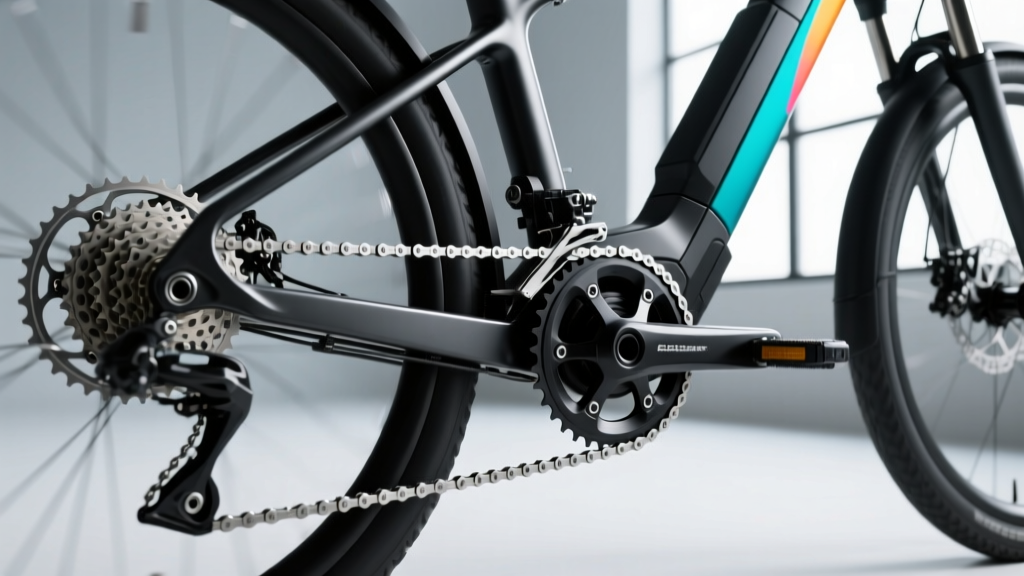
An electric bike's drivetrain consists of two parallel power systems: the human-power drivetrain (pedals, chain, cassette, derailleur) and the electric assist system (motor, battery, controller). Understanding how these interact is key to choosing the right e-bike.
Hub Motor E-Bikes
Hub motors sit inside the front or rear wheel hub and drive the wheel directly. On a hub-motor e-bike, the gears only affect the rider's pedaling effort — they don't change the motor's output. This means a 500W rear-hub motor delivers the same torque to the wheel regardless of which gear you're in. The gears help you pedal efficiently, while the motor adds a fixed level of assist. Hub-motor e-bikes often come with 7-speed Shimano Tourney or Altus drivetrains at the budget end ($1,200–$2,000) and 9-speed Shimano Alivio or SRAM systems on mid-range models ($2,000–$3,500).
Mid-Drive Motor E-Bikes
Mid-drive motors mount at the bike's bottom bracket and feed power through the chain and cassette. This is where gears become critical: the motor's torque is multiplied by whatever gear ratio you select. Shift into a low gear (large rear cog), and the motor's 85 Nm of torque gets amplified dramatically for steep climbs. Shift into a high gear, and you cruise efficiently at 25–28 mph. Mid-drive systems — like Bosch Performance Line CX (250W nominal, 85 Nm peak torque) and Shimano EP8 (250W nominal, 85 Nm) — almost always pair with 10, 11, or 12-speed cassettes. Expect to pay $3,500–$7,000+ for quality mid-drive e-bikes.
Single-Speed and CVT Options
A minority of e-bikes use single-speed or internally geared hub (IGH) drivetrains. Single-speed hub-motor e-bikes (like some models from Lectric or Ride1Up) rely entirely on the motor for hill-climbing, which works on flat terrain but struggles on grades above 8–10%. Enviolo CVT hubs offer stepless gear ratios with zero maintenance but add $300–$500 to the bike's price and introduce slight drivetrain efficiency losses (roughly 2–4% compared to a clean chain drive).
E-Bike vs Electric Car: Commuting Cost Comparison
Many EV shoppers research e-bikes as a complement or alternative to an electric car for short commutes. Here's how the numbers stack up for a 10-mile round-trip commute, 250 workdays per year (2,500 miles annually):
| Category | E-Bike (Class 1/2) | EV (2026 Hyundai Ioniq 6 SE) | Gas Car (30 MPG combined) |
|---|---|---|---|
| Energy/Fuel Cost | $18–$25 (500 kWh × $0.15/kWh ÷ efficiency) | $105–$140 (875 kWh × $0.12–$0.16/kWh) | $290–$375 (83 gal × $3.50–$4.50/gal) |
| Maintenance | $150–$300 (chain, brake pads, tires, tune-up) | $200–$350 (tire rotation, cabin filter, wiper fluid) | $400–$700 (oil changes, filters, brakes, belts) |
| Insurance | $0–$150 (optional specialty coverage) | $1,400–$2,200 (varies by state/driver) | $1,200–$2,000 |
| Parking | $0 (bike rack) | $0–$2,400 (urban garages) | $0–$2,400 |
| Total Annual Cost | $168–$475 | $1,705–$3,090 | $1,890–$5,475 |
An e-bike saves $1,500–$5,000 per year versus driving, depending on your local fuel prices, parking situation, and insurance rates. The trade-off: e-bikes expose you to weather, lack climate control, carry limited cargo, and aren't viable for highway-speed trips or passengers beyond one (on cargo models).
Real-World E-Bike Ownership: What First-Time Buyers Should Know
Battery Capacity and Range
E-bike batteries are measured in watt-hours (Wh) — the same energy unit used in EV batteries, just at much smaller scale. A typical e-bike battery holds 400–700 Wh (0.4–0.7 kWh), compared to 58–100 kWh in an electric car. Real-world range depends heavily on assist level, terrain, rider weight, and wind:
- 400 Wh battery, low assist, flat terrain: 40–55 miles
- 500 Wh battery, medium assist, mixed terrain: 25–40 miles
- 500 Wh battery, max assist, hilly: 15–25 miles
- 700 Wh battery, medium assist: 35–55 miles
Manufacturer-claimed ranges (often 60+ miles) assume minimal assist and ideal conditions. Plan for roughly 50–60% of the advertised maximum in real commuting with moderate assist.
Charging Time and Electrical Requirements
E-bikes charge from standard 120V household outlets using a dedicated charger (typically 2A–4A output). A fully depleted 500 Wh battery takes 3–5 hours to charge at 2A, or 1.5–2.5 hours with a fast 4A charger. Unlike EVs, e-bikes do not require a Level 2 home charger installation — any accessible outlet works. Electricity cost per full charge: roughly $0.06–$0.10 at the national average of $0.15/kWh. Annual charging cost for daily commuters: under $25.
Cold Weather Impact
Lithium-ion e-bike batteries lose 15–30% of their usable capacity in temperatures below 32°F (0°C), mirroring the range reduction EV owners experience in winter. Store your battery indoors and install it just before riding to mitigate cold-weather losses. Charging a frozen battery can cause permanent cell damage — always let the battery warm to above 40°F before plugging in.
E-Bike Purchase Cost Breakdown
| Item | Budget Hub-Motor | Mid-Range Mid-Drive | Premium Mid-Drive |
|---|---|---|---|
| Purchase Price | $1,200–$1,800 | $2,500–$4,000 | $4,500–$7,500 |
| Helmet (required in most states) | $50–$150 | $50–$150 | $50–$150 |
| Lock (U-lock, essential) | $40–$80 | $40–$80 | $40–$80 |
| Insurance (optional) | $0–$150/yr | $100–$200/yr | $150–$300/yr |
| First-Year Maintenance | $100–$200 | $150–$250 | $150–$300 |
| Charging (annual) | $15–$25 | $15–$25 | $15–$25 |
| First-Year Total | $1,405–$2,405 | $2,855–$4,705 | $4,905–$8,355 |
For context, the average new car payment in 2026 exceeds $730/month ($8,760/year) before fuel, insurance, and maintenance. Even a premium e-bike pays for itself within one year if it replaces car trips.
Common E-Bike Gear Myths — Fact-Checked
| Myth | Fact |
|---|---|
| "E-bikes don't need gears because the motor does all the work." | Gears reduce the load on both the rider and the motor. A mid-drive motor in the wrong gear draws excess current, draining the battery 20–30% faster and generating excess heat. Shifting properly extends range and motor life. |
| "More gears always means a better e-bike." | A well-tuned 9-speed drivetrain outperforms a poorly adjusted 12-speed. Gear range (the ratio between the easiest and hardest gear) matters more than gear count. A 10-speed with an 11-42T cassette offers a wider usable range than a 12-speed with an 11-34T cassette. |
| "Single-speed e-bikes are simpler and therefore better." | Single-speed hub-motor e-bikes work on flat routes under 5 miles but struggle on hills above 8% grade. The motor must work at maximum output continuously, overheating on sustained climbs. For any route with elevation change, gears are essential. |
| "E-bike gears wear out faster because of the motor." | Mid-drive motors do increase chain and cassette wear by roughly 30–50% compared to a non-electric bike, due to higher torque loads. Expect cassette replacement every 2,000–4,000 miles ($25–$80) and chain replacement every 1,500–3,000 miles ($15–$40). Hub-motor e-bikes don't add drivetrain wear at all. |
| "You can't shift gears while the motor is running." | You can and should shift while pedaling with motor assist. Bosch and Shimano mid-drive systems actually momentarily reduce motor torque during shifts (called "shift sensing") to protect the drivetrain. Hub-motor bikes allow shifting anytime since the motor is independent of the chain. |
Decision Framework: Which E-Bike Drivetrain Is Right for You?
Choose a Hub-Motor E-Bike (7–9 speed) If:
- Your commute is mostly flat (under 3% sustained grade)
- Your round-trip distance is under 20 miles
- Your budget is $1,200–$2,500
- You want minimal drivetrain maintenance (motor doesn't stress the chain)
- You ride primarily on bike paths and city streets
Choose a Mid-Drive E-Bike (10–12 speed) If:
- Your route includes hills (5%+ sustained grade) or mountains
- You want maximum range from a given battery size (gears optimize motor efficiency)
- You plan to carry heavy cargo or tow a trailer (cargo e-bikes almost always use mid-drive)
- Your budget is $3,000–$7,000+
- You value a natural pedaling feel — mid-drives feel more like riding a regular bike
Choose a Single-Speed or IGH E-Bike If:
- You ride exclusively flat urban routes under 8 miles
- You prioritize zero-maintenance simplicity over hill-climbing ability
- You're buying a lightweight folding e-bike for last-mile transit connections
E-Bike Classes and Legal Considerations
U.S. e-bikes fall into three classes defined by motor behavior and top speed, which affect where you can ride them:
- Class 1: Pedal-assist only (motor runs only when you pedal), tops out at 20 mph. Allowed on most bike paths and trails. Typically uses multi-speed drivetrains.
- Class 2: Throttle-equipped (motor runs without pedaling), tops out at 20 mph. Allowed on most roads and some paths. Often found on hub-motor models with 7–9 speeds.
- Class 3: Pedal-assist only, tops out at 28 mph. Restricted from many multi-use paths. Almost exclusively mid-drive or high-power hub-motor with 9–12 speeds.
Check your state and local regulations — some jurisdictions restrict Class 2 and 3 e-bikes from certain infrastructure, and helmet requirements vary. The National Highway Traffic Safety Administration provides federal classification guidance, but enforcement is state-level.
Frequently Asked Questions
Do e-bikes have automatic gears?
A few e-bikes use automatic shifting systems. The Enviolo AUTOMATiQ hub paired with Bosch motors shifts automatically based on pedaling cadence. Shimano's CUES automatic derailleur system also exists for e-bikes. However, automatic shifting adds $200–$600 to the price and can feel less responsive than manual shifting on steep climbs. Most e-bikes still use manual trigger or grip shifters.
Can I ride an e-bike without pedaling at all?
Class 2 e-bikes with a throttle can propel you without pedaling, up to 20 mph. However, using throttle-only mode drains the battery 30–50% faster than pedal-assist because you're drawing maximum current continuously. On a 500 Wh battery, throttle-only range drops to roughly 15–20 miles versus 30–40 miles with medium pedal assist. Gears don't matter in throttle-only mode on hub-motor bikes, but on mid-drive bikes, you should still select an appropriate gear to avoid motor strain.
How long do e-bike gears and chains last?
On a mid-drive e-bike ridden 2,500 miles/year with moderate assist, expect to replace the chain every 12–18 months ($15–$40) and the cassette every 24–36 months ($25–$80). On a hub-motor e-bike, chain and cassette life matches a regular bicycle: 3,000–5,000 miles for the chain and 8,000–12,000 miles for the cassette, since the motor doesn't load the drivetrain. Regular cleaning and lubrication extends component life by 40–60%.
Is an e-bike a practical replacement for a second car?
For households where the second car is used primarily for trips under 15 miles (groceries, school drop-off, commuting), a cargo e-bike can realistically replace it. Cargo e-bikes like the Rad Power RadWagon 5 ($2,099, 500W hub motor, 7-speed, 60+ mile claimed range) or the Tern GSD S10 ($5,799, Bosch mid-drive, 10-speed, dual-battery capable) carry 150–440 lbs of cargo. The annual savings of $1,500–$4,000 versus maintaining a second car (insurance, registration, fuel, maintenance) makes the payback period 1–3 years. The limitation: inclement weather, highway trips, and multi-passenger transport still require a car or EV.
Do e-bikes qualify for federal tax credits like electric cars?
As of 2026, e-bikes do not qualify for the federal §30D EV tax credit that applies to electric cars and PHEVs. However, the proposed E-BIKE Act (if enacted) would offer a 30% credit up to $1,500 on new e-bike purchases. Several states and cities currently offer their own e-bike rebates — Denver's e-bike rebate program offers $300–$1,400 depending on income and bike type, and California's CalBike program provides up to $1,750 for income-qualified residents. Check your state energy office or local air quality district for current programs.