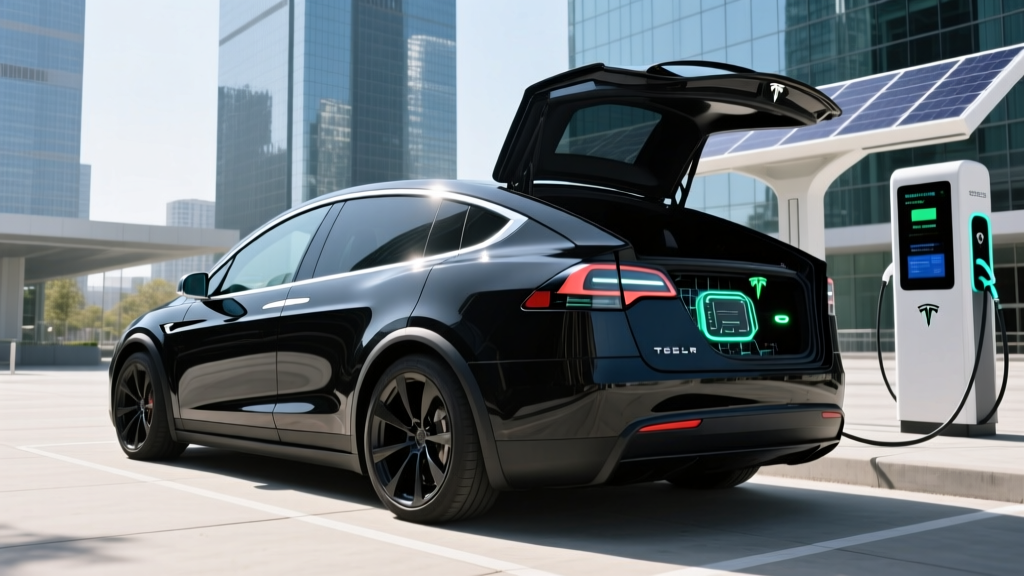
If you've searched for Tesla's flagship three-row SUV lately and noticed sparse inventory or long delivery windows, you may have wondered: did Tesla stop making Model X? The short answer is no. As of early 2026, the Tesla Model X remains in production at the Fremont, California factory and is available to order directly from Tesla. However, its role in Tesla's lineup has shifted dramatically, production volumes are lower than in peak years, and the competitive landscape around it has changed. This review covers exactly where the 2026 Model X stands — with real numbers on range, charging, pricing, and whether it still makes sense against newer rivals.
2026 Model X Production Status: What's Really Happening
Tesla has not discontinued the Model X. The vehicle continues to be built alongside the Model S at Fremont, and Tesla's configurator lists two primary trims: the Model X Long Range AWD and the Model X Plaid. What has changed is volume and priority. Tesla's manufacturing focus has shifted heavily toward the higher-volume Model Y, Cybertruck, and the refreshed Model 3, meaning Model X production runs are smaller and delivery timelines can stretch 6–12 weeks depending on configuration and region.
The 2026 Model X received minor iterative updates consistent with Tesla's rolling-refresh approach: a slightly revised interior materials palette, updated ambient lighting, and continued availability of the yoke or conventional round steering wheel. The powertrain, battery architecture, and exterior remain largely unchanged from the 2023–2025 refresh cycle. If you're considering one, it's very much a current product — just not Tesla's volume priority.
Range, Battery, and Real-World Efficiency
Real-World Expectation: Expect ~280–305 miles on mixed highway driving at 70–75 mph. In freezing temperatures (below 32°F), plan for 220–260 miles due to battery heating demands and cabin climate load. City driving with regenerative braking can push closer to the EPA sticker or slightly above.
The 2026 Model X Long Range AWD uses a ~100 kWh usable battery pack (gross capacity approximately 105 kWh) based on Tesla's 4680-architecture cells in a structural pack configuration. While Tesla does not publicly disclose exact chemistry splits for all trims, the Model X and Model S have historically used NMC (nickel manganese cobalt) chemistry rather than LFP, prioritizing energy density for the 300+ mile range target. NMC packs offer higher energy-per-kg but are more sensitive to sustained 100% state-of-charge storage — Tesla recommends daily charging to 80–90% for longevity.
| Spec | Long Range AWD | Plaid |
|---|---|---|
| EPA Range | 335 mi | 311 mi |
| Battery (usable) | ~100 kWh (NMC) | ~100 kWh (NMC) |
| Efficiency | 100 MPGe / 34 kWh/100mi | 98 MPGe / 35 kWh/100mi |
| 0–60 mph | 3.8 sec | 2.5 sec |
| Horsepower | 670 hp | 1,020 hp |
| Drivetrain | Dual-Motor AWD | Tri-Motor AWD |
| Top Speed | 155 mph | 163 mph |
| Towing Capacity | 5,000 lbs | 5,000 lbs |
Efficiency is the Model X's weak point relative to newer EVs. At roughly 34 kWh per 100 miles, the Model X consumes more energy per mile than a Hyundai Ioniq 9 (~28 kWh/100mi) or a Rivian R1S (~31 kWh/100mi). The culprit is the Model X's aerodynamic profile — despite a low drag coefficient for an SUV, its 5,100+ lb curb weight and large frontal area demand more energy at highway speeds. Per fueleconomy.gov, the Long Range AWD achieves approximately 100 MPGe combined.
Charging Speed: DC Fast Charge and Home Level 2
The 2026 Model X supports the North American Charging Standard (NACS) connector natively — no adapter needed for Tesla Superchargers. It also accesses third-party networks (Electrify America, EVgo) that have deployed NACS connectors or via a CCS adapter for legacy stations.
| Charging Level | Power / Rate | Time / Miles Added |
|---|---|---|
| Level 1 (120V household) | ~1.4 kW | ~3–4 mi/hr |
| Level 2 (240V home Wall Connector) | 11.5 kW (48A) | ~34 mi/hr; full charge in ~10 hrs |
| DC Fast Charge (V3 Supercharger) | Peak 250 kW | 10–80% in ~32 min; 175 mi in 15 min |
| DC Fast Charge (V4 Supercharger) | Peak 250 kW (vehicle-limited) | Same as V3 — Model X architecture caps at 250 kW |
A critical detail for road-trippers: the Model X's peak charge rate of 250 kW is a ceiling, not a sustained rate. In real-world testing, the charge curve tapers noticeably after 50% state of charge, and the 10–80% session averages closer to 150–170 kW. That translates to roughly 32 minutes for a 10–80% session when the battery is properly preconditioned via the onboard navigation routing to a Supercharger. Without preconditioning (e.g., arriving at a charger without navigation routing), expect significantly slower initial charge rates, especially in cold weather.
For home charging, Tesla's Gen 3 Wall Connector at 48 amps (11.5 kW) adds approximately 34 miles of range per hour. A full overnight charge from 20% to 90% takes about 7–8 hours on a 60-amp circuit. Installation costs for a Level 2 home setup typically run $800–$2,500 depending on panel capacity and conduit distance — always get a quote from a licensed electrician to confirm your panel can support a 60-amp dedicated circuit.
Performance and Driving Dynamics
The Model X Long Range AWD delivers 670 horsepower from its dual-motor setup, achieving a 3.8-second 0–60 mph time — quicker than nearly every three-row SUV on the market, gas or electric. The Plaid variant is absurdly fast: 1,020 horsepower from three motors, 2.5 seconds to 60 mph, making it the quickest production SUV ever built.
Driving dynamics are a mixed bag. The air suspension provides a comfortable highway ride with adjustable ground clearance (useful for light off-road or steep driveways), and the low center of gravity from the floor-mounted battery minimizes body roll. But at over 5,100 lbs, the Model X feels its weight through corners and during hard braking. The steering is precise but artificially weighted. This is a straight-line performer and comfortable cruiser, not a corner-carver.
Towing capacity is rated at 5,000 lbs — adequate for a small boat, motorcycle trailer, or lightweight camper, but below the Rivian R1S (7,700 lbs). Expect range to drop 30–50% when towing near maximum capacity at highway speeds.
Interior, Cargo, and Technology
The Model X seats up to seven passengers in a 2-3-2 configuration (five- and six-seat layouts are also available). Second-row legroom is generous at 41.1 inches, though the third row is best suited for children — adults will find 32.7 inches of legroom tight for long trips.
Cargo volume stands at 88.1 cubic feet behind the first row (seats folded), 42.5 cu ft behind the second row, and 15.8 cu ft behind the third row. The front trunk (frunk) adds 6.5 cu ft — useful for charging cables or groceries.
The 17-inch center touchscreen runs Tesla's proprietary infotainment OS, which remains one of the most responsive in the industry. Wireless phone mirroring is absent — Tesla uses its own app ecosystem. The 22-speaker audio system is excellent. Notable tech includes:
- Autopilot (standard): SAE Level 2 driver assistance with adaptive cruise, lane centering, and automatic emergency braking
- Full Self-Driving (Supervised) ($8,000 add-on or $99/month): Adds automated lane changes, intersection handling, and parking — but remains SAE Level 2, requiring full driver attention at all times
- Falcon-wing rear doors with ultrasonic obstacle sensing
- HEPA air filtration with Bioweapon Defense Mode
- Over-the-air software updates that regularly add features
Pricing, Tax Credits, and Ownership Cost
| Trim | Base MSRP | As-Tested (typical options) | §30D Federal Credit |
|---|---|---|---|
| Long Range AWD | $79,990 | $85,000–$92,000 | $0 (exceeds MSRP cap) |
| Plaid | $94,990 | $100,000–$110,000 | $0 (exceeds MSRP cap) |
The 2026 Model X does not qualify for the federal §30D EV tax credit. Under current IRS rules, SUVs must have a base MSRP at or below $80,000 to be eligible. The Long Range AWD starts at $79,990 — technically under the cap — but the mandatory destination fee ($1,390) and any added options push the effective price above the threshold. Additionally, the §30D credit imposes buyer income caps ($300,000 joint / $150,000 single filer AGI) and critical mineral and battery component sourcing requirements that further limit eligibility. Always verify current-year rules at irs.gov or consult a tax professional before making a purchase decision based on credit eligibility.
Some states offer additional rebates or incentives (California's CVRP, for example, has its own income and price caps) — check your state energy office or AFDC's state incentive database for details.
Warranty Coverage
Tesla covers the 2026 Model X with:
- Basic Vehicle Limited Warranty: 4 years / 50,000 miles
- Battery & Drive Unit Warranty: 8 years / 150,000 miles (whichever comes first), with a minimum 70% battery capacity retention guarantee over that period
The 150,000-mile battery warranty is competitive with Rivian's 8-year/175,000-mile coverage and slightly better than the industry standard of 8 years/100,000 miles. Tesla's long-term battery degradation data is among the best-documented in the industry — most Model S/X packs lose approximately 10–12% capacity over 150,000 miles based on owner fleet data.
Is the Model X Worth It vs. Competitors?
Pros
- Fastest SUV in production (Plaid: 2.5s 0–60)
- Access to Tesla Supercharger network (20,000+ stalls in North America)
- Falcon-wing doors are genuinely useful in tight parking spots
- Class-leading infotainment responsiveness and OTA updates
- Strong battery warranty (8yr/150,000mi)
- 5,000-lb towing capacity
Cons
- No federal tax credit eligibility (price above MSRP cap)
- Peak 250 kW DC charging trails newer 350 kW-capable rivals
- Third-row space is tight for adults
- High energy consumption (34 kWh/100mi) increases charging costs
- Falcon-wing doors can be slow and have had reliability complaints historically
- No Apple CarPlay or Android Auto
- Panel gaps and build quality inconsistencies still reported
Choose the Model X If:
- You need three rows and want the quickest acceleration available
- Supercharger network access is a top priority for road trips
- You value OTA software updates and Tesla's tech ecosystem
- Falcon-wing doors solve a real parking-garage problem for you
Look at Competitors Instead If:
- Tax credit eligibility matters — the Hyundai Ioniq 9 and certain Rivian R1S configurations may qualify
- You need faster DC charging — the Ioniq 9 and Kia EV9 support 350 kW peak rates
- Third-row adult comfort is essential — the Rivian R1S and Kia EV9 offer more usable third-row space
- You want Apple CarPlay/Android Auto integration
Who the Model X Suits Best
The 2026 Model X is a niche vehicle for a specific buyer: the family that wants Tesla's ecosystem and Supercharger access, needs occasional third-row seating for kids, and values performance above efficiency. It works well as a daily commuter and family hauler with excellent road-trip capability thanks to the Supercharger network. It's less ideal for buyers prioritizing maximum efficiency, tax-credit savings, or adult-friendly third rows. If you tow frequently, the 5,000-lb rating is adequate but not class-leading — consider the Rivian R1S for heavier loads.
Frequently Asked Questions
Did Tesla stop making the Model X?
No. The Tesla Model X remains in production at the Fremont factory as of 2026, available in Long Range AWD and Plaid trims. Production volumes are lower than Tesla's higher-priority models, and delivery windows can extend 6–12 weeks.
What is the real-world range of the 2026 Model X?
The EPA rates the Long Range AWD at 335 miles and the Plaid at 311 miles. In real-world highway driving at 70–75 mph, expect 280–305 miles. In freezing weather, range can drop to 220–260 miles due to battery thermal management and cabin heating demands.
How fast does the Model X charge?
On a Tesla V3/V4 Supercharger, the Model X peaks at 250 kW DC fast charging, achieving a 10–80% charge in approximately 32 minutes with battery preconditioning. At home on a Level 2 Wall Connector (11.5 kW), it adds about 34 miles of range per hour, with a full charge taking roughly 10 hours.
Does the Model X qualify for the federal EV tax credit?
Effectively, no. The IRS §30D credit caps SUV eligibility at $80,000 MSRP. While the Long Range AWD starts at $79,990, destination charges and options push it over the cap. The Plaid ($94,990) is well above the limit. Additionally, income caps ($300,000 joint / $150,000 single) and battery-sourcing requirements apply. Consult irs.gov or a tax professional for your specific situation.
Is the Model X worth buying over the Rivian R1S or Kia EV9?
It depends on your priorities. The Model X wins on acceleration, Supercharger access, and tech ecosystem. The Rivian R1S offers better off-road capability, more towing capacity (7,700 lbs), and a more conventional, rugged design. The Kia EV9 is significantly more affordable (starting ~$55,000), supports 350 kW charging, and may qualify for the federal tax credit. Test-drive all three before deciding.
How long will the Model X battery last?
Tesla warranties the battery for 8 years or 150,000 miles with a 70% capacity retention guarantee. Fleet data suggests most Model S/X packs retain 88–90% capacity at 150,000 miles. With proper charging habits (avoiding frequent 100% charges, using preconditioning), the battery should outlast 200,000+ miles before needing replacement. A full pack replacement currently costs approximately $18,000–$25,000 out of warranty.