The Quick Answer on Detroit Electric in 2026
Detroit Electric is not a currently active EV manufacturer. The original Detroit Electric brand produced battery-electric cars from 1907 to 1939, making it one of the earliest EV marques in history. A revival attempt led by Albert Lam launched the SP:01 sports car concept around 2013, but the company effectively stalled by 2017 and no vehicles are in production or on sale as of 2026. If you're searching for a Detroit Electric EV to buy today, no new or certified models are available — your options are limited to rare collector vehicles or the unrealized SP:01 prototype.
If you landed here researching Detroit Electric because you're shopping for an EV, you're not alone — the name still generates roughly 590 searches per month. This guide covers what Detroit Electric actually was, what happened to the revival, and what modern buyers should evaluate instead when looking for a practical electric vehicle in 2026.
What Was Detroit Electric? A Brief EV History
Detroit Electric was manufactured by the Anderson Electric Car Company in Detroit, Michigan, from 1907 to 1939. At its peak around 1914, the company sold over 4,000 electric vehicles per year — a remarkable figure for the era. These early EVs used lead-acid batteries (and later, Edison nickel-iron batteries as an option) and offered a range of approximately 80 miles on a charge, with a top speed around 20 mph.
The brand attracted buyers who valued quiet, clean, easy-to-operate transportation — particularly urban professionals and women drivers who preferred not to hand-crank a gasoline engine. Clara Ford, wife of Henry Ford, famously drove a Detroit Electric. The brand ultimately declined as gasoline cars became cheaper, more capable, and supported by expanding fuel infrastructure.
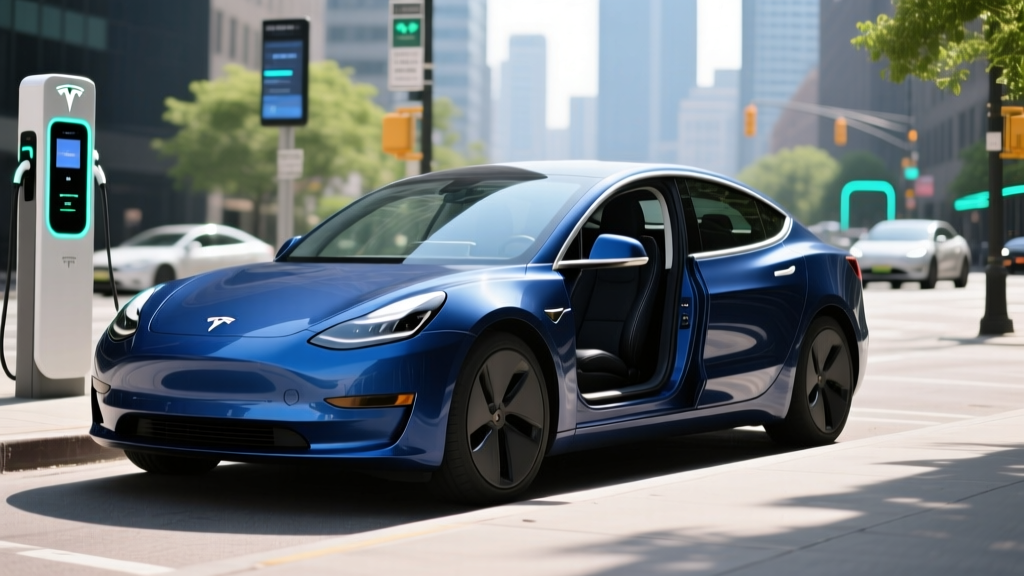
For context on how far EVs have come: a 2026 Tesla Model 3 Long Range delivers an EPA-estimated 363 miles of range with a 75 kWh battery pack — nearly 5x the energy capacity and vastly superior performance to anything Detroit Electric ever produced.
The SP:01 Revival: What Happened
In 2013, a Hong Kong-based company led by former Lotus Engineering executive Albert Lam acquired the Detroit Electric name and announced the SP:01, a limited-production electric sports car based on the Lotus Exige platform. The announced specifications were:
- Battery: 37 kWh lithium-polymer pack
- Range: ~180 miles (NEDC cycle, optimistic by modern EPA standards)
- Motor: 201 hp (150 kW) electric motor
- 0–60 mph: 3.7 seconds (claimed)
- Top speed: 155 mph
- Price: $135,000 (announced MSRP)
- Planned production: 999 units
Despite multiple press events and prototype showings, the SP:01 never reached meaningful production. By 2015, the company had reportedly produced only a handful of vehicles. Detroit Electric Holdings entered administration (the UK equivalent of bankruptcy) in 2017. As of 2026, the brand is effectively dormant with no announced future models, no active dealership network, and no parts or service infrastructure.
| Common Misconception | Fact |
|---|---|
| Detroit Electric is a current EV brand you can buy | The company ceased operations in 2017; no models are in production. |
| The SP:01 competed with Tesla Roadster | The SP:01 never reached production volume; fewer than a dozen were reportedly built. |
| Detroit Electric had modern battery tech | The revival used a 37 kWh pack — modest even for 2013, and far below 2026 standards. |
| You can get service for a Detroit Electric vehicle | No authorized service network exists; any surviving vehicles are collector items. |
What Modern EV Buyers Should Consider Instead
If the Detroit Electric name drew you in because you're researching an EV purchase, here's what the 2026 market actually offers. The EV landscape has matured dramatically, with dozens of models spanning price points from ~$28,000 to $100,000+.
| Factor | 2026 EV (e.g., Hyundai Ioniq 6 SE) | 2026 Gas Sedan (e.g., Toyota Camry LE) |
|---|---|---|
| Base MSRP | $37,500 | $28,500 |
| Fuel/Energy Cost (15,000 mi/yr) | ~$540/yr (home charging at $0.14/kWh) | ~$1,650/yr (30 MPG at $3.30/gal) |
| EPA Range / Tank Range | 361 mi (EPA) | ~510 mi (13.2-gal tank) |
| Maintenance (annual avg) | ~$300 | ~$650 |
| Federal Tax Credit (§30D) | Up to $7,500 (eligibility varies) | None |
| 5-Year Fuel + Maintenance | ~$4,200 | ~$11,500 |
The Hyundai Ioniq 6, Tesla Model 3, Chevrolet Equinox EV, and Ford Mustang Mach-E represent the mainstream EV options in 2026 — all with active dealer networks, available service, proven battery durability, and current eligibility evaluation for the §30D federal tax credit (subject to MSRP caps, income limits, and battery-sourcing requirements that vary by model year).
Real-World Ownership: What First-Time EV Buyers Must Know
Whether you're drawn by EV history or considering a modern electric car, these ownership factors determine whether an EV works for your life:
Home Charging Access
Over 80% of EV charging happens at home. A Level 2 home charger (240V, 32–48 amps / 7.7–11.5 kW) adds roughly 25–37 miles of range per hour and fully replenishes most EVs overnight. Installation costs typically range from $800 to $2,500 if your electrical panel has capacity, or $3,000–$5,000 if a panel upgrade to 200A is needed. If you live in an apartment or lack dedicated parking, public charging dependency increases your cost and inconvenience significantly.
Climate and Range Reality
EPA range estimates are measured in moderate conditions. In cold weather (below 30°F), expect 15–30% range reduction due to battery chemistry limitations and cabin heating demands. Highway driving at 75+ mph also reduces range by approximately 10–15% versus the EPA combined cycle. A vehicle rated at 300 miles EPA may deliver 210–250 miles in winter highway conditions. EVs with heat pumps (standard on most 2026 models from Hyundai, Kia, Tesla, and others) mitigate this loss by ~5–8 percentage points.
Charging Speed and Road Trips
Modern DC fast charging peaks between 150–350 kW depending on the vehicle. A 2026 Hyundai Ioniq 5 can charge from 10–80% in approximately 18 minutes at a 350 kW station, adding ~200 miles. However, charging speed tapers significantly above 80% State of Charge (SoC) to protect battery health — the final 20% can take as long as the first 80%. Plan road trips around 10–80% charging windows for optimal efficiency.
Insurance and Depreciation
EV insurance premiums run 15–25% higher than comparable gas vehicles on average, driven by higher repair costs and specialized parts. Depreciation has also been steeper for EVs in recent years due to rapid technology advancement and price competition — expect 40–55% value retention after 3 years for mainstream models, versus 50–60% for equivalent gas vehicles. These costs partially offset fuel savings in ownership calculations.
Decision Framework: Is a Modern EV Right for You?
- Choose an EV if: You have home charging access, drive under 300 miles daily, live in a moderate or warm climate, and want to minimize fuel/maintenance costs over 5+ years of ownership.
- Choose a PHEV if: You lack reliable home charging, frequently drive 300+ miles in a day, or live in extreme cold where range loss is a concern. Models like the Toyota RAV4 Prime (42 mi electric-only, 38 MPG combined after depletion) bridge both worlds.
- Choose a gas/hybrid if: You have no charging access at home or work, regularly tow heavy loads, or plan to keep the vehicle under 3 years where EV depreciation may outweigh fuel savings.
- Wait if: You're considering a niche or startup brand with no service network (like the dormant Detroit Electric). Established manufacturers with proven battery warranties (8 years/100,000 miles is standard) offer far lower risk.
Frequently Asked Questions
Can I buy a Detroit Electric vehicle in 2026?
No. Detroit Electric is not an active manufacturer. The original company operated from 1907–1939, and the 2013 SP:01 revival attempt failed by 2017. Only collector-grade examples of the original vehicles exist, and the SP:01 never reached meaningful production.
What happened to the Detroit Electric SP:01?
The SP:01 was announced in 2013 as a $135,000 limited-production electric sports car. Despite prototypes and press coverage, fewer than a dozen units were reportedly completed before the company entered administration in 2017. No vehicles are available through any dealership or direct sales channel today.
How does a modern EV compare to what Detroit Electric offered?
The gap is enormous. The original Detroit Electric offered ~80 miles of range at 20 mph with lead-acid batteries. A 2026 mainstream EV like the Chevrolet Equinox EV delivers 319 EPA miles, 213 hp, DC fast charging to 150 kW (10–80% in ~30 min), and a starting price around $33,000 — with available federal tax credits potentially reducing the net cost further.
What's the most reliable EV brand to buy in 2026?
Based on long-term battery data and service network coverage, Tesla (Model 3/Y), Hyundai/Kia (Ioniq 5/6, EV6/EV9), and BMW (i4, iX) consistently rank well for battery durability and ownership satisfaction. All offer 8-year/100,000-mile battery warranties with a guaranteed capacity retention threshold (typically 70%). Always verify current IRS §30D tax credit eligibility before purchasing, as sourcing requirements change annually.
Are vintage Detroit Electric cars worth collecting?
For automotive historians, yes — surviving examples (fewer than a few hundred are believed to exist) can sell for $20,000–$80,000 at auction depending on condition and provenance. However, they are not practical transportation: parts are scarce, lead-acid battery replacement is costly, and performance is limited to neighborhood-speed driving.