The Short Answer on Detroit Electric Cars
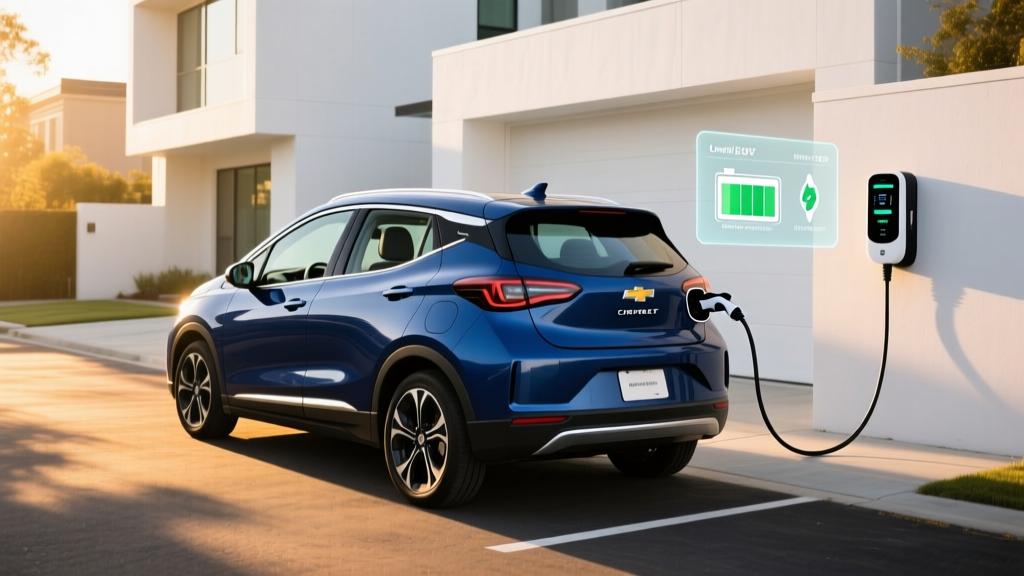
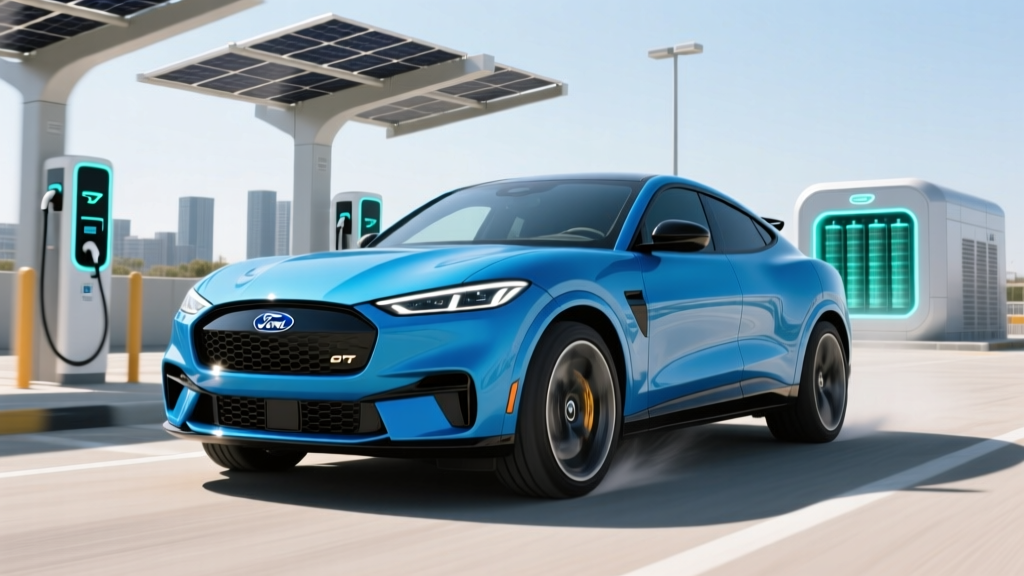
If you're searching for a Detroit electric car built in or around the Motor City, your main options in 2026 are the Chevrolet Equinox EV (built at GM's Factory ZERO in Detroit-Hamtramck, starting around $33,600 with up to 319 miles EPA range), the Ford F-150 Lightning (assembled at the Rouge Electric Vehicle Center in Dearborn, starting ~$55,000 with up to 320 miles range), and the upcoming Dodge Charger Daytona EV (announced for Stellantis' Windsor, Ontario plant, estimated 317+ miles range). GM's Factory ZERO also produces the GMC Sierra EV and Chevrolet Silverado EV. No vehicle is currently branded "Detroit Electric" — that name belongs to a defunct startup that never reached meaningful production.
What "Detroit Electric Car" Actually Means Today
The phrase "Detroit electric car" pulls in two directions. Historically, it refers to the Detroit Electric brand — an early 1900s electric vehicle manufacturer that produced cars between 1907 and 1939, briefly revived as a modern startup around 2008-2013 (producing a handful of the SP:012 sports car prototype) before fading into obscurity. That company has no current production, no dealership network, and no vehicles you can buy in 2026.
More practically, most searchers using this term are looking for one of two things: electric vehicles manufactured in the Detroit metro area, or EVs available to buy from dealerships in Detroit and southeastern Michigan. Both questions have real answers, because Detroit's Big Three automakers — GM, Ford, and Stellantis — all produce or are ramping up electric vehicle production at plants in and around the city.
Here's the manufacturing reality as of early 2026:
- GM Factory ZERO (Detroit-Hamtramck Assembly): Produces the GMC Hummer EV Pickup, Chevrolet Silverado EV, and GMC Sierra EV. This $2.2 billion retooled facility is GM's flagship EV plant.
- Ford Rouge Electric Vehicle Center (Dearborn, MI): Produces the F-150 Lightning. Located just outside Detroit proper but firmly in the metro manufacturing footprint.
- Stellantis Mack Avenue Assembly (Detroit): Currently produces the Jeep Grand Cherokee (ICE/PHEV). The Windsor, Ontario plant (across the river) is slated for the Dodge Charger Daytona EV.
- Orion Assembly (Orion Township, MI): Previously built the Chevy Bolt EV/EUV; retooling for future GM EV truck production.
2026 Detroit-Built EVs: Specs, Range, and Pricing
Let's look at the electric vehicles you can actually buy from Detroit-area dealers right now, with exact numbers.
| Model | EPA Range | Battery | Max DC Charge | 10-80% Time | 0-60 mph | Starting MSRP |
|---|---|---|---|---|---|---|
| Chevy Equinox EV (LT) | 319 mi | ~85 kWh (NMC) | 150 kW | ~30 min | ~8.0 sec | $33,600 |
| Chevy Equinox EV (RS AWD) | 285 mi | ~85 kWh (NMC) | 150 kW | ~30 min | ~7.0 sec | $41,000 |
| Chevy Silverado EV (4WT) | ~390 mi (est.) | ~200 kWh (NMC) | 350 kW | ~20 min | ~4.5 sec (RST) | $39,900 (WT) |
| GMC Sierra EV (Denali) | 440 mi (est.) | ~200 kWh (NMC) | 350 kW | ~20 min | ~4.3 sec | $99,495 |
| Ford F-150 Lightning (Std) | 240 mi | 98 kWh (NMC) | 150 kW | ~36 min | ~7.9 sec | $55,090 |
| Ford F-150 Lightning (Ext) | 320 mi | 131 kWh (NMC) | 150 kW | ~41 min | ~3.8 sec (XLT) | $69,090 |
| GMC Hummer EV Pickup | 329 mi | ~212 kWh (NMC) | 350 kW | ~22 min | ~3.0 sec | $98,845 |
Note: Range figures are EPA estimates. Real-world highway driving at 70+ mph typically reduces range by 10-15%. In Michigan winters (20-30°F), expect an additional 20-30% range reduction due to battery chemistry and cabin heating demands. The Silverado EV and Sierra EV figures are preliminary for trims still ramping production.
Real-World Range Reality for Michigan Drivers
A Chevy Equinox EV rated at 319 miles EPA will realistically deliver ~250-270 miles on a summer highway trip at 75 mph, and ~190-220 miles in January when temperatures hover around 25°F. This isn't a defect — it's lithium-ion chemistry. Cold temperatures slow ion movement in the battery, and resistive cabin heating draws 2-4 kW continuously. If your daily round-trip commute in metro Detroit is under 60 miles, even winter range covers you comfortably with a nightly Level 2 top-up.
EV vs. Gas: Detroit Ownership Cost Breakdown
Southeastern Michigan drivers face some of the highest auto insurance rates in the country, which affects the EV cost equation. Let's compare a Chevy Equinox EV LT ($33,600 MSRP) against a comparable Chevy Equinox Gas LT AWD (~$30,400 MSRP) over 5 years and 75,000 miles, assuming Detroit-area conditions.
| Cost Category (5 Years) | Equinox EV LT | Equinox Gas AWD |
|---|---|---|
| Purchase Price | $33,600 | $30,400 |
| Federal Tax Credit (§30D) | -$7,500* | $0 |
| Effective Purchase | $26,100 | $30,400 |
| Energy/Fuel (75k mi) | $3,750 (home L2) | $7,500 (gas at $3.50/gal, 28 MPG) |
| Maintenance | $1,200 | $3,500 |
| Insurance (Detroit avg.) | $12,500 | $10,000 |
| 5-Year Total Cost | $43,550 | $51,400 |
*The $7,500 federal tax credit under IRS §30D requires meeting income caps ($150K single / $300K joint AGI), MSRP caps ($55K for SUVs/trucks), and battery critical-mineral/sourcing rules that change annually. As of 2026, the Equinox EV qualifies for the full credit at point of sale for eligible buyers. Confirm your eligibility with a tax professional or the IRS website before purchase.
The takeaway: Despite higher insurance costs in metro Detroit (EV insurance premiums run 15-25% higher on average, per industry data), the Equinox EV still saves roughly $7,850 over 5 years when the federal credit applies. Without the credit — due to income phase-outs or sourcing-rule changes — the gap narrows to about $350, making the gas Equinox marginally cheaper. Your mileage, electricity rate, and insurance tier will shift these numbers.
Charging at Home in Detroit: What You Actually Need
Home charging access is the single biggest factor in EV satisfaction. Detroit's housing stock — a mix of older single-family homes, apartments, and condos — creates specific challenges.
| Level | Power | Miles Added/Hour | Equipment Cost | Install Cost |
|---|---|---|---|---|
| Level 1 (120V outlet) | 1.4 kW | ~4 mi/hr | $0 (included cord) | $0 |
| Level 2 (240V, 32A) | 7.7 kW | ~25 mi/hr | $300-$600 | $500-$1,500 |
| Level 2 (240V, 48A) | 11.5 kW | ~37 mi/hr | $400-$800 | $800-$2,500 |
| DC Fast Charge (public) | 50-350 kW | ~150-800 mi/hr | N/A | $0.30-$0.55/kWh |
For most Detroit EV owners, a 32-amp Level 2 home charger on a 240V circuit is the sweet spot. It fully replenishes an Equinox EV's 85 kWh battery overnight (~11 hours from empty, though you'll rarely arrive home below 20%). Expect to pay $800-$1,500 total for the charger unit plus a licensed electrician to run a NEMA 14-50 outlet, assuming your electrical panel has capacity.
Panel upgrade gotcha: Many older Detroit homes have 100-amp electrical service. Adding a 40-amp EV circuit may require a panel upgrade to 200 amps, which adds $1,500-$3,000 to installation. Always have an electrician assess your panel before buying a charger. DTE Energy occasionally offers rebates for residential EV charger installations — check their current programs.
If you live in an apartment or condo without dedicated parking and charging access, your EV experience will depend heavily on public infrastructure. Detroit's public charging network is growing but still sparse compared to coastal cities. The Alternative Fuels Data Center maps all public stations. Electrify America, EVgo, and ChargePoint operate DC fast chargers along I-94, I-75, and at select retail locations in metro Detroit.
Common Detroit EV Myths vs. Facts
| Myth | Fact |
|---|---|
| "EVs can't handle Michigan winters" | Range drops 20-30% in cold, but an Equinox EV with 319 mi EPA still delivers ~200+ mi real-world in January — plenty for most commutes. Preconditioning while plugged in recovers significant efficiency. |
| "The battery will need replacing in 5 years" | GM and Ford warranty their EV batteries for 8 years/100,000 miles with a minimum 70% capacity retention threshold. Industry data shows most NMC batteries retain 85-90% capacity at 100k miles. |
| "There's nowhere to charge in Detroit" | Metro Detroit has 400+ public charging ports as of 2026 (AFDC). Home charging covers 80%+ of driving for most owners with a garage or driveway. |
| "The $7,500 tax credit is automatic" | It requires meeting IRS income caps, MSRP limits, and battery sourcing rules. The credit can be transferred at point of sale for an instant discount, but only if all criteria are satisfied. Check IRS §30D guidelines. |
| "EVs are slower than gas cars" | The F-150 Lightning Extended Range hits 0-60 in ~3.8 seconds. The Hummer EV does it in ~3.0 seconds. Electric motors deliver instant torque — EVs are generally quicker than their gas counterparts at similar price points. |
| "Charging takes forever" | At a 150 kW DC fast charger, the Equinox EV adds ~150 miles in 20 minutes. The Silverado EV at 350 kW can add ~100 miles in under 10 minutes. Plan rest stops around charging, not the other way around. |
Decision Framework: Which Detroit EV Fits Your Life?
Choose based on your actual driving pattern:
Choose the Chevy Equinox EV if: Your daily driving is under 80 miles round-trip, you have access to home Level 2 charging, your budget is $30K-$45K, and you want the lowest total cost of ownership in the Detroit EV lineup. Best for commuters, small families, and urban drivers.
Choose the Ford F-150 Lightning if: You need a truck for work or towing (max tow: 10,000 lbs with extended range), you value the Pro Power Onboard feature (turns the truck into a mobile generator for job sites or tailgating), and your budget allows $55K+. Best for tradespeople, outdoor enthusiasts, and families who tow.
Choose the Chevy Silverado EV or GMC Sierra EV if: You need maximum range (390-440 miles EPA) for long highway runs across Michigan or to neighboring states, you need heavy-duty truck capability, and budget is less of a concern (especially for the Sierra Denali at ~$99K). Best for long-distance drivers and premium truck buyers.
Wait for the Dodge Charger Daytona EV if: You want a performance coupe from a Detroit brand with Stellantis heritage. It's announced but not yet on sale — expect availability late 2026 or 2027. Preliminary specs suggest 317+ miles of range and sub-4-second 0-60 times for the Scat Pack variant.
Consider a PHEV instead if: You lack reliable home charging access, frequently drive 300+ miles in a single day through rural Michigan with sparse charging, or your budget is under $30K. A plug-in hybrid like the Jeep Wrangler 4xe (built in Toledo, OH, close to Detroit) offers 22 miles of electric-only range for daily errands with gas backup for road trips.
First-Time EV Buyer Checklist for Detroit
If you've never owned an electric vehicle, here's what to sort out before you sign paperwork:
- Confirm home charging feasibility. Do you have a garage, carport, or driveway with access to a 240V outlet or room for an electrician to install one? If you park on the street or in a garage without EV infrastructure, public charging alone will be expensive ($0.30-$0.55/kWh at DC fast chargers vs. ~$0.17/kWh residential DTE rates) and inconvenient.
- Get an electrical panel assessment. A licensed electrician can tell you in 15 minutes whether your panel supports a Level 2 circuit or needs an upgrade. Budget $500-$2,500 for standard install, $2,000-$4,500 if a panel upgrade is required.
- Verify your tax credit eligibility. Check the IRS §30D page for current income caps, MSRP limits, and battery sourcing requirements. Ask the dealer to confirm the specific VIN qualifies at point of sale.
- Get insurance quotes before buying. Detroit insurance rates are among the highest in the US. EV premiums typically run 15-25% higher than equivalent gas models. Get a firm quote from your insurer on the exact trim you're considering.
- Understand the charge curve. DC fast charging doesn't sustain peak speed. A "150 kW max" charger will deliver 150 kW only between roughly 10-50% state of charge, then taper to 80 kW, then 40 kW above 80%. This is why 10-80% times are the standard metric — charging from 80-100% can take as long as 10-80%.
- Plan for winter. Buy a Level 2 home charger and learn to precondition your battery and cabin while still plugged in. This warms the battery chemistry before departure, recovering 10-15% of cold-weather range loss and reducing energy draw from the battery during your drive.
Frequently Asked Questions
Is there a car company called "Detroit Electric" I can buy from?
No. The original Detroit Electric company built EVs from 1907-1939. A modern revival attempt (2008-2013) produced a handful of prototype sports cars but never reached production. There is no current "Detroit Electric" brand selling vehicles. If you want an EV built in Detroit, look at GM's Factory ZERO products (Chevy Silverado EV, GMC Sierra EV, GMC Hummer EV) or Ford's F-150 Lightning from Dearborn.
What's the cheapest Detroit-area EV I can buy in 2026?
The Chevrolet Equinox EV LT starts at approximately $33,600 MSRP. With the full $7,500 federal tax credit applied at point of sale, the effective price drops to around $26,100 — making it one of the most affordable new EVs in the US market. Availability at metro Detroit dealerships has improved significantly since the 2024 launch.
Can I charge an EV on a regular 120V outlet in my Detroit garage?
Yes, but slowly. Level 1 charging at 120V/12A delivers about 1.4 kW, adding roughly 4 miles of range per hour. For an Equinox EV with an 85 kWh battery, a full charge from empty would take over 60 hours. This works if your daily driving is under 30 miles and you plug in every night, but most owners install a 240V Level 2 charger for practical daily use.
How do Michigan winters affect EV battery longevity?
Cold weather reduces range temporarily but does not significantly accelerate long-term battery degradation. Modern EVs use active thermal management systems that keep the battery in its optimal temperature range. GM and Ford both warrant their EV batteries for 8 years/100,000 miles with a minimum 70% capacity retention. Real-world data from earlier-generation EVs in cold climates suggests most batteries retain 85-90% capacity well past the warranty period.
Are there any Detroit-built EVs with over 400 miles of range?
The GMC Sierra EV Denali Edition 1 targets 440 miles of EPA range with its ~200 kWh Ultium battery, and the Chevy Silverado EV RST targets approximately 390-440 miles. However, both are premium-priced ($80K-$100K+) and availability has been limited. For a sub-$40K vehicle, the Equinox EV's 319 miles is among the best in its class.
Is the Dodge Charger Daytona EV available to order?
As of early 2026, the Dodge Charger Daytona EV is announced but not yet available for delivery. Stellantis has shown the production vehicle and shared preliminary specs (estimated 317+ miles range, up to 670 hp in Scat Pack trim), but production at the Windsor, Ontario assembly plant has not begun at scale. If you need a vehicle now, this isn't it — but it's worth watching if you want a Detroit-brand electric muscle car.