Define EREV: The Electrified Vehicle That Bridges Two Worlds
If you've been researching electrified vehicles, you've likely encountered the acronym EREV and wondered how it differs from a plug-in hybrid or a pure battery-electric vehicle. To define EREV precisely: an Extended-Range Electric Vehicle is a car that drives exclusively on electric power at all times, using an onboard gasoline generator solely to recharge the battery when it runs low — never to turn the wheels directly.
This distinction matters enormously for buyers. Unlike a conventional PHEV, where the gas engine can mechanically drive the wheels under heavy load or at highway speeds, an EREV's engine functions purely as a mobile power plant. The driving experience is 100% electric — smooth, instant torque, one-pedal regen — while a small internal-combustion generator eliminates the range anxiety that keeps some shoppers from going fully electric.
For 2026, the EREV segment is gaining serious traction in the U.S. market, led by models like the Mazda MX-30 R-EV (available in limited markets), the Ram 1500 REV with its optional range-extender powertrain, and a wave of incoming platforms from Stellantis and GM. Chinese automakers like BYD and Li Auto have already proven the concept at massive scale overseas, and that technology is now arriving stateside.
How an EREV Powertrain Actually Works
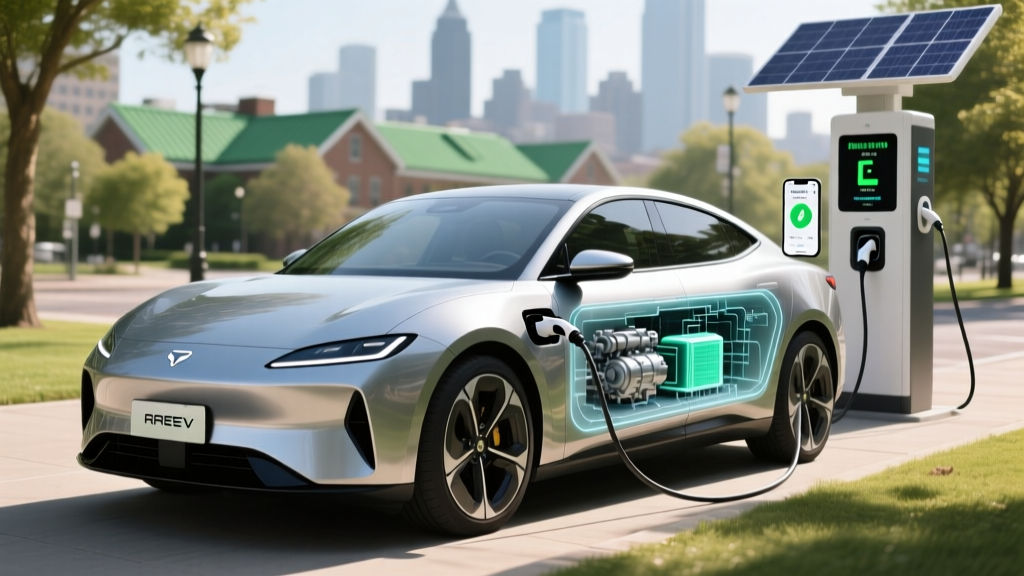
Understanding the EREV architecture requires separating propulsion from power generation. Here's the mechanical flow:
- Battery powers the electric motor(s) — the only source of wheel propulsion, just like a BEV.
- Gasoline generator activates when battery State of Charge (SoC) drops to a threshold (typically 10-15%).
- Generator produces electricity that either feeds the motor directly or tops up the battery.
- No mechanical linkage exists between the engine and the drivetrain — no transmission, no driveshaft connection.
This is fundamentally different from a PHEV like the Toyota RAV4 Prime, where the 2.5-liter four-cylinder can clutch into the transaxle and physically spin the front wheels. In an EREV, the engine might be a 1.5-liter turbo running at its most efficient RPM range (often an Atkinson or Miller cycle), optimized purely for electrical generation rather than variable-speed propulsion.
The engineering advantage is simplicity in the drivetrain and the ability to run the generator at peak thermal efficiency — typically 35-40% — since it doesn't need to respond to throttle transients. The tradeoff is the energy-conversion loss of going from chemical fuel → mechanical rotation → electricity → mechanical rotation, versus a direct mechanical path.
EREV vs. PHEV vs. BEV: Which Architecture Fits Your Life?
| Attribute | BEV (Battery Electric) | EREV (Extended-Range) | PHEV (Plug-In Hybrid) |
|---|---|---|---|
| Wheels driven by | Electric motor only | Electric motor only | Motor + gas engine |
| Gas engine role | None | Generator only | Propulsion + generation |
| Electric-only range | 200-400+ mi (full battery) | 30-80 mi (smaller battery) | 25-50 mi |
| Total range (with gas) | N/A — electric only | 400-600+ mi | 400-550 mi |
| Driving feel | Pure EV, silent, instant torque | Pure EV, generator hum audible when active | EV-like at low speed, engine feel at highway |
| Tailpipe emissions (EV mode) | Zero | Zero (generator off) | Zero (engine off) |
| Maintenance | Minimal — no engine | Engine oil/filter + EV components | Full engine + EV maintenance |
The EREV occupies a specific niche: drivers who want a pure electric daily commute (30-70 miles covers roughly 80% of American commutes, per FHWA travel data) but need the security net of gasoline for longer road trips without relying on DC fast-charging infrastructure.
2026 EREV Models: Specs, Range, and Charging
The U.S. EREV market is still young but expanding. Here's a detailed look at the most prominent current and confirmed-upcoming EREV platforms available to American buyers:
| Spec | Ram 1500 REV (Range-Extender) | Mazda MX-30 R-EV |
|---|---|---|
| Battery (usable) | ~92 kWh NMC | 17.8 kWh NMC |
| Electric-only range (EPA est.) | ~145 mi (EREV mode, generator available) | ~50 mi (est.) |
| Total range with generator | ~690 mi | ~370 mi |
| Generator engine | 3.6L V6 Pentastar | 830cc rotary (Wankel) |
| Horsepower | ~654 hp (dual motor) | ~170 hp |
| 0-60 mph | ~4.4 sec | ~7.9 sec |
| DC fast-charge peak | ~150 kW | ~50 kW |
| 10-80% DC time | ~30 min | ~25 min |
| Level 2 home charge | 11.5 kW (~30 mi/hr) | 7.2 kW (~18 mi/hr) |
| Drivetrain | AWD (dual motor) | FWD |
| Base MSRP | ~$62,000 | ~$36,000 (est.) |
| Body style | Full-size pickup | Subcompact crossover |
Charging an EREV: What Owners Need to Know
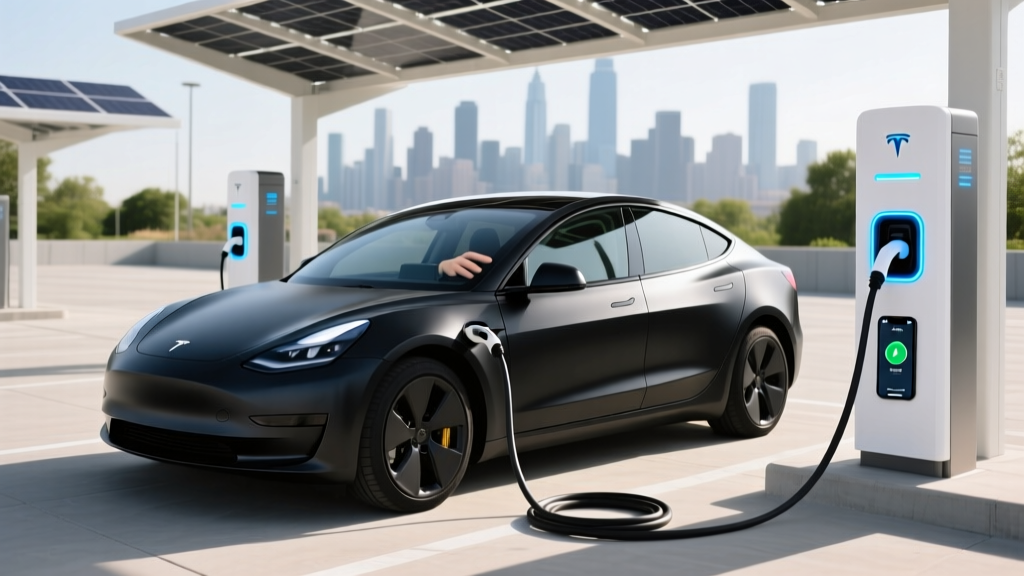
Because EREVs typically carry smaller batteries than full BEVs (with the Ram 1500 REV being a notable exception), charging dynamics differ in practical ways that affect your daily routine and home electrical setup.
| Charging Level | Power (kW) | Ram 1500 REV (~92 kWh) | Mazda MX-30 R-EV (~17.8 kWh) |
|---|---|---|---|
| Level 1 (120V outlet) | ~1.4 kW | ~3 mi/hr — full charge in ~65 hrs | ~4 mi/hr — full charge in ~5 hrs |
| Level 2 (240V, home) | 7.2-11.5 kW | ~30 mi/hr — full charge in ~9 hrs | ~18 mi/hr — full charge in ~2.5 hrs |
| DC Fast Charge | 50-150 kW peak | 10-80% in ~30 min | 10-80% in ~25 min |
Key insight for smaller-battery EREVs: With a 17.8 kWh pack like the MX-30's, Level 1 charging from a standard household outlet is actually viable for overnight replenishment — something impossible with a 90+ kWh BEV battery. If your daily commute is under 40 miles and you have access to a 120V outlet near your parking spot, you may not need a Level 2 installation at all. That said, a Level 2 home charger (typically $500-$1,200 for equipment plus $800-$2,500 for electrician installation, per DOE estimates) provides convenience and ensures a full battery every morning.
For the Ram 1500 REV's larger battery, a Level 2 home charger is strongly recommended. The 150 kW DC fast-charging capability means highway stops can restore significant electric range in the time it takes to grab food, though remember that charge curves taper significantly above 80% SoC — that 10-80% time of 30 minutes does not mean 0-100% in 38 minutes. Expect the final 20% to take nearly as long as the first 70%.
Federal Tax Credit Eligibility for EREVs
A critical question for EREV shoppers: do these vehicles qualify for the IRS §30D Clean Vehicle Credit? The answer is generally yes — but with important caveats that apply to all electrified vehicles in 2026.
- Battery capacity: Must be at least 7 kWh — most EREVs qualify (Ram 1500 REV at 92 kWh easily; MX-30 R-EV at 17.8 kWh qualifies).
- MSRP caps: Vans/SUVs/pickups ≤ $80,000; sedans/other ≤ $55,000. The Ram 1500 REV (pickup) qualifies under the $80K cap at its ~$62,000 base; higher trims may exceed it.
- Buyer income caps: AGI ≤ $300,000 (joint), $225,000 (head of household), $150,000 (single).
- Battery sourcing: Critical minerals and battery components must meet phased-in domestic/free-trade-partner percentages — these thresholds increase annually through 2029.
- Final assembly: Must occur in North America (VIN check required at fueleconomy.gov).
- Point-of-sale transfer: Eligible buyers can transfer the credit to the dealer for an immediate price reduction rather than waiting to claim on taxes.
- Maximum credit: Up to $7,500 ($3,750 for critical minerals + $3,750 for battery components).
Always verify current eligibility on the IRS website or with a tax professional. Sourcing requirements tighten each year, and a model that qualifies in January may lose eligibility if supply chains shift.
For the Ram 1500 REV, the base Tradesman and mid-level trims should clear the $80,000 MSRP cap for trucks, potentially unlocking up to $7,500 in credit — bringing effective pricing closer to $54,500. The Mazda MX-30 R-EV, as a crossover/SUV, falls under the $80,000 cap and its ~$36,000 MSRP easily qualifies on price, though final assembly location and battery sourcing must be confirmed per the VIN-specific lookup tool.
Who Should Buy an EREV — and Who Shouldn't
✓ An EREV Is Ideal If:
- You commute 20-60 miles daily and can charge at home overnight
- You take 4+ road trips per year exceeding 200 miles
- Your area has limited DC fast-charging infrastructure
- You want EV driving feel but aren't ready to plan trips around chargers
- You need a truck (Ram 1500 REV) for towing/hauling without range penalty
- You live in an apartment without charging access but need a garage-free solution (the generator is your backup)
✗ Look at a BEV or PHEV Instead If:
- You want zero gasoline use and zero engine maintenance
- Your commute exceeds your EREV's electric-only range daily (you'll burn gas every day)
- You prioritize maximum cargo space in a crossover (BEV platforms offer flat floors and frunks)
- You want the lowest possible fuel cost — electricity at $0.13/kWh beats gasoline at $3.40/gal by a wide margin
- You're eligible for the full $7,500 credit on a comparably priced BEV with 300+ mile range
The EREV's strongest use case is the driver whose weekdays are predictable and short but whose weekends and holidays involve long-distance travel. If 90% of your miles fall within 50 miles of home, an EREV lets you operate as a pure EV for that 90% while eliminating the planning overhead of charging stops for the remaining 10%. For a Ram 1500 REV owner who tows a boat to a lake 250 miles away, the range-extender eliminates the painful reality that BEV towing range can drop 40-50% below EPA estimates.
Warranty, Ownership Costs, and Long-Term Outlook
EREV warranties typically cover two distinct systems: the high-voltage battery/electric drivetrain and the gasoline generator. Federal law mandates a minimum of 8 years/100,000 miles on emissions-related components, and most manufacturers align their battery warranties to this standard with a capacity-retention threshold (typically 70% of original capacity).
For the Ram 1500 REV, Stellantis provides an 8-year/100,000-mile battery warranty and a 5-year/60,000-mile powertrain warranty covering the generator V6. Mazda's coverage on the MX-30 R-EV follows a similar structure: 8-year/100,000-mile on the high-voltage battery with a 3-year/36,000-mile bumper-to-bumper.
Long-term cost considerations: An EREV carries maintenance costs that sit between a BEV and a PHEV. You'll still need oil changes (though less frequent, since the generator runs at steady RPM and may accumulate fewer hours than a conventional engine), air filter replacement, and spark plug service. However, the electric drivetrain requires no transmission fluid, no clutch replacement, and regenerative braking dramatically extends brake pad life.
Battery degradation in EREVs may actually be lower than in BEVs over the same ownership period, because the smaller battery is cycled less deeply on a percentage basis when the generator is available as backup — the system can maintain a healthier SoC window rather than regularly draining to near-zero.
Frequently Asked Questions About EREVs
What does EREV stand for, and how is it different from a hybrid?
EREV stands for Extended-Range Electric Vehicle. Unlike a conventional hybrid (where the gas engine drives the wheels alongside or instead of the electric motor), an EREV's gasoline engine never touches the drivetrain. It only generates electricity. The car drives like a pure EV at all times — the engine is a backup generator you may not hear for weeks if your commutes stay within electric range.
Do EREVs qualify for the $7,500 federal EV tax credit?
Yes, provided they meet all IRS §30D requirements: minimum 7 kWh battery, North American final assembly, MSRP under the vehicle-class cap ($80K for trucks/SUVs/vans, $55K for sedans), buyer income under the AGI limits, and battery sourcing thresholds. Always check the VIN at fueleconomy.gov before purchasing, as eligibility can change with supply-chain updates.
What happens when an EREV runs out of both battery and gas?
The same thing as any car — it stops. But the EREV's advantage is that the generator activates automatically when battery SoC drops to its threshold (usually 10-15%), so you'd have to run out of gasoline as well. With a typical 10-15 gallon fuel tank, total range often exceeds 500 miles, making this scenario extremely unlikely with normal fuel awareness.
Is an EREV better than a PHEV for daily commuting?
For pure driving experience, yes — the EREV delivers smooth, quiet electric propulsion at all speeds without the engine clunking on during highway merges. However, many PHEVs (like the RAV4 Prime with 42 miles of electric range) offer comparable electric-only commuting with a more established dealer and service network. If your commute is under 40 miles, both architectures will operate in electric mode most days. The EREV wins on refinement; the PHEV wins on proven availability and model variety.
Will more EREVs become available in the U.S.?
The segment is expanding. GM has signaled EREV technology for future commercial vehicles, and several Chinese-market EREVs (from Li Auto, BYD, and others) demonstrate strong consumer demand globally. As U.S. charging infrastructure buildout continues at a slower pace than some projected, automakers see EREVs as a pragmatic bridge technology — offering electric driving without requiring buyers to trust the charging network entirely. Expect 3-5 new EREV nameplates in the U.S. market by 2028.