The "Data Labeler Tesla" Phenomenon: Why Model 3 Owners Are FSD's Frontline Workforce
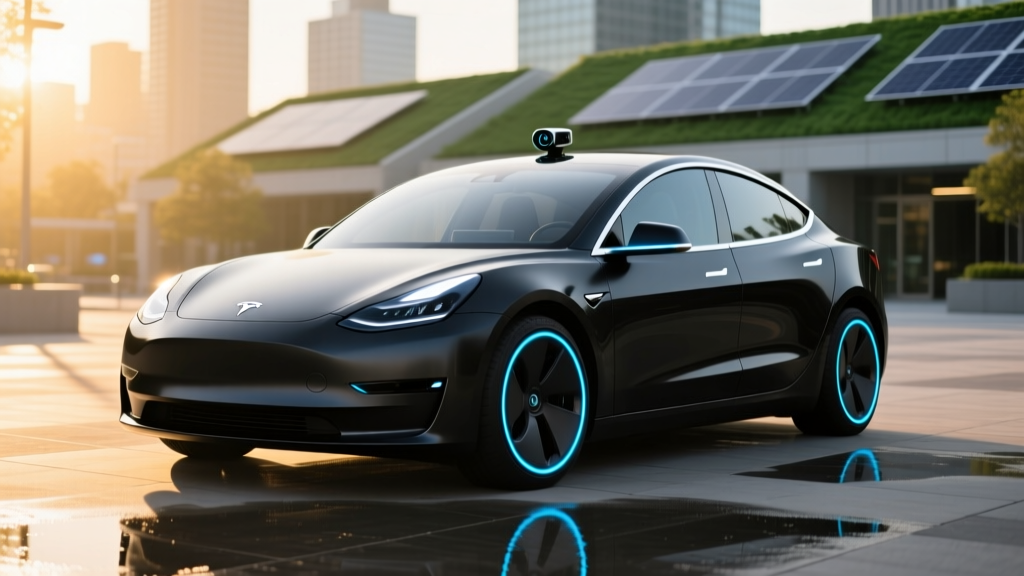
Search forums, Reddit threads, and Tesla investor calls and you'll keep encountering one phrase: data labeler Tesla. It's shorthand for a reality that defines the brand in 2026 — every Tesla Model 3 running Full Self-Driving (Supervised) is, functionally, a rolling sensor suite contributing to Tesla's vision-based neural net. The question for buyers isn't whether the car collects data (it does, if you opt in), but whether the underlying EV is worth owning on its own merits. This review treats the 2026 Model 3 Long Range AWD as both a commuter EV and the platform behind that label, with exact EPA figures, charging curves, and tax-credit math.
2026 Tesla Model 3 Long Range AWD: Spec Table
| Spec | Value |
|---|---|
| EPA Range | 363 miles (Long Range AWD, 19" wheels) |
| Battery Capacity | ~79 kWh usable, NMC (LG M50 cells) |
| Peak DC Fast Charge | 250 kW (V3 Supercharger / NACS) |
| 10–80% DC Time | ~27 minutes (preconditioned) |
| Level 2 Home Charge | 11.5 kW (48A) — ~44 mi/hr |
| 0–60 mph | 4.2 seconds |
| Horsepower | 346 hp (dual-motor AWD) |
| MPGe (combined) | 134 MPGe (25 kWh/100 mi) |
| Base MSRP | $47,740 (Long Range AWD, before destination) |
| Battery Warranty | 8 years / 120,000 miles, ≥70% retention |
Real-World Range vs. The EPA Sticker
The Model 3's efficiency remains among the best in the segment — 25 kWh/100 mi on the EPA's fueleconomy.gov listing beats the Hyundai Ioniq 6 (27 kWh/100 mi for the Long Range) and the BMW i4 eDrive40 (31 kWh/100 mi). That efficiency advantage translates directly to cheaper fueling and more miles per Supercharger stop.
Charging: DC Fast, Home Level 2, and the Curve Reality
The 2026 Model 3 Long Range ships with the native NACS (J3400) charge port — no adapter required at Tesla Superchargers. On a V3 stall, the pack peaks at 250 kW around 10–15% SoC, then tapers through the curve: roughly 175 kW at 40%, 110 kW at 60%, and sub-50 kW past 85%. That taper is why the 10–80% time is 27 minutes rather than the 15-minute marketing figure you'd calculate from peak power alone.
| Charging Level | Power | Miles Added / Hour |
|---|---|---|
| Level 1 (120V, 12A) | ~1.4 kW | ~5 mi/hr |
| Level 2 (240V, 48A Wall Connector) | 11.5 kW | ~44 mi/hr |
| DC Fast (V3 Supercharger) | Peak 250 kW | ~175 mi in 15 min |
| DC Fast (V4 Supercharger) | Peak 250 kW (current vehicles) | Similar to V3 for Model 3 architecture |
Home installation of a Tesla Wall Connector typically runs $800–$1,800 all-in if your panel has capacity for a 60A circuit. Older homes with 100A service may require a $2,000–$4,000 panel upgrade — confirm with a licensed electrician before purchasing hardware.
Performance, Interior, and the FSD Hardware Stack
The dual-motor Long Range hits 60 mph in 4.2 seconds — quick enough for confident merging, not so quick that it invites insurance penalties. Ride quality on the 2026 "Highland" refresh is noticeably quieter and more compliant than pre-2024 Model 3s, with laminated glass all around and retuned dampers.
Interior dimensions put the Model 3 firmly in the compact-executive category:
- Front legroom: 42.7 inches
- Rear legroom: 35.2 inches (tight for tall adults on long trips)
- Cargo: 23 cu ft trunk + rear frunk, 64.9 cu ft with rear seats folded
The infotainment remains a 15.4-inch center touchscreen running Tesla's Linux-based OS — no CarPlay, no Android Auto, which continues to polarize buyers. Voice commands, navigation, and media are strong; the lack of native phone projection is a dealbreaker for some fleets and rideshare drivers.
The "Data Labeler" Hardware: HW4 / AI 5
Every 2026 Model 3 ships with Tesla's latest vision hardware suite — high-resolution cameras (up to 5 MP), improved low-light performance, and the AI5 inference computer on higher trims. When you enable FSD (Supervised) and opt into data sharing, the vehicle's camera feeds are periodically uploaded for training. This is the literal "data labeler Tesla" function: your commute becomes training data for Tesla's end-to-end neural net.
Pricing, Trims, and Federal Tax Credit Math
| Trim | MSRP | §30D Credit (if eligible) | Effective Price |
|---|---|---|---|
| Model 3 RWD | $38,990 | Up to $7,500 (point-of-sale) | ~$31,490 |
| Model 3 Long Range AWD | $47,740 | Up to $7,500 (point-of-sale) | ~$40,240 |
| Model 3 Performance | $54,990 | Up to $7,500 (point-of-sale) | ~$47,490 |
| FSD (Supervised) add-on | $8,000 (outright) or $99/mo | Not credit-eligible | Adds to total |
Under current IRS §30D rules, eligibility for the full $7,500 credit requires:
- Buyer AGI under $150,000 (single) / $300,000 (joint)
- Vehicle MSRP under $55,000 (sedans — all Model 3 trims qualify)
- Battery critical-mineral and component sourcing thresholds that shift annually
- Point-of-sale transfer to the dealer is now standard, reducing out-of-pocket at delivery
Always verify current-year sourcing compliance on the manufacturer's site before signing — partial credits ($3,750) apply if only one of the two sourcing requirements is met.
Pros, Cons, and the Competitor Check
Pros
- Best-in-class efficiency (25 kWh/100 mi)
- Native NACS + largest proprietary Supercharger network
- Quiet, refined ride post-Highland refresh
- Strong residual values vs. legacy EV sedans
- OTA updates keep adding features over time
Cons
- No CarPlay / Android Auto
- Rear seat tight for adults over 6'0"
- FSD is Level 2, not autonomous — driver fatigue still real
- Insurance premiums 20–35% higher than comparable ICE sedans
- Touchscreen-only HVAC/media controls annoy some drivers
Against the Hyundai Ioniq 6 (361-mi EPA, 800V architecture, ~$1,000 cheaper), the Model 3 wins on Supercharger access and efficiency but loses on 350-kW charge capability and CarPlay support. The BMW i4 eDrive40 offers a more premium cabin and CarPlay but trails on range and charging infrastructure.
Who This EV Suits Best
The Model 3 Long Range AWD is ideal for tech-forward commuters covering 30–80 miles daily with home Level 2 access, road-trip-capable couples who value Supercharger density over cabin space, and — yes — FSD enthusiasts who want the latest hardware stack and understand they're participating in Tesla's data pipeline. It is less ideal for families needing three-across car seats, rideshare drivers who need CarPlay for passenger-friendly nav, or buyers in rural charging deserts where CCS networks still lag.
FAQ: Data Labeler Tesla, Model 3 Ownership
What does "data labeler Tesla" actually mean?
It's community slang for the reality that Tesla vehicles running FSD (Supervised) upload camera and telemetry data (with owner opt-in) to train Tesla's neural networks. You're not literally labeling data; the car's real-world driving feeds the model's training pipeline.
What is the real-world range of the 2026 Model 3 Long Range?
310–330 miles in mild mixed driving, ~275 highway at 80 mph, and 220–250 in freezing temperatures. The EPA sticker is 363 miles — treat it as a best-case benchmark.
How fast does it charge at home and on DC?
At home on a 48A Wall Connector, ~44 miles of range per hour (full overnight refill). On V3 Superchargers, 10–80% in about 27 minutes, with the curve tapering significantly above 80%.
Does the 2026 Model 3 qualify for the federal EV tax credit?
All trims fall under the $55,000 sedan MSRP cap. Buyers under the AGI limits ($150k single / $300k joint) who meet battery-sourcing requirements can receive up to $7,500 as a point-of-sale reduction. Verify current-year sourcing status on Tesla's site.
Is FSD (Supervised) worth $8,000?
For most buyers, no — basic Autopilot handles highway lane-keeping well. FSD's value is highest for heavy commuters in stop-and-go traffic and Tesla enthusiasts betting on future capability. Remember: it remains SAE Level 2 and requires full driver attention.
Is it worth buying vs. the Ioniq 6 or i4?
Choose the Model 3 if Supercharger access, efficiency, and OTA evolution matter most. Choose the Ioniq 6 for 800V 350-kW charging and CarPlay. Choose the i4 for cabin refinement and brand prestige. All three are strong — the decision hinges on charging network priority and UI preference.
Sources: EPA fueleconomy.gov, IRS §30D clean vehicle credits, Tesla Model 3 specifications.