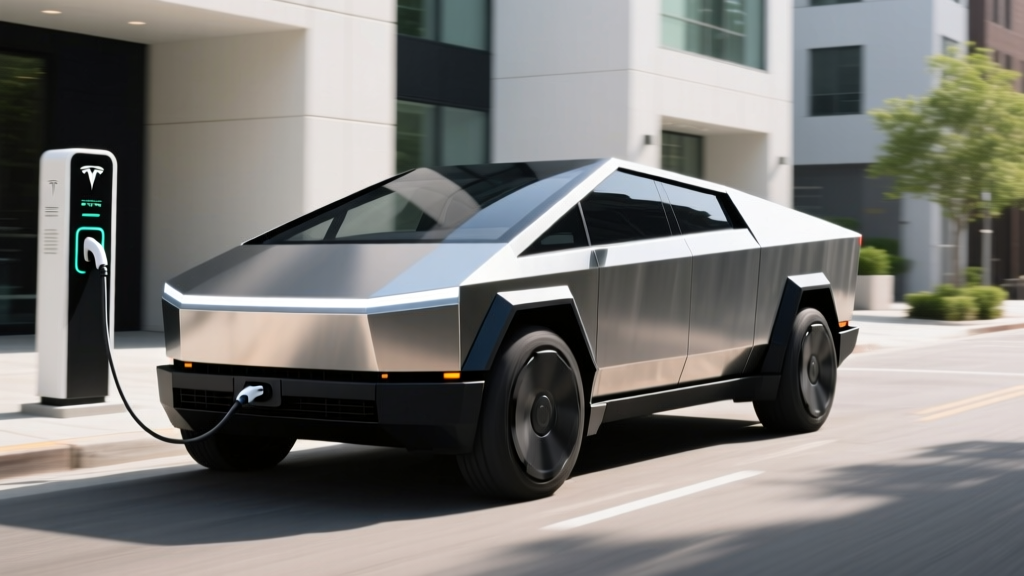
The Tesla Cybertruck defies nearly every pickup truck convention, but one number dominates its spec sheet and shapes almost every aspect of ownership: its curb weight. At roughly 6,600 to 6,843 pounds depending on trim, the Cybertruck is heavier than a Ford F-150 Lightning and far heavier than any comparable midsize truck. That mass influences everything from how far it actually drives on a charge to how quickly it stops, how fast it charges, and what it costs to keep rolling.
This review dissects the 2025–2026 Tesla Cybertruck through the lens of its weight — examining how those thousands of pounds of stainless steel and battery cells translate into real-world range, efficiency, charging performance, and daily usability.
Cybertruck Weight by Trim: The Numbers That Matter
Tesla offers the Cybertruck in three primary configurations, and the curb weight varies meaningfully across them. The dual-motor AWD and tri-motor Cyberbeast share a similar structural foundation, but the additional front motor and associated hardware on the Cyberbeast add mass. Here is how the trims stack up:
| Specification | AWD (Dual-Motor) | Cyberbeast (Tri-Motor) | RWD (Base)* |
|---|---|---|---|
| Curb Weight | ~6,603 lbs | ~6,843 lbs | ~6,300 lbs (est.) |
| Battery Capacity (usable) | ~123 kWh | ~123 kWh | ~100 kWh (est.) |
| Battery Chemistry | NMC (Nickel Manganese Cobalt) | NMC | LFP (expected) |
| EPA Range | 340 miles | 320 miles | ~250 miles (est.) |
| Horsepower | 600 hp | 845 hp | ~400 hp (est.) |
| 0–60 mph | 4.1 sec | 2.6 sec | ~5.5 sec (est.) |
| Drivetrain | Dual-Motor AWD | Tri-Motor AWD | Rear-Wheel Drive |
| Base MSRP | $79,990 | $99,990 | $60,990 (est.) |
*The RWD base trim has been announced but availability has been repeatedly delayed. Specs are preliminary estimates based on Tesla filings and industry analysis. Not currently available for purchase as of early 2026.
For context, a Ford F-150 Lightning Extended Range weighs approximately 6,370 pounds, while a Rivian R1T Dual-Motor with the Max Pack sits around 7,150 pounds. The Cybertruck's mass is substantial, but not an outlier among full-size electric pickups — it is the consequence of packing 123 kWh of NMC cells into a stainless-steel exoskeleton.
How Cybertruck Weight Affects Real-World Range
The EPA rates the dual-motor Cybertruck AWD at 340 miles and the tri-motor Cyberbeast at 320 miles. Those are respectable numbers for a vehicle this heavy, but EPA tests are conducted under controlled conditions that do not reflect highway driving at 75+ mph or cold-weather operation.
EPA Sticker: 340 mi (AWD) / 320 mi (Cyberbeast)
Highway (70–80 mph, moderate weather): Expect ~270–295 mi (AWD), ~250–275 mi (Cyberbeast). The Cyberbeast's extra motor and weight create more rolling resistance and parasitic drag at sustained speed.
Cold Weather (below 32°F): Expect a 20–30% reduction — roughly 220–260 mi for the AWD trim. The Cybertruck's stainless-steel body has lower thermal insulation than aluminum or composite panels, and the battery must use energy for self-heating.
City/Stop-and-Go: Close to EPA or slightly above, thanks to aggressive regenerative braking recapturing energy from the heavy vehicle's momentum.
The physics are straightforward: moving 6,600+ pounds at highway speed requires significantly more energy than moving a 4,500-pound sedan. The Cybertruck's efficiency rating reflects this — the AWD model achieves approximately 2.0–2.2 kWh/mile (roughly 45–50 kWh/100 mi), translating to an EPA-rated 52–56 MPGe combined, according to fueleconomy.gov methodology. That is substantially less efficient than a Tesla Model Y (~3.5–4.0 mi/kWh) but comparable to the F-150 Lightning and Rivian R1T.
Charging Performance: DC Fast Charge and Home Level 2
Charging a 123 kWh battery is a fundamentally different proposition than topping off a 75 kWh pack. The Cybertruck supports Tesla's 800-voltage architecture, enabling aggressive DC fast-charging rates — but the battery's sheer size means even fast charging takes meaningful time.
| Charging Method | Power (kW) | Speed / Time | Notes |
|---|---|---|---|
| DC Fast Charge (V4 Supercharger) | Peak ~350 kW | 10–80% in ~18 min | Peak rate sustained only to ~40% SoC; tapers significantly above 60% |
| DC Fast Charge (V3 Supercharger) | Peak ~250 kW | 10–80% in ~28 min | More common at existing stations; still viable for road trips |
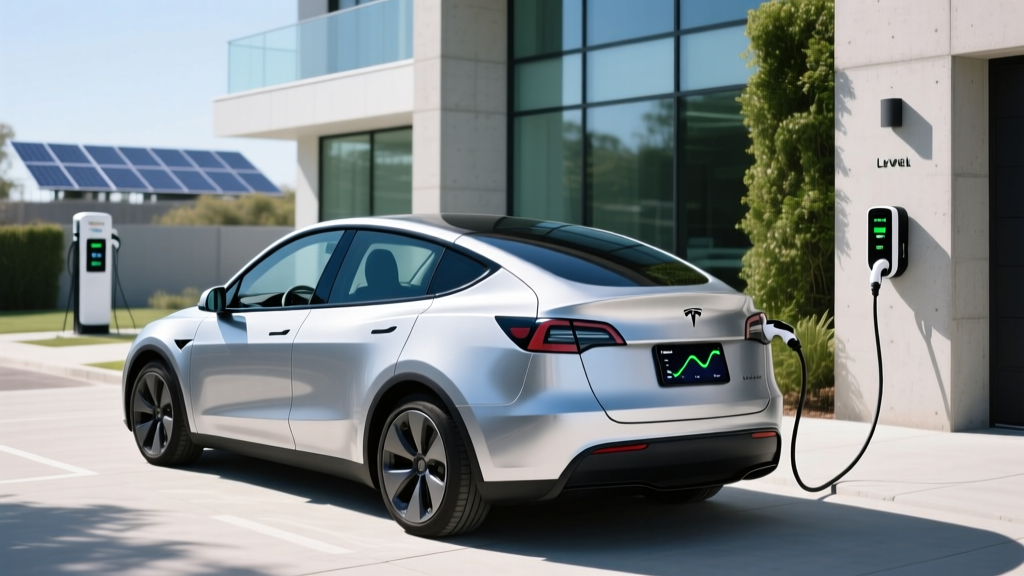
| Home Level 2 (Tesla Wall Connector, 48A) | 11.5 kW | ~37 mi/hr; full charge ~12–13 hrs | Requires 60A dedicated circuit; NACS connector |
| Level 1 (120V household outlet) | ~1.4 kW | ~4–5 mi/hr; full charge ~80+ hrs | Emergency/trickle only — impractical for daily use |
The charging curve is where weight and battery size intersect most visibly. A 123 kWh NMC pack can accept enormous power at low states of charge — Tesla claims peak rates above 350 kW on V4 Superchargers — but the curve tapers steeply past 60% SoC to protect cell longevity. In practice, the jump from 80% to 100% can add another 30–40 minutes. For road-trip planning, plan stops around the 10–80% window and avoid charging to full unless you need the last 20% to reach your destination.
At home, Level 2 charging at 11.5 kW (48 amps on a 240V/60A circuit) adds approximately 37 miles of range per hour. Overnight charging from 20% to 80% takes roughly 7–8 hours — perfectly adequate for daily replenishment. Note that the Cybertruck uses the NACS (North American Charging Standard) connector natively, so no adapter is needed at Tesla Superchargers. For non-Tesla DC fast chargers (Electrify America, EVgo), an adapter may be required depending on the station's connector type, though NACS adoption across networks is expanding rapidly through 2025–2026.
Performance: 845 Horsepower vs. 6,800 Pounds
The Cybertruck's weight is a performance liability in corners and a non-issue in straight-line acceleration. Tesla's tri-motor Cyberbeast produces 845 horsepower and rockets to 60 mph in a verified 2.6 seconds — faster than a Lamborghini Urus and nearly 4,000 pounds heavier. The dual-motor AWD manages 600 hp and a 4.1-second 0–60 time, which is still sports-car territory.
Where the mass is unavoidable is braking and handling. Tesla equips the Cybertruck with steer-by-wire (no mechanical connection between the steering wheel and the wheels) and four-wheel steering, which reduces the turning circle to a surprisingly manageable 34.5 feet. Braking distances from 70 mph are longer than lighter EVs — expect roughly 170–180 feet in independent testing — and the regenerative braking system does significant work to slow the vehicle before the mechanical brakes engage.
The adaptive air suspension provides up to 16 inches of ground clearance in Off-Road mode and can lower the truck for highway driving, which helps reduce drag and partially offset the weight penalty on range. Approach and departure angles are competitive with off-road-oriented pickups when the suspension is raised.
Cargo, Towing, and Practicality
The Cybertruck's 6-foot composite bed offers approximately 68 cubic feet of lockable storage under the motorized tonneau cover. The vault-like bed is sealed against weather, which is a genuine advantage over open-bed pickups for securing gear. Front trunk (frunk) space adds roughly 7 cubic feet — enough for a charging cable kit and a small bag.
Interior passenger volume accommodates five adults, with rear legroom measured at approximately 41 inches. The rear bench is flatter and firmer than a traditional truck's, which some passengers find less comfortable on long trips. Visibility is aided by the massive windshield but complicated by the angular rear profile and small rear camera-dependent backup view.
Towing capacity is rated at 11,000 pounds for both the AWD and Cyberbeast trims. However, towing at or near maximum capacity will slash range by 40–60%, bringing real-world towing range down to roughly 140–180 miles. This is a universal EV pickup limitation, not unique to the Cybertruck, but the truck's weight means the combined Gross Combined Weight Rating (GCWR) demands careful load planning.
Pricing, Trims, and Federal Tax Credit Eligibility
The Cybertruck's pricing has been volatile since launch. As of early 2026, the currently available trims and their MSRP figures are:
| Trim | Base MSRP | Federal §30D Credit | Effective Price (if eligible) |
|---|---|---|---|
| AWD (Dual-Motor) | $79,990 | Eligible for up to $7,500* | ~$72,490 |
| Cyberbeast (Tri-Motor) | $99,990 | Eligible for up to $7,500* | ~$92,490 |
| RWD (Base — announced) | ~$60,990 (est.) | Expected eligible* | ~$53,490 (est.) |
*Federal tax credit eligibility under IRS §30D is NOT automatic. To qualify for the full $7,500 credit, you must meet ALL of the following criteria, per IRS guidelines:
- Income caps: Modified AGI must not exceed $300,000 (joint), $225,000 (head of household), or $150,000 (single).
- MSRP cap: Vans, SUVs, and pickup trucks must have an MSRP at or below $80,000. The AWD trim qualifies; the Cyberbeast at $99,990 exceeds the cap and is ineligible.
- Battery sourcing: A percentage of critical minerals must be sourced from the U.S. or FTA partners, and battery components must be manufactured/assembled in North America. These thresholds increase annually. Verify current-year compliance on the DOE/IRS eligible vehicle list.
- Point-of-sale transfer: As of 2024+, the credit can be transferred to the dealer at purchase, reducing the sale price directly rather than waiting for a tax refund.
Key takeaway: The Cyberbeast does NOT qualify for the federal credit due to its MSRP exceeding $80,000. Only the AWD trim (and the upcoming RWD, if priced under $80,000) can receive the $7,500 benefit — and only if your income and the battery-sourcing requirements align. Always verify eligibility with a tax professional before purchase.
Battery Warranty, Longevity, and Degradation
Tesla covers the Cybertruck's battery and drive unit with an 8-year / 120,000-mile warranty (whichever comes first), guaranteeing a minimum of 70% capacity retention over that period. The NMC chemistry in the AWD and Cyberbeast trims offers higher energy density than LFP but is more susceptible to calendar degradation if routinely charged to 100% and stored at high states of charge.
Best practices for long-term NMC health: charge to 80% for daily use, use 100% only when you need maximum range for a trip, and avoid leaving the truck at 100% SoC for extended periods. The Cybertruck's thermal management system is active and liquid-cooled, which helps mitigate extreme temperature degradation.
Replacement cost for a 123 kWh NMC pack, should it be needed out of warranty, is estimated at $18,000–$25,000 based on current cell pricing and labor — a significant sum, though real-world data from Model S/X vehicles suggests most Tesla packs retain 85–90% capacity at 150,000 miles when properly maintained.
Driver Assistance: Autopilot and FSD (Supervised)
The Cybertruck ships with Tesla's standard Autopilot suite (Traffic-Aware Cruise Control, Autosteer lane-keeping) and offers the optional Full Self-Driving (Supervised) package. It is critical to understand that FSD is a Level 2 SAE driver-assistance system, not autonomous driving. The driver must remain fully engaged, hands on the wheel (or applying torque, given the steer-by-wire system), and eyes on the road at all times.
Tesla Autopilot and FSD (Supervised) are classified as SAE Level 2 — partial driving automation. The vehicle can control steering, acceleration, and braking under certain conditions, but the human driver is responsible for monitoring the environment and must intervene immediately when needed. This is fundamentally different from Level 4 robotaxi services like Waymo, which operate without a human driver in geofenced areas.
The Cybertruck's steer-by-wire system integrates tightly with Autopilot, providing variable steering ratios that adapt to speed. On highway drives, the system performs competently in lane-keeping and adaptive cruise. City-street FSD performance remains inconsistent in complex scenarios — construction zones, unprotected left turns, and non-standard intersections still require frequent driver intervention. FSD is a convenience feature, not a replacement for an attentive driver.
Who the Cybertruck Is For — And Who Should Look Elsewhere
- You want a full-size electric pickup with class-leading acceleration and distinctive design
- You have reliable home Level 2 charging and mostly drive under 250 miles daily
- You value a sealed, lockable bed for gear security
- You want tri-motor performance and are willing to pay $100K+ without a tax credit
- Efficiency is a top priority — the Cybertruck's weight makes it one of the least efficient EVs per mile
- You need maximum towing range — expect under 180 miles when towing heavy loads
- Rear-seat comfort on long trips matters — the bench is firm and upright
- You want proven long-term reliability data — the Cybertruck is still early in its production lifecycle
Key competitors to cross-shop include the Ford F-150 Lightning (lighter, more traditional truck feel, lower starting price, better rear-seat comfort), the Rivian R1T (more refined interior, better off-road capability, quad-motor option), and the Chevrolet Silverado EV (larger battery option, more conventional truck proportions). Each makes different trade-offs on weight, range, and usability.
Pros and Cons at a Glance
- Class-leading acceleration (2.6 sec 0–60 Cyberbeast)
- 340-mile EPA range (AWD) is competitive for the segment
- 800V architecture enables ~350 kW peak DC charging
- Sealed, lockable bed vault with motorized tonneau
- 11,000-lb towing capacity
- Steer-by-wire with four-wheel steering yields tight turning circle
- NACS native — no adapter needed at Superchargers
- 6,600+ lb curb weight hurts efficiency (2.0+ kWh/mile)
- Real-world highway range drops to ~270 mi in warm weather, lower in cold
- Cyberbeast exceeds $80K MSRP cap — no federal tax credit
- Rear-seat comfort is below F-150 Lightning and Rivian R1T
- Stainless-steel body panels are prone to fingerprint smudging and are costly to repair
- FSD (Supervised) remains Level 2 — requires constant driver attention
- Limited service center capacity for body/panel repairs
Frequently Asked Questions
What is the real-world range of the Tesla Cybertruck?
The EPA rates the AWD at 340 miles and the Cyberbeast at 320 miles. In real-world highway driving at 70–80 mph, expect 270–295 miles for the AWD and 250–275 miles for the Cyberbeast. Cold weather (below freezing) can reduce range by 20–30%, bringing the AWD down to roughly 220–260 miles. City driving with regenerative braking can approach or slightly exceed EPA estimates.
How fast does the Cybertruck charge?
On a V4 Tesla Supercharger, the Cybertruck peaks at approximately 350 kW and charges from 10–80% in about 18 minutes, though the rate tapers significantly above 60% SoC. On a V3 Supercharger (250 kW peak), expect 10–80% in roughly 28 minutes. At home on a Level 2 Tesla Wall Connector (11.5 kW), charging adds about 37 miles of range per hour, with a full charge taking 12–13 hours.
Does the Cybertruck qualify for the $7,500 federal EV tax credit?
It depends on the trim and your income. The AWD trim at $79,990 MSRP falls under the $80,000 cap for trucks/SUVs and can qualify for up to $7,500 — provided your modified AGI is within IRS limits ($150K single / $300K joint) and the battery meets critical-mineral sourcing requirements. The Cyberbeast at $99,990 exceeds the MSRP cap and is ineligible. Always verify current-year rules at irs.gov and consult a tax professional.
Why is the Cybertruck so heavy?
Three primary factors drive the Cybertruck's 6,600+ lb curb weight: (1) the 123 kWh NMC battery pack alone weighs approximately 1,500–1,600 lbs; (2) the cold-rolled stainless-steel exoskeleton body is significantly heavier than aluminum or stamped steel; (3) the tri-motor Cyberbeast adds a third drive unit and associated power electronics. This weight is a trade-off for range, structural rigidity, and the distinctive design.
Is the Cybertruck worth buying over the F-150 Lightning or Rivian R1T?
The Cybertruck wins on straight-line performance, charging speed (800V architecture), and bed security. The F-150 Lightning offers a more traditional truck experience, better rear-seat comfort, and lower entry pricing with tax-credit eligibility. The Rivian R1T provides a more refined interior, superior off-road capability, and flexible battery-pack options. Your choice depends on whether you prioritize performance and novelty (Cybertruck), practicality and value (Lightning), or refinement and versatility (R1T).
What is the Cybertruck's efficiency in MPGe?
The EPA rates the dual-motor AWD Cybertruck at approximately 52–56 MPGe combined, which translates to roughly 2.0–2.2 kWh per mile (or 45–50 kWh/100 mi). This is less efficient than lighter EVs but comparable to other full-size electric pickups. The Cyberbeast, with its tri-motor drivetrain and additional weight, rates slightly lower.