Cybertruck Side View: Dimensions, Design, and First Impressions
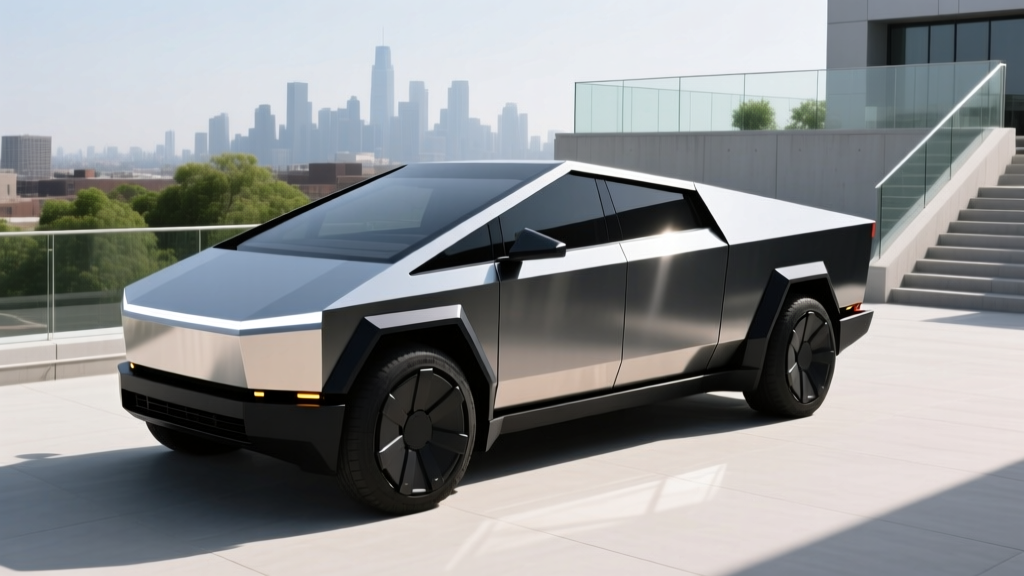
The Tesla Cybertruck side view is unlike anything else on the road. The angular stainless-steel exoskeleton, flatbed geometry, and massive wheel arches create a silhouette that polarizes onlookers but delivers genuine utility. From the side, the truck's 231.7-inch overall length, 79.9-inch width (excluding mirrors), and 70.5-inch height define a vehicle that dominates a parking space and commands attention at every charging station.
The side profile reveals design choices that directly impact aerodynamics and function. The steeply raked windshield flows into a flat roofline that terminates in a motorized tonneau-covered bed. The 6.5-foot bed (74.4 inches long, 47.2 inches wide between wheel wells) is accessible from the side via the vault design, and the angular fender flares house up to 35-inch all-terrain tires on the Dual Motor and Cyberbeast trims. Ground clearance adjusts via adaptive air suspension from 7.99 inches up to 16 inches in Extract Mode, visible in the dramatic side-on stance changes.
For buyers researching the Cybertruck from every angle, the side view also reveals the charge port location (driver-side rear, above the wheel arch), the absence of traditional door handles (replaced by electronic buttons recessed into the window trim), and the vault's structural integration with the cabin — a unibody approach unusual in the truck segment.
Range, Battery, and Real-World Efficiency
Tesla equips the Cybertruck with an estimated 123 kWh usable battery pack using a 4680-cell structural battery pack architecture. The chemistry is NMC (nickel-manganese-cobalt), chosen for its higher energy density — critical for a vehicle with the Cybertruck's mass and frontal area. Tesla has not published an official kWh figure, but independent teardowns and EPA test data point to approximately 123 kWh usable from a ~130 kWh gross pack.
- Dual Motor AWD: EPA 340 miles — expect 270-300 miles in mixed highway driving at 70 mph, and 220-250 miles in cold weather (below 32°F) with cabin heating.
- Cyberbeast (Tri-Motor AWD): EPA 320 miles — expect 255-285 miles highway, and 200-230 miles in winter conditions.
The Cybertruck's 6,603-lb curb weight (Dual Motor) and 0.38 Cd drag coefficient mean efficiency drops sharply above 65 mph. Highway-only road trips will see the lowest MPGe figures.
On the EPA efficiency cycle, the Dual Motor achieves an estimated 76 MPGe combined (44 kWh/100mi), while the Cyberbeast rates at approximately 70 MPGe combined (48 kWh/100mi). These figures place the Cybertruck behind more aerodynamic EVs like the Rivian R1T and Ford F-150 Lightning in efficiency, though the gap narrows when towing or hauling — the Cybertruck's structural pack and thermal management handle sustained heavy loads well.
| Spec | Dual Motor AWD | Cyberbeast (Tri-Motor) |
|---|---|---|
| EPA Range | 340 miles | 320 miles |
| Battery (usable) | ~123 kWh (NMC 4680) | ~123 kWh (NMC 4680) |
| Peak DC Charge Rate | 250 kW | 250 kW |
| 10-80% DC Time | ~28 min | ~28 min |
| Level 2 Home Rate | 11.5 kW (37 mi/hr) | 11.5 kW (37 mi/hr) |
| 0-60 mph | 3.9 seconds | 2.6 seconds |
| Horsepower | 600 hp | 845 hp |
| Towing Capacity | 11,000 lbs | 11,000 lbs |
| MPGe (combined) | 76 MPGe | 70 MPGe |
| Curb Weight | 6,603 lbs | 6,843 lbs |
Charging Speed: DC Fast Charge and Home Level 2
The Cybertruck supports a peak DC fast-charge rate of 250 kW at V3 and V4 Tesla Superchargers (and compatible NACS-equipped public chargers). However, peak rate is not sustained rate — the 4680 cells' thermal characteristics allow strong charging through the mid-SoC range but taper significantly above 80%. In real-world testing at a 250 kW Supercharger:
- 10-50%: Charges at or near 250 kW, adding roughly 200 miles in ~15 minutes
- 50-80%: Rate tapers to 150-180 kW, adding another ~100 miles in ~13 minutes
- 80-100%: Sharp taper to under 50 kW; plan extra time or skip the top-off
- Total 10-80%: Approximately 28 minutes under optimal conditions (battery preconditioned)
Preconditioning matters. Navigating to a Supercharger via the Cybertruck's built-in navigation automatically warms the battery pack to optimal charging temperature. Arriving at a charger without preconditioning — especially in cold weather — can add 10-15 minutes to your session as the pack heats up before accepting peak power.
| Level | Power | Speed (mi/hr added) | Typical Use |
|---|---|---|---|
| Level 1 (120V) | 1.4 kW | ~4 mi/hr | Emergency/trickle |
| Level 2 (240V, 48A) | 11.5 kW | ~37 mi/hr | Home daily charging |
| DC Fast (Supercharger V3/V4) | 250 kW peak | ~800 mi/hr (peak) | Road trips |
For home charging, the Cybertruck's onboard charger accepts up to 11.5 kW (48 amps) on a 240V Level 2 circuit. This requires a 60-amp dedicated breaker and 6-gauge wire for a hardwired Tesla Wall Connector. A full charge from 10% to 100% at home takes roughly 11-12 hours — plan to charge overnight. If your home has a standard 50-amp circuit (common in older panels), you'll see approximately 9.6 kW (30 mi/hr), extending a full charge to 13-14 hours.
Performance, Drivetrain, and Towing
The Dual Motor Cybertruck pairs front and rear permanent-magnet motors for all-wheel drive and 600 combined horsepower. The 0-60 mph time of 3.9 seconds is remarkable for a 6,600-lb truck and outpaces most V8-powered full-size pickups by a wide margin.
The Cyberbeast tri-motor variant adds a second rear motor, producing 845 horsepower and a 2.6-second 0-60 time — supercar territory in a truck body. Both trims feature torque vectoring, adaptive air suspension, and rear-wheel steering that gives the 231.7-inch vehicle a surprisingly tight 37.4-foot turning circle.
Towing capacity is rated at 11,000 pounds across all trims, competitive with the Ford F-150 Lightning (10,000 lbs) and Rivian R1T (11,000 lbs). However, towing at capacity will reduce range by approximately 40-50%, bringing the Dual Motor down to roughly 170-200 miles between charges — a critical planning factor for trailer haulers.
Interior, Cargo Space, and Standout Tech
The Cybertruck's cabin seats five across two rows. Rear legroom measures approximately 38.4 inches — adequate for adults on moderate trips but less generous than the F-150 Lightning's rear seat. The front trunk (frunk) provides roughly 7.1 cubic feet of lockable storage, useful for charging cables or a small bag.
Bed volume with the motorized tonneau closed is approximately 67 cubic feet. The vault design means the bed is enclosed and secure, but the sloped sides and wheel-well intrusion limit flat-floor width to 47.2 inches — a standard 4x8 sheet of plywood will not lie flat between the wells (it can ride above them with support). The tailgate extends the load floor when lowered, and the integrated ramp system aids loading ATVs or heavy equipment.
Tech highlights include:
- 18.5-inch center touchscreen with vehicle controls, navigation, and entertainment (no physical instrument cluster)
- 9.4-inch rear touchscreen for rear-seat climate and media controls
- Tesla Autopilot (SAE Level 2) with optional FSD (Supervised) — note that the driver must remain attentive and hands-on at all times
- Steer-by-wire with a yoke steering wheel — no mechanical linkage between wheel and rack
- 48-volt electrical architecture — a first in a production vehicle, reducing wiring harness weight
- Powershare (V2L/V2H) — up to 11.5 kW of bidirectional power for job-site tools or home backup
Notable drawbacks: the yoke steering requires a learning curve for low-speed maneuvers and parking. The stainless-steel body shows fingerprints readily and is difficult to repair after minor dents. Visibility from the driver's seat is compromised by the thick A-pillars and high cowl, making the surround-view cameras essential.
Pricing, Tax Credits, and Ownership Costs
As of the 2025 model year, Tesla prices the Cybertruck as follows:
| Trim | Base MSRP | §30D Credit Eligible? | Est. After-Credit Price |
|---|---|---|---|
| Dual Motor AWD | $79,990 | Yes (if within income caps) | $72,490 |
| Cyberbeast | $99,990 | Yes (if within income caps) | $92,490 |
Federal tax credit rules (IRS §30D): The Cybertruck qualifies for up to $7,500 in federal tax credits because it is assembled in North America (Austin, TX), meets the MSRP cap for trucks ($80,000 — Dual Motor qualifies; Cyberbeast at $99,990 exceeds the cap and does not qualify), and its battery components and critical minerals meet 2025 sourcing thresholds. However, buyer income caps apply: $150,000 single / $225,000 head of household / $300,000 joint filers. The credit can be applied as a point-of-sale discount through a registered dealer. Always verify current eligibility at IRS.gov qualified vehicle list before purchasing, as sourcing rules tighten annually.
The Cybertruck's battery and drive unit warranty covers 8 years or 120,000 miles (whichever comes first), with Tesla guaranteeing a minimum of 70% battery capacity retention over that period. The limited vehicle warranty is 4 years / 50,000 miles. These terms are in line with the EV truck segment, though Rivian offers an identical 8-year battery warranty.
Cybertruck vs. the Competition: Is It Worth Buying?
- Class-leading 11,000-lb towing capacity
- Stainless-steel exoskeleton is dent- and corrosion-resistant
- 250 kW DC fast charging with strong mid-range charge curve
- Powershare V2L/V2H (11.5 kW) for job-site and home backup
- Tri-motor Cyberbeast delivers 2.6s 0-60 — fastest truck in production
- Supercharger network access (NACS) with 17,000+ U.S. stations
- EPA range drops 40-50% when towing at capacity
- Bed width between wheel wells (47.2") won't fit flat plywood
- Yoke steering and steer-by-wire have a steep learning curve
- 6,600+ lb weight accelerates tire wear (replacement cost: $400-$600/tire)
- Cyberbeast exceeds §30D MSRP cap — no federal tax credit
- Stainless-steel body repairs are difficult and expensive after collisions
The Cybertruck competes directly with the Ford F-150 Lightning (lower price, more conventional layout, 320-mile range, better rear-seat room), the Rivian R1T (more refined interior, quad-motor option, 405-mile max range, but higher starting price), and the Chevrolet Silverado EV (400-mile range on 4WT trim, larger bed, more traditional truck ergonomics).
Choose the Cybertruck if: you need maximum towing (11,000 lbs), want V2H/V2L capability, value Supercharger network access, and are comfortable with the unconventional ergonomics and yoke steering. It is best suited for owners who tow boats or trailers regularly, use their truck for job-site power, and have reliable home charging to offset the efficiency penalty of the Cybertruck's weight and drag.
Look elsewhere if: you prioritize rear-seat comfort, need a flat-load bed for sheet goods, want the lowest possible cost-per-mile, or live in a region with limited Supercharger coverage. The F-150 Lightning remains the more practical daily-driver truck for most buyers, while the R1T offers a more premium experience at a similar price point.
Frequently Asked Questions
What is the real-world range of the Cybertruck?
The Dual Motor AWD achieves an EPA-estimated 340 miles, but real-world highway driving at 70 mph typically yields 270-300 miles. In cold weather (below 32°F) with cabin heating active, expect 220-250 miles. The Cyberbeast tri-motor rates at 320 miles EPA and delivers roughly 255-285 miles in mixed real-world conditions.
How fast does the Cybertruck charge at home and on the road?
On a 240V Level 2 home charger (11.5 kW), the Cybertruck adds approximately 37 miles of range per hour, fully charging overnight in 11-12 hours. At a 250 kW Supercharger, a 10-80% session takes roughly 28 minutes with a preconditioned battery. Charging slows significantly above 80% — plan your stops to depart at 80% rather than topping off.
Does the Cybertruck qualify for the $7,500 federal EV tax credit?
The Dual Motor AWD at $79,990 MSRP qualifies for the full $7,500 §30D credit, provided the buyer's adjusted gross income falls within IRS limits ($150,000 single / $300,000 joint). The Cyberbeast at $99,990 exceeds the $80,000 MSRP cap for trucks and does not qualify. Credit eligibility depends on battery sourcing requirements that tighten each year — verify at fueleconomy.gov before purchase.
Is the Cybertruck worth buying over the F-150 Lightning or Rivian R1T?
It depends on your priorities. The Cybertruck wins on towing capacity (11,000 lbs), V2H/V2L power output (11.5 kW), and DC fast-charge speed (250 kW). The F-150 Lightning wins on price, rear-seat space, and conventional truck ergonomics. The Rivian R1T wins on interior refinement, range (up to 405 miles with Max Pack), and adventure-oriented features like the gear tunnel. Test-drive all three before deciding.
How does the Cybertruck handle in snow and off-road?
The adaptive air suspension raises ground clearance to 16 inches in Extract Mode, and the dual- and tri-motor AWD systems provide excellent traction on loose surfaces. The stainless-steel body resists corrosion from road salt. However, the 6,600-lb weight means longer braking distances on ice, and the stock all-season tires should be swapped for dedicated winter tires in snow-belt states for safe cold-weather operation.