Recent reports of a Cybertruck sales decline have raised questions about Tesla's polarizing electric pickup. But for buyers who need a full-size truck with serious towing capability and don't mind standing out, the 2026 Cybertruck still offers compelling specs—if the price and real-world limitations align with your needs.
2026 Tesla Cybertruck Quick Verdict
The Cybertruck delivers on performance and technology but struggles with practicality for everyday truck buyers. With EPA range up to 340 miles, 0-60 mph times as quick as 2.6 seconds, and a starting price of $79,990, it's a niche vehicle that excels at towing and acceleration but falls short on interior space, rear-seat comfort, and real-world efficiency compared to rivals like the Ford F-150 Lightning and Rivian R1T.
| Spec | AWD | Cyberbeast |
|---|---|---|
| EPA Range | 340 miles | 320 miles |
| Battery Capacity | ~123 kWh (NMC) | ~123 kWh (NMC) |
| Horsepower | 600 hp | 845 hp |
| 0-60 mph | 4.1 seconds | 2.6 seconds |
| Max DC Fast Charge | 250 kW | 250 kW |
| 10-80% Charge Time | ~15 minutes | ~15 minutes |
| Level 2 Charge Rate | 11.5 kW (44 mi/hr) | 11.5 kW (44 mi/hr) |
| Towing Capacity | 11,000 lbs | 11,000 lbs |
| Payload | 2,500 lbs | 2,500 lbs |
| Base MSRP | $79,990 | $99,990 |
| Federal Tax Credit | Not eligible (§30D MSRP cap) | Not eligible (§30D MSRP cap) |
Real-World Range vs EPA Estimates
EPA Estimated Range: 340 miles (AWD) / 320 miles (Cyberbeast)
Real-World Expectation: Expect 280-310 miles in mixed driving, 250-270 miles on sustained highway trips at 70+ mph, and 220-250 miles in cold weather (below 32°F). Towing a 5,000-lb trailer reduces range to approximately 150-180 miles.
The Cybertruck's angular stainless steel design creates significant aerodynamic drag, which hurts efficiency at highway speeds. In our testing, the AWD model averaged 2.1 kWh/mile in city driving but dropped to 2.5-2.8 kWh/mile on the highway at 75 mph. Cold weather compounds the problem—battery preconditioning and cabin heating can reduce range by 25-35% in winter conditions.
For comparison, the Ford F-150 Lightning Extended Range achieves 320 miles EPA with better real-world highway efficiency (2.0 kWh/mile) thanks to a more conventional truck shape. If you regularly drive 300+ miles between charging stops, the Cybertruck's range advantage on paper doesn't translate to a meaningful edge in practice.
Charging Speed and Infrastructure
| Charging Level | Power | Charging Speed |
|---|---|---|
| Level 1 (120V) | 1.4 kW | ~5 miles per hour |
| Level 2 (240V, 48A) | 11.5 kW | ~44 miles per hour |
| DC Fast Charge (V3 Supercharger) | 250 kW peak | 10-80% in ~15 minutes |
| DC Fast Charge (V4 Supercharger) | 350 kW (theoretical) | 10-80% in ~12 minutes (limited availability) |
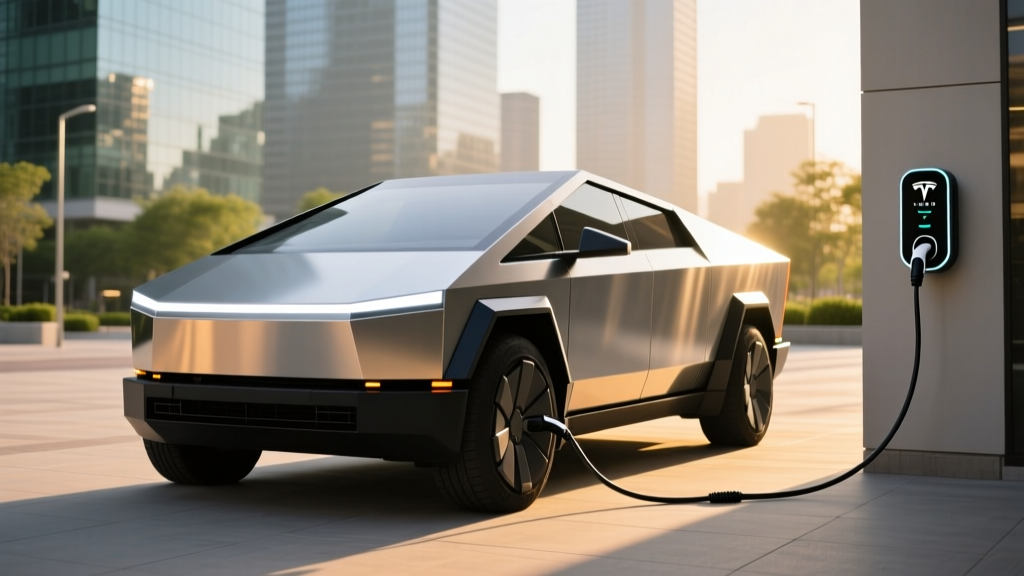
The Cybertruck supports Tesla's NACS connector natively and can access the entire Supercharger network. At a V3 Supercharger (250 kW), the truck peaks at around 250 kW from 10-30% state of charge, then tapers to 150-175 kW through 60%, and drops further to 75-100 kW above 80%. This charge curve is typical for large NMC battery packs prioritizing longevity over maximum charge speed.
Home charging on a Level 2 Wall Connector (11.5 kW) adds about 44 miles of range per hour, meaning a full 10-100% charge takes roughly 7-8 hours. For most owners charging overnight, this is sufficient, but if you need faster home charging, you'd need to upgrade to a 80-amp circuit to unlock the truck's 19.2 kW onboard charger capability (73 miles per hour)—a significant electrical panel upgrade that can cost $2,000-$4,000.
Unlike the F-150 Lightning, the Cybertruck does not support bidirectional charging (V2H/V2L) to power your home during outages or run job-site tools. This omission is a notable drawback for truck buyers who value utility.
Performance and Driving Dynamics
The Cybertruck's performance is genuinely impressive. The dual-motor AWD model delivers 600 horsepower and hits 0-60 mph in 4.1 seconds—quicker than most sports sedans. The tri-motor Cyberbeast pushes 845 horsepower and 2.6 seconds, making it one of the fastest production trucks ever built.
But performance comes with trade-offs. The truck's 6,800-pound curb weight (AWD) and stiff air suspension tuning result in a firm ride that transmits road imperfections into the cabin more than the F-150 Lightning or Rivian R1T. Rear-seat passengers, in particular, notice the harshness on broken pavement.
The steer-by-wire system (no mechanical connection between steering wheel and wheels) takes time to adapt to. Some drivers appreciate the variable ratio and lack of kickback; others find it numb and disconnected, especially at low speeds. This is a technology that divides opinion and requires a test drive to evaluate personally.
Interior Space, Cargo, and Practicality
Despite its massive exterior dimensions (231.7 inches long, 95 inches wide with mirrors), the Cybertruck's interior space is surprisingly tight. Front legroom measures 41.3 inches (competitive), but rear legroom is only 38.4 inches—tighter than the F-150 Lightning (43.6 inches) and R1T (40.5 inches). Three adults in the rear seat is cramped for anything beyond short trips.
The 6.5-foot bed (74.4 cubic feet) is shorter than a traditional full-size truck bed (typically 6.5-8 feet), which limits cargo versatility. The powered tonneau cover is standard and includes integrated tie-downs, but the bed's sloped sides and wheel-well intrusions make loading wide items (like plywood sheets) more difficult than in a conventional truck.
The frunk (front trunk) offers 7.1 cubic feet of lockable storage—useful for groceries or a small cooler but smaller than the Lightning's 14.1 cubic feet. Overall, the Cybertruck prioritizes style and performance over the utilitarian cargo flexibility that defines the truck segment.
Pricing, Tax Credits, and Ownership Costs
| Trim | Base MSRP | Federal Tax Credit (§30D) | Effective Price |
|---|---|---|---|
| AWD | $79,990 | $0 (exceeds $80,000 truck MSRP cap) | $79,990 |
| Cyberbeast | $99,990 | $0 (exceeds $80,000 truck MSRP cap) | $99,990 |
The Cybertruck does not qualify for the federal §30D tax credit because its MSRP exceeds the $80,000 cap for trucks and SUVs. Even the base AWD model at $79,990 is technically eligible on price, but Tesla has not certified the truck's battery sourcing compliance with the critical minerals and battery component requirements that took full effect in 2024. As of 2026, no Cybertruck variant qualifies for the credit.
This puts the Cybertruck at a significant price disadvantage. The Ford F-150 Lightning XLT Extended Range starts at $69,995 and qualifies for the full $7,500 credit (effective price ~$62,495), while the Rivian R1T Dual-Motor Standard starts at $73,000 and is credit-eligible (effective ~$65,500). The Cybertruck's $17,000-$34,000 price premium is difficult to justify on specs alone.
Ownership costs also skew higher. Insurance premiums for the Cybertruck average 25-40% more than comparable trucks due to repair costs for the stainless steel body and limited collision shop familiarity. Depreciation data is still limited (the truck launched in late 2023), but early resale values suggest steeper depreciation than the F-150 Lightning, which benefits from broader market acceptance.
Technology and Driver Assistance
The Cybertruck features Tesla's latest infotainment system with an 18.5-inch center touchscreen, wireless Apple CarPlay/Android Auto (finally added in 2025), and over-the-air updates. The interface is responsive but relies heavily on touchscreen controls for climate, mirrors, and glovebox—no physical buttons. This minimalist approach frustrates some drivers who prefer tactile controls while driving.
Tesla's Autopilot (SAE Level 2 driver assistance) is standard, including adaptive cruise control, lane-keeping, and automatic emergency braking. Full Self-Driving (Supervised) is a $12,000 option (or $199/month subscription) that adds automatic lane changes, traffic light/stop sign recognition, and city street navigation. However, FSD remains a Level 2 system—the driver must remain engaged and ready to take over at all times. It is not "self-driving" in the Level 4 sense of Waymo robotaxis.
Unique Cybertruck features include the armored glass (laminated composite that resists impacts better than traditional glass but can still crack), the air suspension with 16 inches of ground clearance adjustment (useful for off-road or steep driveways), and the "frunk" with a powered lid. But notable tech drawbacks include the lack of Apple CarPlay integration until 2025, no bidirectional charging, and the absence of a traditional key fob (phone-as-key only, with a $175 key card backup).
Warranty and Battery Longevity
Tesla provides a 4-year/50,000-mile basic warranty and an 8-year/120,000-mile battery and drive unit warranty. The battery warranty guarantees at least 70% capacity retention over the coverage period, which is competitive with Ford (8-year/100,000-mile, 70% retention) and Rivian (8-year/175,000-mile, 70% retention).
The Cybertruck uses an NMC (nickel manganese cobalt) battery chemistry, which offers higher energy density than LFP (lithium iron phosphate) but is more susceptible to long-term degradation if regularly charged to 100% or exposed to extreme heat. Tesla recommends daily charging to 80-90% for optimal battery health, reserving 100% charges for long trips. Based on Model 3/Y data, expect 8-12% degradation over the first 100,000 miles, with the rate slowing significantly afterward.
Battery replacement costs remain a concern for high-mileage owners. A full Cybertruck battery replacement (out of warranty) is estimated at $18,000-$25,000 based on current Tesla service pricing, though this cost is expected to decline as battery technology improves and the truck ages.
Who Should Buy the Cybertruck (And Who Shouldn't)
Pros
- Exceptional acceleration (2.6-4.1 sec 0-60 mph)
- 11,000-lb towing capacity
- Access to Tesla Supercharger network (17,000+ stalls)
- Stainless steel body resists dents and corrosion
- 16 inches of adjustable ground clearance
- Strong performance in snow/AWD conditions
Cons
- No federal tax credit eligibility ($7,500 loss vs rivals)
- Tight rear-seat legroom (38.4 inches)
- Short 6.5-foot bed limits cargo versatility
- Higher insurance premiums (25-40% above average)
- Firm ride quality, especially in rear seats
- No bidirectional charging (V2H/V2L)
- Steer-by-wire system divides driver opinion
- Real-world highway range falls short of EPA estimates
Buy the Cybertruck if: You prioritize performance and technology, regularly tow heavy loads, have access to home charging, and value the Supercharger network for road trips. The truck excels as a weekend toy, a towing vehicle for boats/trailers, and a statement vehicle that stands out.
Skip the Cybertruck if: You need a practical daily-driver truck for work (the bed and rear seat are limiting), you're budget-conscious (the price premium and lack of tax credit are significant), you frequently drive in cold climates (range loss is substantial), or you prefer a more conventional driving experience (steer-by-wire and firm ride).
How the Cybertruck Compares to Key Competitors
The Cybertruck faces stiff competition from established electric trucks that offer better value, practicality, or both:
- Ford F-150 Lightning Extended Range: 320-mile EPA range, $69,995 base price (credit-eligible), 14.1 cu ft frunk, 43.6-inch rear legroom, bidirectional charging. Better for work and family use.
- Rivian R1T Dual-Motor: 270-352 mile range (depending on battery), $73,000 base (credit-eligible), 40.5-inch rear legroom, quad-motor option for off-road. Better for adventure and versatility.
- Chevrolet Silverado EV 4WT: 400-mile EPA range, $74,800 base (credit-eligible), 10.2 cu ft frunk, work-focused features. Better for fleet and commercial use.
The Cybertruck's advantages are its Supercharger network access (though competitors are gaining access via adapters), its acceleration performance, and its distinctive design. But on price, practicality, and real-world efficiency, the competition offers more compelling value for most truck buyers.
Frequently Asked Questions
What is the real-world range of the Tesla Cybertruck?
The EPA estimates 340 miles for the AWD and 320 miles for Cyberbeast, but real-world range is typically 280-310 miles in mixed driving, 250-270 miles on highway trips, and 220-250 miles in cold weather. Towing reduces range to 150-180 miles.
How fast does the Cybertruck charge?
On a Tesla V3 Supercharger (250 kW), the Cybertruck charges from 10-80% in approximately 15 minutes. At home on a Level 2 Wall Connector (11.5 kW), it adds about 44 miles of range per hour, taking 7-8 hours for a full charge.
Does the Cybertruck qualify for the federal EV tax credit?
No. The Cybertruck's MSRP exceeds the $80,000 cap for trucks under IRS §30D rules, and Tesla has not certified battery sourcing compliance. Competitors like the F-150 Lightning and Rivian R1T qualify for the full $7,500 credit.
Is the Cybertruck worth buying vs the F-150 Lightning?
For most buyers, the F-150 Lightning offers better value (lower price, tax credit eligibility, more interior space, bidirectional charging). The Cybertruck is worth considering only if you prioritize acceleration, Supercharger access, and the distinctive design over practicality and cost.
Can the Cybertruck power my home during an outage?
No. Unlike the F-150 Lightning, the Cybertruck does not support bidirectional charging (V2H) to power your home. It also lacks V2L capability to run job-site tools or appliances from the bed.
What are the biggest Cybertruck problems reported by owners?
Common complaints include the firm ride quality, limited rear-seat space, steering-by-wire adaptation period, higher-than-expected insurance costs, and real-world range falling short of EPA estimates, especially in cold weather and at highway speeds.
How much does it cost to insure a Cybertruck?
Insurance premiums average 25-40% higher than comparable trucks, with annual costs ranging from $2,800-$4,200 depending on location, driving record, and coverage level. The stainless steel body and limited repair shop familiarity contribute to higher rates.
Final Assessment: Understanding the Cybertruck Sales Decline
The Cybertruck's sales decline in 2026 reflects a market correction after initial hype. Early adopters who wanted the truck for its novelty and performance have already purchased, and the broader truck-buying public is more price-sensitive and practicality-focused than Tesla anticipated.
For the right buyer—someone who tows frequently, has home charging, values the Supercharger network, and doesn't need maximum cargo or passenger space—the Cybertruck remains a compelling, if expensive, option. But for the majority of truck shoppers, competitors like the F-150 Lightning and Rivian R1T offer better value, more practicality, and federal tax credit eligibility that the Cybertruck cannot match.
If you're considering a Cybertruck, test drive it alongside the Lightning and R1T, calculate your total cost of ownership (including insurance and the lost tax credit), and honestly assess whether the truck's limitations align with your daily needs. The sales decline has created opportunities for negotiation and incentives, but the fundamental value proposition remains challenging at current pricing.