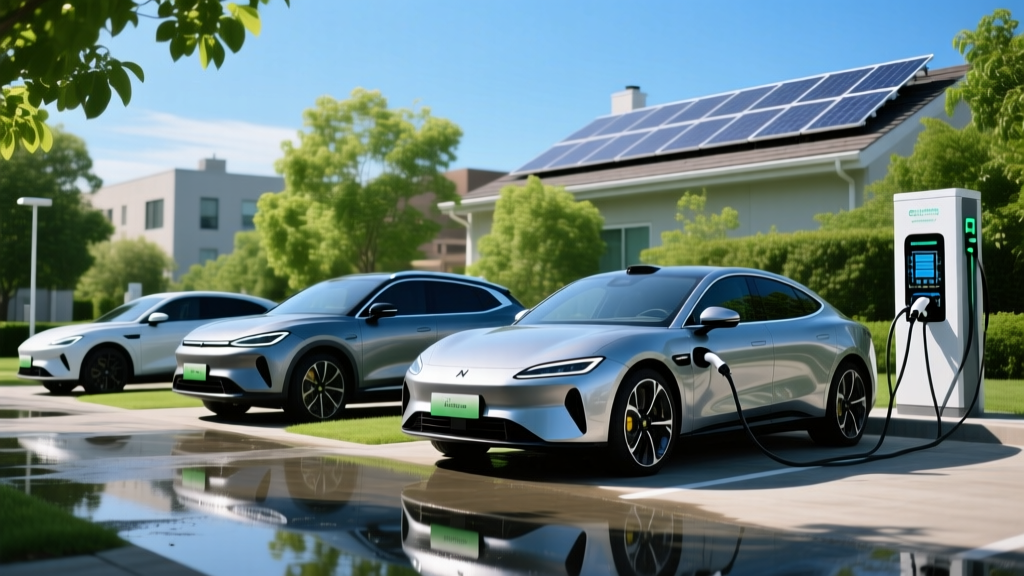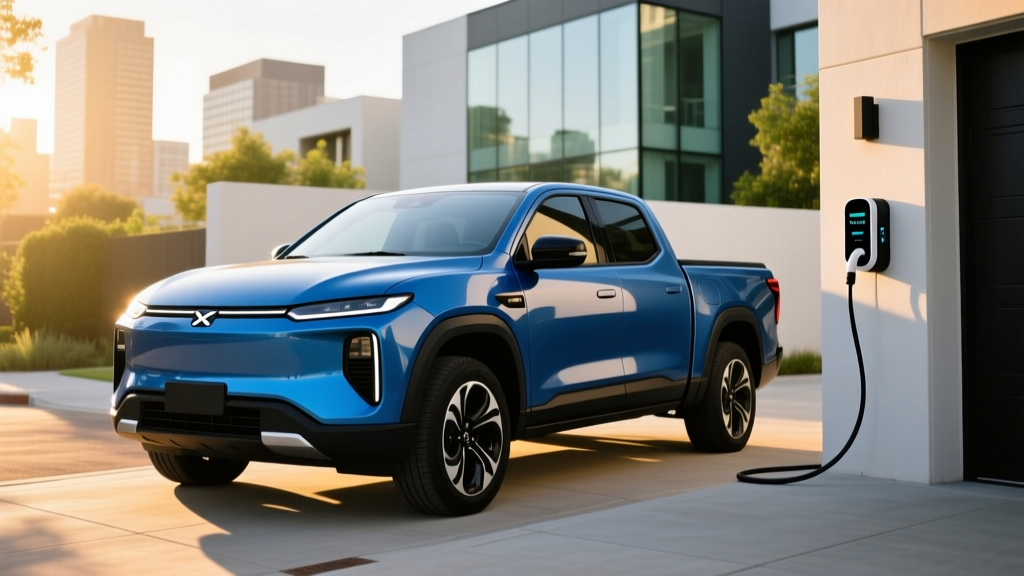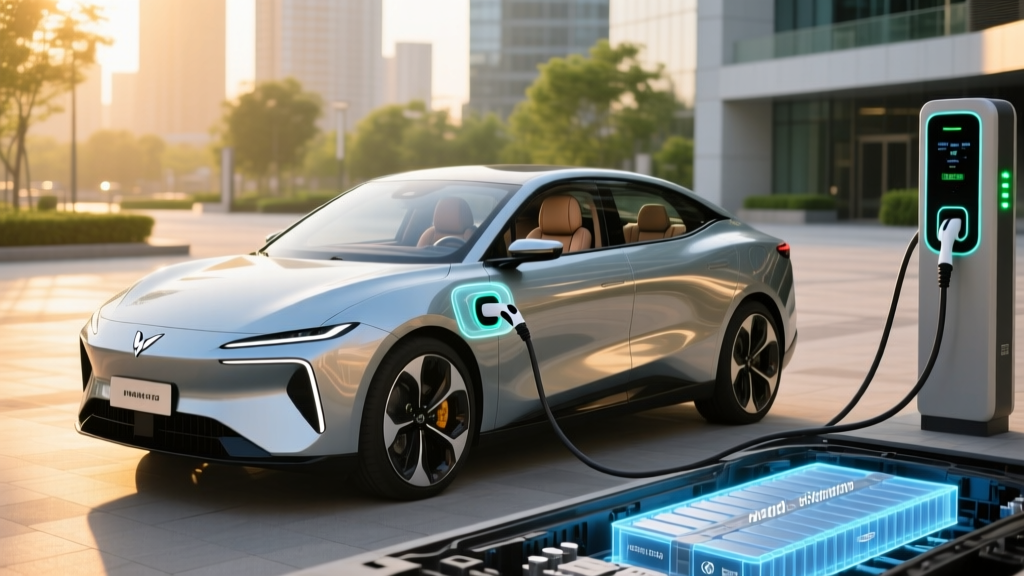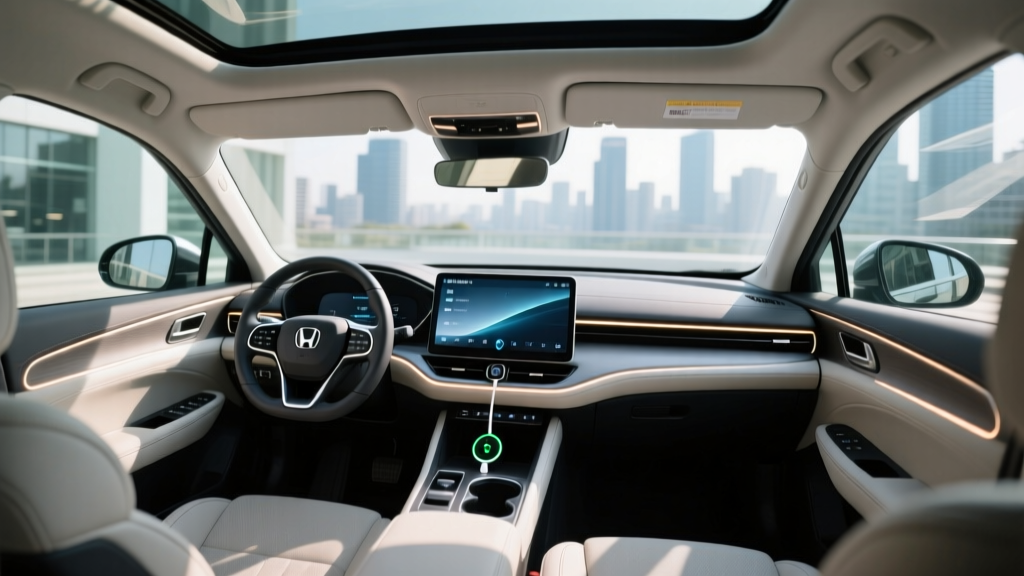
Honda's first mass-market electric SUV arrived not with a bespoke platform, but with a borrowed one. The 2024 Honda Prologue rides on GM's Ultium architecture — the same bones underpinning the Chevrolet Blazer EV and Cadillac Lyriq — yet Honda tuned the interior, infotainment, and driving character to feel distinctly like a Honda. For shoppers searching for 2024 Honda Prologue interior details, the headline is room: this is a midsize two-row crossover with generous passenger volume, a flat floor, and cargo capacity that rivals the Honda Passport. But the Prologue is more than a cabin on wheels — its range, charging speed, and federal tax credit eligibility all factor into whether it's the right EV for your household.
Below, we break down every spec that matters to real buyers: EPA range versus what you'll actually see on the highway, DC fast-charge curves, Level 2 home-charging rates, battery chemistry, tax-credit math, and the interior dimensions and tech that make or break daily ownership.
Range, Battery, and Real-World Efficiency
The 2024 Prologue comes in two drivetrain configurations, and range varies accordingly. The front-wheel-drive (FWD) EX and Touring models carry an EPA-estimated 296 miles of range, while the dual-motor all-wheel-drive (AWD) Elite drops to 273 miles. Both use an 85 kWh usable lithium-ion battery built on GM's Ultium platform, which employs NMC (nickel manganese cobalt) cathode chemistry — the standard for energy-dense, long-range EVs in this class. Honda does not offer an LFP (lithium iron phosphate) variant.
EPA estimate: 296 mi (FWD) / 273 mi (AWD)
Real-world highway (70 mph, mild weather): expect ~245–265 mi (FWD), ~225–245 mi (AWD)
Cold-weather (below 32°F, mixed driving): plan for 20–30% reduction — roughly 190–235 mi (FWD)
Why the gap? The EPA cycle includes generous regenerative-braking credits and low-speed urban driving. Sustained highway speeds, headwinds, and cold-soaked batteries all pull real-world numbers below the sticker. The Prologue's boxy SUV profile also increases aerodynamic drag at speed compared to a sleeker sedan.
Efficiency lands at 99 MPGe combined for the FWD model and 91 MPGe combined for AWD, translating to roughly 34 kWh/100 mi (FWD) and 37 kWh/100 mi (AWD), per fueleconomy.gov. Those figures are competitive with the Hyundai Ioniq 5 and Ford Mustang Mach-E but trail the Tesla Model Y's class-leading efficiency.
| Trim | Drivetrain | EPA Range | MPGe (City/Hwy/Combined) | kWh/100 mi |
|---|---|---|---|---|
| EX | FWD | 296 mi | 107 / 91 / 99 | 34 |
| Touring | FWD | 296 mi | 107 / 91 / 99 | 34 |
| Elite | AWD (Dual-Motor) | 273 mi | 97 / 84 / 91 | 37 |
Charging Speed: DC Fast Charge and Home Level 2
The Prologue supports a peak DC fast-charge rate of 155 kW via its CCS1 connector. In practice, Honda quotes a 10–80% charge time of approximately 34 minutes at a compatible 150+ kW station. That's adequate but not class-leading — the Hyundai Ioniq 5's 800V architecture can do 10–80% in roughly 18 minutes at a 350 kW charger, and the Tesla Model Y peaks at 250 kW on Superchargers.
The charge curve matters more than peak kW. The Prologue holds close to its 155 kW peak through roughly 40% state of charge (SoC), then tapers progressively. From 80–100%, expect a significant slowdown typical of NMC batteries protecting cell longevity. If you road-trip regularly, plan your stops around the 10–80% window for the best time-to-miles ratio.
For home charging, the Prologue's onboard charger accepts up to 11.5 kW on Level 2 (240V, 48A). That translates to roughly 31 miles of range per hour of charging, or a full 0–100% charge in about 8.5 hours — easily achievable overnight on a dedicated home Level 2 circuit. Honda includes a dual-level charging cord with the vehicle that handles both 120V (Level 1, ~3 mi/hr) and 240V (Level 2, up to ~19.2 mi/hr on a standard 32A outlet), but for the full 11.5 kW rate you'll want a hardwired 48A wall connector installed by a licensed electrician.
| Level | Power (kW) | Speed (mi/hr) | Notes |
|---|---|---|---|
| Level 1 (120V) | ~1.4 kW | ~3 mi/hr | Emergency/trickle only; ~95 hr for full charge |
| Level 2 (240V, 32A) | 7.7 kW | ~19 mi/hr | Included cord on NEMA 14-50 outlet |
| Level 2 (240V, 48A) | 11.5 kW | ~31 mi/hr | Requires hardwired wall connector; ~8.5 hr full |
| DC Fast Charge | Up to 155 kW | ~190 mi in 30 min | 10–80% in ~34 min; CCS1 connector |
kW (kilowatts) measures charging power — how fast energy flows into the battery. kWh (kilowatt-hours) measures battery capacity — how much energy the battery stores. Think of kW as the width of the hose and kWh as the size of the tank.
Interior Dimensions, Cargo, and Cabin Quality
This is where the Prologue makes its strongest case. Honda positioned this SUV as a family-first vehicle, and the interior dimensions reflect that priority. The cabin is built on a 121.8-inch wheelbase — longer than the Honda CR-V — and it shows in rear-seat legroom.
| Dimension | Measurement |
|---|---|
| Front headroom | 40.0 in |
| Rear headroom | 38.1 in |
| Front legroom | 41.4 in |
| Rear legroom | 38.7 in |
| Cargo (behind 2nd row) | 25.2 cu ft |
| Cargo (2nd row folded) | 57.7 cu ft |
| Wheelbase | 121.8 in |
The rear seat is genuinely comfortable for adults on longer trips — a 6-foot passenger behind a 6-foot driver will have adequate knee clearance, and the nearly flat floor (thanks to the Ultium skateboard platform) makes the middle seat usable for a third passenger, at least on shorter drives.
Cargo volume at 25.2 cu ft behind the second row trails the Tesla Model Y's ~30 cu ft but matches or beats the Ford Mustang Mach-E (~29.7 cu ft with the frunk included — the Prologue has no front trunk, a missed opportunity given the Ultium platform's available space). Fold the 60/40 split rear seats and you open up 57.7 cu ft, which handles a weekend's worth of family luggage, a stroller, or a Costco run without drama.
Material quality sits between mainstream and premium. The EX and Touring trims use cloth and leatherette; the Elite steps up to perforated leather seats with ventilated fronts. Hard plastics are visible on the lower door panels and center console sides — not egregious for the price point, but noticeable if you're cross-shopping a Hyundai Ioniq 5 or Kia EV6, which both offer more upscale soft-touch surfaces in similar trims.
Infotainment, Tech, and Driver Assistance
Honda replaced its older infotainment architecture with a Google-built system for the Prologue. The 11.3-inch touchscreen runs Google Maps navigation, Google Assistant voice control, and access to the Google Play Store for third-party apps. Wireless Apple CarPlay and Android Auto are standard across all trims. A 11-inch digital driver display sits behind the steering wheel, showing speed, range, and ADAS status.
The Google integration is the Prologue's tech highlight. Google Maps in the native nav system can pre-condition the battery for DC fast charging when you navigate to a charger — a critical feature that warms the battery pack to optimize charge speed, reducing the taper effect in cold weather. Wireless phone charging, a Wi-Fi hotspot, and a 12-speaker Bose audio system (Touring and Elite) round out the tech sheet.
On the driver-assistance front, Honda equips every Prologue with the Honda Sensing suite: adaptive cruise control with low-speed follow, lane-keeping assist, lane-departure warning, forward collision warning, automatic emergency braking, traffic-sign recognition, and blind-spot monitoring. This is an SAE Level 2 system — it can manage steering and speed simultaneously on highways, but the driver must remain fully engaged with hands on the wheel and eyes on the road. It is not self-driving. Hands-free systems like GM's Super Cruise (available on the mechanically related Blazer EV) are not offered on the Prologue, which is a notable gap given the shared platform.
The Honda Sensing system on the Prologue is an SAE Level 2 driver-assist feature. It requires continuous driver supervision. You must keep your hands on the wheel and monitor traffic at all times. It does not navigate intersections, handle construction zones autonomously, or operate without driver input. For true hands-free highway driving in this segment, look at GM Super Cruise or Ford BlueCruise on competing models.
Performance and Drivetrain
The FWD Prologue (EX and Touring) produces 212 horsepower and 236 lb-ft of torque from a single front-mounted motor. The AWD Elite adds a rear motor for a combined 288 horsepower and 333 lb-ft of torque.
| Spec | FWD (EX/Touring) | AWD (Elite) |
|---|---|---|
| Horsepower | 212 hp | 288 hp |
| Torque | 236 lb-ft | 333 lb-ft |
| 0–60 mph | ~8.0 sec | ~6.2 sec |
| Drivetrain | Single-motor FWD | Dual-motor AWD |
| Towing capacity | 1,500 lb | 1,500 lb |
The FWD model is perfectly adequate for commuting and suburban driving but feels its weight (roughly 4,700 lb) during highway merges and passing maneuvers. The AWD Elite's 288 hp makes it noticeably more confident, with the dual-motor setup providing solid grip in wet and light snow conditions. Neither variant is quick by EV standards — the Tesla Model Y Long Range hits 60 mph in about 4.8 seconds — but the Prologue wasn't engineered for drag strips. It's a comfort-oriented family hauler, and the ride quality reflects that: compliant, quiet, and well-damped over rough pavement.
Towing is limited to 1,500 lb across all trims — enough for a small utility trailer or a pair of dirt bikes, but not a camper or boat. If towing is a priority, the Ford F-150 Lightning or Rivian R1S are far more capable.
Pricing, Trims, and Federal Tax Credit
The 2024 Prologue launched with three trims, and pricing has remained stable through the model year:
| Trim | Base MSRP | Drivetrain | §30D Credit Eligible? | Effective Price (est.) |
|---|---|---|---|---|
| EX | $47,400 | FWD | Yes (if buyer qualifies) | ~$39,900 |
| Touring | $52,400 | FWD | Yes (if buyer qualifies) | ~$44,900 |
| Elite | $57,400 | AWD | Yes (if buyer qualifies) | ~$49,900 |
All three trims fall under the $80,000 MSRP cap for SUVs under IRS §30D rules. However, the full $7,500 federal tax credit is not automatic. Eligibility depends on several factors that change periodically:
- Buyer income caps: Modified adjusted gross income (MAGI) must not exceed $150,000 (single), $225,000 (head of household), or $300,000 (joint filers).
- Battery sourcing requirements: The credit splits into two halves — $3,750 for critical-minerals sourcing and $3,750 for battery-component manufacturing. As of the latest IRS guidance, the Prologue's GM-sourced Ultium battery qualifies for at least a portion of the credit, but sourcing rules tighten annually. Verify current-year eligibility before purchase.
- Point-of-sale transfer: Since 2024, buyers can transfer the credit to the dealer at purchase, reducing the upfront price rather than waiting for a tax refund. This makes the effective prices in the table above achievable at the dealership if you qualify.
Always confirm eligibility with your tax professional and check the latest IRS rules at irs.gov before committing to a purchase. State and local incentives may stack on top but vary widely by jurisdiction.
Warranty and Long-Term Ownership
Honda backs the Prologue with a competitive warranty package:
- Limited vehicle warranty: 3 years / 36,000 miles
- Powertrain warranty: 5 years / 60,000 miles
- Battery warranty: 8 years / 100,000 miles (retains at least 70% of original capacity)
The 8-year/100,000-mile battery warranty is standard for the industry and matches what GM, Hyundai, and Ford offer. Honda guarantees the pack will retain at least 70% of its original capacity during that period. NMC batteries in liquid-cooled packs like the Ultium system typically degrade 1–2% per year under normal use, meaning most owners will see roughly 85–90% state of health (SoH) at the 8-year mark — well above the warranty threshold. For context, Honda's official Prologue page details the warranty terms by state, as California and states adopting CARB emissions rules may offer extended coverage.
Pros, Cons, and Verdict
- Spacious rear seat (38.7 in legroom) and flat floor
- 296 mi EPA range on FWD is competitive for the class
- Google-built infotainment with native Google Maps and battery pre-conditioning
- Standard Honda Sensing ADAS on every trim
- Federal tax credit eligible (subject to IRS sourcing and income rules)
- Comfortable, quiet ride quality
- 155 kW peak DC charge rate is slow vs. 800V competitors
- No front trunk (frunk) — wasted space on the Ultium platform
- No hands-free driving option (GM Super Cruise not available)
- FWD model feels underpowered for its weight
- 1,500-lb towing capacity limits utility
- Interior hard plastics don't match the ~$50K price point
Who is the 2024 Honda Prologue for? This EV is built for families who prioritize interior space and comfort over sporty performance or cutting-edge charging tech. If your daily routine involves school drop-offs, grocery runs, and a manageable commute — with the occasional 200-mile road trip — the Prologue's 296-mile FWD range, roomy cabin, and Google-based infotainment fit well. It's less ideal for frequent long-distance travelers who need faster DC charging, or for buyers who want hands-free highway driving. Cross-shoppers should also test the Hyundai Ioniq 5 (faster charging, more upscale interior), Tesla Model Y (best efficiency and Supercharger access), and Ford Mustang Mach-E (sportier drive, available BlueCruise).
Frequently Asked Questions
What is the real-world range of the 2024 Honda Prologue?
The EPA rates the FWD Prologue at 296 miles and the AWD Elite at 273 miles. In real-world highway driving at 70 mph in mild temperatures, expect roughly 245–265 miles from the FWD model and 225–245 from AWD. In freezing weather, plan for a 20–30% reduction from the EPA figure.
How fast does the Prologue charge at home and on the road?
On DC fast charging, the Prologue peaks at 155 kW and reaches 10–80% in approximately 34 minutes. At home on a 48A Level 2 charger, it adds about 31 miles of range per hour, fully charging overnight in roughly 8.5 hours.
Does the 2024 Honda Prologue qualify for the $7,500 federal EV tax credit?
The Prologue is eligible under IRS §30D, but the full $7,500 credit depends on your income (capped at $150K/$225K/$300K by filing status), the vehicle's battery-sourcing compliance (which tightens yearly), and the MSRP cap ($80K for SUVs — all Prologue trims qualify). The credit can be transferred to the dealer at point of sale. Confirm current eligibility at irs.gov and with a tax professional.
Is the Prologue worth buying over the Tesla Model Y or Hyundai Ioniq 5?
It depends on your priorities. The Prologue wins on rear-seat comfort and straightforward Google infotainment. The Model Y wins on efficiency, Supercharger network access, and cargo space. The Ioniq 5 wins on DC charging speed (18-min 10–80% on 350 kW) and interior material quality. If Honda brand loyalty and a traditional dealership experience matter to you, the Prologue is the strongest Honda-branded EV option available.
Does the Prologue have a frunk?
No. Despite riding on GM's Ultium skateboard platform — which in some applications supports a front trunk — Honda did not include one. All cargo goes in the rear, which offers 25.2 cu ft behind the second row and 57.7 cu ft with seats folded.
What is the battery warranty on the 2024 Prologue?
Honda provides an 8-year/100,000-mile battery warranty guaranteeing at least 70% capacity retention. The vehicle limited warranty covers 3 years/36,000 miles, and the powertrain warranty covers 5 years/60,000 miles.