Quick Verdict: The Cybertruck From the Inside Out
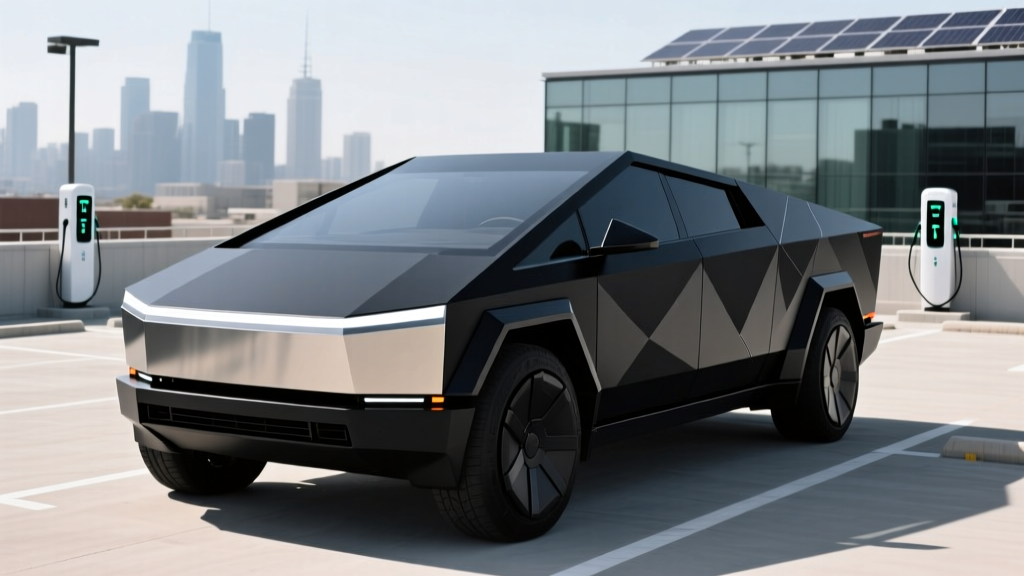
The Tesla Cybertruck polarizes from the curb, but the conversation changes once you step inside. Searching for Cybertruck por dentro reveals a cabin that strips away traditional truck ornamentation in favor of a minimalist, screen-forward command center wrapped in vegan leather and cold-rolled stainless steel accents. For 2026, Tesla offers the Cybertruck in AWD (Dual Motor) and Cyberbeast (Tri-Motor) trims, both riding on an 800-volt architecture that enables some of the fastest DC fast-charging in the pickup segment. This review covers everything from real-world range and charging curves to interior dimensions, tax-credit eligibility, and whether this angular EV truck actually delivers on its utility promises.
Cybertruck Por Dentro: Interior, Tech, and Cargo
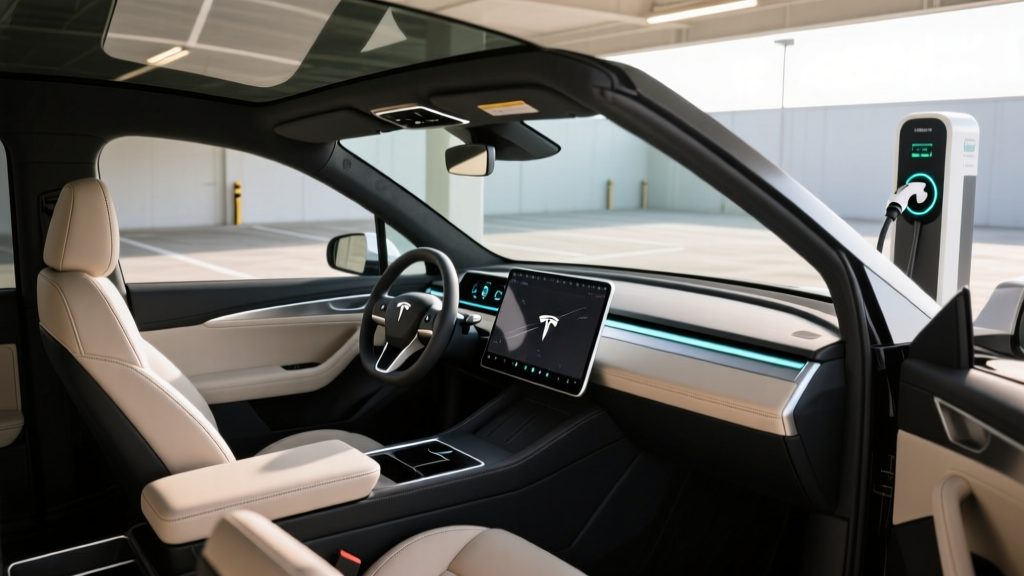
The Cybertruck's cabin is a study in brutalist minimalism. A single 18.5-inch center touchscreen dominates the dash, running Tesla's latest vehicle software with integrated navigation, media, climate controls, and a customizable widget bar. There is no traditional instrument cluster; all driving information is projected onto the lower-left quadrant of the central display. A smaller 9.4-inch rear touchscreen gives second-row passengers climate and media control.
Materials are a mix of premium and utilitarian. The seats are upholstered in Tesla's vegan leather (a polyurethane composite), which holds up well to daily use but lacks the breathability of perforated options in competitors like the Ford F-150 Lightning. The dash and door panels use a combination of soft-touch materials and exposed stainless steel trim that echoes the exterior exoskeleton.
Dimensions and Cargo Capacity
| Specification | Cybertruck AWD | Cyberbeast |
|---|---|---|
| Front Legroom | 41.8 in | 41.8 in |
| Rear Legroom | 38.5 in | 38.5 in |
| Bed Length | 6 ft (72 in) | 6 ft (72 in) |
| Bed Volume | 67 cu ft | 67 cu ft |
| Frunk (Front Trunk) | 7.1 cu ft (lockable) | 7.1 cu ft (lockable) |
| Hidden Under-Bed Storage | ~8 cu ft | ~8 cu ft |
| Towing Capacity | 11,000 lbs | 11,000 lbs |
| Payload Capacity | 2,500 lbs | 2,500 lbs |
The 6-foot composite bed features a powered retractable tonneau cover rated to support 300 lbs of distributed weight — enough for two adults or a rooftop tent. The vault-style tailgate deploys as a ramp for loading ATVs or motorcycles. Under the bed floor, a sealed storage compartment adds roughly 8 cubic feet of lockable, weatherproof space ideal for tools or recovery gear.
Standout Tech and Drawbacks
The Cybertruck includes Tesla's full suite of over-the-air updates, a 15-speaker premium audio system with active noise cancellation, and a bioweapon defense mode HVAC system with a HEPA filter. The steer-by-wire system (Tesla calls it "adaptive steering") eliminates the mechanical connection between the yoke-style steering wheel and the front wheels, enabling a variable steering ratio that requires less than a full turn lock-to-lock.
Notable drawbacks: The yoke steering wheel, while visually striking, draws criticism from owners who find it awkward during low-speed maneuvers and three-point turns. Rear visibility is limited by the sloping bed cover and lack of a traditional rear window; Tesla compensates with a digital rearview camera feed on the main display. The absence of physical buttons for climate and wiper controls means every adjustment requires a screen tap, which some drivers find distracting.
Range, Battery, and Efficiency
The 2026 Cybertruck uses a structural battery pack with an estimated usable capacity of approximately 123 kWh, built on Tesla's 4680 cylindrical cell format. Tesla has not officially disclosed the cathode chemistry for the Cybertruck pack, but industry teardowns and supply-chain reporting point to a high-nickel NMC (nickel-manganese-cobalt) formulation optimized for energy density and high-discharge performance — consistent with the tri-motor Cyberbeast's power demands.
| Trim | EPA Est. Range | Real-World Highway (~75 mph) | Cold Weather (20°F) |
|---|---|---|---|
| AWD (Dual Motor) | 340 miles | ~270–295 miles | ~230–260 miles |
| Cyberbeast (Tri-Motor) | 320 miles | ~255–280 miles | ~215–245 miles |
In real-world highway driving at sustained speeds of 70–75 mph, expect to use roughly 70–75% of the EPA sticker range. Cold weather (below freezing) compounds range loss due to battery heating demands and increased aerodynamic drag from denser air. The Cybertruck's heat pump system mitigates some of this loss, but the truck's 6,600+ lb curb weight and large frontal area work against efficiency. According to fueleconomy.gov, the AWD Cybertruck achieves an estimated 67 MPGe combined (approximately 50 kWh/100 mi), while the Cyberbeast rates at roughly 63 MPGe combined.
Charging Speed: DC Fast, Level 2, and Home Setup
The Cybertruck's 800-volt architecture is one of its strongest practical advantages. On a compatible DC fast charger, it can accept a peak charge rate of up to 250 kW (on V3 Superchargers) and up to 350 kW on Tesla's newer V4 Supercharger cabinets with the integrated CCS adapter.
| Charging Level | Power (kW) | Rate / Time | Notes |
|---|---|---|---|
| Level 1 (120V outlet) | ~1.4 kW | ~3–4 mi/hr | Emergency/trickle only; a full charge takes days |
| Level 2 (240V, 48A Wall Connector) | 11.5 kW | ~34 mi/hr (~12 hrs empty-full) | Standard home charging; requires 60A circuit |
| Level 2 (240V, 80A Wall Connector) | 19.2 kW | ~56 mi/hr (~7 hrs empty-full) | Requires 100A circuit and upgraded panel in many homes |
| DC Fast Charge (V3 Supercharger) | Peak 250 kW | 10–80% in ~28 min | Sustained rate tapers above 60% SoC |
| DC Fast Charge (V4 / 350 kW CCS) | Peak ~350 kW | 10–80% in ~20 min | Requires V4 cabinet availability; preconditioning essential |
Charging curve reality: The Cybertruck does not sustain peak charge rates for the entire session. In testing, the truck holds near 250 kW from roughly 10% to 40% state of charge, then tapers progressively — dropping to ~150 kW by 60% and ~80 kW by 80%. This is typical for large-battery EVs and is managed by the battery management system to protect cell longevity. Always precondition the battery (via navigation to a Supercharger) before fast-charging to reach optimal cell temperature.
For home charging, Tesla's Gen 3 Wall Connector at 48 amps on a 240V/60A circuit delivers approximately 34 miles of range per hour of charging — enough to replenish a typical day's driving overnight. Upgrading to an 80-amp circuit with the High Power Wall Connector cuts charge time significantly but may require a panel upgrade (budget $1,500–$3,500 for electrical work depending on your home's existing service, per licensed electrician estimates).
Performance and Drivetrain
| Spec | AWD (Dual Motor) | Cyberbeast (Tri-Motor) |
|---|---|---|
| Horsepower | 600 hp | 845 hp |
| Torque | ~740 lb-ft | ~1,030 lb-ft |
| 0–60 mph | 3.9 seconds | 2.6 seconds |
| Drivetrain | Dual Motor AWD | Tri-Motor AWD |
| Top Speed | 130 mph | 130 mph |
| Adaptive Air Suspension | Standard | Standard |
The Cyberbeast's 2.6-second 0–60 mph time makes it one of the quickest production pickups ever built, rivaling supercars from a decade ago. The dual-motor AWD trim is hardly slow at 3.9 seconds, and its slightly better range makes it the more practical daily driver. Both trims feature adaptive air suspension with up to 16 inches of ground clearance in Off-Road mode and automatic lowering at highway speeds for aerodynamic efficiency.
The steer-by-wire system enables four-wheel steering, giving the 20-foot-long truck a turning circle comparable to a midsize sedan. In practice, this makes parking and tight-trail maneuvering surprisingly manageable, though the lack of physical feedback through the yoke takes acclimation.
Pricing, Tax Credits, and Ownership Cost
As of early 2026, the Cybertruck lineup is priced as follows:
| Trim | Base MSRP | As-Tested (Typical Options) | Federal Tax Credit (§30D) |
|---|---|---|---|
| Cybertruck AWD | $81,630 | $85,000–$88,000 | Not eligible (MSRP exceeds $80,000 truck cap) |
| Cyberbeast | $101,630 | $105,000–$110,000 | Not eligible (MSRP exceeds $80,000 truck cap) |
- MSRP cap for trucks/vans/SUVs: $80,000. Both Cybertruck trims exceed this threshold, making them ineligible for the $7,500 federal credit.
- Income caps: Modified AGI must not exceed $150,000 (single), $225,000 (head of household), or $300,000 (joint) — relevant if a future trim drops below the MSRP cap.
- Battery sourcing: Critical minerals and battery components must meet phased-in domestic/free-trade sourcing requirements per IRS guidelines.
- Point-of-sale transfer: Eligible buyers can transfer the credit to the dealer at purchase for an immediate price reduction — but only if the vehicle qualifies.
Bottom line: At current pricing, no Cybertruck trim qualifies for the federal §30D credit. Some states offer additional incentives (check AFDC state incentive lookup), but amounts vary by jurisdiction.
5-Year Ownership Snapshot
Despite the high purchase price, operating costs are lower than a comparable gas truck. Electricity at the national average of ~$0.16/kWh means fully charging the 123 kWh battery costs roughly $19.70, compared to $60–$80 for a full tank in an F-150 or Silverado. Over 5 years and 75,000 miles, estimated fuel savings versus a gas truck can reach $8,000–$12,000 depending on local electricity and gas prices. However, insurance premiums for the Cybertruck run 25–40% higher than the segment average, partially offsetting those savings.
Pros, Cons, and Who Should Buy
Pros
- 800V architecture with peak 350 kW DC charging (V4 stations)
- Class-leading 0–60 performance, especially Cyberbeast at 2.6 sec
- Stainless steel exoskeleton — no paint to chip or fade
- 11,000-lb towing capacity with integrated trailer tech
- Powered tonneau cover supporting 300 lbs; under-bed vault storage
- Four-wheel steering yields a surprisingly tight turning radius
- Over-the-air updates continuously add features
Cons
- Base price exceeds $80K — no federal tax credit eligibility
- Yoke steering is divisive; awkward for parking and U-turns
- Real-world highway range falls 15–25% below EPA estimates
- Large footprint (223.6 in long, 95 in wide w/ mirrors) challenges tight garages
- No physical buttons — all controls routed through touchscreen
- Limited rear visibility; reliant on camera feed
- Insurance premiums significantly above segment average
Who the Cybertruck Suits Best
Buy it if: You want a high-performance electric truck with fast 800V charging, need serious towing and payload capability, and value the tech-forward minimalism of Tesla's ecosystem. The Cybertruck works well for owners with home Level 2 charging who take periodic road trips (the Supercharger network remains the most reliable DC fast-charging infrastructure in the U.S.) and who want a truck that doubles as a statement vehicle.
Look elsewhere if: You need a sub-$60K truck, rely on the federal tax credit to make the math work, prefer conventional steering and physical controls, or regularly park in tight urban garages where the Cybertruck's 95-inch width (with mirrors) becomes a liability. The Ford F-150 Lightning (starting ~$55,000, eligible for the §30D credit on qualifying trims) or the Rivian R1T (more refined interior, eligible for the credit on certain configurations) may better serve budget-conscious or family-oriented buyers.
Warranty and Battery Longevity
| Coverage | Term |
|---|---|
| Basic Vehicle Limited Warranty | 4 years / 50,000 miles |
| Battery & Drive Unit Warranty | 8 years / 120,000 miles |
| Battery Capacity Retention Threshold | Minimum 70% of original capacity during warranty period |
Tesla's 8-year/120,000-mile battery and drive unit warranty is competitive within the EV truck segment. The 70% capacity retention threshold is standard — if your battery degrades below 70% of its original usable kWh within the warranty window, Tesla will repair or replace it. Based on data from Tesla's existing 4680-cell fleet (Model Y Austin-built), early degradation curves show roughly 5–7% loss in the first 30,000 miles, then a flattening curve. Projecting to 150,000 miles, most packs should retain 85–90% of original capacity under normal use. Avoid habitual DC fast-charging to 100% and frequent deep discharges to 0% to maximize longevity.
Frequently Asked Questions
What is the real-world range of the Tesla Cybertruck?
The EPA estimates 340 miles for the AWD and 320 miles for the Cyberbeast. In real-world highway driving at 70–75 mph, expect roughly 270–295 miles (AWD) and 255–280 miles (Cyberbeast). In cold weather below freezing, those figures drop to approximately 230–260 and 215–245 miles respectively. Range varies with payload, towing, terrain, and driving style.
How fast does the Cybertruck charge at home and on the road?
At home on a 240V/48A Level 2 Tesla Wall Connector, the Cybertruck adds about 34 miles of range per hour, fully recharging overnight in roughly 12 hours. On a V3 Supercharger (250 kW peak), a 10–80% session takes approximately 28 minutes. On newer V4 Superchargers capable of 350 kW, that drops to around 20 minutes, provided the battery is preconditioned.
Does the Cybertruck qualify for the $7,500 federal EV tax credit?
No. Under current IRS §30D rules, the MSRP cap for trucks is $80,000. Both the AWD ($81,630) and Cyberbeast ($101,630) exceed this cap and are ineligible. State-level incentives may still apply depending on your jurisdiction.
Is the Cybertruck worth buying over the F-150 Lightning or Rivian R1T?
It depends on priorities. The Cybertruck offers faster charging (800V), quicker acceleration, and a more distinctive design. The F-150 Lightning provides a more conventional truck experience, lower starting price, and tax-credit eligibility. The Rivian R1T delivers a more refined interior, better off-road capability with quad-motor torque vectoring, and a stronger adventure-community ecosystem. If performance and Tesla's Supercharger network are your top priorities, the Cybertruck is compelling. If budget and traditional truck ergonomics matter more, the Lightning or R1T may be the better fit.
How does steer-by-wire feel in daily driving?
Most owners report a 1–2 week adjustment period. The variable ratio means small yoke inputs at highway speed produce subtle steering changes, while larger inputs at low speed turn the wheels more aggressively. The lack of physical road feedback is the most common complaint. Four-wheel steering makes the truck feel smaller than its dimensions suggest, particularly in parking lots.
Can the Cybertruck tow a travel trailer or boat?
Yes. With an 11,000-lb towing capacity and integrated trailer brake controller, the Cybertruck handles most travel trailers, boat trailers, and car haulers. Note that towing at or near maximum capacity will reduce range by 40–55% depending on trailer aerodynamics and weight. Tesla's built-in trailer assist and range projection tools help plan charging stops while towing.
What is the Cybertruck's safety rating?
As of early 2026, the Cybertruck has not yet received a full crash-test rating from NHTSA or IIHS. Tesla states the stainless steel exoskeleton and large front crumple zone provide exceptional occupant protection, but independent validation is pending. Check NHTSA.gov and IIHS.org for updates as testing results are published.