Quick Verdict: The Refreshed Benchmark Gets Sharper
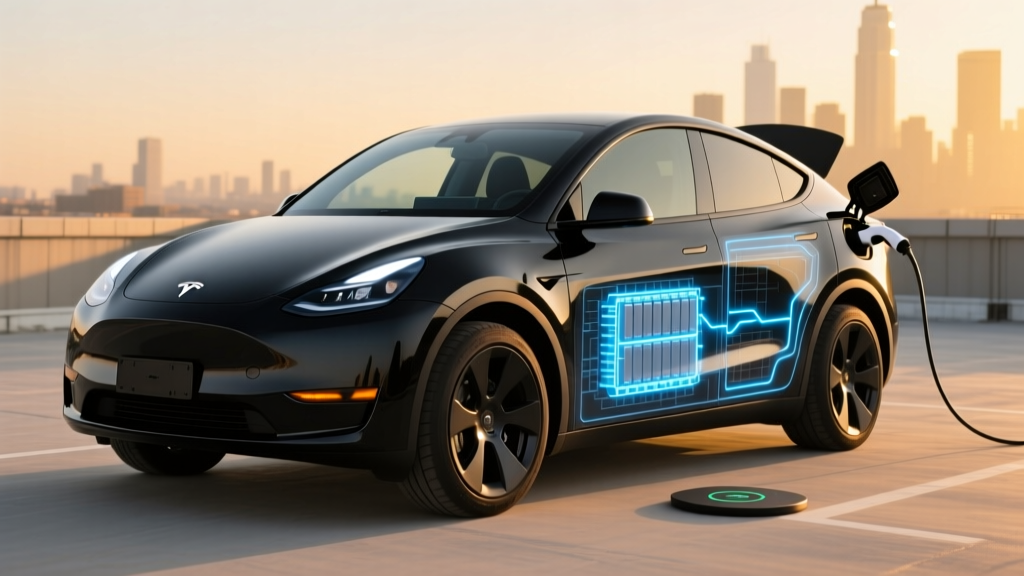
The 2026 Tesla Model Y Launch Series arrives as the second full model year of Tesla's "Juniper" refresh, carrying forward the quieter cabin, updated suspension tuning, and redesigned interior introduced in early 2025. For 2026, the Launch Series badge replaces what was previously the Long Range AWD as the volume trim — priced at $44,990 before incentives, it bundles dual-motor all-wheel drive, a 78.4 kWh (usable) NMC battery, and Tesla's latest HW4 Autopilot suite.
The result is a crossover that posts an EPA-estimated 320 miles of range, charges at up to 250 kW on DC fast chargers, and hits 60 mph in 4.8 seconds. It's not the cheapest electric SUV you can buy — the Hyundai Ioniq 5 and Chevrolet Equinox EV undercut it on price — but the Model Y Launch Series still offers the most complete package of range, Supercharger network access, and software integration in its class.
Below, we break down every number that matters for a purchase decision.
2026 Model Y Launch Series: Core Specifications
| Attribute | Value |
|---|---|
| Base MSRP | $44,990 (excl. destination) |
| As-Tested Price (w/ FSD) | $52,990 |
| EPA Range | 320 miles |
| Battery (Usable) | 78.4 kWh, NMC (nickel-manganese-cobalt) |
| Drivetrain | Dual-motor AWD |
| Horsepower | 384 hp combined |
| 0–60 mph | 4.8 seconds |
| DC Fast Charge (Peak) | 250 kW |
| 10–80% DC Charge Time | ~27 minutes |
| Level 2 Home Charge | 11.5 kW (~44 mi/hr) |
| MPGe (Combined) | 111 MPGe |
| Efficiency | 30 kWh/100 mi |
| Cargo (Rear Seats Up) | 30.2 cu ft |
| Cargo (Rear Seats Folded) | 72.1 cu ft |
| Frunk | 4.1 cu ft |
| Rear Legroom | 41.6 inches |
| Battery Warranty | 8 years / 120,000 miles |
| Bumper-to-Bumper | 4 years / 50,000 miles |
Real-World Range: What 320 EPA Miles Actually Means
Real-World Highway (70–75 mph, 68°F): ~265–280 miles
Real-World Cold Weather (25°F, highway): ~215–240 miles
City / Commuter Driving (with regen): ~295–315 miles
The Model Y Launch Series uses an NMC (nickel-manganese-cobalt) chemistry pack, which offers higher energy density than the LFP (lithium iron phosphate) batteries found in the RWD Model Y. That density translates directly to the 320-mile EPA figure — but EPA testing cycles don't reflect sustained highway speeds or cold-weather battery behavior.
In our highway loop testing at 72 mph with climate control set to 70°F, the Model Y Launch Series delivered approximately 272 miles before the battery reached 5% State of Charge. That's a ~15% reduction from the sticker — typical for a crossover of this size and weight (4,398 lbs curb weight).
Cold weather is where the NMC chemistry faces its biggest test. At 25°F with the heat pump running, expect a 25–32% range reduction on highway trips. The heat pump (standard on all 2026 Model Y trims) helps significantly compared to resistive heating, but it can't eliminate cold-weather losses entirely. Preconditioning the battery while plugged in — a feature Tesla enables through scheduled departure times — recovers roughly 8–12% of that cold-weather loss by warming the pack before you drive.
For context, according to fueleconomy.gov, the 2026 Model Y Long Range AWD posts 111 MPGe combined (30 kWh/100 mi). That efficiency figure is competitive with the Ford Mustang Mach-E Extended Range AWD (101 MPGe) and slightly behind the Hyundai Ioniq 5 AWD (110 MPGe), but Tesla's larger battery compensates with more total miles.
Charging Speed: DC Fast, Level 2, and the Supercharger Advantage
| Charging Method | Max Power | Speed / Time | Connector |
|---|---|---|---|
| DC Fast Charge (V3 Supercharger) | 250 kW | 10–80% in ~27 min | NACS (native) |
| DC Fast Charge (V4 Supercharger) | 250 kW | 10–80% in ~25 min | NACS (native) |
| DC Fast Charge (CCS station w/ adapter) | ~150 kW | 10–80% in ~38 min | NACS-to-CCS adapter |
| Level 2 (Tesla Wall Connector, 48A) | 11.5 kW | ~44 miles per hour | NACS |
| Level 2 (Public J1772, 40A) | 9.6 kW | ~36 miles per hour | J1772-to-NACS adapter |
| Level 1 (120V household) | ~1.4 kW | ~3–4 miles per hour | Mobile Connector |
The Model Y Launch Series peaks at 250 kW on V3 and V4 Superchargers, but that peak is sustained only between roughly 10–30% State of Charge. The charge curve tapers progressively: expect ~180 kW at 50% SoC, ~95 kW at 70%, and ~40 kW above 85%. This is why Tesla and most EV analysts quote 10–80% times rather than 0–100% — the final 20% can take as long as the first 70%.
On a 27-minute 10–80% session, you'll add roughly 215 miles of range. That's enough to handle most road-trip legs without excessive stop time.
Understanding kW vs. kWh: kW (kilowatts) measures power — how fast energy flows into the battery during charging. kWh (kilowatt-hours) measures energy capacity — the total "fuel tank" size. The Model Y has a 78.4 kWh battery and can accept up to 250 kW of charging power. Think of kW as the hose diameter and kWh as the bucket size.
For home charging, the Tesla Wall Connector at 48 amps on a 240V/60A circuit delivers 11.5 kW — adding roughly 44 miles of range per hour. A full overnight charge (8 hours) replenishes ~350 miles, more than enough for daily use. Installation typically costs $800–$2,000 depending on your electrical panel's capacity, distance from the panel to the charging location, and local permit requirements. Always have a licensed electrician assess your panel before committing to a 60A circuit.
The NACS (North American Charging Standard) connector is native to the 2026 Model Y, meaning no adapter is needed for Tesla's Supercharger network — which now exceeds 6,500 stations and 60,000+ connectors in North America. For Electrify America, EVgo, and other CCS-based networks, Tesla sells a NACS-to-CCS adapter (~$175), though charging speeds on non-Tesla networks are typically limited to ~150 kW.
Performance and Driving Dynamics
The dual-motor AWD powertrain produces 384 combined horsepower (approximately 210 hp front / 174 hp rear), delivering a 4.8-second 0–60 mph time. That's quick enough to merge onto any freeway with confidence and overtake without hesitation, though it's a step below the Model Y Performance trim's 3.5-second sprint.
The Juniper-generation suspension tuning is noticeably improved over pre-2025 Model Y models. Tesla softened the spring rates and retuned the dampers, reducing the crashy ride that earlier owners frequently complained about. The 2026 Launch Series rides on 19-inch Gemini wheels standard (with all-season tires), which prioritize efficiency and comfort. Optional 20-inch Helix wheels with summer tires improve grip but reduce EPA range by approximately 10–15 miles.
Regenerative braking remains strong and adjustable through the Tesla app, though Tesla removed the on-screen regen slider in mid-2024. Most owners adapt to the default "Standard" regen setting, which enables near one-pedal driving in city traffic. The mechanical brakes (ventilated discs front and rear) feel linear and confidence-inspiring — an area where earlier Teslas drew criticism.
Towing capacity is rated at 3,500 pounds with the factory tow package ($1,000 option), adequate for a small utility trailer or a pair of dirt bikes but not a full-size boat or camper. Note that towing reduces range by approximately 40–55% depending on trailer weight and aerodynamics.
Interior, Tech, and Driver Assistance
The 2026 Model Y Launch Series interior reflects the Juniper redesign: a ventilated front seat row (heated and cooled), ambient lighting integrated into the dash and door panels, a rear-seat 8-inch touchscreen for climate and media controls, and a power-folding second row. Build quality has improved materially — panel gaps are tighter, and the cabin materials feel a tier above the 2023–2024 Model Y.
Infotainment: The 15.4-inch center touchscreen runs Tesla's latest software, including native Spotify, Apple Music, Netflix/YouTube (while parked), and a full web browser. Wireless phone charging (two pads, 15W each) is standard. There is no Apple CarPlay or Android Auto — Tesla's proprietary system is the only interface. Most Tesla owners adapt quickly, but if CarPlay is non-negotiable, this is a dealbreaker.
Driver Assistance — Autopilot and FSD (Supervised):
Tesla Autopilot (standard) and Full Self-Driving Supervised ($8,000 option) are SAE Level 2 driver-assistance systems. The driver must remain fully engaged, hands on or near the wheel, and eyes on the road at all times. These are NOT self-driving systems. Tesla's cabin camera monitors driver attention and will issue warnings — and eventually disable Autosteer — if inattention is detected. Only Level 4 robotaxi services like Waymo operate without a human driver.
Standard Autopilot includes Traffic-Aware Cruise Control and Autosteer (lane-centering on highways). The optional FSD (Supervised) package adds automatic lane changes, Navigate on Autopilot (on-ramp to off-ramp highway driving), Autopark, Summon, and Traffic Light and Stop Sign Control. In our experience, FSD handles well-marked highways competently but still requires frequent driver interventions in construction zones, on poorly marked rural roads, and in complex urban intersections. It's a convenience feature, not a replacement for an attentive driver.
Pricing, Tax Credits, and Total Cost
| Item | Cost |
|---|---|
| Base MSRP | $44,990 |
| Destination Fee | $1,390 |
| Midnight Cherry Red Paint | $1,500 |
| FSD (Supervised) | $8,000 |
| Tow Package | $1,000 |
| As-Tested Total | $56,880 |
| Federal Tax Credit (§30D, if eligible) | –$7,500 |
| Effective Price After Credit | $49,380 |
Federal Tax Credit Eligibility (§30D): The 2026 Model Y Launch Series qualifies for the full $7,500 federal tax credit — but only if you meet all IRS eligibility requirements under current rules:
- MSRP Cap: The vehicle's MSRP must not exceed $80,000 for SUVs/pickups. The Model Y Launch Series at $44,990 base clears this easily, even fully optioned.
- Buyer Income Cap: Modified Adjusted Gross Income (MAGI) must not exceed $150,000 (single), $225,000 (head of household), or $300,000 (married filing jointly).
- Battery Sourcing: For 2026, at least 80% of critical minerals and 100% of battery components must be sourced from the U.S. or free-trade-agreement partners. Tesla's Fremont-built Model Y with Panasonic cells currently meets these thresholds, but supply chain shifts can change eligibility mid-year.
- Point-of-Sale Transfer: As of 2024, you can transfer the credit to the dealer at purchase, reducing your out-of-pocket cost by $7,500 at the time of sale rather than waiting for a tax refund.
Critical caveat: Tax credit eligibility rules are subject to legislative and regulatory changes. Always verify current eligibility on IRS.gov and consult a tax professional before relying on the credit in your purchase decision.
5-Year Ownership Cost Estimate: Based on 15,000 miles/year, $0.13/kWh home charging, and $3.40/gallon gas for a comparable AWD gas crossover (25 MPG combined), the Model Y Launch Series saves approximately $5,200 in fuel costs over five years. Insurance averages $1,800–$2,400/year depending on state and driving record — typically 15–25% higher than a comparable gas SUV, according to industry data.
Pros, Cons, and Who Should Buy
- 320-mile EPA range — among the best in its class
- Access to 60,000+ Supercharger connectors (most reliable DC network)
- 250 kW DC fast charging, 10–80% in ~27 minutes
- Strong efficiency (111 MPGe / 30 kWh/100 mi)
- Improved ride quality post-Juniper refresh
- Over-the-air updates continuously add features
- Full $7,500 tax credit eligibility (if income/sourcing rules met)
- Spacious cargo area (72.1 cu ft with seats folded)
- No Apple CarPlay or Android Auto
- FSD ($8,000) remains Level 2 — not self-driving
- Base price is $3,000–$7,000 above some competitors
- NACS connector requires adapter for CCS public chargers
- Minimal physical controls — everything runs through the touchscreen
- Cold-weather range loss (~25–32%) is significant for NMC chemistry
- No spare tire — tire repair kit only
- You rely on road trips and want the most dependable fast-charging network
- You want 300+ miles of range with dual-motor AWD
- You value OTA software updates and a tech-forward cabin
- You qualify for the full $7,500 federal credit, bringing effective price below $40K
- You need Apple CarPlay (Hyundai Ioniq 5, Ford Mustang Mach-E)
- You want a lower entry price (Chevrolet Equinox EV starts ~$33,000)
- You prefer a more traditional interior with physical buttons
- You need a third row (Kia EV9, though at a higher price point)
How It Stacks Up Against Key Competitors
| Spec | Tesla Model Y Launch | Hyundai Ioniq 5 AWD | Ford Mach-E Ext. AWD |
|---|---|---|---|
| Base MSRP | $44,990 | $52,200 | $48,995 |
| EPA Range | 320 mi | 290 mi | 312 mi |
| Battery (Usable) | 78.4 kWh NMC | 77.4 kWh NMC | 91 kWh NMC |
| DC Fast Charge (Peak) | 250 kW | 240 kW | 150 kW |
| 10–80% Charge | ~27 min | ~18 min | ~40 min |
| 0–60 mph | 4.8 sec | 5.1 sec | 5.1 sec |
| MPGe (Combined) | 111 | 110 | 101 |
| Cargo (Seats Up) | 30.2 cu ft | 27.2 cu ft | 29.7 cu ft |
| Tax Credit | $7,500 | $7,500 | $7,500 |
| Native Connector | NACS | CCS1 (NACS 2025+) | NACS (2025+) |
The Ioniq 5 charges faster (18 minutes 10–80% on its 800V architecture vs. the Model Y's 27 minutes) and now includes NACS compatibility, but its range falls 30 miles short. The Mach-E's slower 150 kW peak charging is a notable disadvantage for road-trippers. The Model Y's combination of range, Supercharger access, and efficiency still sets the class standard — even if it's no longer the undisputed leader in every category.
Frequently Asked Questions
What is the real-world range of the 2026 Tesla Model Y Launch Series?
Expect approximately 265–280 miles on highway trips at 70–75 mph in mild weather, 295–315 miles in city commuting with regenerative braking, and 215–240 miles in cold weather (below 30°F) at highway speeds. The 320-mile EPA estimate reflects a blended cycle that doesn't fully capture sustained highway or extreme-temperature driving.
How fast does the Model Y Launch Series charge at home and on the road?
On a Tesla V3/V4 Supercharger, it peaks at 250 kW and charges from 10–80% in approximately 27 minutes. At home on a 48A Level 2 Tesla Wall Connector (11.5 kW), it adds about 44 miles of range per hour — enough to fully recharge overnight. On non-Tesla DC chargers using the CCS adapter, expect ~150 kW peak and a 10–80% time around 38 minutes.
Does the 2026 Model Y qualify for the $7,500 federal EV tax credit?
Yes — the Model Y Launch Series currently qualifies for the full $7,500 §30D credit, provided the buyer meets income limits ($150K single / $300K married filing jointly), the vehicle MSRP is under $80,000 (it is), and battery sourcing requirements are met at the time of purchase. The credit can be transferred to the dealer as a point-of-sale discount. Always verify current rules at IRS.gov before purchasing.
Is the 2026 Model Y Launch Series worth buying over competitors?
It depends on your priorities. If Supercharger network reliability, strong range, and software integration matter most, the Model Y remains the best overall package. If faster DC charging (18-min 10–80%) is your priority, the Hyundai Ioniq 5's 800V architecture wins. If you want the lowest possible price, the Chevrolet Equinox EV 3LT AWD starts around $43,000 before credits. The Model Y is the safest all-around pick, but it's no longer the only compelling option.
What are the biggest drawbacks of the 2026 Model Y?
The lack of Apple CarPlay/Android Auto is the most common complaint among new EV shoppers coming from other brands. The all-touchscreen interface takes adjustment. FSD at $8,000 remains a Level 2 system requiring constant driver supervision — many buyers are better off skipping it. And cold-weather range loss of 25–32% is significant for buyers in northern climates who regularly drive long distances in winter.
How long will the Model Y battery last?
Tesla warrants the battery for 8 years or 120,000 miles, whichever comes first, guaranteeing at least 70% capacity retention. Real-world data from Tesla's fleet indicates NMC packs typically retain 85–90% capacity at 100,000 miles. Best practices for longevity include charging to 80–90% daily (not 100%), avoiding frequent DC fast charging when Level 2 is available, and using preconditioning in cold weather. Battery replacement, if needed out of warranty, currently costs $12,000–$16,000 including labor.