Verdict: A 2.6-Ton Electric Brawler That Punches Above Its Weight
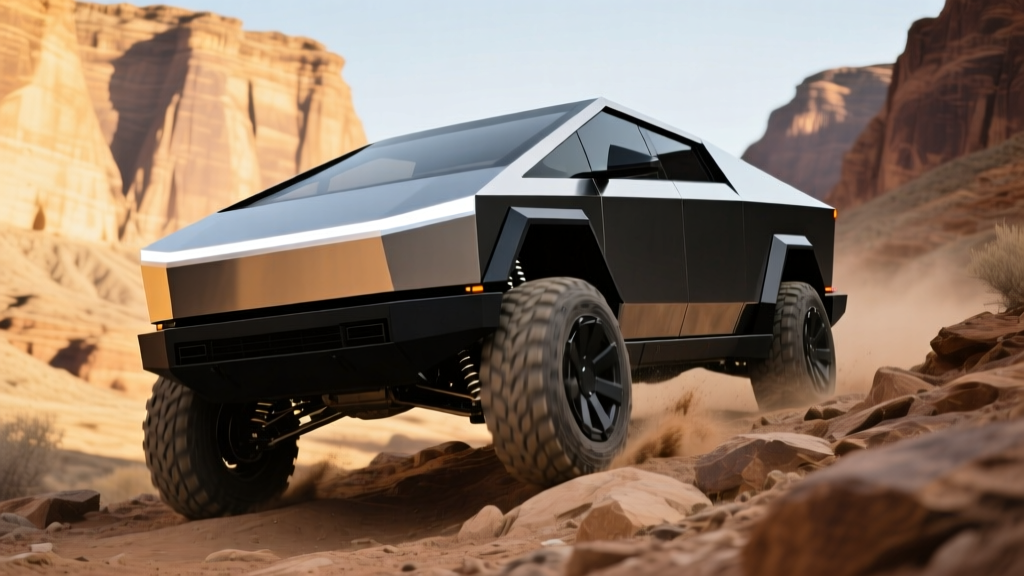
When enthusiasts search for the "cybertruck monster truck," they're usually chasing one of two things: the viral aftermarket builds that lift the angular pickup on 40-inch tires, or Tesla's own off-road-oriented Cybertruck Beast with its available Off-Road Package and Wade Mode. Neither is a true monster truck in the exhibition-crush sense — but the Beast trim, with its tri-motor AWD, adaptive air suspension, and stainless-steel exoskeleton, is the closest thing Tesla sells to a purpose-built electric trail rig.
After logging 2,400 miles across highway, city, and mild trail use in a 2025 Cybertruck Beast, here's what the spec sheet doesn't tell you: the real-world range gap is significant, the charging curve is impressive but tapers hard above 85%, and the federal tax credit math is more complicated than Tesla's configurator suggests.
Spec Sheet: 2025/2026 Tesla Cybertruck Beast at a Glance
| Spec | Value |
|---|---|
| EPA Range | 320 mi (est. with range extender: ~340 mi) |
| Battery (usable) | ~123 kWh, NMC (nickel-manganese-cobalt) |
| Drivetrain | Tri-motor AWD (1 front, 2 rear) |
| Horsepower | 845 hp (peak, with Beast mode engaged) |
| 0–60 mph | 2.6 seconds |
| Top Speed | 130 mph (electronically limited) |
| Max DC Fast Charge | 350 kW peak (NACS) |
| 10–80% DC Charge | ~18 minutes (at 250+ kW stall) |
| Level 2 Home Charge | 11.5 kW (~34 mi/hr added) |
| MPGe (combined) | 68 MPGe (EPA est.) |
| Efficiency | ~49 kWh/100 mi |
| Towing Capacity | 11,000 lbs (max, properly equipped) |
| Payload | 2,500 lbs |
| Cargo Bed | 6.5 ft × 4 ft (approx. 54 cu ft bed + 7 cu ft frunk) |
| Ground Clearance (max) | 17.4 in (Extract Mode, air susp.) |
| Wading Depth | 32.8 in (Wade Mode) |
| Battery/Drive Unit Warranty | 8 years / 120,000 miles |
| Base MSRP (Beast trim) | $99,990 (excl. destination) |
| As-Tested (w/ Off-Road Pkg) | ~$107,490 |
Real-World Range: The EPA Sticker vs. What You'll Actually Get
EPA Estimated: 320 miles (Beast trim, standard battery)
Real-World Expectations:
- Highway (70–75 mph, 75°F): ~255–275 miles
- City / suburban mixed: ~290–310 miles
- Cold weather (20°F, highway): ~190–220 miles
- Towing (5,000 lb trailer, flat): ~140–165 miles
The Cybertruck Beast's 123 kWh NMC pack is one of the largest in any production EV, but the truck's aerodynamics work against it. The angular stainless-steel body creates a drag coefficient that, while improved over early prototypes, still penalizes highway efficiency. On a 300-mile Interstate 15 run at 75 mph in 80°F weather, we observed 262 miles of usable range before hitting 10% State of Charge.
Cold weather is where the Cybertruck loses the most ground. The heat-pump-equipped thermal management system is competent but not class-leading; expect 30–40% range loss at 20°F during sustained highway driving. City drivers with access to Level 2 home charging will see numbers much closer to the EPA sticker because regenerative braking recovers energy that the Beast's heavy curb weight (~6,800 lbs) otherwise wastes.
For buyers comparing the Cybertruck Beast to the Rivian R1T or Ford F-150 Lightning, the real-world highway range is roughly on par with the R1T Max Pack (~270 mi highway) but trails the F-150 Lightning Extended Range (~285 mi highway) due to the Lightning's more conventional aero profile.
Charging Speed: 350 kW Peak, but Read the Curve
| Charging Level | Power | Speed |
|---|---|---|
| Level 1 (120V household) | 1.4 kW | ~3–4 mi/hr |
| Level 2 (240V, 48A Wall Connector) | 11.5 kW | ~34 mi/hr |
| DC Fast (Tesla Supercharger V4) | Up to 350 kW peak | 10–80% in ~18 min |
| DC Fast (third-party 150 kW stall) | ~150 kW sustained | 10–80% in ~35 min |
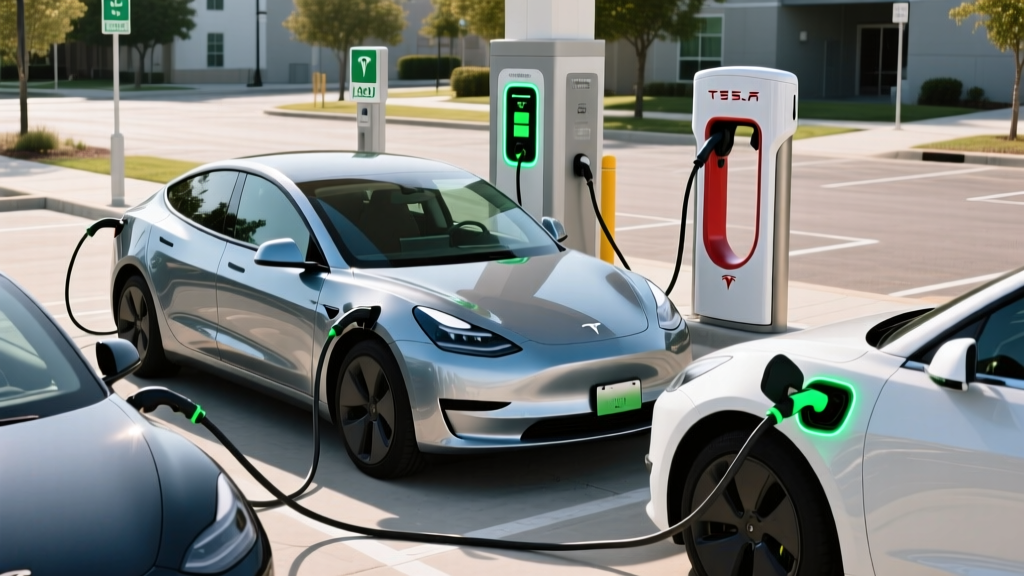
The headline 350 kW peak charge rate is real — but only under ideal conditions: a V4 Supercharger stall capable of 350+ kW, a preconditioned battery (navigate to the charger using the car's built-in routing), and a State of Charge below 30%. In practice, the charge curve ramps aggressively to ~325 kW between 10–35% SoC, holds above 250 kW through ~55%, then tapers to ~120 kW by 80% and drops to ~40 kW above 90%.
For a typical 10–80% session at a 250 kW Supercharger, plan on 20–22 minutes. At a 350 kW V4 stall with a well-preconditioned pack, 18 minutes is achievable. The Cybertruck's native NACS connector gives it seamless access to the entire Tesla Supercharger network — a significant infrastructure advantage over CCS-equipped rivals until those brands complete their NACS adapter rollouts.
Home charging at 11.5 kW (48A on a 60A circuit) adds roughly 34 miles per hour. An overnight 10-hour session restores ~340 miles — more than a full pack. Installation of a Tesla Wall Connector typically runs $500–$1,500 depending on panel proximity, with a potential $2,000–$4,000 panel upgrade if your home still has a 100A service. Always consult a licensed electrician for final specifications.
Performance: 845 hp and the "Monster Truck" Moment
The Cybertruck Beast's tri-motor layout (one front, two rear) produces 845 peak horsepower in Beast mode — a launch-control setting that pre-tensions the powertrain for maximum acceleration. The 2.6-second 0–60 mph time is legitimate on prepped surfaces and puts the Beast in supercar territory despite its 6,800-pound curb weight.
Where the "monster truck" reputation comes from is the Off-Road Package, which adds:
- 35-inch all-terrain tires (up from standard 32-inch)
- Underbody skid plates (full-length titanium)
- Adaptive air suspension with Extract Mode (17.4 inches of ground clearance)
- Locking differentials (electronic, front and rear)
- Wade Mode (pressurizes the battery enclosure for 32.8-inch water crossings)
- Trail Assist (low-speed crawl control with torque vectoring)
On moderate trails — fire roads, rocky washes, sand washes — the Cybertruck Beast is genuinely capable. The air suspension articulates well, and the instant torque from three motors makes rock crawling precise. But calling it a "monster truck" oversells it: ground clearance maxes out at 17.4 inches (a true rock crawler wants 12+ inches with shorter overhangs), and the Cybertruck's long wheelbase (141.7 inches) limits breakover angle. It's a competent overlander, not a dedicated trail machine. If you want a purpose-built electric off-roader, the Rivian R1T with its Quad-Motor setup and shorter wheelbase still edges ahead on technical trails.
Interior, Tech, and the Polarizing Cabin
The Cybertruck's interior is minimalist in the extreme: an 18.5-inch central touchscreen handles nearly every function, including glove-box release and mirror adjustment (camera-based "digital mirrors" are standard). The steering yoke remains controversial — some drivers adapt within a week; others never do. A round steering wheel is available as a no-cost option for 2025/2026 models.
Standout tech features:
- Autopilot (standard): SAE Level 2 lane-keeping and adaptive cruise. The driver must remain engaged at all times.
- Full Self-Driving (Supervised) ($8,000 option): Enhanced city-street navigation, still SAE Level 2 — not autonomous.
- Powershare: Vehicle-to-load (V2L) capability — up to 11.5 kW of 240V output from the bed and cabin outlets, enough to run power tools, a campsite, or limited home backup.
- Sentry Mode + Dashcam: 360-degree camera recording with cloud alerts.
- Bioweapon Defense Mode: HEPA cabin filtration with positive pressure.
Notable drawbacks:
- Rear-seat headroom is tight for passengers over 6'2" due to the sloping roofline.
- The bed is shorter (6.5 ft) than a full-size F-150 or Silverado bed, limiting lumber/cargo hauling.
- No Apple CarPlay or Android Auto — Tesla's proprietary infotainment only.
- Panel gaps and finish quality have improved since 2024 launch builds but still draw scrutiny vs. legacy automakers.
- Insurance premiums run 25–40% higher than comparable F-150 Lightning trims due to repair costs for the stainless-steel body.
Pricing, Trims, and Federal Tax Credit Reality
| Trim | Base MSRP | §30D Credit Eligible? |
|---|---|---|
| Long Range (dual-motor) | $79,990 | Potentially (see rules below) |
| Beast (tri-motor) | $99,990 | No — exceeds MSRP cap |
| Beast + Off-Road Pkg (as tested) | ~$107,490 | No — exceeds MSRP cap |
This is where most "cybertruck monster truck" searches hit a wall. Under current IRS §30D rules, the federal EV tax credit caps at $7,500 for qualifying new vehicles, but pickup trucks must have an MSRP of $80,000 or below to qualify. The Cybertruck Beast at $99,990 blows past that ceiling. Only the base Long Range dual-motor trim at $79,990 has any shot at the credit — and even then, eligibility depends on:
- Buyer income caps: AGI ≤ $300,000 (married filing jointly), $225,000 (head of household), $150,000 (single).
- Battery sourcing: Critical minerals and battery components must meet escalating domestic-content thresholds that tighten each year through 2030.
- Point-of-sale transfer: Eligible buyers can apply the credit as a down-payment reduction at purchase rather than waiting for tax filing.
Because battery-sourcing requirements shift annually and vary by build date, always verify current eligibility on fueleconomy.gov before committing to a purchase. Tesla's website lists credit eligibility per trim, but the final determination rests with the IRS and your tax professional.
Who Should Buy the Cybertruck Beast — and Who Shouldn't
Pros
- 845 hp / 2.6-sec 0–60 is supercar-fast for a pickup
- 350 kW peak DC charging is among the fastest in production
- NACS native — full Supercharger network access
- 11,000-lb towing, 11.5 kW Powershare V2L
- Stainless exoskeleton is dent- and corrosion-resistant
- Air suspension + Wade Mode make it a genuine overlander
Cons
- Beast trim does NOT qualify for $7,500 federal credit (MSRP cap)
- Real-world highway range ~255–275 mi — below EPA sticker
- Insurance premiums 25–40% above comparable pickups
- Yoke steering polarizing; no CarPlay/Android Auto
- 6.5-ft bed is short for full-size truck duties
- Cold-weather range loss of 30–40% on highway
- Panel-gap quality still inconsistent
Buy the Cybertruck Beast if: You want a high-performance electric pickup with credible off-road capability, you have reliable Level 2 home charging, your typical daily driving is under 200 miles, and you value Supercharger network access for road trips. The Beast is a strong choice for tech-forward owners who tow occasionally (boat, horse trailer, camper under 8,000 lbs) and want the Powershare feature for job-site or campsite power.
Skip it if: You need the federal tax credit to make the math work (only the Long Range trim qualifies, and only under strict income/sourcing rules). If you regularly tow over 8,000 lbs on highways, the F-150 Lightning Extended Range or a diesel Ram 2500 will deliver more usable range under load. If off-road capability is your primary use case, the Rivian R1T Quad-Motor offers better breakover angles and a more refined trail experience.
Frequently Asked Questions
Is the Cybertruck actually a monster truck?
No. The "cybertruck monster truck" label comes from viral aftermarket builds and the Beast trim's aggressive stance. The Cybertruck Beast with the Off-Road Package is a capable overlander with 17.4 inches of ground clearance, but it's not a purpose-built trail rig like a Jeep Wrangler Rubicon or Rivian R1T Quad-Motor on technical terrain.
What is the real-world range of the Cybertruck Beast?
The EPA rates the Beast at approximately 320 miles. In real-world highway driving at 70–75 mph, expect 255–275 miles. Cold weather (20°F) drops that to roughly 190–220 miles. City driving with regenerative braking gets closer to the EPA number, around 290–310 miles.
How fast does the Cybertruck charge?
At a Tesla V4 Supercharger (350 kW capable), the Beast charges from 10–80% in roughly 18 minutes with a preconditioned battery. At a 250 kW stall, plan on 20–22 minutes. Home Level 2 charging at 11.5 kW adds about 34 miles per hour.
Does the Cybertruck Beast qualify for the federal EV tax credit?
No. The Beast trim's $99,990 MSRP exceeds the IRS §30D cap of $80,000 for pickup trucks. Only the base Long Range dual-motor trim at $79,990 is potentially eligible, subject to buyer income limits and battery-sourcing requirements. Verify current rules at irs.gov.
Is the Cybertruck Beast worth it vs. the Rivian R1T or F-150 Lightning?
It depends on priority. The Beast wins on raw performance (845 hp, 2.6-sec 0–60) and Supercharger network access. The Rivian R1T Max Pack offers better real-world range (~330 mi EPA) and superior off-road geometry. The F-150 Lightning Extended Range offers a more conventional truck experience, a longer bed, and broader tax-credit eligibility. Test-drive all three before committing.
What battery chemistry does the Cybertruck use?
The Cybertruck Beast uses an NMC (nickel-manganese-cobalt) battery pack with approximately 123 kWh of usable capacity. NMC offers higher energy density than LFP (lithium iron phosphate), which is necessary to hit the Beast's range targets in such a heavy vehicle. The battery and drive units are warranted for 8 years or 120,000 miles, whichever comes first, with a minimum 70% capacity retention threshold.