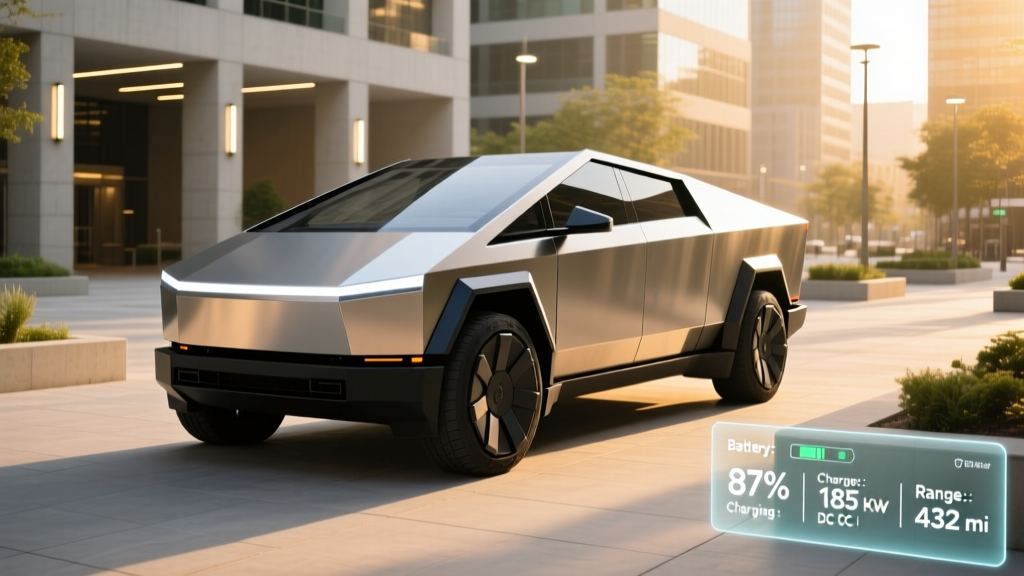
The Tesla Cybertruck is unlike anything else on the road — a stainless-steel exoskeleton, steer-by-wire steering, and a 48-volt electrical architecture that invites a new generation of aftermarket upgrades. But which Cybertruck mods actually deliver measurable value, and which are cosmetic gimmicks? In this guide, we break down the most practical modifications for real owners, grounded in the truck's baseline performance, range, and charging specs.
Cybertruck Baseline Specs: What You're Working With
Before modifying, understand the platform. The 2026 Cybertruck is available in three trims, each with distinct range, power, and pricing. All trims share the same structural battery pack using 4680-format NMC (nickel manganese cobalt) cells — chosen for energy density over the LFP chemistry found in some Tesla sedans.
| Spec | Long Range AWD | All-Wheel Drive | Cyberbeast |
|---|---|---|---|
| EPA Range | 340 mi | 318 mi | 301 mi |
| Battery (usable) | ~123 kWh NMC | ~123 kWh NMC | ~123 kWh NMC |
| Horsepower | 600 hp | 600 hp | 845 hp |
| 0–60 mph | 3.8 sec | 3.9 sec | 2.6 sec |
| Drivetrain | Dual-Motor AWD | Dual-Motor AWD | Tri-Motor AWD |
| Max DC Fast Charge | 250 kW | 250 kW | 250 kW |
| 10–80% DC Time | ~28 min | ~28 min | ~28 min |
| Level 2 Home Charge | 11.5 kW (~34 mi/hr) | 11.5 kW (~34 mi/hr) | 11.5 kW (~34 mi/hr) |
| Efficiency | 56 MPGe / 60 kWh/100mi | 53 MPGe / 63 kWh/100mi | 50 MPGe / 67 kWh/100mi |
| Base MSRP | $79,990 | $99,990 | $119,990 |
Top Cybertruck Mods That Move the Needle
The Cybertruck's 48V architecture and stainless body panels create unique constraints. Here are the modifications that owners and third-party engineers have validated as genuinely effective:
1. Aerodynamic Tonneau Covers and Bed Caps
The open bed creates significant drag. A flush-fit powered tonneau cover (such as those from BAK Industries or the OEM Tesla bed cover) can recover 3–5% highway range by smoothing airflow over the bed. At $1,200–$2,500, this is the single highest-ROI mod for road-trippers who don't frequently haul tall cargo.
2. Paint Protection Film (PPF) and Ceramic Coating
The cold-rolled stainless steel doesn't rust, but it does show fingerprints, water spots, and micro-scratches. A full-body PPF wrap ($4,000–$7,000 installed) preserves the factory finish and reduces cleaning frequency. Ceramic coating alone ($800–$1,500) offers hydrophobic protection but won't prevent rock chips on the flat, angular panels.
3. All-Terrain Tire Upgrades
The stock 35×12.50R20 Goodyear Territory RT tires balance on-road comfort with light off-road capability. Swapping to a dedicated A/T tire like the BFGoodrich KO2 or Falken Wildpeak AT4W improves trail traction and puncture resistance but costs 8–12% in range due to higher rolling resistance. Expect the Long Range to drop from 340 EPA to ~295–305 real-world miles with aggressive A/T rubber.
4. Rock Sliders and Underbody Armor
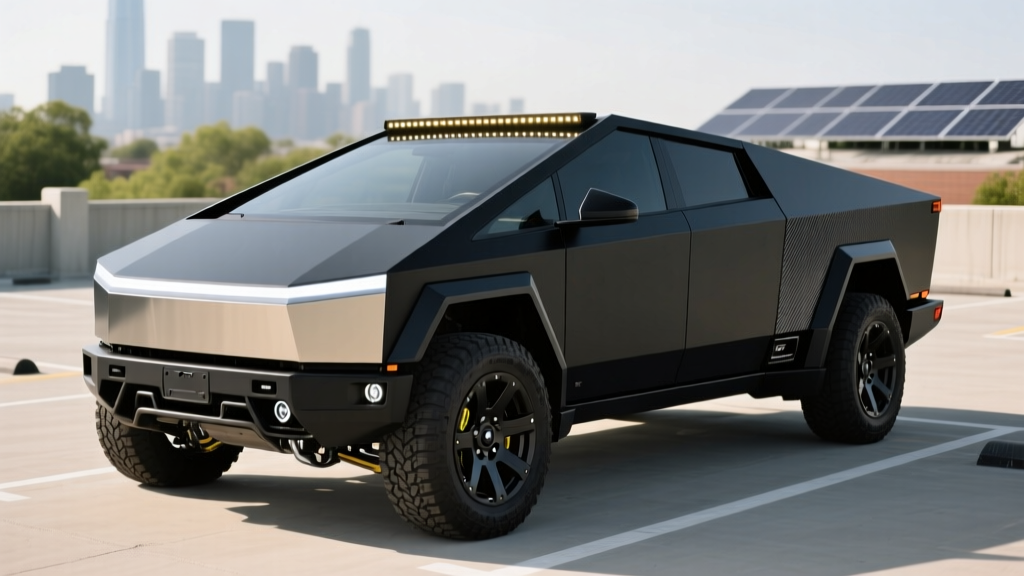
The Cybertruck's approach angle is decent (35°), but the flat underbody and exposed battery pack benefit from skid plate upgrades. Steel rock sliders ($1,500–$3,000) protect the rocker panels on trails and double as a step for the tall bed. Combined with aftermarket differential and transfer-case skid plates, this is essential for any owner running trails in Moab or the Rubicon.
5. Lighting Upgrades: Light Bars and Auxiliary Pods
The Cybertruck's stock LED matrix headlights are excellent on-road, but off-road auxiliary lighting remains popular. Roof-mounted LED bars (Rigid Industries, Baja Designs) in the 30–40" range draw 150–300 watts — manageable on the 48V system with proper relay harnesses. Expect ~$800–$2,000 for quality pods and wiring.
6. Suspension Lifts and Leveling Kits
The adaptive air suspension provides 16" of ground clearance in Extract Mode, but aftermarket 1.5–2" leveling spacers ($500–$1,200) give a more aggressive stance and accommodate larger 37" tires. Note: lifting above stock may void portions of the Tesla New Vehicle Limited Warranty if suspension or drivetrain issues arise post-modification.
Charging Infrastructure: What Mods Can't Fix
No aftermarket modification increases the Cybertruck's peak charge rate. The 250 kW DC fast-charge ceiling (on V3 Superchargers) means 10–80% in roughly 28 minutes, with a pronounced taper above 80% as the battery management system protects cell longevity. Here's the charging reality by level:
| Level | Power (kW) | Speed (mi/hr added) | Notes |
|---|---|---|---|
| Level 1 (120V outlet) | 1.4 kW | ~2 mi/hr | Emergency/trickle only |
| Level 2 (240V, 48A) | 11.5 kW | ~34 mi/hr | Full overnight charge in ~11 hrs |
| DC Fast (V3 Supercharger) | 250 kW peak | ~1,000 mi/hr (peak) | 10–80% in ~28 min; tapers hard above 80% |
| DC Fast (V4 Supercharger) | 250 kW peak | ~1,000 mi/hr (peak) | Same vehicle-side limit; cable is lighter |
Key insight: The Cybertruck's charge curve peaks early and tapers aggressively. You'll see 250 kW only between roughly 10–30% State of Charge. From 50–80%, the rate drops to 80–120 kW. Plan road-trip stops accordingly — charging from 20–80% is far more time-efficient than 60–100%.
Pricing and Federal Tax Credit Eligibility
The Cybertruck sits above the IRS §30D MSRP cap for trucks ($80,000), which eliminates federal tax credit eligibility for most trims. Here's the breakdown:
| Trim | MSRP | §30D Eligible? | Effective Price |
|---|---|---|---|
| Long Range AWD | $79,990 | Potentially yes (under $80K truck cap) | ~$72,490 (if buyer meets income + sourcing rules) |
| All-Wheel Drive | $99,990 | No (exceeds $80K MSRP cap) | $99,990 |
| Cyberbeast | $119,990 | No (exceeds $80K MSRP cap) | $119,990 |
Important caveats: Even the Long Range trim only qualifies if the buyer meets income caps ($150K single / $300K joint), the vehicle's battery contains sufficient critical minerals and North American-sourced components per current-year IRS rules, and the buyer hasn't exceeded the §30D lifetime credit limit. Always verify with IRS.gov §30D guidelines and consult a tax professional before relying on credit eligibility. The point-of-sale transfer option allows qualified buyers to apply the credit at purchase rather than waiting for tax filing.
Who the Cybertruck Actually Suits
The Cybertruck is not a universal vehicle. Its best use cases:
- Tech-forward truck buyers who want EV performance and don't need a traditional tailgate/bed configuration.
- Off-road enthusiasts willing to add armor and A/T tires — the air suspension and 16" ground clearance are legitimately capable.
- High-mileage commuters in states with cheap electricity (e.g., Pacific Northwest at $0.10/kWh) where the 60 kWh/100mi efficiency still undercuts gas trucks on cost per mile.
- NOT ideal for: Fleet/commercial buyers needing a sub-$50K truck, families needing easy rear-seat access (the sloped roofline limits headroom), or anyone who needs to fit a standard 4×8 sheet of plywood flat in the bed (the wheel wells intrude).
Biggest Pros and Cons
Pros
- Tri-motor Cyberbeast: 2.6-sec 0–60 is supercar-level in a 6,800-lb truck
- Stainless body resists dents, corrosion, and UV damage
- 48V architecture enables high-power accessories without 12V strain
- 11,000-lb towing capacity (with integrated trailer brake controller)
- Frunk + bed vault + rear under-bed storage = versatile cargo options
- Over-the-air updates continue adding features post-purchase
Cons
- Real-world highway range falls 15–20% below EPA sticker
- 250 kW charge ceiling is slower than competitors (Rivian R1T: 300+ kW on CCS adapters)
- Stainless panels are expensive to repair; collision shops are scarce
- Steer-by-wire requires adaptation; no physical steering column for some buyers
- Rear visibility is poor; reliance on cameras for backing
- Base price $79,990+ puts it in luxury-truck territory with limited tax credit access
Warranty Coverage
Tesla provides the following coverage for the 2026 Cybertruck:
- Basic Vehicle Limited Warranty: 4 years / 50,000 miles
- Battery & Drive Unit Warranty: 8 years / 120,000 miles (with minimum 70% capacity retention)
- Restraint System: 5 years / 60,000 miles
- Corrosion Perforation: 12 years / unlimited miles (less relevant given stainless steel)
Aftermarket modifications that affect the powertrain, suspension, or electrical system can void portions of this warranty. Always document stock configurations and retain OEM parts for potential reversion before warranty service.
Frequently Asked Questions
What is the real-world range of the Cybertruck?
Expect 270–290 miles highway for the Long Range trim, dropping to 220–250 miles in sub-freezing temperatures. City driving with regenerative braking recovers more energy, yielding closer to EPA figures.
How fast does the Cybertruck charge at home and on the road?
At home on a Level 2 (240V, 48A) charger, the Cybertruck adds ~34 miles of range per hour, fully charging in about 11 hours. On DC fast chargers, it peaks at 250 kW for 10–80% in ~28 minutes, but the charge curve tapers significantly above 50%.
Does the Cybertruck qualify for the federal EV tax credit?
Only the Long Range AWD trim at $79,990 potentially qualifies under the §30D truck MSRP cap of $80,000. The AWD and Cyberbeast trims exceed the cap and are ineligible. Even the Long Range requires the buyer to meet income limits ($300K joint / $150K single), battery-sourcing rules, and lifetime credit limits. Verify at IRS.gov.
Is the Cybertruck worth buying vs. the Rivian R1T or Ford F-150 Lightning?
If you prioritize acceleration, tech novelty, and stainless durability, the Cybertruck is unmatched. If you need a more traditional truck bed, easier serviceability, or a lower entry price, the F-150 Lightning (from ~$55K) or Rivian R1T (from ~$73K) may be better fits. The Lightning also qualifies for the full $7,500 credit across more trims.
What Cybertruck mods are safe without voiding the warranty?
Cosmetic mods (PPF, wraps, bed mats, tonneau covers) and bolt-on accessories (light bars with independent wiring, bed racks) generally don't affect warranty. Suspension lifts, wheel/tire changes that alter load ratings, and any 48V system taps should be done cautiously — retain OEM parts and consult Tesla service before modifications that affect drivetrain or structural components.
Can I add a range extender or larger battery to the Cybertruck?
No. The structural battery pack is integrated into the vehicle's unibody. There is no approved aftermarket method to increase battery capacity. Tesla's announced range-extender (a bed-mounted battery/generator unit) has not reached production as of early 2026.