The Tesla Cybertruck is unlike any pickup on the road — and the question "what is the Cybertruck made of" gets to the heart of why. Its cold-rolled stainless steel exoskeleton, 48-volt electrical architecture, and steer-by-wire system represent a fundamental rethinking of truck design. But radical engineering doesn't always translate to practical ownership. This review covers every number that matters: real-world range, charging speed, pricing after tax credits, and how it stacks up against the Ford F-150 Lightning and Rivian R1T.
The Exoskeleton: What Is the Cybertruck Made Of?
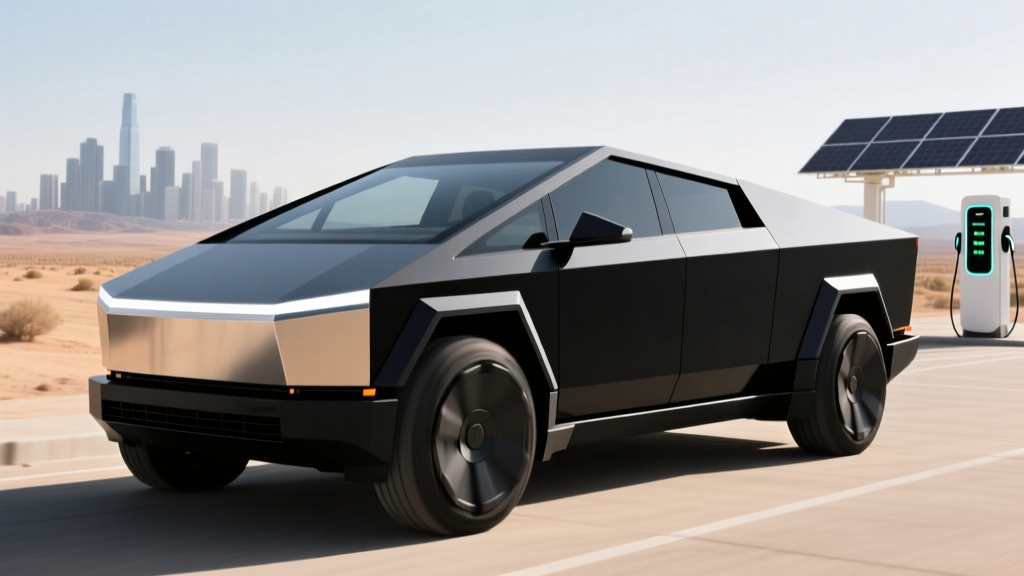
The Cybertruck's most defining feature is its body. Tesla uses an ultra-hard 30X cold-rolled stainless steel alloy — the same family of alloys used in SpaceX Starship prototypes — for the exterior exoskeleton. This material is exceptionally hard (Tesla claims it resists dents from sledgehammer strikes and 9mm handgun rounds at testing ranges), eliminating the need for conventional automotive paint.
Key material specifications:
- Exterior skin: 30X cold-rolled stainless steel, approximately 1.8mm thick
- Structural frame: High-strength steel unibody with integrated battery pack as a stressed member
- Vault (bed): Stainless steel with composite bed liner; 6-foot bed with lockable tonneau cover
- Windshield and glass: Tesla "Armor Glass" — laminated glass with polymer interlayer designed for impact resistance
- Underbody: Stainless steel skid plates standard across all trims
The tradeoff for this durability is weight. The Cybertruck AWD tips the scales at approximately 6,603 lbs (Dual Motor) to 6,871 lbs (Cyberbeast), substantially heavier than comparable aluminum-body trucks. That mass directly affects efficiency, tire wear, and real-world range — something buyers need to factor in.
Range, Battery, and Real-World Efficiency
The 2026 Cybertruck lineup uses a ~123 kWh usable battery pack with NMC (nickel manganese cobalt) chemistry. Tesla does not use LFP in the Cybertruck — the energy density required for a truck this heavy demands NMC cells. Here's how the trims break down:
| Spec | AWD (Dual Motor) | Cyberbeast (Tri-Motor) |
|---|---|---|
| EPA Range | 340 miles | 320 miles |
| Battery (usable) | ~123 kWh, NMC | ~123 kWh, NMC |
| Efficiency | 56 MPGe (60 kWh/100mi) | 51 MPGe (66 kWh/100mi) |
| 0-60 mph | 4.1 seconds | 2.6 seconds |
| Horsepower | 600 hp | 845 hp |
| Drivetrain | Dual Motor AWD | Tri-Motor AWD |
| Towing Capacity | 11,000 lbs | 11,000 lbs |
For context, the EPA's fueleconomy.gov data confirms the Cyberbeast's combined 51 MPGe — making it one of the least efficient EVs on the market per mile, a direct consequence of its 6,800+ lb curb weight and stainless steel construction.
Charging: 800V Architecture and Real Charge Times
The Cybertruck uses an 800-volt electrical architecture (shared with the Tesla Semi and next-gen platforms), enabling impressive DC fast-charging speeds on compatible infrastructure. It charges via the NACS (North American Charging Standard) connector natively — no adapter needed for Tesla Superchargers.
| Charging Level | Power / Rate | Time / Speed |
|---|---|---|
| Level 1 (120V household) | ~1.4 kW | ~3-4 miles/hour |
| Level 2 (240V, 48A Wall Connector) | 11.5 kW | ~34 miles/hour; 0-100% in ~13 hours |
| DC Fast Charge (V4 Supercharger) | Peak 350 kW | 10-80% in ~25 minutes |
| DC Fast Charge (older V3 Supercharger) | Peak ~250 kW | 10-80% in ~35 minutes |
Charging curve reality check: The 350 kW peak rate is only sustained between approximately 10-30% SoC. From 50-80%, the rate tapers to roughly 150-180 kW, and above 80% it drops sharply to protect the NMC cells. A typical 10-80% session at a V4 Supercharger takes about 25 minutes — competitive with the F-150 Lightning's ~41 minutes (on a 150 kW charger) but slower than the Rivian R1T's ~29 minutes at peak 220 kW.
For home charging, the Tesla Wall Connector at 48 amps (11.5 kW) adds roughly 34 miles per hour of charging. An overnight session (10 hours) replenishes about 340 miles — sufficient for most daily use. Plan on a dedicated 60A circuit; installation typically runs $800-$2,000 depending on panel proximity.
Pricing, Trims, and Federal Tax Credit Eligibility
Tesla has restructured the Cybertruck lineup for 2026. Here's current pricing before any incentives:
| Trim | Base MSRP | Federal §30D Credit | Effective Price |
|---|---|---|---|
| AWD (Dual Motor) | $79,990 | Up to $7,500* | ~$72,490 |
| Cyberbeast (Tri-Motor) | $99,990 | Up to $7,500* | ~$92,490 |
*Federal tax credit caveats (IRS §30D, 2026 rules):
- MSRP cap: Trucks/vans/SUVs must have an MSRP at or below $80,000. The AWD qualifies; the Cyberbeast at $99,990 does NOT qualify.
- Income cap: Modified AGI must not exceed $150,000 (single), $225,000 (head of household), or $300,000 (joint).
- Battery sourcing: Critical minerals and battery component requirements phase in annually. Verify current-year compliance on IRS.gov's clean vehicle credit page before purchasing.
- Point-of-sale transfer: Eligible buyers can transfer the credit to the dealer at purchase, reducing the upfront cost immediately rather than waiting for tax filing.
This is a critical distinction: the Cyberbeast's MSRP pushes it above the §30D truck cap, making the AWD trim the only credit-eligible option. Always confirm eligibility with a tax professional before relying on the credit in your budget.
Interior, Cargo, and Daily Practicality
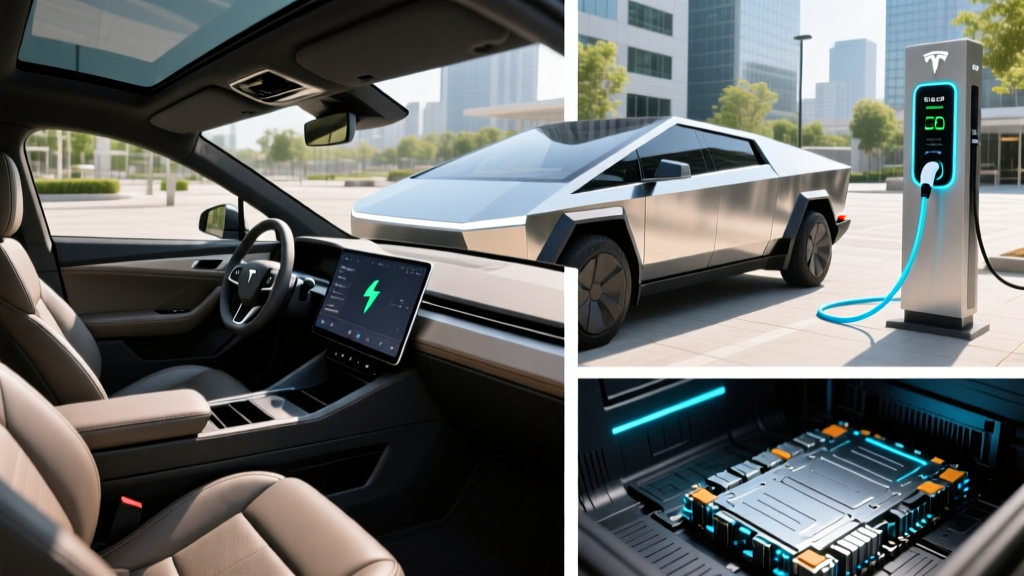
The Cybertruck seats five across a single bench-style row (front) and a three-across rear bench. The cabin is minimalist — dominated by an 18.5-inch center touchscreen with no physical instrument cluster. A rear 9.4-inch touchscreen serves back-seat passengers.
Cargo dimensions:
- Vault (bed) length: 6 feet (72 inches) with tailgate closed; extends to ~8 feet with tailgate down
- Vault width: ~48 inches between wheel wells
- Vault volume: Approximately 67 cu ft (bed only)
- Frunk (front trunk): ~7.1 cu ft, lockable
- Rear legroom: ~38.4 inches
- Front headroom: ~40.2 inches
The power-operated tonneau cover is a standout feature — it locks securely and supports up to 300 lbs of distributed weight. The vault includes built-in 120V and 240V outlets (enabling job-site power tool use), LED bed lighting, and a washable composite liner. However, the 6-foot bed is shorter than the 5.5-6.5 foot beds on most crew-cab competitors, and the vault's tapered shape (dictated by the exoskeleton design) limits hauling standard 4x8 plywood sheets flat.
Standout Tech and Notable Drawbacks
What works well:
- Steer-by-wire: No mechanical connection between the yoke and wheels — enables variable steering ratios (full lock in less than one turn at low speeds, stable highway feel at speed). Genuinely transformative for parking a 22-foot truck.
- 48-volt architecture: Reduces wiring harness weight by ~70% compared to traditional 12V systems. Powers everything from the steer-by-wire to the HVAC compressor.
- Adaptive air suspension: Up to 17 inches of ground clearance in Extract Mode; lowers for highway efficiency and easier bed access.
- Bioweapon Defense Mode: HEPA cabin filtration with positive pressure.
- Powershare: Up to 11.5 kW of vehicle-to-load (V2L) and vehicle-to-home (V2H) capability — enough to run major appliances during outages.
Where it falls short:
- Visibility: The angular A-pillars and lack of a rear window (replaced by a camera feed) create significant blind spots. The camera-based rearview is disorienting for some drivers.
- Wiper design: A single, large windshield wiper with a complex linkage is prone to streaking and has been a reliability pain point in early production models.
- Yoke steering: The standard yoke is polarizing — excellent for highway cruising but awkward for low-speed maneuvers and three-point turns despite the steer-by-wire ratio advantage.
- Insurance: Cybertruck insurance premiums run 30-60% higher than comparable trucks due to stainless steel repair complexity and parts cost.
- Build quality variance: Panel gap inconsistency and early-production software bugs have been documented. Tesla has improved this through 2025-2026 production runs, but variability remains.
Pros
- Stainless steel exoskeleton is genuinely dent- and corrosion-resistant
- Tri-motor Cyberbeast delivers supercar acceleration (2.6s 0-60) in a truck
- 800V architecture enables competitive DC fast-charging speeds
- Steer-by-wire makes a massive truck surprisingly maneuverable
- 11.5 kW Powershare for job-site and emergency home backup
- 11,000 lb towing capacity matches conventional heavy-duty trucks
Cons
- Real-world highway range drops to ~270-290 miles (Cyberbeast)
- Cyberbeast ($99,990) exceeds §30D MSRP cap — no federal credit
- 6-foot bed limits utility for standard construction materials
- Insurance premiums significantly higher than F-150 Lightning or R1T
- Camera-based rearview and poor rear visibility take adjustment
- Polarizing design limits resale appeal to a narrow buyer segment
Cybertruck vs. F-150 Lightning vs. Rivian R1T
The electric truck segment has matured, and the Cybertruck faces serious competition:
| Spec | Cybertruck AWD | F-150 Lightning Lariat | Rivian R1T Dual-Motor |
|---|---|---|---|
| EPA Range | 340 mi | 320 mi (Extended Range) | 352 mi (Max Pack) |
| Base MSRP | $79,990 | $69,995 | $75,900 |
| §30D Eligible | Yes (AWD only) | Yes | Yes |
| Bed Length | 6 ft | 5.5 ft | 4.5 ft (54 in) |
| Towing | 11,000 lbs | 10,000 lbs | 11,000 lbs |
| 0-60 mph | 4.1 sec | ~4.5 sec | ~4.5 sec |
| NACS Native | Yes | Yes (2025+) | Yes (2025+) |
Which Electric Truck Should You Buy?
- Choose the Cybertruck AWD if: You want the most distinctive design, 800V charging, steer-by-wire, and can accept the visibility and bed-length compromises.
- Choose the F-150 Lightning if: You need a conventional truck experience, dealer service network, Pro Power Onboard, and the lowest entry price with full §30D eligibility.
- Choose the Rivian R1T if: You prioritize adventure capability (4-zone air suspension, gear tunnel storage, available Max Pack range) and premium interior quality over raw performance.
Warranty and Battery Longevity
Tesla's warranty coverage for the 2026 Cybertruck:
- Vehicle limited warranty: 4 years / 50,000 miles
- Battery and drive unit warranty: 8 years / 120,000 miles (whichever comes first), with a minimum 70% capacity retention threshold
- Stainless steel body corrosion: Covered under the general limited warranty; no separate corrosion perforation warranty (unlike legacy automakers)
NMC battery degradation in a vehicle this heavy is a legitimate long-term concern. Based on Tesla's fleet data from Model S/X (which use similar NMC chemistry), expect approximately 10-12% capacity loss over the first 100,000 miles, with degradation slowing significantly after the initial break-in period. The 120,000-mile battery warranty is slightly more generous than the industry-standard 100,000 miles.
For battery longevity, Tesla recommends daily charging to 80-90% for NMC packs and reserving 100% charges for road trips. The Cybertruck's thermal management system (active liquid cooling and heating) is robust, but extreme cold-weather charging without preconditioning will accelerate degradation.
Who Should Buy the Cybertruck?
The Cybertruck is a niche vehicle that excels in specific use cases:
- Best for: Tech-forward truck buyers who want standout design, need V2H/V2L power capability, tow occasionally (not daily), and have reliable home charging access.
- Not ideal for: Fleet/commercial buyers needing dealer service networks, daily heavy-tow operators (range drops severely), buyers who need a full-size 8-foot bed, or anyone sensitive to insurance premium increases.
- Consider alternatives if: Your budget is under $75,000 after credits (look at the F-150 Lightning), you need maximum range without compromise (Rivian R1T Max Pack), or you prefer conventional truck ergonomics.
Frequently Asked Questions
What is the real-world range of the Cybertruck?
The EPA rates the AWD at 340 miles and the Cyberbeast at 320 miles. In real-world highway driving at 75 mph, expect 270-290 miles. Cold weather (below freezing) reduces this to roughly 200-240 miles. Towing a trailer cuts range to 150-180 miles depending on weight and aerodynamics.
How fast does the Cybertruck charge?
On a Tesla V4 Supercharger, the Cybertruck peaks at 350 kW and charges from 10-80% in approximately 25 minutes. On a Level 2 home charger (Tesla Wall Connector at 11.5 kW), it adds about 34 miles per hour, fully charging overnight in ~13 hours.
Does the Cybertruck qualify for the federal EV tax credit?
The AWD trim ($79,990 MSRP) qualifies for up to $7,500 under IRS §30D, subject to buyer income caps ($150K single / $300K joint) and battery sourcing requirements. The Cyberbeast ($99,990) exceeds the $80,000 truck MSRP cap and does NOT qualify. Always verify current-year rules on IRS.gov and consult a tax professional.
Is the Cybertruck's stainless steel body really bulletproof?
Tesla demonstrated the 30X stainless steel resisting 9mm handgun rounds during testing. However, "bulletproof" is not an official rating — it depends on caliber, distance, and angle. The material is exceptionally dent- and scratch-resistant for daily use, and it will not rust like conventional steel.
How does the Cybertruck compare to the F-150 Lightning?
The Cybertruck AWD offers more range (340 vs 320 mi), faster acceleration, and 800V charging, but costs ~$10,000 more, has a shorter bed, and lacks the Ford dealer service network. The Lightning is the more conventional, practical choice; the Cybertruck is the statement vehicle with superior tech.
What is the Cybertruck's Autopilot/FSD capability level?
Tesla's Full Self-Driving (Supervised) is an SAE Level 2 driver-assistance system. Despite the "self-driving" branding, the driver must remain fully engaged, hands on the yoke, and ready to take over at all times. It is not autonomous driving. Only Level 4 services like Waymo operate without a human driver.