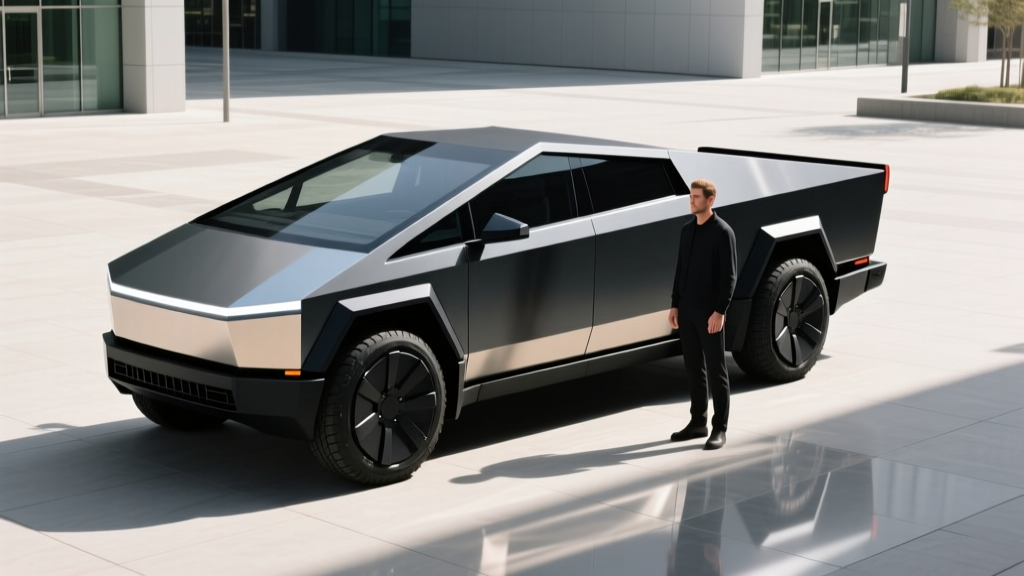
If you've been searching for the length of Cybertruck, you've likely discovered that its footprint is more than a trivia answer — it dictates garage compatibility, parking behavior, bed utility, and even aerodynamic efficiency. Tesla's stainless-steel pickup measures 238.3 inches (19.86 feet) long, placing it squarely in the full-size truck segment alongside the Ford F-150 Lightning and Rivian R1T, yet its angular monolith design makes those inches feel even more substantial in a suburban driveway.
This review goes well beyond the tape measure. We'll break down how the Cybertruck's dimensions shape its real-world range, charging performance, cargo practicality, and daily drivability — backed by EPA data, manufacturer specs, and real-world ownership variables that spec sheets often omit.
Cybertruck Dimensions: The Complete Measurement Sheet
Understanding the Cybertruck's physical envelope is critical before you sign a purchase agreement. Here's the full dimensional profile for the current-production dual-motor and tri-motor configurations:
| Measurement | Value | Competitor Context |
|---|---|---|
| Overall Length | 238.3 in (6,053 mm) | F-150 Lightning: 231.7 in; Rivian R1T: 217.1 in |
| Wheelbase | 143.3 in (3,640 mm) | F-150 Lightning: 145.5 in |
| Width (body, no mirrors) | 81.0 in (2,057 mm) | Rivian R1T: 81.8 in |
| Width (mirrors extended) | 95.0 in (2,413 mm) | — |
| Height (standard ride) | 70.5 in (1,791 mm) | F-150 Lightning: 78.3 in |
| Bed Length | 72.0 in (6 ft / 1,829 mm) | R1T: 54.0 in (standard) |
| Bed Width (between wheel wells) | 50.0 in | — |
| Front Legroom | 41.8 in | F-150 Lightning: 43.9 in |
| Rear Legroom | 38.0 in | F-150 Lightning: 43.6 in |
| Curb Weight (AWD) | ~6,600 lbs | F-150 Lightning: ~6,171 lbs |
| GVWR | ~8,900 lbs | — |
| Towing Capacity (max) | 11,000 lbs | F-150 Lightning: 10,000 lbs |
The 238.3-inch length puts the Cybertruck roughly 6.6 inches longer than the F-150 Lightning (SuperCrew, 5.5-ft bed) and a significant 21.2 inches longer than the Rivian R1T. That extra length comes from the 6-foot bed and the truck's elongated stainless-steel exoskeleton, which extends past the rear axle to create the signature angular tail.
Garage Fit Reality Check
A standard two-car garage in the US typically has a depth of 20 to 22 feet (240–264 inches). At 238.3 inches, the Cybertruck fits inside a 22-foot-deep garage with less than 2 feet to spare — and that's before accounting for a garage-door opener motor, wall-mounted storage, or a slight incline on the driveway. If your garage is only 20 feet deep, the Cybertruck will not fit with the door closed. Measure before you order.
Range, Efficiency, and Real-World Expectations
EPA Estimated: 340 miles (AWD Long Range, 20" wheels)
Real-World Highway (70 mph, mild weather): ~270–300 miles
Real-World Cold Weather (30°F, mixed driving): ~220–260 miles
Towing (5,000-lb trailer, flat terrain): ~150–180 miles
The Cybertruck's angular, flat-panel design yields a higher drag coefficient than sleeker EVs, and its 6,600-lb mass penalizes efficiency at sustained highway speeds and in cold temperatures where battery chemistry is less reactive.
The Cybertruck AWD (Long Range) carries an EPA-estimated 340 miles of range from a battery pack Tesla rates at approximately 123 kWh usable capacity. The tri-motor Cyberbeast variant sacrifices some range — EPA-estimated at 320 miles — due to the additional front motor's weight and parasitic losses.
Tesla has not officially published the battery chemistry in its spec sheets, but teardown analyses and supply-chain reporting indicate the Cybertruck uses NMC (nickel manganese cobalt) cells in a structural battery pack. NMC offers higher energy density than LFP, which is necessary given the truck's mass and the range targets Tesla set. The trade-off is that NMC batteries benefit from keeping state-of-charge between 20–80% for daily use to maximize long-term longevity.
On the EPA's fueleconomy.gov listing, the Cybertruck AWD achieves approximately 71 MPGe combined (roughly 47 kWh per 100 miles). That's competitive for a full-size electric truck — the F-150 Lightning Extended Range posts 70 MPGe — but well below lighter EVs like the Tesla Model Y (122 MPGe). The physics are unavoidable: moving 6,600 pounds of stainless steel requires energy.
Charging Speed: DC Fast, Level 2, and the Charge Curve
Charging is where Cybertruck ownership either flows smoothly or becomes a frustration, depending on your setup. Here are the hard numbers:
| Charging Level | Power / Rate | Time / Miles Added | Connector |
|---|---|---|---|
| DC Fast Charge (Peak) | 350 kW (at V4 Supercharger) | 10–80% in ~15 minutes | NACS (native) |
| DC Fast Charge (Sustained Avg) | ~200–250 kW (10–80%) | ~180 miles in 15 min | NACS |
| Level 2 (Home, 48A / 11.5 kW) | 11.5 kW | ~29 mi/hr; full charge ~11 hrs | NACS (Wall Connector) |
| Level 2 (40A / 9.6 kW) | 9.6 kW | ~24 mi/hr; full charge ~13 hrs | NACS / J1772 w/ adapter |
| Level 1 (120V, 12A) | ~1.4 kW | ~3–4 mi/hr | NACS Mobile Connector |
The Cybertruck uses the NACS (North American Charging Standard) connector natively — it's the same plug used across all Tesla vehicles and now adopted by Ford, GM, Rivian, and most major automakers. At a V4 Supercharger station, the Cybertruck can peak at 350 kW, though sustained charging rates taper significantly above 60% state-of-charge. Expect the 10–80% session to average around 200–250 kW, which is still class-leading for a truck this size.
Charge curve reality: Like all EVs, the Cybertruck doesn't hold peak kW for the entire session. The large 123 kWh pack actually helps here — a bigger battery can accept higher absolute power without exceeding cell-level C-rate limits, so the Cybertruck sustains strong charging rates longer than smaller-pack EVs. But above 80%, the rate drops sharply to protect battery health. Plan to charge to 80% on road trips and move on.
For home charging, the Tesla Wall Connector on a 60-amp circuit delivers 11.5 kW (48 amps), adding roughly 29 miles per hour. Overnight (10 hours) recovers about 290 miles — sufficient for virtually any daily commute. Installation typically costs $800–$2,500 depending on panel capacity and run length; a 200-amp service panel is usually required.
Performance: Tri-Motor Cyberbeast vs. Dual-Motor AWD
| Spec | AWD (Dual Motor) | Cyberbeast (Tri-Motor) |
|---|---|---|
| Horsepower | 600 hp | 845 hp |
| 0–60 mph | 3.9 seconds | 2.6 seconds |
| Top Speed | 112 mph | 130 mph |
| Drivetrain | Dual-motor AWD | Tri-motor AWD |
| EPA Range | 340 miles | 320 miles |
| Max Towing | 11,000 lbs | 11,000 lbs |
Even the "base" dual-motor AWD Cybertruck produces 600 horsepower and hits 60 mph in 3.9 seconds — quicker than most sports cars from a decade ago. The tri-motor Cyberbeast is absurd by any standard: 845 hp and a 2.6-second 0–60 time in a vehicle that weighs over three tons and measures nearly 20 feet long.
The Cybertruck's adaptive air suspension provides up to 16 inches of ground clearance (in Extract mode) and can lower the truck for highway efficiency or loading. Rear-wheel steering (up to 10 degrees) is standard, which dramatically tightens the turning circle — a critical feature for a 238.3-inch vehicle navigating urban streets and parking structures. Without it, the Cybertruck's curb-to-curb turning diameter would be impractical; with it, the truck pivots more like a mid-size SUV.
Pricing, Trims, and Federal Tax Credit Eligibility
| Trim | Base MSRP | Est. After §30D Credit | Federal Credit Eligible? |
|---|---|---|---|
| AWD (Long Range) | $79,990 | ~$72,490 (if eligible) | ⚠️ MSRP under $80K cap ✓ — subject to income & sourcing rules |
| Cyberbeast (Tri-Motor) | $99,990 | $99,990 (no credit) | ❌ Exceeds $80,000 truck MSRP cap |
The Cybertruck AWD's MSRP of $79,990 squeaks under the IRS §30D MSRP cap of $80,000 for trucks and vans. This means the AWD trim may qualify for up to $7,500 in federal tax credits — but only if you also meet all other requirements:
- Income caps: Modified AGI ≤ $300,000 (married filing jointly), $225,000 (head of household), or $150,000 (single).
- Battery sourcing: A percentage of critical minerals and battery components must meet US/free-trade-partner sourcing thresholds (these percentages increase annually; check current-year IRS guidance).
- Point-of-sale transfer: As of 2024+, you can transfer the credit to the dealer at purchase, reducing your out-of-pocket cost immediately — but you must still meet income limits, and if your actual tax liability is lower than the credit transferred, you'll owe the difference at tax time.
- Final assembly: Must occur in North America (the Cybertruck is built in Austin, TX — this requirement is met).
The Cyberbeast at $99,990 exceeds the MSRP cap and is ineligible for the federal credit regardless of your income. Consult a tax professional before banking on the credit — battery-sourcing rules shift frequently and can disqualify otherwise-eligible vehicles mid-year.
Technology, Driver Assistance, and Notable Drawbacks
Standout Tech Features
- 18.5-inch front touchscreen with Tesla's latest UI, navigation, and vehicle controls (no physical instrument cluster).
- 9.4-inch rear touchscreen for rear-seat passengers (climate, media, trip info).
- Tesla Autopilot (Level 2 driver-assist) with adaptive cruise, lane centering, and automatic emergency braking standard.
- Full Self-Driving (Supervised) available as a $8,000 option or $99/month subscription — still Level 2; driver must remain fully engaged.
- Powershare V2L: Up to 11.5 kW of onboard power output (240V) — enough to run power tools at a job site or essential home appliances during an outage.
- Sail pillar camera & blind-spot monitoring displayed on the main screen to compensate for the truck's thick C-pillars and minimal rear glass.
- Motorized tonneau cover with integrated lockable vault in the bed; front trunk (frunk) provides ~7 cu ft of sealed storage.
Notable Drawbacks
- Rear visibility is severely limited by the sail pillars and narrow rear window — you'll rely heavily on cameras and mirrors.
- Rear-seat headroom is tight for taller passengers due to the sloping roofline (38.0 in legroom is adequate, but the seat cushion is relatively flat and low).
- Stainless-steel body shows fingerprints aggressively and is difficult to repair — collision shops need Tesla-specific training and tooling.
- Single-zone climate quirks: Some owners report uneven cabin temperature distribution in extreme heat due to the massive glass roof and steel body's thermal properties.
- No Apple CarPlay / Android Auto — Tesla's proprietary infotainment only.
- Insurance costs are significantly higher than comparable trucks due to repair complexity and parts pricing.
Tesla Autopilot and Full Self-Driving (Supervised) are SAE Level 2 driver-assist systems. They do NOT make the Cybertruck self-driving. You must keep your hands on the yoke, eyes on the road, and remain prepared to take over at any instant. Only Level 4 services like Waymo operate without a human driver — and those are limited to specific geofenced areas.
Battery Warranty and Long-Term Ownership
Tesla covers the Cybertruck's battery and drive units with an 8-year / 120,000-mile warranty (whichever comes first), guaranteeing a minimum of 70% capacity retention over that period. The vehicle's basic limited warranty is 4 years / 50,000 miles.
Given the Cybertruck's ~123 kWh NMC pack, a 30% degradation would still leave roughly 86 kWh usable — translating to approximately 238 miles of range at the truck's efficiency rate. In practice, Tesla's historical degradation data across Model S/X/3/Y suggests most packs lose 8–12% in the first 100,000 miles, with the curve flattening significantly afterward. The structural pack design, which integrates cells into the chassis for rigidity, is new for Tesla and long-term data specific to the Cybertruck is still accumulating.
Maintenance costs are low relative to ICE trucks: no oil changes, no transmission fluid, regenerative braking preserves friction brake pads for 100,000+ miles in typical use. The primary ownership cost concerns are tire replacement (heavy EVs wear tires 20–30% faster; expect new rubber every 25,000–35,000 miles at ~$300–$450 per tire) and insurance premiums (typically 30–60% higher than a comparably priced F-150).
Who Should Buy the Cybertruck?
- You need a 6-foot bed and 11,000-lb towing with EV efficiency.
- You tow a boat, horse trailer, or camper within ~180-mile radius.
- You want V2L capability for job-site power or home backup.
- You value Supercharger network access for road-trip charging.
- Your garage is ≥22 feet deep and your budget exceeds $80K.
- You have a standard 20-foot-deep garage.
- You prioritize rear-seat comfort for tall adults.
- You frequently take long highway road trips in cold climates (range drops 25–35%).
- You want Apple CarPlay or conventional switchgear.
- You need a sub-$60K electric truck (consider waiting for next-gen platforms).
The Cybertruck's 238.3-inch length is a defining feature — it enables the 6-foot bed and 11,000-lb tow rating, but it also demands infrastructure (garage depth, parking space length) that many buyers take for granted. If your lifestyle accommodates its physical presence, the Cybertruck delivers a combination of range, charging speed, and utility that no other EV truck currently matches. If it doesn't, the F-150 Lightning (shorter, more conventional) or Rivian R1T (compact, adventure-oriented) may serve you better.
Frequently Asked Questions
What is the exact length of the Cybertruck in feet?
The Tesla Cybertruck measures 238.3 inches, which converts to 19.86 feet (approximately 19 feet 10 inches). This includes the front bumper through the rear bumper — the bed itself is 72 inches (6 feet) of that total.
Will the Cybertruck fit in a standard garage?
It depends on your garage depth. A 22-foot-deep garage (common in newer homes) will fit the Cybertruck with roughly 22 inches to spare. A 20-foot-deep garage (common in older construction) will not accommodate the Cybertruck with the door closed. Measure from the back wall to the closed garage door before ordering.
How does the Cybertruck's length compare to the F-150 Lightning?
The Cybertruck is 6.6 inches longer than the F-150 Lightning SuperCrew with the 5.5-foot bed (231.7 in). However, the F-150 Lightning with the 6.5-foot bed measures 251.7 inches — longer than the Cybertruck. The Rivian R1T is notably shorter at 217.1 inches.
Does the Cybertruck qualify for the $7,500 federal tax credit?
The AWD trim at $79,990 is under the $80,000 MSRP cap for trucks, so it may qualify — but you must also meet IRS income caps ($150K single / $300K joint), battery-sourcing requirements, and North American assembly rules. The Cyberbeast at $99,990 is ineligible. Always verify current-year rules at IRS.gov and consult a tax professional.
What is the real-world highway range of the Cybertruck?
While the EPA rates the AWD at 340 miles, real-world highway driving at 70+ mph typically yields 270–300 miles in mild weather. In cold conditions (below 35°F), expect 220–260 miles due to battery chemistry limitations and increased cabin heating demands. Towing cuts range roughly in half.
How fast does the Cybertruck charge at a Supercharger?
At a V4 Supercharger, the Cybertruck can peak at 350 kW and charge from 10–80% in approximately 15 minutes. Sustained average power during that session is closer to 200–250 kW. Charging above 80% slows dramatically — plan road-trip stops around the 80% mark for optimal time efficiency.
Is the Cybertruck good for towing?
The 11,000-lb max tow rating is best-in-class for electric trucks. However, towing significantly impacts range — expect roughly 150–180 miles when pulling a 5,000-lb trailer on flat terrain. The Cybertruck's integrated trailer brake controller and tow-assist cameras are well-implemented, but long-distance towing still requires careful charging-route planning.