If you've been browsing EV-adjacent accessories or Tesla's online shop, you've likely encountered the Cybertruck kids car — a battery-powered ride-on toy styled after Tesla's polarizing stainless-steel pickup. It's not a vehicle you can drive on public roads, and it certainly won't earn you an EPA efficiency rating, but as a piece of electrified family fun, it raises legitimate questions: What are its actual specs? How does the battery and charging system work? And at roughly $1,200, does it deliver enough value to justify the price tag?
This review breaks down the Cyberquad for Kids (Tesla's official ride-on product, rebranded in some markets and often colloquially called the "Cybertruck kids car" by shoppers) with the same data-driven approach we apply to full-size EVs — battery chemistry, charge times, real-world runtime, and ownership practicalities.
What Exactly Is the Cybertruck Kids Car?
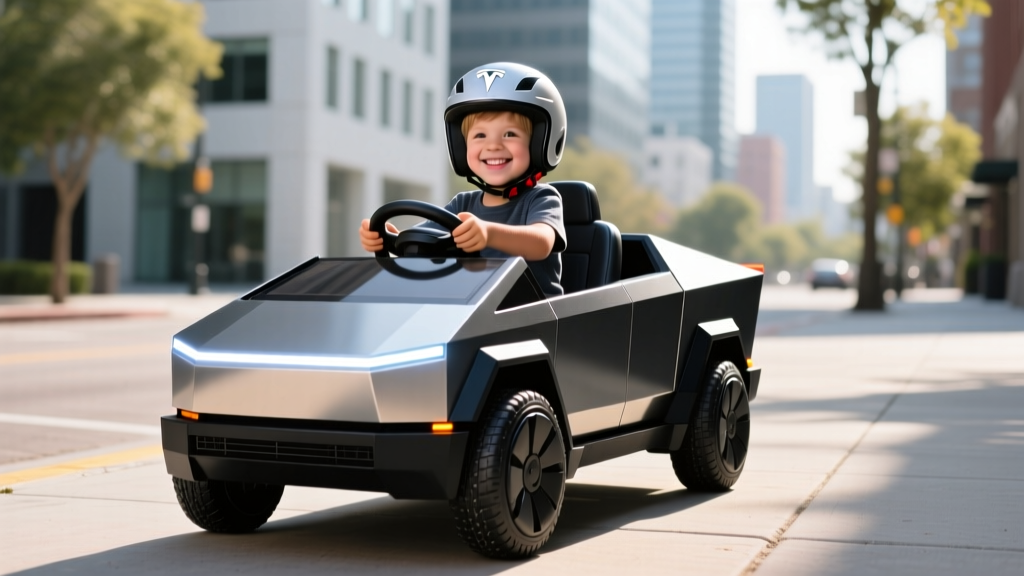
The product most buyers are searching for under the term "Cybertruck kids car" is Tesla's officially licensed ride-on vehicle, manufactured in partnership with Radio Flyer. Originally announced alongside the Cybertruck in 2019 and released in late 2021, this miniature EV replicates the Cybertruck's angular design language at roughly 1:2 scale. It's designed for children ages 8 and up (with parental supervision for younger riders) and seats one child plus a small passenger or cargo.
Important context: this is a ride-on toy, not a street-legal vehicle. It does not have an EPA range rating, does not qualify for any federal EV tax credit, and is not subject to NHTSA safety standards for motor vehicles. However, it uses genuine EV technology — a lithium-ion battery pack, electric motor, and regenerative-style braking — making it relevant to families already invested in the EV ecosystem.
| Spec | Value |
|---|---|
| Official Name | Cyberquad for Kids (Tesla × Radio Flyer) |
| Price (MSRP) | $1,200 (Tesla Shop) |
| Battery | 24V lithium-ion (approx. 0.36 kWh usable) |
| Motor | Single rear electric motor |
| Top Speed | 10 mph (Speed Mode); 5 mph (Low Speed) |
| Max Range per Charge | ~15 miles (flat terrain, light rider) |
| Max Rider Weight | 150 lbs |
| Charge Time (0–100%) | ~5 hours (included 24V charger) |
| Recommended Age | 8+ years |
| Warranty | 1 year limited (battery & electronics) |
Battery, Range, and Runtime: Real-World Expectations
The Cyberquad uses a 24-volt lithium-ion battery pack. While Tesla has not published the exact cell chemistry (LFP vs. NMC) or precise kWh capacity in its consumer documentation, teardown analysis by the EV community estimates the usable capacity at approximately 0.36 kWh. This is a fractional amount compared to a full-size EV (the Cybertruck AWD, for reference, carries roughly 123 kWh usable), but it's appropriate for the vehicle's mass and intended use.
Unlike full-size EVs, this ride-on has no thermal management system for the battery. That means extreme heat (above 95°F) or cold will affect both performance and long-term battery health. Store and charge it indoors, and avoid leaving it in a hot garage or freezing shed for extended periods.
Charging: What to Expect at Home
The Cyberquad ships with a dedicated 24V wall charger — no Level 2 or DC fast charging here. Plug it into any standard 120V household outlet.
| Charge Method | Power | Time (0–100%) | Notes |
|---|---|---|---|
| Included 24V Wall Charger | ~72W (3A × 24V) | ~5 hours | Standard 120V outlet |
| DC Fast Charging | Not supported | N/A | No CCS/NACS port |
| Level 2 (240V) | Not supported | N/A | No onboard charger upgrade |
A full charge from empty takes roughly 5 hours. There is no fast-charge capability, and no aftermarket upgrade path exists. Plan charging around play sessions: a morning charge supports afternoon riding, and an overnight charge ensures a full battery the next day.
One practical note: the charger uses a proprietary barrel connector, not a standardized EV plug. Replacement chargers are available through Tesla's shop or authorized Radio Flyer parts dealers, typically for $40–$60.
Performance and Ride Experience
The Cyberquad delivers a single-speed, rear-wheel-drive experience with two selectable modes:
- Low Speed Mode: Caps top speed at 5 mph — appropriate for beginners and supervised younger riders.
- Speed Mode: Unlocks the full 10 mph top speed for experienced riders on open, flat terrain.
Acceleration is modest but peppy for a ride-on: 0–5 mph in roughly 2–3 seconds in Speed Mode. There's no published 0–60 time because the vehicle can't reach 60 mph. The motor provides smooth, linear torque delivery — a hallmark of electric propulsion even at this scale.
Braking is handled by a rear drum brake with an electronic parking brake. There's no regenerative braking system (the battery is too small to benefit meaningfully from energy recapture). The ride quality is firm — the Cyberquad uses a steel frame with rear suspension and solid rubber tires, not pneumatic. Expect a bumpy ride on anything other than smooth pavement or packed dirt.
Design, Features, and Tech
The Cyberquad's design is its strongest selling point. The angular, stainless-steel-look body panels (actually stamped steel with a brushed finish) closely mirror the full-size Cybertruck's aesthetic. Features include:
- LED headlights and taillights — functional and visually striking at dusk.
- Digital dashboard — displays speed, battery level (bar graph, not percentage), and drive mode.
- USB charging port — yes, you can charge a phone from the Cyberquad's battery (though this will reduce runtime).
- Forward/reverse selector — with an audible backup beeper.
- Adjustable seat — accommodates riders of varying heights.
What it lacks: there's no Bluetooth, no app connectivity, no GPS tracking, and no parental remote-control override (a feature common on competing ride-ons in the $300–$600 range). For a $1,200 product, the absence of a parent remote is a notable gap — if your child gets into trouble, you can't remotely kill the motor.
Pricing, Availability, and Value Assessment
| Item | Cost |
|---|---|
| Cyberquad for Kids (MSRP) | $1,200 |
| Shipping | Free (via Tesla Shop) |
| Federal EV Tax Credit (§30D) | $0 — not eligible (toy, not a motor vehicle) |
| State/Local Incentives | None applicable |
| Total Out-of-Pocket | $1,200 |
The Cyberquad is sold exclusively through Tesla's online shop and occasionally restocks after sell-out periods. It does not qualify for the IRS §30D federal EV tax credit — that credit applies only to new, street-legal plug-in electric vehicles meeting specific MSRP, income, battery-sourcing, and final-assembly requirements. A ride-on toy is classified as a consumer product, not a motor vehicle.
At $1,200, the Cyberquad sits at the premium end of the ride-on market. For comparison:
- Peg Perego John Deere Gator (24V, 2 seats): ~$550
- Power Wheels Dune Racer (12V): ~$280
- Bentley Licensed Ride-On (24V, parent remote): ~$700
You're paying a significant premium for the Tesla/Cybertruck branding and the stainless-steel aesthetic. Whether that premium is justified depends on how much brand cachet and design fidelity matter to your family.
Pros
- Striking Cybertruck design — genuine stainless-steel-look panels
- 10 mph top speed is fast for a ride-on (supervision required)
- 150-lb weight capacity allows teens and adults to ride
- LED lighting and digital dash feel premium
- Lithium-ion battery (lighter, longer-lasting than lead-acid alternatives)
Cons
- $1,200 price is 2–4× competing ride-ons
- No parent remote-control override
- 5-hour charge time with no fast-charge option
- Firm ride quality on rough surfaces
- Limited availability — frequent stock-outs
- 1-year warranty is shorter than some competitors (2–3 years)
Who Should Buy the Cybertruck Kids Car?
The Cyberquad for Kids makes the most sense for:
- Tesla-owning families who want a matching accessory for the garage and enjoy the brand ecosystem.
- Older children (10–14) who have outgrown traditional Power Wheels but aren't ready for a gas-powered ATV.
- Collectors and display buyers — the Cyberquad looks striking parked next to a full-size Cybertruck.
It's not the best choice for:
- Budget-conscious buyers — you can get a capable 24V ride-on for half the price.
- Parents of very young children (under 8) — the lack of a parent remote is a safety concern for unsupervised toddlers.
- Off-road use — solid tires and minimal suspension limit this to smooth surfaces.
Frequently Asked Questions
What is the real-world range of the Cybertruck kids car?
Advertised range is up to 15 miles under ideal conditions. In practice, expect 8–12 miles with a typical child rider on mixed terrain. Cold weather reduces this further by 15–25%.
How fast does it charge?
The included 24V wall charger takes approximately 5 hours for a full charge from a standard 120V outlet. There is no DC fast-charging or Level 2 option.
How much does it cost after tax credits?
The Cyberquad costs $1,200 out of pocket. It does not qualify for any federal or state EV tax credits, as it is classified as a toy, not a motor vehicle.
Is it worth buying vs. key competitors?
If design and Tesla branding are your top priorities, yes — nothing else looks like a Cybertruck. If you prioritize value, parent-remote safety features, or off-road capability, competitors like the Peg Perego Gator or Bentley ride-on offer more features for less money.
Does it qualify for the federal EV tax credit?
No. The IRS §30D credit applies only to qualified plug-in electric motor vehicles. The Cyberquad is a consumer toy product and is not eligible. For full §30D eligibility rules, see IRS.gov clean vehicle credits.
Can adults ride the Cyberquad for Kids?
Yes — the 150-lb max rider weight accommodates most teens and many adults. However, runtime will decrease significantly with a heavier rider.
Is it safe for young children?
Tesla recommends ages 8 and up. The 10 mph top speed in Speed Mode is fast enough to cause injury in a collision. Always require a helmet and supervise riders. The absence of a parent remote-control override is a notable safety gap compared to some competitors.