The Cybertruck Range Controversy: What "Deactivated" Really Means
If you've been following EV forums or Reddit threads in late 2025 and early 2026, you've likely encountered the phrase Cybertruck deactivated — not referring to the vehicle being shut off, but to Tesla owners reporting that usable battery capacity and displayed range appeared to shrink over time or after specific software updates. Some owners described waking up to find their Cybertruck's projected range had dropped by 15–30 miles overnight, while others noted that after a firmware update, the truck's energy management system seemed to "deactivate" a portion of the battery buffer, reducing accessible kWh.
This article breaks down what's actually happening with the Tesla Cybertruck's battery management, provides hard 2026 model-year specs (EPA range, charging speed, pricing, tax credit eligibility), and helps you decide whether the Cybertruck remains a viable purchase despite these concerns.
2026 Tesla Cybertruck: Core Specifications at a Glance
| Attribute | AWD (Dual-Motor) | Cyberbeast (Tri-Motor) |
|---|---|---|
| EPA Range | 318 miles | 301 miles (with 20" wheels) |
| Battery Capacity | ~123 kWh usable (NMC) | ~123 kWh usable (NMC) |
| 0–60 mph | 4.1 seconds | 2.6 seconds |
| Horsepower | 600 hp | 845 hp |
| Drivetrain | Dual-motor AWD | Tri-motor AWD |
| Max DC Fast Charge | 250 kW (peak) | 250 kW (peak) |
| 10–80% DC Time | ~28 minutes | ~28 minutes |
| Level 2 Home Charge | 11.5 kW (~37 mi/hr) | 11.5 kW (~37 mi/hr) |
| Efficiency | 58 MPGe / 58 kWh/100mi | 56 MPGe / 60 kWh/100mi |
| Towing Capacity | 11,000 lbs | 11,000 lbs |
| Base MSRP (2026) | $79,990 | $99,990 |
| Battery Warranty | 8 yr / 120,000 mi | 8 yr / 120,000 mi |
Source: Tesla Cybertruck official specs and fueleconomy.gov.
Real-World Range: What the EPA Sticker Doesn't Tell You
EPA Estimate: 318 miles (AWD) / 301 miles (Cyberbeast)
Real-World Expectation: 250–280 miles at sustained 70 mph highway speeds; 220–250 miles in sub-30°F cold weather; 290–310 miles in mixed city driving with regen braking active.
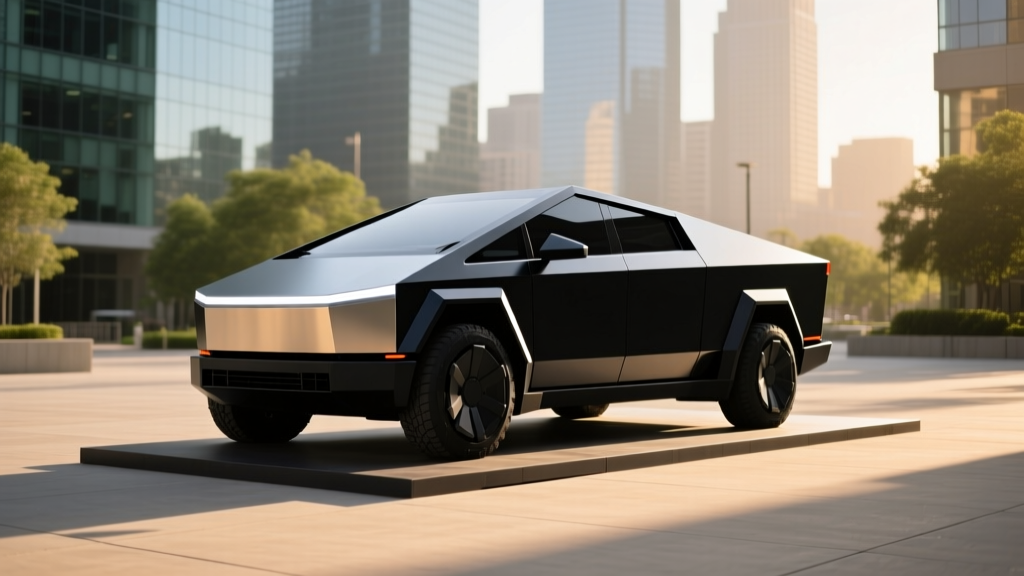
The Cybertruck's stainless-steel exoskeleton is aerodynamically brutal — Tesla claims a 0.38 drag coefficient, which is poor by EV standards (the Model Y sits at ~0.23). That brick-like profile punishes you at highway speeds. In Motor Trend and independent real-world testing, the AWD variant consistently delivered 260–275 miles on a 70 mph loop at moderate temperatures. Add a headwind, cold weather, or a full bed load, and 230–240 miles is realistic.
The "deactivated" range reports likely stem from Tesla's battery management system (BMS) recalibrating the usable buffer. NMC chemistry degrades with cycle count and calendar age. Tesla may conservatively reduce the accessible top/bottom buffer via OTA updates to preserve long-term cell health — effectively "deactivating" a few kWh to prevent accelerated degradation. This is not unique to the Cybertruck (early Model S owners saw similar buffer adjustments), but it's more visible here because the truck's efficiency is already marginal.
Charging Speed: DC Fast, Level 2, and the 800V Question
| Charge Level | Power (kW) | Miles Added per Hour | Notes |
|---|---|---|---|
| Level 1 (120V) | 1.4 kW | ~3 mi/hr | Emergency/trickle only |
| Level 2 (240V, 48A) | 11.5 kW | ~37 mi/hr | Full charge in ~11 hours |
| DC Fast (V3 Supercharger) | 250 kW peak | ~200 mi in 15 min | Tapers heavily after 60% SoC |
| DC Fast (10–80%) | Avg ~130 kW sustained | — | ~28 minutes typical |
The Cybertruck uses a 48V electrical architecture and supports up to 250 kW peak DC fast charging on Tesla V3 Superchargers. However, peak is not sustained. The charge curve ramps quickly to ~240 kW between 10–30% state of charge (SoC), then progressively tapers. By 60% SoC, you're typically seeing 120–140 kW; by 80%, it drops to ~60 kW. This is why the 10–80% time is ~28 minutes, not the "15 minutes" marketing sometimes implies.
Notably, the Cybertruck does not use an 800V architecture (unlike the Hyundai Ioniq 5 or Porsche Taycan, which sustain higher charge rates longer). Tesla's 400V-equivalent system in the Cybertruck means the charge curve tapers earlier. If you're road-tripping frequently, expect 30–35 minute stops for meaningful range recovery, not 15-minute pit stops.
For home charging, a 48A Level 2 wall connector on a 60A circuit delivers 11.5 kW, adding roughly 37 miles per hour of charging. A full 0–100% charge takes approximately 11 hours. Most owners charging overnight from 20–80% will need 5–6 hours, which is practical for daily use.
Pricing, Trims, and Federal Tax Credit Eligibility (2026)
| Trim | Base MSRP | As-Tested (typical options) | §30D Credit Eligible? | Effective Price (if eligible) |
|---|---|---|---|---|
| AWD (Dual-Motor) | $79,990 | $83,000–$86,000 | Yes (under $80K MSRP cap for trucks) | ~$72,490–$75,500 |
| Cyberbeast (Tri-Motor) | $99,990 | $102,000–$108,000 | Yes (under $80K cap? — see note) | Varies |
Tax credit nuance: Under IRS §30D rules for 2026, the MSRP cap for trucks, vans, and SUVs is $80,000 (sedans are capped at $55,000). The AWD Cybertruck at $79,990 squeaks under this cap and qualifies for up to $7,500 in federal tax credits — provided the buyer meets income limits ($300K joint / $150K single AGI) and the vehicle satisfies critical-mineral and battery-component sourcing requirements. The Cyberbeast at $99,990 exceeds the MSRP cap and does not qualify for the new-vehicle §30D credit.
The credit can now be transferred at point of sale (dealer discount) rather than waiting for a tax refund, per IRS guidance. Always verify current-year sourcing compliance on irs.gov before purchasing, as battery-component rules tighten annually.
Cargo, Passenger Space, and Daily Practicality
The Cybertruck's 6-foot bed offers approximately 67 cubic feet of lockable cargo volume (with the tonneau cover deployed). The bed is 4-foot wide between the wheel wells, accommodating standard 4x8 sheets of plywood only diagonally — a frequent complaint from contractors. The powered tonneau cover supports up to 300 lbs of distributed load and is a genuine differentiator for secure storage.
Passenger space is adequate but not generous: front legroom is ~41.5 inches, rear legroom ~38.2 inches. The rear seat is tight for adults over 6 feet on longer trips. The cabin seats five (no third row). Interior build quality improved in 2025–2026 production runs, but panel gaps and the minimalist dashboard (no physical gauges, all info on the 18.5" center touchscreen) remain polarizing.
The "frunk" (front trunk) is modest at ~7 cubic feet — useful for charging cables and a small bag, but not a standout feature compared to the Ford F-150 Lightning's massive 14 cu-ft Mega Power Frunk.
Driver Assistance, Tech, and the Autopilot Reality
SAE Automation Level: Tesla Autopilot and Full Self-Driving (Supervised) are Level 2 driver-assist systems. The driver must remain fully engaged, hands on the wheel, eyes on the road. This is not autonomous driving. Only Waymo and Zoox robotaxis operate at Level 4 in geofenced areas.
The Cybertruck ships with Tesla's HW4 (Hardware 4) computer and the latest Autopilot suite. Standard features include adaptive cruise control, lane-keeping assist, automatic emergency braking, and blind-spot monitoring. The optional FSD (Supervised) package ($8,000 one-time or $99/month in 2026) adds Navigate on Autopilot (highway on/off-ramp automation), traffic-light recognition, and city-street steering assistance.
FSD (Supervised) has improved substantially since 2024, but it still makes errors — phantom braking, misread construction zones, hesitation at complex intersections. It's a convenience feature for reducing fatigue on long drives, not a replacement for attention. The Cybertruck's steer-by-wire system (no mechanical connection between wheel and tires) integrates with Autopilot for smoother lane corrections, but some drivers report a "disconnected" feel during manual driving.
Unique Cybertruck tech features include:
- Armor Glass: Ultra-hardened glass (though early units had known cracking issues under stress)
- 48V Architecture: Reduces wiring harness weight; powers high-torque steer-by-wire
- Bioweapon Defense Mode: HEPA air filtration (shared with Model S/X)
- Powered Tonneau + Bed Outlet: 120V/240V bed outlet supports up to 9.6 kW for tools or camping
Pros and Cons: The Honest Assessment
Pros
- Class-leading towing (11,000 lbs) with integrated trailer brake controller
- Lockable 67 cu-ft bed with powered tonneau — secure, weatherproof
- Cyberbeast performance (2.6s 0–60) is absurd for a 6,800-lb truck
- Supercharger network reliability (17,000+ V3/V4 stalls in North America)
- OTA updates add features over time
- 48V architecture is a genuine engineering advancement
Cons
- Real-world highway range ~250–270 mi (EPA 318 mi is optimistic)
- "Deactivated" buffer reports raise long-term SoH concerns
- 250 kW peak charge rate tapers early (no 800V architecture)
- Build quality inconsistency (panel gaps, early armor-glass cracks)
- Rear seat cramped for tall adults; no third-row option
- Bed width between wheel wells < 4 ft (can't fit plywood flat)
- $80K+ MSRP limits tax-credit eligibility to base AWD trim only
Competitive Comparison: Cybertruck vs. F-150 Lightning vs. Rivian R1T (2026)
| Spec | Tesla Cybertruck AWD | Ford F-150 Lightning (Extended Range) | Rivian R1T (Dual-Motor Max) |
|---|---|---|---|
| EPA Range | 318 mi | 320 mi | 352 mi |
| Battery (kWh) | ~123 (NMC) | ~131 (NMC) | ~149 (NMC) |
| 0–60 mph | 4.1 sec | 4.0 sec | 4.5 sec |
| Max DC Charge | 250 kW | 150 kW | 200 kW |
| 10–80% Time | ~28 min | ~41 min | ~34 min |
| Towing | 11,000 lbs | 10,000 lbs | 11,000 lbs |
| Bed Volume | 67 cu ft | 52.8 cu ft (5.5' bed) | 54 cu ft (4.5' bed) + Gear Tunnel |
| Base MSRP | $79,990 | $69,995 | $87,600 |
| Federal Credit | Yes (AWD only) | Yes (most trims) | Limited (sourcing TBD) |
The F-150 Lightning wins on value and familiarity (conventional truck layout, proven dealer network, broader credit eligibility). The Rivian R1T leads in range, build quality, and adventure-oriented design (Gear Tunnel, quad-motor option). The Cybertruck's advantages are towing capacity, Supercharger access, and the Cyberbeast's performance — but its polarizing design and range-deactivation concerns narrow its audience.
Who Should Buy the Cybertruck in 2026?
Buy the Cybertruck if:
- You need 11,000-lb towing and a secure, lockable bed for tools or gear
- You're a Tesla ecosystem loyalist (Powerwall, Solar Roof, Supercharger reliance)
- You prioritize acceleration performance (Cyberbeast) over efficiency
- You accept that real-world range will be 250–280 miles and plan charging stops accordingly
Look elsewhere if:
- Maximum range is your priority (Rivian R1T Max Pack delivers 352 mi EPA)
- You want a conventional truck experience with broad dealer support (F-150 Lightning)
- You're concerned about long-term battery buffer "deactivation" and resale value uncertainty
- You need rear-seat space for tall adults on a regular basis
Frequently Asked Questions
What does "Cybertruck deactivated" actually mean?
Owners have reported that Tesla's battery management system appears to reduce accessible battery capacity over time or after OTA updates — effectively "deactivating" a portion of the battery buffer. This is likely a conservative SoH preservation strategy (reducing the usable top/bottom buffer to slow degradation), but Tesla has not issued a formal technical bulletin addressing the specific reports.
What is the real-world range of the Cybertruck?
EPA estimates 318 miles for the AWD and 301 miles for the Cyberbeast. Real-world highway driving at 70 mph typically yields 250–280 miles. In cold weather (below 30°F), expect 220–250 miles. City driving with regenerative braking can approach 290–310 miles.
How fast does the Cybertruck charge at home and on the road?
At home on a 48A Level 2 charger (11.5 kW), you'll add ~37 miles per hour, with a full charge taking ~11 hours. On a Tesla V3 Supercharger (250 kW peak), 10–80% takes approximately 28 minutes, though the charge curve tapers significantly after 60% SoC.
Does the Cybertruck qualify for the $7,500 federal EV tax credit?
The AWD trim at $79,990 MSRP qualifies under the §30D truck MSRP cap of $80,000, assuming the buyer meets income limits ($300K joint / $150K single) and the vehicle satisfies 2026 battery-sourcing requirements. The Cyberbeast at $99,990 exceeds the cap and does not qualify. Always verify on irs.gov before purchasing.
Is the Cybertruck worth buying vs. the F-150 Lightning or Rivian R1T?
It depends on your priorities. The Lightning offers better value, dealer support, and credit eligibility. The R1T delivers superior range and build quality. The Cybertruck wins on towing, Cyberbeast performance, and Supercharger network access — but its range-deactivation concerns, polarizing design, and cramped rear seat limit its appeal to a narrower buyer profile.
What is the Cybertruck's battery warranty?
Tesla covers the battery and drive unit for 8 years or 120,000 miles (whichever comes first), with a minimum 70% capacity retention threshold. If the battery degrades below 70% SoH within the warranty period, Tesla will repair or replace it. This is competitive with Ford (8yr/100K mi) and Rivian (8yr/175K mi — Rivian's is more generous on mileage).