Why the Cybertruck Custom Scene Exploded in 2026
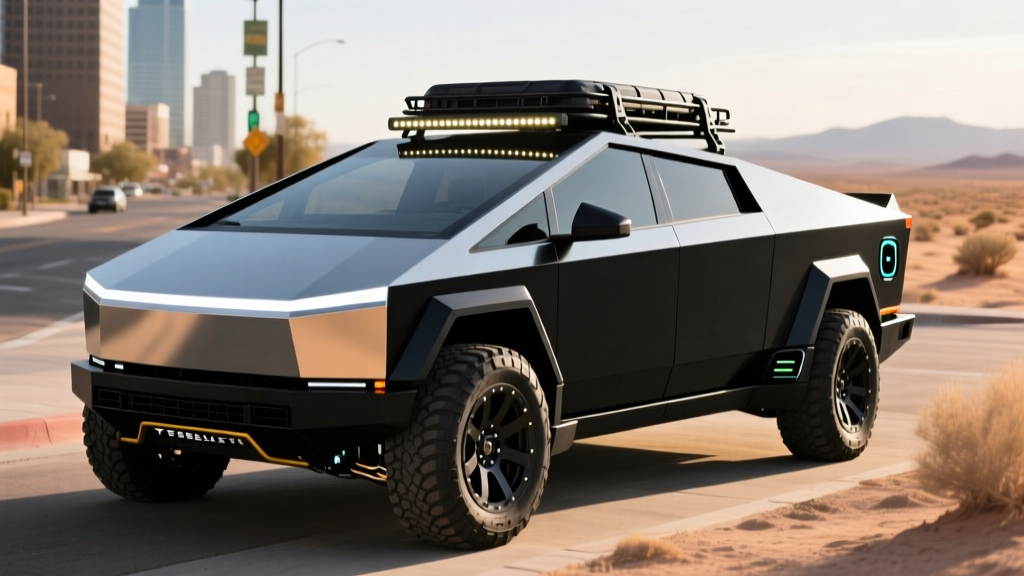
The Tesla Cybertruck's angular stainless-steel exoskeleton was practically begging for personalization from the moment deliveries began. By 2026, a robust aftermarket ecosystem has emerged — from performance ECU tunes and suspension lifts to full vinyl wraps, rooftop tents, and auxiliary battery modules. But modifying an electric pickup isn't like bolting a cold-air intake onto an F-150. Every Cybertruck custom modification interacts with a tightly integrated high-voltage system, thermal management loop, and software-defined drivetrain. Get it wrong, and you risk voiding your battery warranty, reducing your EPA-estimated range, or triggering fault codes that lock you out of Supercharging.
This guide breaks down what the Cybertruck actually delivers from the factory in 2026, then examines how popular custom modifications affect range, charging, performance, and long-term ownership — with hard numbers, not guesswork.
2026 Cybertruck Factory Specs: The Baseline Before You Mod
Before evaluating any Cybertruck custom build, you need the stock numbers. Tesla currently offers three trims for the 2026 model year. Here are the key specifications as published by Tesla and the EPA's fueleconomy.gov:
| Spec | AWD (Dual Motor) | Cyberbeast (Tri Motor) | RWD (Base — Announced) |
|---|---|---|---|
| EPA Est. Range | 340 mi | 320 mi | ~250 mi (preliminary) |
| Battery (usable) | ~123 kWh (NMC) | ~123 kWh (NMC) | TBD |
| Horsepower | 600 hp | 845 hp | TBD |
| 0-60 mph | 3.9 sec | 2.6 sec | TBD |
| Max DC Fast Charge | 250 kW (peak) | 250 kW (peak) | TBD |
| 10-80% DC Time | ~28 min | ~28 min | TBD |
| Level 2 Home Charge | 11.5 kW (~37 mi/hr) | 11.5 kW (~37 mi/hr) | TBD |
| MPGe (combined) | 67 MPGe | 62 MPGe | TBD |
| Efficiency | 50 kWh/100 mi | 54 kWh/100 mi | TBD |
| Base MSRP | $79,990 | $99,990 | $60,990 (announced) |
| Drivetrain | Dual-motor AWD | Tri-motor AWD | Single-motor RWD |
| Towing Capacity | 11,000 lb | 11,000 lb | TBD |
Battery chemistry note: The Cybertruck uses an NMC (nickel manganese cobalt) lithium-ion pack, chosen for its high energy density — essential in a vehicle this heavy (~6,800 lb curb weight for AWD). Unlike LFP (lithium iron phosphate) packs found in the Model 3 RWD, NMC cells degrade faster if routinely charged to 100% or stored at very low state of charge. Tesla recommends daily charging to 80-90% for longevity, which effectively reduces your usable daily range to roughly 270-305 miles on the AWD model.
The EPA rates the Cybertruck AWD at 340 miles. In real-world highway driving at 70-75 mph, expect approximately 260-290 miles depending on temperature, elevation, and tire condition. In cold weather (below 30°F), range loss of 20-30% is typical for NMC packs — bringing effective range down to 210-250 miles. The stainless-steel body and aggressive frontal area (high drag coefficient) penalize highway efficiency more than city driving, where regenerative braking recovers energy.
Most Popular Cybertruck Custom Modifications — And What They Actually Cost You
The Cybertruck custom aftermarket in 2026 breaks into five major categories. Each has measurable impacts on range, efficiency, and warranty status.
1. Suspension Lifts and Larger Tires
A 2-inch lift kit with 35-inch all-terrain tires is the single most common Cybertruck custom mod for overlanding and off-road builds. Companies like Unplugged Performance and EV Tune offer Cybertruck-specific kits ranging from $2,500 to $5,500 installed.
Range impact: Larger, heavier all-terrain tires increase rolling resistance and unsprung mass. Independent testing by EV owners has documented a 10-18% reduction in efficiency, dropping the AWD's real-world range from ~280 highway miles to roughly 230-250 miles. The MPGe equivalent falls from ~67 to approximately 55-58 MPGe.
Warranty risk: Tesla's warranty does not cover suspension components modified with aftermarket parts. If a lifted Cybertruck experiences premature wheel-bearing wear or driveshaft issues, Tesla can deny the claim. However, the 8-year/120,000-mile battery and drive unit warranty remains intact unless Tesla can prove the modification directly caused a high-voltage system failure — a high bar under the Magnuson-Moss Warranty Act.
2. Vinyl Wraps and Paint Protection Film (PPF)
The bare stainless-steel body is polarizing. Full vinyl wraps ($4,000-$7,000) and clear PPF ($5,000-$9,000) are the most popular aesthetic Cybertruck custom upgrades. These have negligible impact on range or efficiency — perhaps a 1-2% change due to surface texture differences, which is within normal variance.
Key concern: Improper PPF installation around the Cybertruck's panel gaps and sharp creases can trap moisture against the stainless steel, leading to surface corrosion spots. Choose installers with documented Cybertruck experience.
3. Auxiliary Battery Modules and Range Extenders
Several companies now offer bed-mounted auxiliary battery packs (10-20 kWh) that integrate with the Cybertruck's 12V system or, in more advanced setups, through a DC-DC converter tied to the high-voltage bus. Prices range from $6,000 to $15,000.
Range impact: A 15 kWh auxiliary module adds roughly 30-40 miles of theoretical range but also adds 200-350 lb of weight, which partially offsets gains. Net real-world gain is typically 15-25 miles — far less than marketing claims suggest.
Warranty risk: Any modification that interfaces with the high-voltage system is extremely high-risk. If an auxiliary pack causes a voltage irregularity that damages the main BMS (battery management system), Tesla will almost certainly deny the battery warranty claim. Proceed with extreme caution and consult a Tesla-certified technician.
4. Software Tunes and Performance Upgrades
Unlike ICE vehicles, the Cybertruck's performance is largely software-defined. Some third-party tuners offer "unlock" modules that increase boost pressure on the drive inverters, claiming 5-10% horsepower gains. Cost: $1,500-$3,000.
Range impact: Increased power output raises energy consumption. A 10% power bump typically yields a 5-8% efficiency penalty under spirited driving. If you already drive aggressively, the impact compounds.
Warranty risk: Tesla's over-the-air diagnostics can detect non-standard inverter behavior. A software tune almost certainly voids the drive unit warranty and may flag the vehicle for Supercharger network restrictions. This is the highest-risk mod category.
5. Rooftop Tents, Campers, and Rack Systems
The Cybertruck's bed rails and vault system support a growing ecosystem of rooftop tents ($2,000-$5,000) and slide-in campers ($15,000-$35,000). These are mechanically straightforward but aerodynamically brutal.
Range impact: A rooftop tent adds drag that reduces highway efficiency by 12-20%. A full slide-in camper can cut range by 25-35%, dropping the AWD model to roughly 180-220 real-world highway miles. For overlanding, this means meticulous route planning around charging infrastructure.
Charging a Modified Cybertruck: What Changes and What Doesn't
One advantage of most Cybertruck custom builds: the charging hardware is largely unaffected by cosmetic and suspension modifications. The Cybertruck supports the NACS (North American Charging Standard) connector natively, giving it access to Tesla's Supercharger network — the most reliable DC fast-charging infrastructure in the US as of 2026.
| Charging Level | Stock AWD | With Lift/AT Tires | With Camper |
|---|---|---|---|
| Level 1 (120V, 12A) | ~3 mi/hr (1.4 kW) | ~3 mi/hr | ~2.5 mi/hr |
| Level 2 (240V, 48A) | ~37 mi/hr (11.5 kW) | ~31 mi/hr | ~26 mi/hr |
| DC Fast (250 kW peak) | ~180 mi in 15 min | ~150 mi in 15 min | ~125 mi in 15 min |
| 10-80% DC Time | ~28 min | ~28 min* | ~28 min* |
*The 10-80% charging time in minutes remains similar because the battery pack size and charge curve are unchanged — but each mile added represents more energy consumed by the modified vehicle. So while you still charge in ~28 minutes, the miles you gain cover less actual distance on the road.
Charge curve reality: The Cybertruck peaks at 250 kW only between roughly 10-30% state of charge. From 30-60%, it sustains around 180-200 kW. Above 80%, charging slows dramatically to protect the NMC cells — dropping below 50 kW. This is why the 10-80% metric matters more than peak kW. On a road trip, plan stops around the 15-80% window for the fastest throughput.
2026 Pricing, Tax Credits, and the True Cost of a Cybertruck Custom Build
The Cybertruck's pricing has been a moving target since launch. Here's where the 2026 model year stands:
| Trim | Base MSRP | As-Tested (Typical Options) | §30D Tax Credit Eligible? |
|---|---|---|---|
| AWD (Dual Motor) | $79,990 | $84,000-$88,000 | No — exceeds $80,000 truck MSRP cap |
| Cyberbeast (Tri Motor) | $99,990 | $102,000-$108,000 | No — exceeds $80,000 truck MSRP cap |
| RWD (Base) | $60,990 (announced) | $62,000-$66,000 | Potentially yes — under $80,000 cap |
Critical tax credit context: Under IRS §30D rules, the Cybertruck qualifies as a truck (GVWR over 4,000 lb), so the MSRP cap is $80,000. The AWD at $79,990 technically squeaks under, but any factory options or destination charges that push the sticker above $80,000 disqualify it. The base RWD model, once available, is the most credit-friendly variant. However, buyers must also meet income caps ($150,000 single / $300,000 joint AGI) and the vehicle must satisfy critical-mineral and battery-component sourcing requirements that have tightened significantly since 2024. The credit can now be transferred to the dealer at point of sale as a down-payment reduction. Always verify current-year eligibility on IRS.gov before committing.
Custom build budget example: A typical Cybertruck custom overlanding build in 2026 looks like this:
- Cybertruck AWD base: $79,990
- 2" lift + 35" AT tires: $4,500
- Full PPF wrap: $6,500
- Rooftop tent + rack system: $4,000
- Bed storage system: $2,500
- Light bar + auxiliary lighting: $1,200
- Total build: ~$98,690
Factor in higher insurance premiums (modified EVs often see 15-25% rate increases) and the total first-year cost approaches $105,000+.
Warranty, Insurance, and Long-Term Ownership Realities
Tesla's factory warranty for the 2026 Cybertruck covers:
- Basic vehicle: 4 years / 50,000 miles
- Battery & drive units: 8 years / 120,000 miles (with minimum 70% capacity retention guaranteed)
The battery warranty's 70% retention threshold is important: if your 123 kWh NMC pack degrades below ~86 kWh within 8 years/120,000 miles, Tesla will repair or replace it. However, any modification that Tesla determines contributed to battery degradation — particularly auxiliary electrical systems, non-OEM thermal management alterations, or software tunes — gives them grounds to deny the claim.
Insurance reality: The Cybertruck already carries elevated insurance costs due to its stainless-steel body (expensive to repair) and high performance. Adding custom modifications further increases premiums. Several major insurers now offer agreed-value policies for modified EVs, but expect to pay $3,500-$5,500/year for a custom build versus $2,800-$4,000 for stock. Always get insurance quotes before finalizing your mod list.
Resale considerations: Heavily modified Cybertrucks face a narrower buyer pool. While tasteful PPF and mild suspension lifts may hold value among the overlanding community, aggressive performance tunes and non-reversible electrical modifications typically reduce resale value by 10-20% compared to stock equivalents.
How the Modified Cybertruck Stacks Up Against Competitors
If you're considering a Cybertruck custom build for off-road or overlanding use, here's how it compares to other electrified trucks when similarly modified:
| Vehicle | Stock EPA Range | Est. Modified Range (Lift+AT) | Max Tow | Starting MSRP |
|---|---|---|---|---|
| Cybertruck AWD | 340 mi | ~245-270 mi | 11,000 lb | $79,990 |
| Rivian R1T Dual Max | 352 mi | ~265-290 mi | 11,000 lb | $87,900 |
| Ford F-150 Lightning Ext. Range | 320 mi | ~240-265 mi | 10,000 lb | $71,990 |
| Chevy Silverado EV 4WT | 440 mi | ~340-370 mi | 10,000 lb | $74,800 |
The Cybertruck's NACS-native charging advantage is significant for overlanding: Tesla's Supercharger network has more rural and highway-adjacent locations than any CCS-based network, though Electrify America and EVgo have narrowed the gap considerably by 2026. The Rivian R1T, while more expensive, has a more mature aftermarket and better approach/departure angles stock. The Silverado EV's massive battery offers the best modified-range buffer but lacks the Cybertruck's cultural cachet.
Who Should Build a Custom Cybertruck — And Who Shouldn't
Build a custom Cybertruck if:
- You need a daily-driver EV that can also handle moderate off-road trails and overlanding weekends
- You value the Supercharger network for road-trip charging reliability
- You're willing to accept a 10-20% range reduction in exchange for capability and aesthetics
- You plan to keep the truck 5+ years (amortizing the modification cost)
Think twice if:
- You regularly drive 300+ miles between charging stops — the modified range won't support it comfortably
- You need the full battery warranty protection for peace of mind
- You plan to sell within 2-3 years (modifications rarely recoup cost)
- You want a quiet, compliant ride — the Cybertruck's air suspension is already firm, and lifts make it firmer
Cybertruck Custom Build FAQ
What is the real-world range of a stock Cybertruck AWD?
The EPA rates it at 340 miles, but real-world highway driving at 70-75 mph yields approximately 260-290 miles in mild weather. In cold conditions (below 30°F), expect 210-250 miles. City driving with regenerative braking is closer to the EPA number — around 300-320 miles.
How fast does a modified Cybertruck charge?
Charging hardware is unchanged by most mods. The Cybertruck still peaks at 250 kW DC and charges 10-80% in roughly 28 minutes. However, because modified trucks consume more energy per mile, each minute of charging buys fewer actual road miles. At home on Level 2 (11.5 kW), expect about 37 miles of range per hour stock, dropping to 30-32 mi/hr with larger tires.
Does the Cybertruck qualify for the $7,500 federal EV tax credit?
It depends on the trim and your specific situation. The AWD at $79,990 technically meets the $80,000 MSRP cap for trucks under IRS §30D, but options that push the sticker above $80,000 disqualify it. You must also meet income caps ($150K single / $300K joint) and the vehicle must satisfy critical-mineral and battery-component sourcing requirements. The upcoming RWD model at $60,990 is more likely to qualify. Consult a tax professional before relying on the credit.
Will custom modifications void my Cybertruck warranty?
Under the Magnuson-Moss Warranty Act, a dealer must prove that a modification caused a specific failure to deny a warranty claim. In practice, Tesla can deny battery or drive unit claims if they detect non-standard electrical loads, software alterations, or suspension geometry changes that plausibly contributed to a failure. Cosmetic mods (wraps, PPF) carry minimal warranty risk. Performance tunes carry the highest risk.
What are the biggest pros and cons of a Cybertruck custom build?
- Unique personalization on a high-visibility platform
- Improved off-road capability with lift + AT tires
- NACS-native access to the Supercharger network
- 11,000-lb towing with integrated trailering tech
- Strong community and growing aftermarket support
- 10-20% range reduction with common mods
- Warranty denial risk for electrical/performance mods
- High base price — builds easily exceed $100K
- Elevated insurance costs for modified EVs
- Narrower resale market for heavily modified examples
- NMC battery requires careful charge-habit management
Is a custom Cybertruck worth it vs. a stock Rivian R1T or F-150 Lightning?
If your priority is maximum off-road capability with the best charging network, a mildly modified Cybertruck AWD is compelling. If you want a more mature aftermarket with better warranty support and don't mind CCS charging (with adapters), the Rivian R1T is a strong alternative. If budget matters most and you can live with shorter modified range, the F-150 Lightning offers the lowest entry cost. There is no universally "best" choice — it depends on your use case, risk tolerance for warranty issues, and how many highway miles you drive between charges.