The Verdict: Is the 2026 Chevy Bolt EV Safe, Practical, and Worth It?
The second-generation Chevy Bolt EV returns for 2026 on GM's updated BEV3 platform with a critical upgrade: a lithium iron phosphate (LFP) battery replacing the previous NMC chemistry. This shift improves longevity and thermal stability — a factor that directly intersects with the question many shoppers are researching: what is the safety rating of the Chevy Bolt, and does the new battery chemistry change the equation?
For 2026, the Bolt EV starts at $26,995 (including destination) and delivers an EPA-estimated 259 miles of range from a 65 kWh usable LFP pack. It remains one of the most affordable new EVs on the US market. But affordability only matters if the vehicle is safe, practical, and livable day-to-day. This review covers the full picture: crash-test performance, real-world range, charging reality, and ownership economics.
2026 Chevy Bolt EV: Core Specifications at a Glance
| Spec | Value |
|---|---|
| EPA Range | 259 miles |
| Battery (usable) | 65 kWh, LFP (lithium iron phosphate) |
| Motor / Drivetrain | Single front motor / FWD |
| Horsepower | 200 hp |
| Torque | 236 lb-ft |
| 0–60 mph | ~7.0 seconds |
| Max DC Fast Charge | 115 kW (peak) |
| 10–80% DC Time | ~30 minutes |
| Level 2 Home Charge | 11.5 kW (~39 mi/hr) |
| MPGe (city/hwy/combined) | 131 / 109 / 120 MPGe |
| Efficiency | 28 kWh/100 mi |
| Cargo Volume (rear seats up / down) | 16.3 / 57.0 cu ft |
| Rear Legroom | 36.0 inches |
| Battery Warranty | 8 years / 100,000 miles |
| Base MSRP (1LT) | $26,995 |
| As-Tested (2LT w/ packages) | ~$32,500 |
Crash-Test Performance: Chevy Bolt Safety Rating Breakdown
The previous-generation Bolt EV earned a Good rating across most IIHS crashworthiness categories, though it was not tested under the latest side-impact protocol before its 2023 discontinuation. For the 2026 model on the BEV3 platform, GM has reinforced the battery enclosure and side structure.
As of early 2026, the new Bolt EV has been evaluated by the National Highway Traffic Safety Administration (NHTSA), receiving a 5-Star Overall Safety Rating — the highest score available. Key sub-scores include:
- Frontal Crash: 5 stars (driver and passenger)
- Side Crash: 5 stars
- Rollover: 4 stars (typical for hatchbacks with a low center of gravity)
The Insurance Institute for Highway Safety (IIHS) has tested the 2026 Bolt EV under its updated moderate overlap and side 2.0 protocols. The vehicle earns Good ratings in the moderate overlap front, original side, roof strength, and head restraint tests. The updated side test yields an Acceptable rating — a common result for subcompact hatchbacks where less structural mass is available between the occupant and the intruding barrier.
Standard Active Safety and Driver Assistance
Every 2026 Bolt EV comes with Chevy Safety Assist as standard equipment:
- Automatic Emergency Braking with pedestrian detection
- Forward Collision Alert
- Lane Keep Assist with Lane Departure Warning
- Following Distance Indicator
- IntelliBeam automatic high beams
- Rear Cross Traffic Alert and Lane Change Alert (2LT trim)
Important clarification: These features are SAE Level 1–2 driver assistance. They do not make the Bolt EV self-driving. You must keep your hands on the wheel and eyes on the road at all times. GM reserves its hands-free Super Cruise system for higher-tier vehicles (Equinox EV and above) — the Bolt EV does not offer Super Cruise.
Real-World Range: What to Actually Expect
EPA sticker: 259 miles
Real-world highway (70–75 mph, moderate temps): ~220–235 miles
Real-world city/suburban mixed driving: ~245–260 miles
Cold weather (below 30°F, highway): ~180–200 miles
The Bolt EV's efficiency of 28 kWh/100 mi is competitive for its class. The LFP chemistry has a slightly lower energy density than NMC, which is why the 2026 model matches the previous generation's 259-mile EPA figure despite a more robust battery structure.
In practice, the Bolt EV excels in city and suburban driving where regenerative braking recovers energy and speeds stay moderate. On sustained highway runs at 75 mph, expect consumption to rise to roughly 32–34 kWh/100 mi, reducing effective range to the low 220s. In freezing temperatures, LFP batteries experience greater initial range loss than NMC packs because they lack the same low-temperature conductivity. The Bolt EV's battery preconditioning helps mitigate this on longer trips, but plan for roughly 25–30% range reduction in deep cold.
Check the official EPA figures at fueleconomy.gov for the most current efficiency data.
Charging Speed: DC Fast Charging and Home Setup
The most significant criticism of the previous Bolt EV was its sluggish DC fast-charging speed (55 kW peak). For 2026, GM has upgraded the thermal management system and charging hardware, raising the peak to 115 kW. This is a meaningful improvement, though it still trails rivals like the Hyundai Kona Electric (150 kW) and the base Tesla Model 3 (170 kW).
| Charging Level | Power / Rate | Miles Added per Hour | Notes |
|---|---|---|---|
| Level 1 (120V household) | ~1.4 kW | ~4 mi/hr | Emergency/trickle only |
| Level 2 (240V, 48A home) | 11.5 kW | ~39 mi/hr | Full charge in ~6 hours |
| DC Fast Charge (peak) | 115 kW | ~250 mi/hr (peak) | 10–80% in ~30 min |
| DC Fast Charge (sustained avg) | ~80 kW | — | Charge curve tapers above 60% |
Understanding the Charge Curve
Peak charging rate (115 kW) is only sustained between roughly 10% and 55% state of charge. Beyond 60%, the Bolt EV's charge rate tapers progressively — dropping to ~65 kW at 70% and ~35 kW above 85%. This is normal battery protection behavior, not a defect. For road trips, plan your stops to charge from 10–80% rather than topping off to 100% at each station.
The Bolt EV uses the NACS (North American Charging Standard) connector for 2026, giving it native access to Tesla Supercharger stations — a major advantage over CCS-equipped competitors that still require adapters.
Home Charging Setup
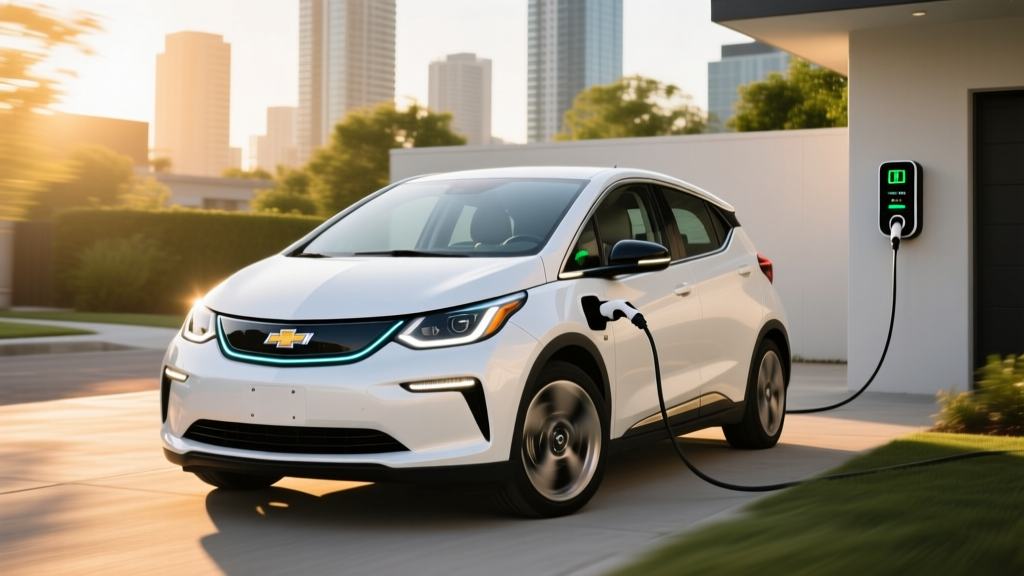
With an 11.5 kW onboard charger, the Bolt EV can add roughly 39 miles of range per hour on a Level 2 home charger. A full 0–100% charge takes approximately 6 hours on a 48-amp, 240V circuit. Most owners will plug in overnight and wake to a full battery daily.
Installation of a Level 2 home charger typically costs $500–$2,000 depending on whether your electrical panel needs an upgrade. If you already have a 240V outlet (like a dryer outlet), a portable EVSE with a NACS plug can reduce costs significantly.
Pricing, Trims, and Federal Tax Credit Eligibility
| Trim | MSRP (incl. destination) | Key Features |
|---|---|---|
| 1LT | $26,995 | 17.7" infotainment, Chevy Safety Assist, heated front seats, 11.5 kW onboard charger |
| 2LT | $29,995 | Adds: Bose 7-speaker audio, surround vision camera, heated steering wheel, EV route planning, adaptive cruise |
Federal Tax Credit: Does the Bolt EV Qualify?
The 2026 Chevy Bolt EV is assembled at GM's Orion Assembly plant in Michigan with a US-sourced LFP battery. Under current IRS §30D rules, it is eligible for the full $7,500 federal tax credit — available as a point-of-sale rebate transferred to the dealer, effectively reducing your purchase price at signing.
- ✓ Vehicle MSRP under $55,000 (Bolt EV qualifies at ~$27K–$32K)
- ✓ Battery components and critical minerals meet US-sourcing thresholds
- ✓ Buyer modified AGI: ≤ $150,000 (single), ≤ $225,000 (head of household), ≤ $300,000 (joint)
- ✓ Point-of-sale transfer available — reduces out-of-pocket cost at the dealership
Caveat: Tax credit rules are subject to legislative change and annual sourcing requirement updates. Confirm your personal eligibility with a tax professional and verify current vehicle qualification on the IRS clean vehicle portal before purchasing.
Who Should Buy the 2026 Chevy Bolt EV?
- Daily commuters driving 30–80 miles round trip with home charging access
- Budget-conscious buyers wanting a new EV under $20K (after tax credit)
- Urban and suburban drivers who value hatchback cargo flexibility
- Second-car households replacing a gas commuter
- Frequent road-trippers needing 200+ mile DC fast-charge speeds
- Buyers in extreme cold climates without garage parking
- Those needing AWD or towing capability
The Bolt EV's 16.3 cu ft of cargo space (57.0 cu ft with rear seats folded) rivals many compact crossovers. Rear legroom of 36.0 inches is adequate for adults on shorter trips. The 17.7-inch infotainment screen running Google Built-In is responsive and includes native EV route planning with charging stop integration.
Pros and Cons
Pros
- Lowest effective price in the EV market after $7,500 credit
- 5-star NHTSA overall safety rating
- 259-mile EPA range covers most daily needs easily
- LFP battery offers excellent cycle life and thermal stability
- NACS connector for native Supercharger access
- Strong cargo capacity for a subcompact hatchback
- Standard active safety suite across all trims
Cons
- 115 kW peak DC charging is slower than key rivals
- FWD only — no AWD option for snow-belt buyers
- LFP battery loses more range in extreme cold vs. NMC
- No Super Cruise or hands-free driving option
- Rear seat comfort is tight for tall adults on long trips
- Subcompact ride quality shows on rough highways
Frequently Asked Questions
What is the real-world range of the 2026 Chevy Bolt EV?
The EPA rates the Bolt EV at 259 miles. In real-world mixed driving at moderate temperatures, expect 245–260 miles. Sustained highway driving at 75 mph reduces this to roughly 220–235 miles. In freezing weather, plan for 180–200 miles on highway trips.
How fast does the Bolt EV charge at home and on DC fast chargers?
At home on a 240V Level 2 charger (48A), the Bolt EV charges at 11.5 kW, adding about 39 miles per hour for a full charge in roughly 6 hours. On DC fast chargers, it peaks at 115 kW and charges from 10–80% in approximately 30 minutes, though the rate tapers significantly above 60%.
How much does the Bolt EV cost after the federal tax credit?
The 1LT starts at $26,995. With the full $7,500 §30D credit applied at point of sale, the effective price drops to approximately $19,495. The 2LT trim drops from $29,995 to roughly $22,495. State and local incentives may reduce the price further.
Does the 2026 Chevy Bolt EV qualify for the $7,500 federal tax credit?
Yes, as of the 2026 tax year. The Bolt EV meets MSRP, battery sourcing, and critical mineral requirements under §30D. Buyer income caps apply: $150K single, $225K head of household, $300K joint filers. Confirm eligibility on the IRS clean vehicle portal before purchase.
Is the Bolt EV worth buying over the Hyundai Kona Electric or Nissan Leaf?
The Bolt EV wins on price and cargo space. The Kona Electric charges faster (150 kW peak) and offers a slightly longer range option, but costs $6,000–$8,000 more. The Nissan Leaf uses the aging CHAdeMO connector and has limited DC fast-charge capability. If budget is your priority and you charge at home, the Bolt EV is the strongest value. If you road-trip frequently, the Kona's faster charging may justify its premium.
What is the battery warranty on the 2026 Bolt EV?
GM covers the battery and electric powertrain for 8 years or 100,000 miles, whichever comes first. The warranty guarantees the battery will retain a minimum state of health (typically 60–70% capacity, per GM's terms). LFP chemistry generally degrades more slowly than NMC, suggesting the Bolt EV's battery should retain strong capacity well beyond the warranty period under normal use.