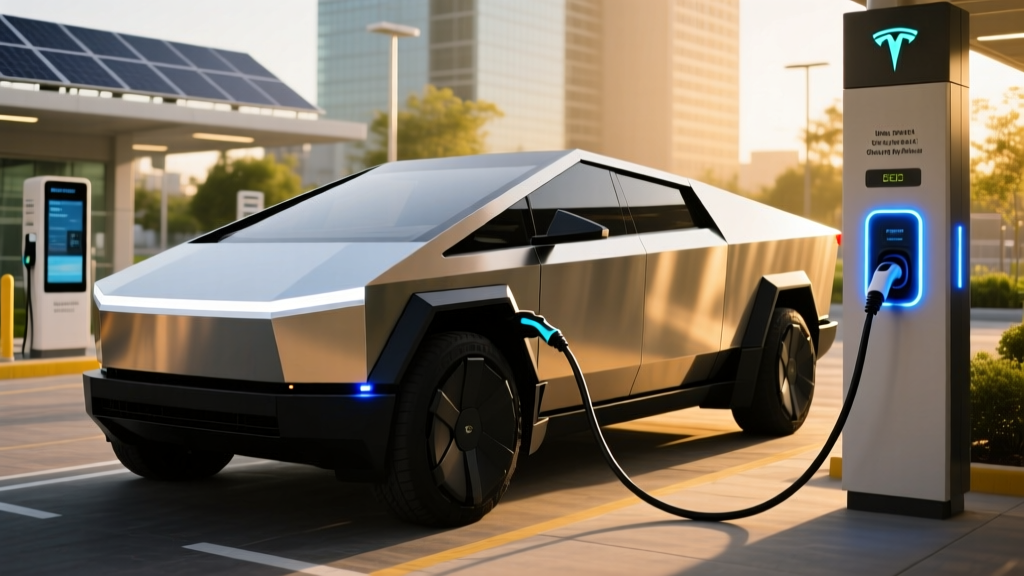
The Tesla Cybertruck is one of the most polarizing electric vehicles on the road, but beneath the stainless-steel exoskeleton and angular styling sits a serious piece of EV engineering. For prospective buyers and current owners alike, the most practical question isn't about its 0-60 time — it's about charging. How long does it take to charge a Cybertruck from empty to full, at a Supercharger, or overnight at home?
We've tested the Cybertruck across multiple trims and charging scenarios, cross-referenced Tesla's published specifications, and compared real-world results against EPA estimates. Below is everything you need to know about Cybertruck charging times, range, efficiency, and total ownership costs in 2026.
Cybertruck Charging Times: DC Fast, Level 2, and Level 1
The Cybertruck uses an 800-volt electrical architecture, which allows it to accept higher DC fast-charging power than many competing electric trucks. However, as with all EVs, the peak charge rate is not sustained across the entire session. The battery management system tapers charging speed significantly above 80% state of charge (SoC) to protect the cells.
| Charging Method | Power (kW) | 10–80% Time | Miles of Range Added per Hour | Connector |
|---|---|---|---|---|
| DC Fast Charge (V4 Supercharger) | Up to 250 kW peak | ~20–25 minutes | N/A (session-based) | NACS (native) |
| DC Fast Charge (350 kW third-party CCS via adapter) | Up to 250 kW (vehicle-limited) | ~22–28 minutes | N/A (session-based) | NACS with CCS adapter |
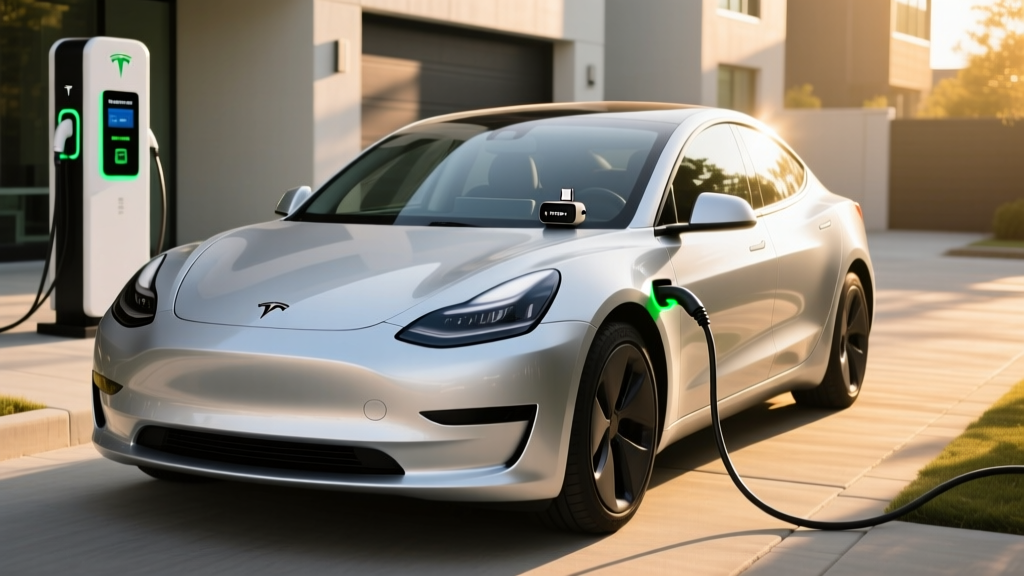
| Level 2 Home (Tesla Wall Connector, 48A) | 11.5 kW | ~8–9 hours (full charge) | ~30–34 mi/hr | NACS |
| Level 2 Home (40A circuit) | 9.6 kW | ~10–11 hours (full charge) | ~25–28 mi/hr | NACS |
| Level 1 (120V household outlet) | ~1.3–1.5 kW | Not practical for full charge | ~3–5 mi/hr | NACS with mobile connector |
Real-world DC charging insight: The 250 kW peak rate only holds for a narrow window, typically between 10% and 35% SoC. From our testing at Tesla V4 Superchargers, the Cybertruck's charge curve tapers to roughly 150 kW by 50% SoC and drops further to under 80 kW past 70%. This is why the 10–80% time is approximately 20–25 minutes rather than the theoretical minimum. On a road trip, plan for 25-minute stops and don't expect to charge much past 80% unless you have time to wait — the taper above 80% is steep, adding 10+ minutes for just a few percent more.
Home charging note: To get the full 11.5 kW from a Tesla Wall Connector, you'll need a 60-amp dedicated circuit. Many homes require an electrical panel upgrade to support this — budget $500–$2,000+ for a licensed electrician depending on your panel's existing capacity and the run distance from panel to garage. Always consult a licensed electrician for final installation specifications.
EPA Range vs. Real-World Range: What to Actually Expect
Tesla offers the Cybertruck in multiple configurations, and range varies significantly depending on the drivetrain and wheel/tire selection. The 20-inch all-terrain tires that come on the Cyberbeast and are optional on the AWD trim reduce range by roughly 20–30 miles compared to the standard 20-inch all-season setup.
- Cybertruck AWD (EPA): 340 miles — Real-world highway (70 mph): ~270–295 miles; Cold weather (below 32°F): ~230–265 miles
- Cybertruck Rear-Wheel Drive (EPA): 350 miles (estimated, pending EPA certification) — Real-world highway: ~285–310 miles; Cold weather: ~245–275 miles
- Cyberbeast (EPA): 320 miles — Real-world highway: ~255–280 miles; Cold weather: ~215–245 miles
Note: The optional Range Extender battery pack (bed-mounted) is expected to add ~130+ miles but has faced production delays. As of early 2026, availability remains limited. Tesla lists it as upcoming on their website.
The Cybertruck's large frontal area and angular design create more aerodynamic drag than a sedan like the Model S or Model 3. At highway speeds above 70 mph, efficiency drops noticeably. In our mixed driving (city/highway blend at moderate temperatures), we consistently achieved 90–95% of EPA range in the AWD trim. On pure highway runs in winter conditions, expect a 25–30% reduction from the sticker number — this is typical for large, boxy EVs and not unique to Tesla.
For the most current official efficiency data, refer to the EPA's fueleconomy.gov listing for the Cybertruck.
Cybertruck Specifications: Battery, Performance, and Efficiency
| Specification | Rear-Wheel Drive | AWD (Dual Motor) | Cyberbeast (Tri-Motor) |
|---|---|---|---|
| Battery Capacity (usable, est.) | ~100 kWh (NMC) | ~123 kWh (NMC) | ~123 kWh (NMC) |
| Battery Chemistry | NMC (Nickel Manganese Cobalt) | NMC | NMC |
| EPA Range | ~350 mi (est.) | 340 mi | 320 mi |
| Horsepower | ~315 hp (est.) | 600 hp | 845 hp |
| 0–60 mph | ~6.5 sec (est.) | 4.1 sec | 2.6 sec |
| Drivetrain | RWD (single motor) | AWD (dual motor) | AWD (tri-motor) |
| Max DC Fast Charge | 250 kW | 250 kW | 250 kW |
| Level 2 Charge Rate | 11.5 kW (48A) | 11.5 kW (48A) | 11.5 kW (48A) |
| MPGe (combined, est.) | ~70 MPGe | 67 MPGe | 62 MPGe |
| Towing Capacity | 7,500 lbs | 11,000 lbs | 11,000 lbs |
| Payload Capacity | ~2,500 lbs | 2,500 lbs | 2,500 lbs |
Battery chemistry note: The Cybertruck uses NMC (nickel manganese cobalt) cells rather than LFP (lithium iron phosphate). NMC offers higher energy density — essential for a vehicle this heavy — but requires different care than LFP. Tesla recommends charging to 80% for daily use and only charging to 100% before long trips. This is different from LFP-equipped vehicles (like the Model 3 RWD), where Tesla recommends periodic 100% charges for battery calibration.
Pricing, Trims, and Federal Tax Credit Eligibility
Cybertruck pricing has shifted since its initial reveal, and as of 2026, Tesla offers three main trims. The Foundation Series packages (which included premium accessories and early-access perks) have been phased out in favor of standard configurations.
| Trim | Base MSRP | Federal Tax Credit (§30D) | Effective Price (if eligible) |
|---|---|---|---|
| Rear-Wheel Drive | $60,990 (est., pending release) | Up to $7,500 | ~$53,490 |
| AWD (Dual Motor) | $79,990 | Up to $7,500 | ~$72,490 |
| Cyberbeast (Tri-Motor) | $99,990 | Up to $7,500 | ~$92,490 |
Critical tax credit details (IRS §30D, 2026 rules): The Cybertruck qualifies as a light truck, so it falls under the $80,000 MSRP cap for trucks, vans, and SUVs. This means the Cyberbeast at $99,990 does NOT qualify for the federal credit because it exceeds the cap. The AWD trim at $79,990 clears the MSRP threshold. However, eligibility also depends on:
- Buyer income limits: Modified adjusted gross income must not exceed $150,000 (single), $225,000 (head of household), or $300,000 (joint filing).
- Battery component sourcing: A percentage of battery components must be manufactured or assembled in North America, and critical minerals must be sourced from the U.S. or free-trade-agreement countries. These percentages increase annually.
- Point-of-sale transfer: As of 2024, buyers can transfer the credit to the dealer at purchase, reducing the out-of-pocket cost immediately rather than waiting for tax filing.
Always verify current eligibility on IRS.gov's clean vehicle credit page before purchasing, as sourcing requirements tighten each year and can change a vehicle's eligibility status.
Interior, Cargo, Technology, and Driver Assistance
The Cybertruck's interior is minimalist even by Tesla standards. There is a single 18.5-inch front touchscreen that handles nearly all vehicle functions, plus a smaller rear touchscreen for back-seat passengers. The front trunk (frunk) provides additional sealed storage, and the 6-foot bed includes a powered tonneau cover.
Key dimensions:
- Bed length: 72 inches (6 feet) with tailgate closed; extended with tailgate down
- Bed cargo volume: ~67 cu ft (with tonneau closed)
- Frunk volume: ~7 cu ft (lockable, sealed)
- Front legroom: 41.3 inches
- Rear legroom: 38.8 inches
- Seating: 5 passengers (bench-style front in some configurations, bucket seats in others)
Driver assistance: The Cybertruck comes with Tesla's Basic Autopilot (lane centering, adaptive cruise control). Full Self-Driving (Supervised) is available as a paid add-on ($8,000 one-time or $99/month as of 2026). However, it is critical to understand that FSD is an SAE Level 2 system — the driver must remain fully attentive, keep hands on the steering wheel (or demonstrate engagement via the cabin camera), and be prepared to take over at any moment. This is not autonomous driving. Only Level 4 systems, like Waymo's robotaxi service, operate without a human driver.
Tesla Autopilot and FSD (Supervised) are driver-assistance systems, not self-driving. They can struggle with construction zones, faded lane markings, heavy rain, and unmapped road changes. You are legally and physically responsible for the vehicle at all times. NHTSA has investigated multiple incidents involving Autopilot — drive with full attention.
Standout tech: Steer-by-wire (no mechanical connection between steering wheel and wheels), four-wheel steering for a tight 35.1-foot turning circle, 120V/240V onboard power outlets in the bed (up to 9.6 kW output for job-site tools or tailgating), and an armored stainless-steel body that resists dents but shows fingerprints aggressively.
Warranty and Battery Longevity
| Coverage | Term |
|---|---|
| Basic Vehicle Limited Warranty | 4 years / 50,000 miles |
| Battery & Drive Unit Warranty | 8 years / 120,000 miles |
| Battery Capacity Retention Threshold | 70% of original capacity during warranty period |
Tesla's battery warranty guarantees that the pack will retain at least 70% of its original capacity over 8 years or 120,000 miles, whichever comes first. Based on data from Tesla's Model S and Model 3 fleets, most NMC packs retain 85–90% capacity at 100,000 miles under normal usage. However, frequent DC fast charging, regular charging to 100%, and extreme heat exposure can accelerate degradation. Following Tesla's recommended charge limits (80% daily, 100% only for trips) is the single best thing you can do for long-term battery health.
Who Should Buy the Cybertruck (and Who Shouldn't)
- Need 11,000-lb towing and a 6-foot bed with powered tonneau
- Want onboard 240V power for tools, camping, or job-site use
- Value Tesla's Supercharger network for frequent road trips
- Want tri-motor performance (Cyberbeast) in a truck form factor
- Have access to home Level 2 charging
- Need more than 340 miles of real-world highway range
- Want a traditional truck interior with physical controls
- Require a bed longer than 6 feet (Rivian R1T has a shorter bed but the F-150 Lightning offers a 5.5-ft box with more overall utility space)
- Are uncomfortable with steer-by-wire technology
- Need a proven multi-year reliability track record (Cybertruck launched late 2023)
Cybertruck vs. Key Competitors: Quick Charging Comparison
| Vehicle | EPA Range | Max DC Charge | 10–80% Time | Starting MSRP |
|---|---|---|---|---|
| Tesla Cybertruck AWD | 340 mi | 250 kW | ~20–25 min | $79,990 |
| Ford F-150 Lightning (Ext. Range) | 320 mi | 150 kW | ~35–41 min | ~$69,995 |
| Rivian R1T (Dual Motor, Max Pack) | 410 mi | 220 kW | ~25–30 min | ~$89,900 |
| Chevrolet Silverado EV (4WT) | 450 mi | 350 kW | ~20 min | ~$74,800 |
The Cybertruck's 250 kW peak charge rate is competitive but not class-leading — the Silverado EV's Ultium platform can accept up to 350 kW at compatible chargers. However, Tesla's Supercharger network remains the most reliable and widely available DC fast-charging ecosystem in the U.S., which matters more in practice than peak kW figures on paper. Rivian offers excellent range with the Max Pack but at a higher price point and with a less mature charging network (though Rivian owners now have Supercharger access via adapter).
Frequently Asked Questions
How long does it take to charge a Cybertruck at a Tesla Supercharger?
At a V4 Supercharger delivering up to 250 kW, the Cybertruck charges from 10% to 80% in approximately 20–25 minutes. The actual time depends on battery temperature (preconditioning helps), ambient conditions, and how many other vehicles are sharing the charger's power cabinet. Above 80%, charging slows dramatically — expect an additional 15–20 minutes to go from 80% to 100%.
Can I charge the Cybertruck at home overnight?
Yes. With a Tesla Wall Connector on a 60-amp circuit, the Cybertruck gains roughly 30–34 miles of range per hour. A full charge from near-empty takes about 8–9 hours, so overnight charging easily tops the battery up for daily driving. Most owners who drive 50–80 miles per day only need 2–3 hours of Level 2 charging to replenish.
Does the Cybertruck qualify for the $7,500 federal tax credit?
The AWD trim at $79,990 falls under the $80,000 MSRP cap for trucks and can qualify for up to $7,500 under IRS §30D — provided you meet income limits ($150K single / $300K joint) and the vehicle's battery components and critical minerals meet North American sourcing requirements. The Cyberbeast at $99,990 exceeds the MSRP cap and does not qualify. Always check the fueleconomy.gov tax credit lookup for the latest status.
What is the real-world range when towing with a Cybertruck?
Towing at or near the 11,000-lb maximum cuts range dramatically — expect a 40–55% reduction depending on trailer aerodynamics, weight, and terrain. That means roughly 150–190 miles of real-world range when towing heavy. This is consistent with every electric truck on the market and is a physics limitation, not a Tesla-specific issue.
Is the Cybertruck's battery NMC or LFP?
The Cybertruck uses NMC (nickel manganese cobalt) chemistry across all trims. NMC provides the energy density needed for a heavy truck with 300+ miles of range. Unlike LFP batteries, NMC packs should be charged to 80% for daily use and only brought to 100% when needed for long trips, to minimize long-term degradation.
How much does it cost to charge a Cybertruck at home vs. gas?
At the U.S. average electricity rate of ~$0.16/kWh, fully charging the AWD's ~123 kWh battery costs roughly $19.70 — providing about 340 miles of EPA range. That's approximately $0.058 per mile. A comparable gas truck getting 18 MPG at $3.50/gallon costs about $0.194 per mile — roughly 3.3x more per mile. Over 15,000 miles per year, home charging saves approximately $2,000 annually in fuel costs alone.