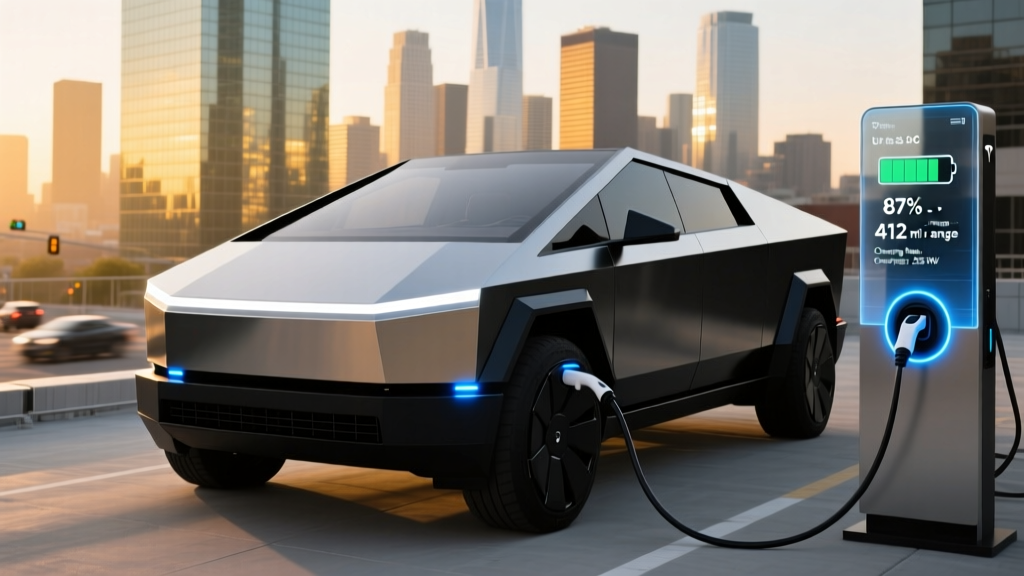
The Tesla Cybertruck remains one of the most polarizing vehicles on the road — a stainless-steel wedge that turns every parking lot into a car show. But beyond the viral drag races and angular memes, a growing chorus of owners and onlookers are asking a blunt question: is the Cybertruck burning through more cash than expected?
Between its $79,990 starting price, insurance premiums that rival supercars, real-world range that can fall well short of the EPA sticker, and repair costs tied to its exotic 48-volt architecture, the Cybertruck demands a hard look at the numbers. This review breaks down every spec, cost, and ownership reality you need to weigh before signing the delivery paperwork in 2026.
Tesla Cybertruck 2026 Specifications at a Glance
| Spec | AWD (Dual-Motor) | Cyberbeast (Tri-Motor) |
|---|---|---|
| EPA Range | 340 miles | 320 miles |
| Battery (usable est.) | ~123 kWh (NMC) | ~123 kWh (NMC) |
| Max DC Fast Charge | 250 kW | 250 kW |
| 10–80% DC Time | ~28 min | ~28 min |
| Level 2 Charge Rate | 11.5 kW (~37 mi/hr) | 11.5 kW (~37 mi/hr) |
| 0–60 mph | 3.9 sec | 2.6 sec |
| Horsepower | 600 hp | 845 hp |
| Drivetrain | Dual-Motor AWD | Tri-Motor AWD |
| Towing Capacity | 11,000 lbs | 11,000 lbs |
| MPGe (combined) | 72 MPGe | 68 MPGe |
| Efficiency | 47 kWh/100 mi | 50 kWh/100 mi |
| Base MSRP | $79,990 | $99,990 |
| Battery Warranty | 8 yr / 120,000 mi | 8 yr / 120,000 mi |
Sources: EPA / fueleconomy.gov, Tesla Cybertruck Specs
Real-World Range: Where the EPA Sticker Meets the Highway
Real-World Expectation: ~260–290 mi highway at 70 mph; ~210–240 mi in sub-freezing cold weather; ~230–260 mi while towing 5,000+ lbs.
The Cybertruck's aerodynamic profile — while visually striking — creates substantial drag at highway speeds. In multiple independent tests, the AWD dual-motor variant has returned between 260 and 290 miles at sustained 70–75 mph cruising, a 15–24% shortfall from the 340-mile EPA combined figure. This is typical for body-on-frame-style electric trucks, but it's a sharper penalty than a sedan like the Model S.
Cold weather compounds the loss. Lithium-ion NMC cells lose efficiency below 40°F, and the Cybertruck's massive 123 kWh pack requires significant thermal energy to maintain operating temperature. Expect a 25–35% range reduction in sustained sub-freezing conditions, putting real winter range in the 210–240 mile bracket for the AWD model.
If towing is on your agenda, plan conservatively. A 5,000-pound trailer at highway speed can push consumption above 70 kWh/100 mi, cutting effective range to roughly 175–200 miles between charges. The Cybertruck is not a long-distance tow rig without careful route planning around Superchargers.
Charging Speed: 250 kW Peak, But Watch the Curve
| Charging Level | Power / Rate | Miles Added per Hour | Notes |
|---|---|---|---|
| Level 1 (120V) | ~1.4 kW | ~3 mi/hr | Emergency / trickle only |
| Level 2 (240V, 48A) | 11.5 kW | ~37 mi/hr | Full overnight charge in ~11 hrs |
| DC Fast Charge | 250 kW peak | ~200+ mi in 15 min | 10–80% in ~28 min; tapers sharply above 80% |
Tesla's 250 kW Supercharger V3/V4 network remains the gold standard for public charging reliability, and the Cybertruck leverages it well — with caveats. The peak 250 kW rate is achievable between roughly 15–40% state of charge (SoC) when the battery is properly preconditioned via the onboard navigation routing. After 60% SoC, the charge curve tapers significantly. By 80%, you're pulling closer to 80–100 kW, and the final 80–100% stretch can take as long as the 10–80% session itself.
For practical road-trip planning, plan 20–25 minute stops at 250 kW Superchargers to go from 10–80%. That translates to roughly 200–220 real-world highway miles of added range per stop. Not class-leading — the Hyundai Ioniq 5 and Porsche Taycan both charge faster on compatible networks — but adequate given Tesla's superior charger uptime and density.
At home, the 11.5 kW Level 2 rate on a Tesla Wall Connector (48-amp circuit, requiring a 60-amp breaker) adds about 37 miles per hour. A depleted battery reaches full overnight in roughly 11 hours. If your home electrical panel is limited to a 32-amp circuit (7.7 kW), expect closer to 25 mi/hr and a 15-hour full charge.
Performance and Driving Dynamics
The Cyberbeast's 2.6-second 0–60 mph time makes it one of the quickest production vehicles ever sold, period. The dual-motor AWD's 3.9-second run is hardly slow either. But straight-line speed is only part of the story.
The Cybertruck uses steer-by-wire technology — there is no mechanical connection between the steering wheel and the front wheels. This enables the yoke-style steering wheel and a variable steering ratio (fewer turns lock-to-lock at low speed, more stability at highway speed). Most reviewers find it intuitive after 20–30 minutes of driving, but it requires an adjustment period and has drawn criticism from drivers who prefer traditional feedback.
The 48-volt electrical architecture (a first for a mass-production vehicle) reduces wiring harness weight and enables higher-power accessories, but it also means 48V-specific components are required for repairs — a factor in the elevated service costs some owners report. Tesla's rear-wheel steering system gives the 223-inch-long truck a surprisingly tight 37-foot turning circle, making it more manageable in urban environments than its dimensions suggest.
Pricing, Tax Credits, and the Real Cost of Ownership
| Trim | Base MSRP | Est. As-Tested* | Federal §30D Credit | Effective Price |
|---|---|---|---|---|
| AWD (Dual-Motor) | $79,990 | $84,990–$89,990 | $0 (exceeds MSRP cap) | $79,990–$89,990 |
| Cyberbeast (Tri-Motor) | $99,990 | $104,990–$114,990 | $0 (exceeds MSRP cap) | $99,990–$114,990 |
*As-tested includes destination fee, Foundation Series packages, and common add-ons.
This is where the "burning through cash" question gets real. Without a federal tax credit, the Cybertruck's effective purchase price is its sticker price. Add state registration fees (which can run $500–$1,200+ annually for heavy EVs in states like California and Texas), and the total cost of entry is substantial.
Insurance is another major line item. The Cybertruck's stainless-steel exoskeleton panels, 48-volt architecture, and high repair complexity have pushed average annual premiums to $4,500–$7,000+ depending on your state, driving record, and coverage level. For comparison, a Ford F-150 Lightning averages $2,200–$3,500 annually, and a Rivian R1T sits around $3,000–$4,200. Always get a personalized insurance quote before committing.
Tire costs also run higher than typical trucks. The Cybertruck's 35-inch all-terrain tires and heavy curb weight (~6,600–6,800 lbs) accelerate wear, with replacement sets running $1,800–$2,400 every 25,000–35,000 miles.
Cargo, Passenger Space, and Utility
The Cybertruck's 6-foot vault-style bed offers 74.3 cubic feet of lockable storage, with a powered retractable tonneau cover rated to support 300 lbs. The front trunk (frunk) adds roughly 7 cu ft of additional sealed storage. Maximum payload is rated at 2,500 lbs.
Interior passenger space is adequate for four adults but not generous by full-size truck standards. Rear legroom measures approximately 38 inches — enough for a 6-foot passenger behind a similarly sized driver, but tighter than a Ford F-150 or Rivian R1T. The rear bench fits three in a pinch, but the center position is compromised by the floor hump and limited shoulder room.
The 18.5-inch front touchscreen handles all vehicle controls (there are no physical buttons or stalks — turn signals are on the yoke). A 9.4-inch rear touchscreen provides climate and media controls for back-seat passengers. The glass roof provides an open, airy cabin but no shade option beyond the factory tint, which some owners find insufficient in hot climates.
Standout Tech and Notable Drawbacks
Standout features:
- Steer-by-wire with rear-wheel steering for exceptional maneuverability
- 48-volt electrical architecture (industry first for production vehicles)
- Adaptive air suspension with 16 inches of travel and up to 17 inches of ground clearance
- Armor glass with stainless-steel exoskeleton panels
- Tesla Supercharger network access (NACS connector, native — no adapter needed)
- Over-the-air updates adding features post-delivery
- Bioweapon Defense Mode (HEPA cabin filtration)
- Vehicle-to-load (V2L) capability via bed and cabin outlets
Notable drawbacks:
- No physical turn-signal stalks or gear selector — all on the yoke/screen
- Visibility compromised by thick A-pillars and angular rear design
- Panel gap consistency and build quality remain inconsistent across deliveries
- 48V components require specialized service; longer repair wait times reported
- No Apple CarPlay or Android Auto — Tesla's proprietary infotainment only
- Autopilot and FSD (Supervised) are Level 2 driver-assist systems, not self-driving — driver must remain engaged at all times
Pros and Cons
Pros
- Class-leading acceleration (2.6s Cyberbeast)
- 11,000-lb towing capacity
- Stainless-steel exoskeleton is dent- and corrosion-resistant
- Excellent off-road capability with air suspension
- Native NACS / Supercharger access
- Lockable vault bed with powered tonneau
- OTA updates continually add features
Cons
- No federal tax credit (MSRP cap exceeded)
- High insurance premiums ($4,500–$7,000+/yr)
- Real-world highway range 15–24% below EPA
- Steep learning curve (steer-by-wire, no stalks)
- Tight rear-seat space for a full-size truck
- Specialized 48V repairs can mean longer downtimes
- Poor towing range (~175–200 mi with trailer)
Who Should Buy the Cybertruck (And Who Shouldn't)
- You want a head-turning EV truck with supercar-level acceleration
- You value the Tesla Supercharger network for road trips
- Off-road capability and adaptive air suspension appeal to you
- You can charge at home and accept ~260–290 mi real-world highway range
- Budget is not a primary constraint ($80K–$115K total spend)
- You need maximum rear-seat passenger space (consider Rivian R1T or F-150 Lightning)
- You tow frequently over long distances (towing range is a significant limitation)
- You want a federal tax credit to offset the purchase price
- Insurance cost is a major budget factor
- You prefer traditional controls (stalks, buttons, physical gear selector)
Cybertruck vs. Key Competitors
| Spec | Cybertruck AWD | Rivian R1T Dual-Motor | Ford F-150 Lightning Lariat |
|---|---|---|---|
| EPA Range | 340 mi | 352 mi (Max Pack) | 320 mi (Ext. Range) |
| Base MSRP | $79,990 | $79,900 | $69,995 |
| Federal Credit | $0 | $0 (exceeds cap) | Up to $7,500 (if eligible) |
| 0–60 mph | 3.9 sec | 4.5 sec | 4.0 sec |
| Towing | 11,000 lbs | 11,000 lbs | 10,000 lbs |
| Max DC Charge | 250 kW | 220 kW | 150 kW |
| Rear Legroom | ~38 in | ~37 in | ~43 in |
The F-150 Lightning remains the value and practicality leader, especially with potential tax credit eligibility and far lower insurance costs. The Rivian R1T offers a more refined interior, a gear tunnel for creative storage, and competitive range with the Max Pack. The Cybertruck wins on acceleration, head-turning design, and Supercharger network access — but it's the most expensive to own of the three when insurance, tire wear, and zero tax incentives are factored in.
Frequently Asked Questions
What is the real-world range of the Cybertruck?
The EPA rates the AWD at 340 miles and the Cyberbeast at 320 miles. In real-world highway driving at 70 mph, expect 260–290 miles (AWD) and 240–270 miles (Cyberbeast). Cold weather drops this by an additional 25–35%.
How fast does the Cybertruck charge?
At a 250 kW Tesla Supercharger, the Cybertruck charges from 10–80% in approximately 28 minutes, adding roughly 200+ miles of range. At home on a Level 2 Wall Connector (11.5 kW), it adds ~37 miles per hour, with a full charge taking about 11 hours.
Does the Cybertruck qualify for the federal EV tax credit?
No. Under current IRS §30D rules, the truck MSRP cap is $80,000. The Cybertruck AWD starts at $79,990 but destination fees and any options push it above the threshold. The Cyberbeast at $99,990 far exceeds it. Additionally, buyer income caps and battery-sourcing requirements apply. Always check IRS.gov for the latest rules.
How much does the Cybertruck cost to own annually?
Beyond the purchase price, budget $4,500–$7,000+ for insurance, $600–$1,200 for electricity (depending on mileage and rates), $500–$1,200 for state registration/EV fees, and $1,800–$2,400 for tire replacement every 25,000–35,000 miles. Total annual operating costs can reach $8,000–$12,000 before any loan or lease payments.
Is the Cybertruck good for towing?
It's rated for 11,000 lbs — competitive with gas half-ton trucks. However, towing at highway speed can cut range to 175–200 miles, making long-distance towing impractical without meticulous Supercharger route planning. For frequent heavy towing, a diesel or hybrid truck remains more practical.
Why is Cybertruck insurance so expensive?
The stainless-steel exoskeleton panels, 48-volt electrical architecture, steer-by-wire system, and high parts cost make repairs complex and expensive. Combined with the vehicle's high MSRP and performance, insurers price premiums accordingly.
What is the Cybertruck's battery warranty?
Tesla covers the battery and drive unit for 8 years or 120,000 miles (whichever comes first), with a minimum 70% capacity retention guarantee during that period. This is comparable to most competitors' 8-year/100,000-mile coverage, with slightly better mileage terms.