The Bulletproof Question: What Tesla Actually Claims
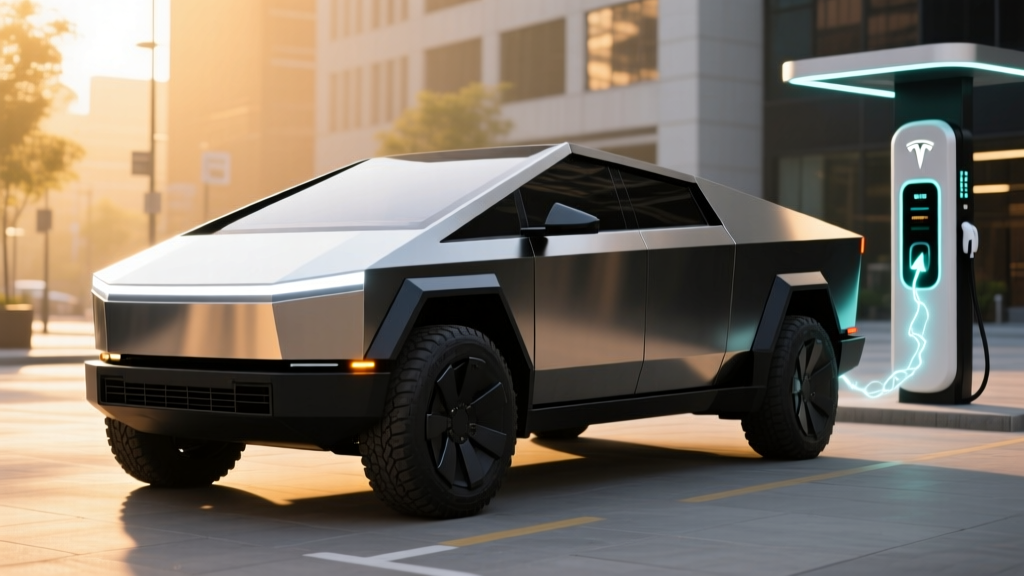
Search "Cybertruck bulletproof" and you'll find a tangle of marketing stunts, shattered windows, and internet debates. Let's cut through the noise with data. The Tesla Cybertruck uses an ultra-hard 30X cold-rolled stainless-steel exoskeleton that Tesla claims can resist certain small-arms fire. The armored glass — branded "Tesla Armor Glass" — is a polymer-layered composite designed to absorb impacts without shattering into dangerous fragments. But "bulletproof" is not a binary label; it's a spectrum governed by standards like NIJ (National Institute of Justice) ballistic ratings.
Tesla has demonstrated the Cybertruck's steel body resisting 9mm handgun rounds in controlled settings. However, Tesla has not published a formal NIJ ballistic certification for the production vehicle. The armored glass famously cracked during the 2019 unveiling, though Tesla says the production version uses an improved poly-layer that held up under subsequent testing. The bottom line: the Cybertruck offers more ballistic resistance than any conventional pickup, but calling it fully "bulletproof" overstates what the manufacturer has certified.
| Spec | AWD (Dual-Motor) | Cyberbeast (Tri-Motor) |
|---|---|---|
| EPA Range | 340 miles | 320 miles |
| Battery (usable, est.) | ~123 kWh, NMC | ~123 kWh, NMC |
| 0-60 mph | 3.9 sec | 2.6 sec |
| Horsepower | 600 hp | 845 hp |
| Drivetrain | Dual-motor AWD | Tri-motor AWD |
| Max DC Fast Charge | 250 kW (peak) | 250 kW (peak) |
| 10-80% DC Time | ~30 min | ~30 min |
| Level 2 Home Charge | 11.5 kW (~44 mi/hr) | 11.5 kW (~44 mi/hr) |
| Towing Capacity | 11,000 lbs | 11,000 lbs |
| MPGe (combined) | 72 MPGe | 69 MPGe |
| Base MSRP | $79,990 | $99,990 |
Real-World Range: What the EPA Sticker Doesn't Tell You
EPA Estimated Range: 340 miles (AWD) / 320 miles (Cyberbeast)
Real-World Expectation: Expect 270–300 miles on highway road trips at 70-75 mph. In cold weather (below 32°F), range can drop to 220–250 miles due to battery resistance and cabin heating demands. The Cybertruck's angular shape creates a higher drag coefficient (~0.34 Cd) than a sleek sedan, which penalizes highway efficiency disproportionately.
The Cybertruck's efficiency lands at roughly 72 MPGe combined for the AWD trim, translating to about 48 kWh per 100 miles — among the highest consumption figures in Tesla's lineup. That's the trade-off for 6,000+ pounds of stainless steel and a massive battery pack. If your commute is mostly stop-and-go city driving, regenerative braking helps recover energy, and you'll see results closer to the EPA sticker. Sustained highway driving, especially into headwinds or at elevation, will push you toward the lower end of real-world range.
Charging Speed: DC Fast Charging and Home Level 2
The Cybertruck supports a peak DC fast-charge rate of 250 kW on V3 Tesla Superchargers (and compatible NACS-equipped stations). However, peak rate is not sustained rate. The charge curve tapers significantly above 50% state of charge (SoC) to protect the NMC battery cells. In practice:
| Charging Level | Power (kW) | Speed (miles added/hr) | Notes |
|---|---|---|---|
| Level 1 (120V) | ~1.4 kW | ~3-4 mi/hr | Emergency/trickle only |
| Level 2 (240V, 48A) | 11.5 kW | ~44 mi/hr | Home overnight charging |
| DC Fast (V3 Supercharger) | Up to 250 kW peak | ~200+ mi in 15 min (10-50%) | Tapers above 50% SoC |
| DC Fast (10-80%) | — | — | ~30 minutes typical |
For home Level 2 charging, you'll want a Tesla Wall Connector on a 60-amp circuit delivering 48 amps to the truck. That adds roughly 44 miles of range per hour, meaning a full charge from 10% to 100% takes about 8-9 hours — fine for overnight charging. kW (kilowatts) measures power flow rate; kWh (kilowatt-hours) measures total energy stored. The Cybertruck's ~123 kWh battery is the "tank size," while 250 kW is how fast you can "fill" it at peak.
One ownership tip: precondition the battery by navigating to a Supercharger in the Tesla app or nav system before arriving. This warms the cells and enables faster charge acceptance, especially critical in cold weather where an un-preconditioned battery might accept only 50-80 kW initially.
Performance and Drivetrain: From 0-60 in Under 3 Seconds
The Cyberbeast tri-motor variant delivers 845 horsepower and hits 0-60 mph in 2.6 seconds — making it one of the quickest production pickups ever built. The dual-motor AWD trim still manages 3.9 seconds with 600 hp. Both use Tesla's permanent-magnet synchronous motors with torque vectoring across axles.
Towing capacity is rated at 11,000 lbs for both trims, competitive with heavy-duty ICE trucks, though towing that maximum will slash your range by 40-50%. Plan for 150-180 miles of range when pulling a loaded trailer at highway speeds. The steer-by-wire system (no mechanical connection between steering wheel and wheels) provides variable ratio steering — fewer turns lock-to-lock at low speeds, more stability at highway speed. It takes acclimation but works well once internalized.
Pricing, Trims, and Federal Tax Credit Eligibility
The 2026 Cybertruck lineup has shifted since the early Foundation Series pricing. Current base MSRPs:
- AWD (Dual-Motor): $79,990
- Cyberbeast (Tri-Motor): $99,990
Now the critical question for buyers: does the Cybertruck qualify for the $7,500 federal EV tax credit under IRS §30D?
§30D Federal Tax Credit Requirements (2026):
- MSRP Cap: Trucks/SUVs must be under $80,000 MSRP. The AWD Cybertruck at $79,990 squeaks under this cap; the Cyberbeast at $99,990 does NOT qualify.
- Buyer Income Cap: Modified AGI must not exceed $150,000 (single), $225,000 (head of household), or $300,000 (joint filers).
- Battery Sourcing: Critical minerals and battery components must meet phased-in domestic/free-trade sourcing requirements per the Inflation Reduction Act. Tesla has worked to qualify the Cybertruck's supply chain, but eligibility can shift annually. Always verify on IRS.gov before purchasing.
- Point-of-Sale Transfer: Eligible buyers can transfer the credit to the dealer at purchase, reducing the out-of-pocket price immediately rather than waiting for tax filing.
Bottom line: if you buy the AWD trim, meet the income requirements, and the sourcing rules hold, your effective price drops to roughly $72,490. The Cyberbeast is ineligible due to the MSRP cap.
Cargo, Interior Space, and Daily Practicality
The Cybertruck's 6-foot bed (styled as a "vault") offers 67 cubic feet of lockable storage with the powered tonneau cover deployed. The bed is 4-foot wide between the wheel wells — wide enough for standard plywood sheets. A front trunk (frunk) adds additional sealed storage.
Interior seating accommodates six across two rows (3-across bench front and rear). Rear legroom measures approximately 41.5 inches — adequate for adults on longer trips. The minimalist interior centers on an 18.5-inch touchscreen handling all infotainment, climate, and vehicle controls. There are no traditional stalks or buttons; even the turn signals are integrated into the steering wheel rim, a design choice that draws polarized reviews from owners.
Notable tech features include:
- Autopilot (standard) and available Full Self-Driving (Supervised) — both are SAE Level 2 driver-assist systems requiring constant driver engagement, NOT self-driving
- Adaptive air suspension with up to 16 inches of ground clearance in Off-Road mode
- Bioweapon Defense Mode (HEPA filtration)
- Powered bed cover and integrated 120V/240V bed outlets for job-site power (V2L capability)
Warranty Coverage
Tesla provides the following warranty coverage for the Cybertruck:
- Limited Vehicle Warranty: 4 years / 50,000 miles
- Battery & Drive Unit Warranty: 8 years / 120,000 miles (with minimum 70% battery capacity retention over the warranty period)
The 8-year/120,000-mile battery warranty is competitive with the industry standard (most EV makers offer 8 years/100,000 miles). Tesla's NMC cells have demonstrated strong longevity in Model S/X fleets, though the Cybertruck's heavier weight and higher discharge rates under towing could influence long-term degradation patterns. We won't have robust long-term data for another 2-3 years.
Who Should Buy the Cybertruck?
Buy the Cybertruck AWD if:
- You want the stainless-steel armor aesthetic and moderate ballistic resistance
- You need a daily-drivable electric truck with 340 miles of EPA range
- You want to potentially capture the $7,500 federal tax credit (MSRP under $80K)
- You tow occasionally but not at maximum capacity daily
Buy the Cyberbeast if:
- Straight-line performance (2.6-sec 0-60) matters more than tax-credit savings
- You want tri-motor torque vectoring for off-road or track use
- Budget is flexible above $95K+
Look elsewhere if:
- You need proven long-term reliability data (the Cybertruck is still early in its lifecycle)
- You prefer conventional steering feel over steer-by-wire
- You frequently tow near 11,000 lbs and need 200+ miles of range while doing so
Pros, Cons, and the Verdict
Pros
- Stainless-steel exoskeleton offers genuine impact and corrosion resistance
- Class-leading acceleration (Cyberbeast: 2.6 sec 0-60)
- 11,000-lb towing capacity with integrated bed power (V2L)
- Access to Tesla Supercharger network (17,000+ stalls in North America)
- Over-the-air updates continuously add features
Cons
- No formal NIJ ballistic certification — "bulletproof" is marketing shorthand
- High energy consumption (48 kWh/100mi) means costly charging vs. lighter EVs
- Steer-by-wire and yoke-style wheel require significant adaptation
- Cyberbeast ineligible for federal tax credit due to $80K MSRP cap
- Real-world highway range drops substantially when towing or in cold weather
- Panel gaps and early build-quality reports remain a concern per owner forums
Frequently Asked Questions
Is the Tesla Cybertruck actually bulletproof?
The Cybertruck's 30X cold-rolled stainless-steel body has demonstrated resistance to 9mm handgun rounds in controlled tests, and the armored glass uses a polymer composite layer. However, Tesla has not published a formal NIJ ballistic rating. It is more accurate to call it "ballistic-resistant" against certain handgun calibers rather than fully bulletproof against all threats.
What is the real-world range of the Cybertruck?
The EPA rates the AWD at 340 miles and the Cyberbeast at 320 miles. In real-world highway driving at 70-75 mph, expect 270-300 miles. In cold weather (below freezing), plan for 220-250 miles. Towing at maximum capacity cuts range by 40-50%, to roughly 150-180 miles.
How fast does the Cybertruck charge?
At a V3 Supercharger, the Cybertruck peaks at 250 kW, adding up to 200+ miles in about 15 minutes (10-50% SoC). A 10-80% charge takes approximately 30 minutes. At home on a Level 2 Wall Connector (11.5 kW), expect about 44 miles of range per hour of charging.
Does the Cybertruck qualify for the federal EV tax credit?
The AWD trim at $79,990 MSRP falls under the $80,000 truck/SUV cap and may qualify for the full $7,500 credit if you meet income limits (under $150K single / $300K joint) and battery sourcing requirements hold. The Cyberbeast at $99,990 does NOT qualify due to the MSRP cap. Verify current eligibility at IRS.gov.
Is the Cybertruck worth buying over the Ford F-150 Lightning or Rivian R1T?
It depends on your priorities. The F-150 Lightning offers more conventional truck ergonomics and a lower entry price but less range. The Rivian R1T is more refined off-road with a quad-motor option but starts higher and lacks Supercharger access (though adapters exist). The Cybertruck wins on raw performance, Supercharger infrastructure, and the stainless-steel body's durability. It loses on steering feel adaptation and build-quality consistency.
What's the biggest drawback of owning a Cybertruck?
Beyond the polarizing design, the biggest practical drawbacks are the high energy consumption (costly DC fast charging on road trips), the learning curve of steer-by-wire, and the real-world range loss when towing or in cold climates. Early owners also report panel-gap inconsistencies, though Tesla has been addressing these in production updates.