The Cybertruck's Real Running Costs: Beyond the EPA Sticker
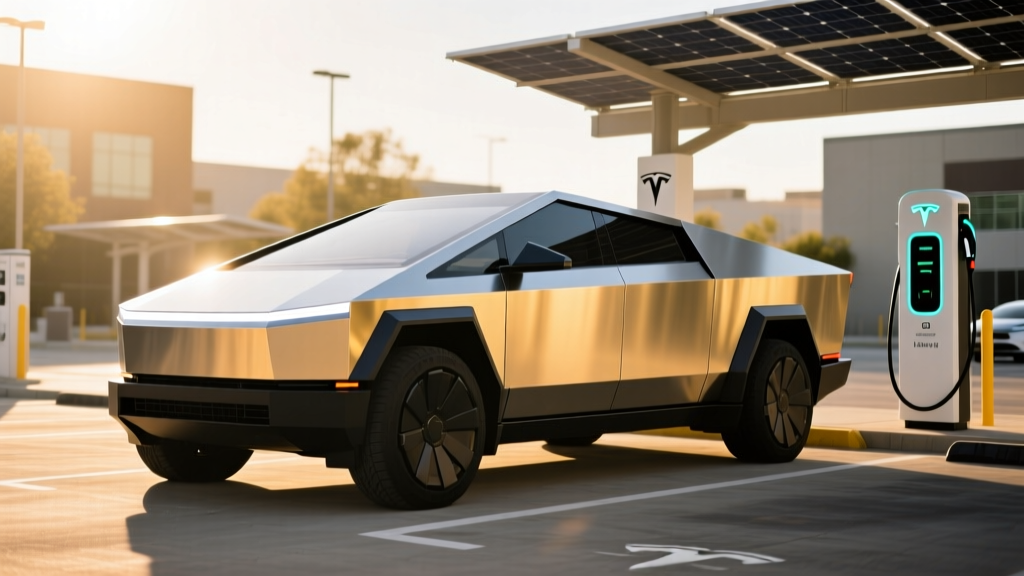
The Tesla Cybertruck is one of the most polarizing vehicles on the road, but beneath the stainless-steel exoskeleton lies a practical question for prospective buyers: what does it actually cost to keep running? The Cybertruck annual electricity cost depends heavily on your local utility rates, driving habits, and whether you can charge at home — and that's just the beginning of the ownership equation.
In this analysis, we model the full five-year cost of ownership for the 2026 Tesla Cybertruck across all three trims — Dual Motor AWD, Cyberbeast, and the base RWD (when available). We pair EPA efficiency data with real-world charging scenarios, factor in insurance premiums that routinely surprise new EV owners, and map out exactly where the IRS §30D federal tax credit applies.
- EPA Combined: ~70 MPGe (varies by trim and wheel config)
- Battery: ~123 kWh usable (NMC chemistry)
- EPA Range: up to 340 miles (AWD), ~320 miles (Cyberbeast)
- Real-world highway (75 mph, 70°F): ~280–310 miles
- Real-world cold weather (30°F, mixed driving): ~230–260 miles
- Peak DC Fast Charge: ~250 kW (10–80% in ~25–30 min with preconditioning)
How Much Does It Really Cost to Own a Cybertruck Over 5 Years?
Let's build the full five-year picture for a 2026 Cybertruck AWD Dual Motor at an MSRP of approximately $79,990 (before options, destination, or incentives). We assume 15,000 miles/year (75,000 total), a national average residential electricity rate of $0.16/kWh, and a mix of 80% home Level 2 charging and 20% public DC fast charging at $0.40/kWh.
| Cost Category | 5-Year Total (Est.) | Annual Avg. |
|---|---|---|
| Purchase Price (AWD Dual Motor) | $79,990 | — |
| Federal Tax Credit (§30D) | −$7,500 (if eligible) | — |
| Net Purchase After Credit | $72,490 | — |
| Electricity (75,000 mi total) | $6,300 | $1,260/yr |
| Insurance (avg. premium) | $18,000–$22,500 | $3,600–$4,500/yr |
| Maintenance & Repairs | $2,000–$3,000 | $400–$600/yr |
| Depreciation (est. 5-yr) | $28,000–$35,000 | — |
| Total 5-Year Cost (with credit) | $118,790–$132,990 | ~$23,758–$26,598/yr |
The Cybertruck annual electricity cost of roughly $1,260 is surprisingly reasonable for a 6,800+ lb vehicle — but electricity is only about 5–7% of the total five-year spend. Insurance and depreciation dominate the ledger.
Cybertruck Annual Electricity Cost: The Math by Charging Scenario
The Cybertruck AWD Dual Motor consumes approximately 48–52 kWh per 100 miles on the EPA combined cycle. That's a big battery moving a heavy, angular truck. Let's model three realistic charging scenarios for 15,000 annual miles:
| Charging Scenario | Avg. $/kWh | Annual Cost | Cost/Mile |
|---|---|---|---|
| 100% Home Level 2 ($0.16/kWh national avg.) | $0.16 | $1,200 | $0.08 |
| 80% Home / 20% DC Fast ($0.40/kWh) | $0.21 blended | $1,575 | $0.105 |
| 100% Public DC Fast Charging | $0.40 | $3,000 | $0.20 |
If you rely entirely on public DC fast chargers — Electrify America, EVgo, Tesla Superchargers — your Cybertruck annual electricity cost roughly doubles compared to exclusive home charging. The blended scenario (80/20) reflects how most suburban homeowners actually use their trucks: plugging in overnight and topping up on road trips.
For comparison, a gas-powered Ford F-150 4WD averaging 20 MPG combined at $3.50/gallon costs approximately $2,625 per year in fuel for the same 15,000 miles — or $0.175/mile. Even the blended EV scenario undercuts gasoline by roughly $1,050 annually.
Federal Tax Credit: Do You Qualify for §30D?
The IRS §30D Clean Vehicle Credit offers up to $7,500 for qualifying new EVs — but eligibility hinges on a web of requirements that trip up many buyers. As of 2026, the Tesla Cybertruck's eligibility depends on the specific trim and the buyer's tax situation.
- MSRP Cap: Trucks, SUVs, and vans must be under $80,000 MSRP. The Cybertruck AWD Dual Motor (~$79,990) qualifies; the Cyberbeast (~$99,990) does NOT qualify.
- Buyer Income Limits: Modified AGI must not exceed $300,000 (joint), $225,000 (head of household), or $150,000 (single).
- Battery Component Sourcing: $3,750 of the credit requires battery components manufactured or assembled in North America (phase-in percentages increase annually).
- Critical Minerals Sourcing: $3,750 requires critical minerals extracted or processed in the U.S. or an FTA partner country (phase-in percentages increase annually).
- Point-of-Sale Transfer: You can transfer the credit to the dealer at purchase, reducing your out-of-pocket cost immediately — even if you owe less than $7,500 in tax liability (for the transferred credit only).
- One Credit Per Vehicle: The vehicle must be new, placed in service by you, and used primarily in the U.S.
Source: IRS.gov — Credits for New Clean Vehicles. Rules subject to legislative change. Consult a tax professional for your specific situation.
The Cyberbeast trim's MSRP exceeding the $80,000 cap is a significant limitation. If you want the federal credit, the AWD Dual Motor is your path — and only if your income falls within the caps and the battery sourcing requirements are met for that model year.
Maintenance Savings: What You Skip and What You Still Pay For
The Cybertruck eliminates many routine maintenance items that gas truck owners take for granted. No oil changes, no transmission fluid, no spark plugs, no exhaust system, and dramatically reduced brake wear thanks to regenerative braking. But "low maintenance" doesn't mean "no maintenance."
| Maintenance Item | Cybertruck (5-yr est.) | Gas F-150 4WD (5-yr est.) |
|---|---|---|
| Oil Changes | $0 | $750–$1,000 |
| Transmission Fluid/Service | $0 | $200–$400 |
| Brake Pads/Rotors | $0–$300 (regen extends life) | $800–$1,500 |
| Tire Rotation & Replacement | $2,000–$3,000 (heavy EV = faster tire wear) | $1,500–$2,200 |
| Cabin Air Filter | $150–$250 | $150–$250 |
| Wiper Blades, Fluid, Misc. | $200–$400 | $200–$400 |
| Total 5-Year Maintenance | $2,350–$3,950 | $3,600–$5,750 |
The savings are real — typically $1,000 to $2,500 over five years — but tire costs are the hidden equalizer. The Cybertruck's weight (over 6,800 lbs for the AWD) and instant torque accelerate tire wear. Budget for a tire set replacement around year 3–4, and consider that OEM-spec Cybertruck tires (35-inch all-terrains) are not cheap.
Tesla's basic vehicle warranty covers 4 years / 50,000 miles, while the battery and drive unit warranty extends to 8 years / 120,000 miles (with a minimum 70% capacity retention threshold). That battery warranty provides meaningful protection against early degradation, though NMC chemistry in a large pack typically holds up well under normal use.
Insurance Reality: The Cost Most Buyers Underestimate
Here's where the Cybertruck ownership story gets uncomfortable. EV insurance premiums are typically 20–40% higher than comparable gas vehicles, and the Cybertruck sits at the upper end of that range. Several factors drive this:
- High repair costs: The stainless-steel exoskeleton and integrated structural battery pack make collision repairs expensive and specialized.
- Vehicle weight: At 6,800+ lbs, the Cybertruck causes more damage in multi-vehicle collisions, raising liability premiums.
- Parts availability: Tesla's parts supply chain has historically lagged legacy automakers, extending repair timelines and rental-car costs for insurers.
- Performance profile: The Cyberbeast's 845 horsepower and sub-3-second 0–60 time places it in sports-car insurance territory.
Expect annual premiums of $3,600–$4,500 for the AWD Dual Motor with a clean driving record — and potentially $5,000+ for the Cyberbeast. Always pull quotes from at least three insurers before purchase. Some carriers now offer EV-specific policies that factor in lower mileage or home-charging patterns.
State, Local, and Utility Incentives: Stack the Savings
The federal credit is only one piece of the incentive puzzle. Depending on your state and utility, additional savings may be available:
- State EV rebates: California's Clean Fuel Reward, Colorado's state tax credit (up to $5,000 for trucks), Massachusetts' MOR-EV program, and others can stack on top of the federal credit. These vary widely and change frequently — check your state's energy office or AFDC state law database.
- Utility rebates: Many utilities offer $250–$1,500 rebates for purchasing an EV and/or installing a Level 2 home charger. Some also offer reduced TOU rates exclusively for EV owners.
- HOV lane access: States like California, Colorado, and Virginia offer solo HOV lane access for qualifying EVs — a significant time savings for commuters, even if it doesn't show up on a spreadsheet.
- Home charging installation: The federal §30C Alternative Fuel Vehicle Refueling Property Credit covers up to $1,000 (30% of cost) for home EV charger installation, subject to census-tract eligibility.
Depreciation and Resale Value: The Wild Card
EV depreciation has historically been steeper than gas vehicles, driven by rapid battery technology advances, aggressive Tesla price cuts, and evolving consumer preferences. The Cybertruck is a unique case:
- Early demand: The Cybertruck's polarizing design and limited production initially kept resale values elevated — some early deliveries sold above MSRP on the used market.
- Production scaling: As Tesla ramps production and delivery backlogs clear, the used-market premium has eroded. By 2026, supply is normalizing.
- Estimated 5-year depreciation: 35–45% of purchase price, translating to roughly $28,000–$35,000 in value loss for the AWD Dual Motor. This is comparable to a loaded gas F-150 but higher than a Toyota Tacoma.
- Battery health matters: At resale time, buyers will scrutinize the State of Health (SoH) percentage. Keeping the battery between 20–80% SoC for daily use and avoiding frequent 100% charges helps preserve value.
The Cybertruck's stainless-steel body is theoretically more dent-resistant, which could help cosmetic condition at trade-in — but the integrated structural battery pack means any significant underbody damage could total the vehicle rather than allow a localized repair.
Decision Framework: Is the Cybertruck Worth the Total Cost?
- You have reliable home Level 2 charging access (keeps annual electricity cost under $1,300)
- Your household income falls within §30D caps and you're buying the AWD Dual Motor (under $80K MSRP cap)
- You value instant torque, low-center-of-gravity handling, and Tesla's Supercharger network
- You plan to keep the truck 5+ years to amortize the insurance and depreciation costs
- You need the Cyberbeast trim (disqualified from the federal credit due to MSRP cap)
- You rely exclusively on public charging (costs roughly double home charging)
- Insurance quotes come back above your budget tolerance — get quotes BEFORE ordering
- You trade vehicles every 2–3 years (depreciation will sting hardest in the early years)
Frequently Asked Questions
How much does it cost to charge a Cybertruck at home per month?
At the national average residential rate of $0.16/kWh and 15,000 miles/year, expect roughly $100/month for home charging. If your utility offers off-peak TOU rates around $0.08/kWh, that drops to approximately $50/month. The Cybertruck's ~123 kWh battery means a full 0–100% home charge costs about $19.70 at average rates.
Does the Cybertruck qualify for the $7,500 federal tax credit?
The AWD Dual Motor trim (~$79,990 MSRP) qualifies for the §30D credit if the buyer meets income limits ($300K joint / $150K single) and the battery sourcing requirements are satisfied for that model year. The Cyberbeast (~$99,990) exceeds the $80,000 truck MSRP cap and does NOT qualify. Always verify current-year sourcing compliance on the IRS eligible vehicle list before purchasing.
How do Cybertruck electricity costs compare to a gas F-150?
The Cybertruck AWD at a blended $0.21/kWh costs about $0.105/mile in electricity. A gas F-150 4WD at 20 MPG combined and $3.50/gallon costs about $0.175/mile. Over 15,000 annual miles, that's roughly $1,575 vs. $2,625 — a savings of $1,050/year on "fuel." However, the Cybertruck's higher insurance premiums ($1,000–$2,000 more annually) can offset much or all of that fuel savings.
How well does the Cybertruck hold its value?
Estimated 5-year depreciation is 35–45%, or roughly $28,000–$35,000 for the AWD Dual Motor. This is broadly comparable to full-size gas trucks but higher than midsize trucks like the Tacoma. Battery State of Health, mileage, and Tesla's pricing strategy at the time of resale all influence the final number. The Cybertruck's unique design may help it stand out in the used market — or limit its buyer pool.
What maintenance does the Cybertruck still require?
You'll still need tire rotations and replacements (budget $2,000–$3,000 over 5 years due to the truck's weight), cabin air filter changes, windshield wiper replacement, washer fluid, and brake fluid checks. Tesla recommends periodic inspections of the suspension and drive components. There are no oil changes, transmission services, or spark plugs.
Can I transfer the federal tax credit to the dealer at point of sale?
Yes. Under current §30D rules, you can transfer the credit to the dealership at purchase, reducing your out-of-pocket cost immediately. This works even if your tax liability is less than the credit amount (a key advantage over the old non-refundable system). The dealer handles the IRS registration. Confirm the dealer is registered with the IRS Energy Credits Online portal before finalizing your order.