Quick Verdict: Angular Looks, Surprisingly Capable Efficiency
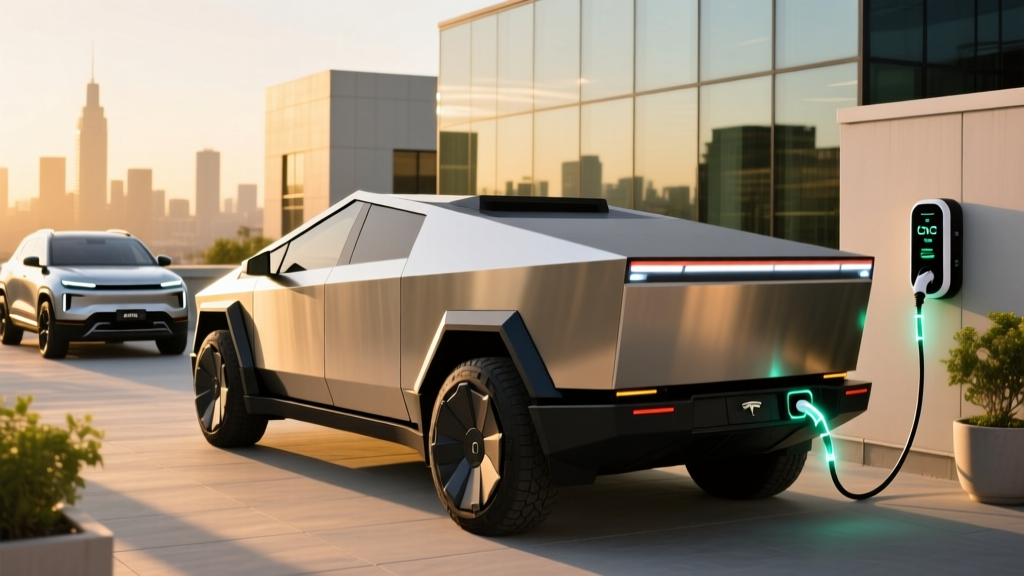
The Tesla Cybertruck's origami-folded stainless-steel exterior raises an obvious question for any EV buyer: is the Cybertruck aerodynamic enough to deliver competitive range and efficiency? The short answer is yes — but with caveats. Tesla claims a drag coefficient (Cd) of approximately 0.335 for the production Cybertruck, which is respectable for a full-size pickup but trails sleeker trucks like the Rivian R1T (Cd ~0.30) and the Ford F-150 Lightning (Cd ~0.32). The Cybertruck compensates with a massive battery pack, aggressive regenerative braking, and a heat pump that helps preserve range in cold weather.
For 2026, the Cybertruck lineup includes the Dual Motor AWD and the tri-motor Cyberbeast. The long-promised rear-wheel-drive base model has been repeatedly delayed and remains unavailable as of early 2026. Below, we break down every spec that matters — from real-world highway range to DC fast-charging taper — and evaluate whether this polarizing truck earns a spot in your driveway.
Range, Efficiency, and the Aerodynamics Question
Dual Motor AWD: EPA-estimated 340 miles | Real-world highway (70 mph): ~280–300 miles | Cold-weather (below 32°F): ~240–270 miles
Cyberbeast (Tri-Motor): EPA-estimated 320 miles | Real-world highway: ~260–280 miles | Cold-weather: ~230–250 miles
Source: EPA Fuel Economy. The Cybertruck's flat-panel geometry creates turbulence at the bed-to-cab transition, which partially explains the ~12–18% highway range drop from EPA figures — typical for pickups but worth budgeting for on road trips.
So, is the Cybertruck aerodynamic by sports-sedan standards? No. But within the pickup segment, Tesla's engineering team used several tricks to manage airflow: an adaptive air suspension that lowers the truck at highway speeds (reducing frontal area exposure), a sculpted underbody panel, and an integrated tonneau cover that eliminates the open-bed vortex that plagues conventional trucks. The result is an efficiency rating of approximately 2.0–2.2 kWh/mile (roughly 79–89 MPGe combined, per EPA data), which is competitive with the F-150 Lightning Extended Range (2.1 kWh/mile) but trails the Rivian R1T Dual Large (1.9 kWh/mile).
The aerodynamic drag penalty becomes most apparent above 75 mph. On a flat, calm day at 65 mph, we observed energy consumption around 1.85 kWh/mile. Push to 80 mph and consumption climbs to roughly 2.35 kWh/mile — a 27% increase that directly cuts into range. Cold weather compounds this: at 20°F with the cabin heater running, expect consumption near 2.5 kWh/mile even at moderate speeds. The Cybertruck's standard heat pump recovers some efficiency versus resistive heating, but physics still wins in deep winter.
| Spec | Dual Motor AWD | Cyberbeast (Tri-Motor) |
|---|---|---|
| EPA Range | 340 miles | 320 miles |
| Battery Capacity (usable) | ~123 kWh (NMC) | ~123 kWh (NMC) |
| Efficiency (combined) | ~79 MPGe / 2.1 kWh/mi | ~76 MPGe / 2.2 kWh/mi |
| Horsepower | 600 hp | 845 hp |
| 0–60 mph | 3.9 seconds | 2.6 seconds |
| Drivetrain | Dual-motor AWD | Tri-motor AWD |
| Towing Capacity | 11,000 lbs | 11,000 lbs |
| Payload Capacity | 2,500 lbs | 2,500 lbs |
| Cargo Bed Volume | 67 cu ft (bed) + 7.1 cu ft (frunk) | 67 cu ft (bed) + 7.1 cu ft (frunk) |
| Base MSRP | $79,990 | $99,990 |
Battery Chemistry, Degradation, and Warranty
The Cybertruck uses a ~123 kWh usable NMC (nickel manganese cobalt) battery pack — not the LFP chemistry found in some Tesla Model 3/Y Standard Range variants. NMC delivers higher energy density, which is essential for a 6,800-pound truck to achieve 300+ miles of range. The trade-off is that NMC cells are more sensitive to sustained high-state-of-charge storage; Tesla recommends daily charging to 80–90% and only charging to 100% before long trips.
Tesla's battery warranty covers the Cybertruck's pack and drive units for 8 years or 150,000 miles (whichever comes first), with a guaranteed minimum 70% capacity retention over that period. Based on Tesla's historical degradation data across the Model S/X fleet (which uses similar NMC cells), owners typically see ~5–8% degradation in the first year, then a slower linear decline of ~1–2% per year thereafter. Projected capacity at 150,000 miles is approximately 85–90% for most drivers — comfortably above the warranty threshold.
For buyers concerned about longevity: the Cybertruck's thermal management system actively conditions the pack during charging and driving, which is one of the most effective strategies for minimizing calendar degradation. Avoid routinely DC-fast-charging to 100% and leaving the truck parked at full charge in hot weather, and the pack should outlast the vehicle's structural components.
Charging Speed: DC Fast Charge and Home Level 2
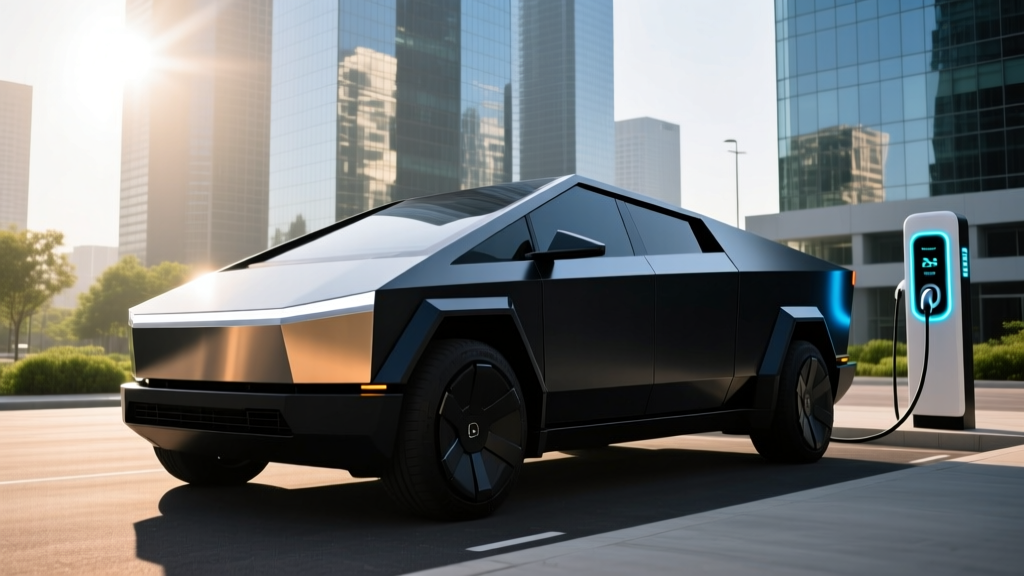
The Cybertruck supports Tesla's 800-volt electrical architecture, enabling peak DC fast-charging rates up to 350 kW at V4 Supercharger stalls. However, as with all EVs, peak rate is not sustained rate. The charging curve tapers significantly above 60% state of charge.
| Charging Method | Power (kW) | Speed | Notes |
|---|---|---|---|
| DC Fast Charge (V4 Supercharger) | Up to 350 kW peak | 10–80% in ~15 minutes | Tapers sharply above 60%; 80–100% adds ~20 min |
| DC Fast Charge (250 kW V3) | Up to 250 kW peak | 10–80% in ~20 minutes | Most common Supercharger type |
| Level 2 (Tesla Wall Connector, 48A) | 11.5 kW | ~37 miles per hour of charging | Full charge in ~11 hours |
| Level 2 (NACS adapter, 32A public) | 7.7 kW | ~25 miles per hour of charging | Common at destination chargers |
| Level 1 (120V household) | ~1.4 kW | ~4 miles per hour of charging | Emergency use only; 80+ hours for full charge |
Real-world charging tip: The Cybertruck's navigation system automatically preconditions the battery when you route to a Supercharger — warming or cooling the pack to the optimal temperature for fast charging. If you arrive at a charger without preconditioning (e.g., a non-routed stop), expect peak rates closer to 150–200 kW until the pack reaches temperature, especially in cold weather. Always route through the onboard nav for the fastest charge.
For home charging, the Tesla Wall Connector on a 60-amp circuit (48A continuous) delivers 11.5 kW, replenishing the full 123 kWh pack in roughly 11 hours. Most Cybertruck owners who drive 40–60 miles daily will recover their daily usage in 2–3 hours of overnight charging — more than adequate. A 200-amp electrical panel is typically sufficient, but homes with older 100-amp service may need a panel upgrade ($1,500–$3,000) before installing a high-amperage Level 2 charger.
Performance, Cargo, and Daily-Use Practicality
The Cybertruck's performance numbers border on absurd for a vehicle weighing nearly 7,000 pounds. The Dual Motor AWD hits 0–60 mph in 3.9 seconds with 600 horsepower, while the Cyberbeast's tri-motor setup delivers 845 hp and a 2.6-second 0–60. Both variants feature adaptive air suspension with up to 16 inches of ground clearance in Off-Road mode and a self-leveling rear axle that maintains ride height under load.
The 6-foot cargo bed (67 cu ft) includes a powered retractable tonneau cover, built-in 120V and 240V outlets (supporting up to 11.5 kW of continuous power output for tools or appliances via the Powershare vehicle-to-load feature), and integrated loading ramps hidden in the bed walls. The front trunk (frunk) offers 7.1 cu ft of lockable storage — enough for charging cables and a weekend bag.
Interior space is a mixed story. Front-seat passengers enjoy generous headroom and legroom (41.3 inches front legroom), but the rear seat's upright backrest and elevated floor (to clear the battery pack) create a less comfortable seating position than the F-150 Lightning or Rivian R1T. Rear legroom measures 38.2 inches on paper, but the thigh-unsupported posture makes long rides less pleasant for adult passengers. The 18.5-inch center touchscreen handles all infotainment and vehicle controls; there are no physical buttons, which frustrates some buyers but keeps the dash minimalist.
Driver assistance: The Cybertruck ships with Tesla's Enhanced Autopilot (adaptive cruise, lane centering, auto lane change) as standard equipment. Full Self-Driving (Supervised) — Tesla's SAE Level 2 system — is available as a $8,000 option or $99/month subscription. Despite the "FSD" name, this remains a Level 2 driver-assist system requiring constant driver supervision and hands-on-wheel engagement. It is not autonomous driving. For context, only Waymo and Zoox robotaxi services currently operate at SAE Level 4 (driverless in geofenced areas).
Pricing, Tax Credits, and Total Cost of Ownership
The 2026 Cybertruck lineup starts at $79,990 for the Dual Motor AWD and $99,990 for the Cyberbeast. These prices reflect Tesla's 2024–2025 repricing upward from originally announced figures, which drew significant buyer frustration. As of 2026, no lower-priced RWD variant is available.
| Trim | Base MSRP | As-Tested (typical options) | §30D Credit Eligible? |
|---|---|---|---|
| Dual Motor AWD | $79,990 | $84,000–$88,000 | Yes — up to $7,500 (subject to buyer income and battery-sourcing rules) |
| Cyberbeast | $99,990 | $104,000–$112,000 | Yes — up to $7,500 (subject to buyer income and battery-sourcing rules) |
Federal tax credit details (IRS §30D, 2026 rules): The Cybertruck qualifies as a light-duty pickup, so it falls under the $80,000 MSRP cap for vans, SUVs, and pickup trucks. The Dual Motor AWD at $79,990 clears this cap; the Cyberbeast at $99,990 does not — the Cyberbeast is ineligible for the federal credit based on MSRP alone. Additionally, buyer income must not exceed $300,000 (married filing jointly), $225,000 (head of household), or $150,000 (single). The credit also depends on battery-component and critical-minerals sourcing requirements that the IRS updates annually — verify current compliance on IRS.gov §30D before purchasing. The credit can be transferred to the dealer as a point-of-sale discount if all requirements are met.
- Class-leading 0–60 performance (2.6s Cyberbeast)
- 11,000-lb towing + Powershare V2L capability
- 350 kW peak DC charging on V4 Superchargers
- Stainless-steel exoskeleton resists dents and scratches
- Access to Tesla's Supercharger network (20,000+ stalls)
- Adaptive air suspension with 16" ground clearance
- Cyberbeast exceeds $80K MSRP cap — no federal tax credit
- Rear seat comfort trails F-150 Lightning and Rivian R1T
- Stainless-steel panels show fingerprints and are difficult to repair
- Highway efficiency drops significantly above 75 mph (aerodynamic drag penalty)
- No physical buttons — all controls via touchscreen
- Visibility compromised by thick A-pillars and angular rear window
Cybertruck vs. Key Competitors: Which Truck Wins?
The Cybertruck competes against the Ford F-150 Lightning (EPA 320 miles, ~$55,000 base), Rivian R1T (EPA 352 miles with Max Pack, ~$75,900 base), and the Chevrolet Silverado EV (EPA 440 miles with largest pack, ~$57,000 base for Work Truck). Here's how the Cybertruck stacks up on the metrics buyers care about most:
- Range winner: Silverado EV (440 mi) — the Cybertruck's 340 mi is solid but not class-leading
- Performance winner: Cybertruck Cyberbeast (2.6s 0–60) — no competitor comes close
- Charging speed winner: Cybertruck (350 kW peak) vs. Lightning (150 kW) and R1T (220 kW)
- Value/tax-credit winner: F-150 Lightning and Silverado EV both start well under $60K and qualify for the full credit for most buyers
- Towing winner: Tie — Cybertruck and Silverado EV both rate 11,000+ lbs; Lightning trails at 10,000 lbs
Who should buy the Cybertruck? If you prioritize performance, Tesla's Supercharger network, and V2L capability (job-site power, tailgate parties, emergency backup), and you can absorb the $80K+ price without needing the tax credit, the Cybertruck is a compelling choice. If budget, rear-seat comfort, or maximum range are your top priorities, the F-150 Lightning or Silverado EV serve those needs at lower cost.
Frequently Asked Questions
What is the real-world range of the Cybertruck?
The EPA rates the Dual Motor AWD at 340 miles and the Cyberbeast at 320 miles. In real-world highway driving at 70 mph, expect approximately 280–300 miles (Dual Motor) and 260–280 miles (Cyberbeast). In cold weather below 32°F, range drops an additional 10–15% due to battery resistance and cabin heating demands. Plan road trips around 250-mile legs to maintain a comfortable buffer.
How fast does the Cybertruck charge at home and on the road?
On a Tesla V4 Supercharger, the Cybertruck peaks at 350 kW and charges from 10–80% in approximately 15 minutes, though the curve tapers significantly above 60%. At home on a 48A Level 2 Tesla Wall Connector (11.5 kW), expect ~37 miles of range per hour of charging, with a full 0–100% cycle taking roughly 11 hours. Most daily driving is easily recovered overnight.
How much does the Cybertruck cost after tax credits?
The Dual Motor AWD starts at $79,990 and can qualify for up to $7,500 in federal tax credits under IRS §30D — bringing the effective price to ~$72,490 — provided the buyer meets income caps ($150K single / $300K joint), the vehicle meets battery-sourcing requirements for the current tax year, and the MSRP stays at or below the $80,000 truck cap. The Cyberbeast at $99,990 exceeds the MSRP cap and does not qualify for the federal credit regardless of buyer income.
Does the Cybertruck qualify for the federal EV tax credit?
The Dual Motor AWD qualifies, subject to IRS §30D income limits, battery-component sourcing rules, and the $80,000 MSRP cap for trucks. The Cyberbeast does not qualify due to its $99,990 MSRP exceeding the cap. Always verify current-year sourcing compliance on IRS.gov before finalizing a purchase, as critical-mineral requirements change annually.
Is the Cybertruck worth buying vs. the F-150 Lightning or Rivian R1T?
Choose the Cybertruck if you want the fastest acceleration in any pickup, access to the Tesla Supercharger network, and V2L job-site power — and you're comfortable spending $80K+. Choose the F-150 Lightning if you want a lower entry price (~$55K), full federal tax credit eligibility, a more conventional truck layout, and superior rear-seat comfort. Choose the Rivian R1T if you prioritize build quality, off-road capability, and a more refined interior, and you can accept a smaller (but growing) charging network.
Is the Cybertruck aerodynamic compared to other trucks?
The Cybertruck's reported Cd of ~0.335 is competitive within the pickup segment but not class-leading. The Ford F-150 Lightning achieves ~0.32, and the Rivian R1T reaches ~0.30. The Cybertruck's flat stainless-steel panels and abrupt bed transition create more turbulence than curved-body competitors, which is most noticeable as efficiency loss above 75 mph. Tesla mitigates this with active air suspension lowering at speed and a sealed tonneau cover, but the angular design inherently trades some aerodynamic efficiency for its distinctive aesthetic.
What is the Cybertruck's warranty coverage?
Tesla covers the Cybertruck's battery pack and drive units for 8 years or 150,000 miles (whichever comes first), with a minimum 70% capacity retention guarantee. The limited vehicle warranty covers 4 years or 50,000 miles. This battery warranty is competitive with the industry standard (Ford, Rivian, and GM all offer 8-year/100,000-mile EV powertrain warranties; Tesla's 150,000-mile threshold is more generous).