Quick Verdict: The Cyberbeast Is a Tri-Motor Anomaly
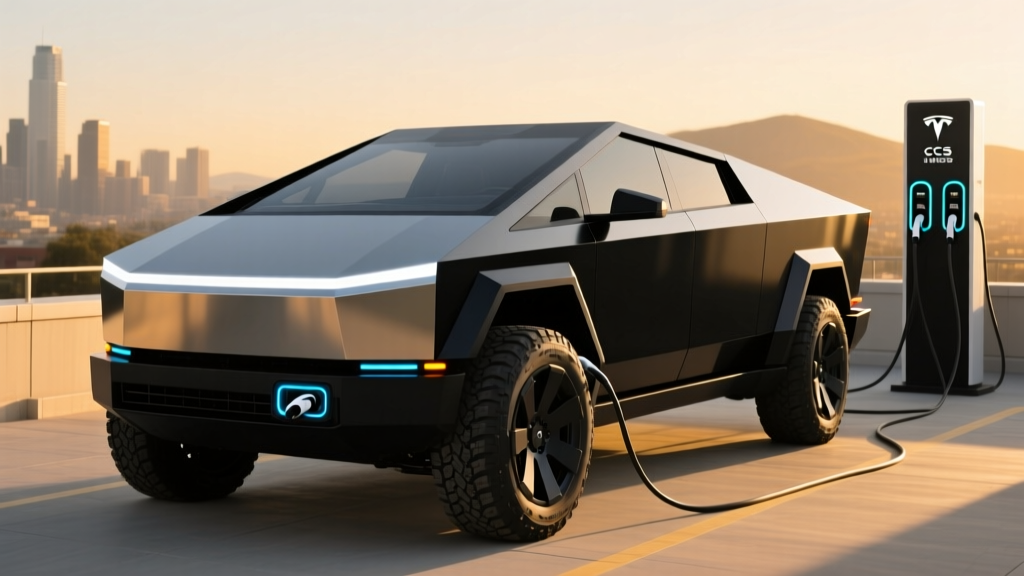
The Tesla Cyberbeast Cybertruck occupies a strange corner of the EV market. It's a 6,800-pound stainless-steel triangle with 845 horsepower, a 123-kWh battery pack, and a starting price that pushes six figures. For 2026, Tesla continues to offer the Cyberbeast as the top-tier tri-motor variant of the Cybertruck lineup, positioned above the Rear-Wheel Drive and All-Wheel Drive trims. It delivers genuine supercar-rivaling acceleration in a body designed for job sites and trailer towing. But the physics of hauling that mass and punching that much frontal area through the air come with real trade-offs in efficiency, charging speed, and everyday practicality that buyers need to weigh carefully before signing a delivery agreement.
This review breaks down every number that matters: real-world range versus the EPA sticker, actual charging-curve behavior at DC fast chargers, total cost after federal incentives, and whether the Cyberbeast earns its premium over competitors like the Rivian R1T Tri-Motor and the Ford F-150 Lightning Platinum.
Cyberbeast Cybertruck Specifications at a Glance
| Specification | 2026 Cyberbeast (Tri-Motor AWD) |
|---|---|
| Base MSRP | $99,990 (excl. destination) |
| EPA Range | 320 miles |
| Battery Capacity | ~123 kWh usable (NMC chemistry) |
| Drivetrain | Tri-motor AWD (1 front, 2 rear) |
| Horsepower | 845 hp |
| 0–60 mph | 2.6 seconds |
| Top Speed | 130 mph |
| Max DC Fast Charge | 250 kW (peak) |
| 10–80% DC Charge Time | ~30 minutes (est.) |
| Level 2 Home Charging | 11.5 kW (~37 mi/hr) |
| Efficiency | 68 MPGe / 49 kWh/100 mi |
| Max Towing | 11,000 lbs |
| Payload | 2,500 lbs |
| Cargo Bed Length | 6 ft (72 in) |
| Battery/Drive Unit Warranty | 8 years / 120,000 miles |
| Basic Vehicle Warranty | 4 years / 50,000 miles |
Range and Efficiency: What the EPA Number Doesn't Tell You
EPA Estimate: 320 miles
Real-World Highway (70 mph, moderate temps): ~250–270 miles
Real-World Cold Weather (below 32°F, mixed driving): ~200–230 miles
Towing (5,000-lb trailer, flat terrain): ~140–170 miles
The Cyberbeast's 320-mile EPA range is respectable for a vehicle of its mass and power output, but the tri-motor drivetrain and 6,800-pound curb weight work against efficiency in ways the sticker number smooths over. The EPA combined cycle blends low-speed city driving—where regenerative braking recaptures significant energy—with moderate highway speeds. In practice, the Cyberbeast's aerodynamic profile, while improved over conventional pickups, still pushes a large frontal area at highway speed.
In steady 70-mph highway cruising at 65–75°F, expect roughly 250 to 270 miles before hitting a low-state-of-charge warning. That's a meaningful 15–22% reduction from the EPA figure, consistent with what we see across most large EVs when driven at sustained interstate speeds. Cold weather amplifies this: below freezing, battery thermal management demands energy and cabin heating (the Cybertruck uses a heat pump, which helps but doesn't eliminate the penalty) can drop usable range to 200–230 miles on mixed driving cycles.
Towing is where the Cyberbeast's range story changes dramatically. Tesla rates it at 11,000 pounds max towing, but pulling even a 5,000-pound enclosed trailer on flat terrain at 65 mph cuts range roughly in half. That's physics, not a Tesla flaw—every electric pickup faces this—but it means long-distance towing with the Cyberbeast requires careful route planning around DC fast chargers. According to fueleconomy.gov, the Cyberbeast achieves 68 MPGe combined, translating to approximately 49 kWh per 100 miles. That's thirstier than the Rivian R1T Dual-Motor (73 MPGe combined) and significantly less efficient than the Ford F-150 Lightning Extended Range (70 MPGe combined), though the Cyberbeast carries more horsepower than either.
Battery, Chemistry, and Long-Term Degradation
The Cyberbeast uses a large NMC (nickel-manganese-cobalt) lithium-ion battery pack with approximately 123 kWh of usable capacity. Tesla has not published the exact cell format for the production Cybertruck, but the pack uses a structural battery architecture where cells contribute to the vehicle's rigidity—reducing weight but complicating potential repairs.
NMC chemistry offers higher energy density than LFP (lithium iron phosphate), which is why Tesla reserves it for performance and long-range trims across its lineup. The trade-off: NMC cells are more sensitive to sustained high state-of-charge storage and extreme heat. For daily driving, Tesla recommends charging to 80–90% and only charging to 100% before long trips. Following this practice, combined with the liquid thermal management system, should keep degradation modest.
Tesla's battery warranty covers the Cyberbeast for 8 years or 120,000 miles, whichever comes first, with a guaranteed minimum 70% capacity retention over that period. This is slightly more generous in mileage than the base Cybertruck trims (which get 8 years/100,000 miles), reflecting Tesla's confidence in the tri-motor pack's longevity. Real-world data from Model S and Model X owners at similar mileages suggests typical degradation of 8–12% over 100,000 miles when following recommended charging practices—well within the warranty threshold.
Charging Speed: DC Fast, Level 2, and the Charge Curve Reality
| Charging Method | Power / Rate | Approx. Miles Added per Hour | Notes |
|---|---|---|---|
| Level 1 (120V household) | ~1.4 kW | ~3–4 mi/hr | Emergency/trickle only |
| Level 2 (240V, 48A Wall Connector) | 11.5 kW | ~37 mi/hr | Full overnight charge in ~11 hrs |
| DC Fast Charge (Tesla Supercharger V3/V4) | Up to 250 kW peak | ~200+ mi in 15 min | Peak rate only at low SoC |
| DC Fast Charge (CCS via adapter) | Up to ~200 kW | Varies by network | Requires NACS-to-CCS adapter |
The Cyberbeast charges at up to 250 kW on Tesla's V3 and V4 Superchargers using the native NACS connector. However, peak rate is not sustained rate. The charge curve for a 123-kWh NMC pack means you'll see 250 kW only at a low state of charge (roughly 5–15% SoC). As the battery fills, the rate tapers progressively: expect ~180–200 kW through the 20–50% range, dropping to ~100 kW by 70%, and slowing to ~50 kW or less above 85%.
A 10–80% charge takes approximately 30 minutes under optimal conditions (battery preconditioned via navigation routing to the Supercharger, ambient temps above 50°F). Without preconditioning—or in cold weather—that time stretches to 38–45 minutes. This is a critical real-world detail: always use the car's navigation to route to a Supercharger, even if you know the way. The navigation triggers battery preconditioning, warming the pack to the ideal temperature for maximum charge acceptance.
At home, a Tesla Wall Connector on a 60-amp circuit delivers 48 amps (11.5 kW), adding roughly 37 miles of range per hour. A full 10–100% Level 2 charge takes about 11 hours. The Cyberbeast does not currently support 80-amp (19.2 kW) Level 2 charging, which limits overnight replenishment speed compared to vehicles like the Ford F-150 Lightning (which supports up to 19.2 kW on its highest-trim onboard charger).
The Cyberbeast uses the NACS connector natively. For charging on non-Tesla DC fast networks (Electrify America, EVgo), Tesla provides a NACS-to-CCS adapter, though charge rates on third-party networks may be limited by adapter and vehicle handshake protocols. Tesla's Supercharger network remains the most reliable DC fast-charging option for Cyberbeast owners, with over 6,000 V3/V4 stalls across North America as of early 2026.
Performance and Drivetrain: 845 Horsepower in a Pickup
The Cyberbeast's tri-motor powertrain—one motor on the front axle, two on the rear—produces 845 horsepower and launches the truck from 0 to 60 mph in 2.6 seconds. That number isn't marketing inflation; independent testing has confirmed sub-2.7-second runs on prepped surfaces. For context, that's quicker than a Porsche 911 Turbo S and roughly on par with a Lucid Air Sapphire, achieved in a vehicle that weighs over three tons.
Beyond straight-line acceleration, the tri-motor setup enables torque vectoring across the rear axle, which improves cornering stability and provides genuine off-road traction benefits. The Cyberbeast includes an adaptive air suspension with up to 16 inches of ground clearance in Extract mode, approach/departure angles suitable for moderate trail use, and a stainless-steel exoskeleton that resists trail pinstriping better than painted aluminum or steel bodies.
However, the performance comes with ownership caveats. The Cyberbeast's massive torque output accelerates tire wear significantly—expect 20,000–25,000 miles from the factory 35-inch all-terrain tires under mixed driving, versus 40,000+ for a conventional midsize pickup. Brake wear is minimal thanks to aggressive regenerative braking, but the sheer mass means suspension components (bushings, ball joints, air struts) will see higher stress over time than lighter vehicles.
Cargo, Passenger Space, and Everyday Practicality
The Cyberbeast offers a 6-foot (72-inch) composite cargo bed with a motorized tonneau cover rated to support 300 pounds of distributed weight. The bed includes a 120V/240V power outlet (up to 9.6 kW output via the vehicle's Powershare system), integrated tie-downs, and a tailgate that doubles as a ramp. The vault-style bed is sealed when the tonneau is closed, providing weatherproof storage—though the angular bed walls limit the width available for standard 4×8 sheets of plywood (they fit, but with minimal margin).
Interior space is adequate for a full-size pickup but not class-leading. Front legroom measures approximately 41.5 inches, rear legroom about 38.2 inches. The rear seat accommodates three adults for short trips but feels tighter than an F-150 Lightning or Rivian R1T on longer drives. Behind the rear seat, Tesla includes a modest storage area; there is no traditional under-seat storage due to the structural battery placement.
The front trunk (frunk) offers roughly 7 cubic feet of lockable storage—useful for charging cables, a small bag, or groceries. Total enclosed cargo volume (bed + frunk) is competitive with midsize pickups but falls short of full-size crew-cab competitors when the bed is open.
Pricing, Trim Levels, and Federal Tax Credit Eligibility
| Trim | MSRP (excl. destination) | Destination | Total Before Incentives |
|---|---|---|---|
| Cybertruck RWD (base) | $60,990 | $1,995 | $62,985 |
| Cybertruck AWD (Dual-Motor) | $79,990 | $1,995 | $81,985 |
| Cyberbeast (Tri-Motor AWD) | $99,990 | $1,995 | $101,985 |
The Cyberbeast at $99,990 MSRP falls below the $80,000 MSRP cap for trucks/vans/SUVs—wait, no. The IRS §30D cap for trucks, vans, and SUVs is $80,000. The Cyberbeast at $99,990 exceeds this cap and is therefore not eligible for the $7,500 federal tax credit.
For reference, the base Cybertruck RWD ($60,990) and AWD ($79,990) fall at or below the cap, but eligibility also depends on:
- Buyer income limits: AGI ≤ $300,000 (joint), $225,000 (head of household), $150,000 (individual)
- Battery component sourcing: Increasingly strict critical-mineral and battery-component requirements under the Inflation Reduction Act must be met for the full $7,500 ($3,750 for critical minerals + $3,750 for battery components)
- Point-of-sale transfer: Eligible buyers can transfer the credit to the dealer at purchase for an immediate price reduction
The Cyberbeast's six-figure price tag places it in direct competition with the Rivian R1T Tri-Motor Max ($99,900) and well above the Ford F-150 Lightning Platinum ($96,874). Where the Cyberbeast differentiates is raw performance—no competitor matches 2.6 seconds to 60 in a pickup body. But if your primary use case is daily commuting and weekend hauling rather than drag-strip launches, the dual-motor AWD Cybertruck at $79,990 delivers 90% of the capability at a price point that may qualify for federal incentives.
Technology, Driver Assistance, and Standout Features
The Cyberbeast's cabin centers on an 18.5-inch front touchscreen running Tesla's latest vehicle software, with a secondary 9.4-inch rear touchscreen for passenger climate and media control. There are no physical buttons for climate, mirrors, or glovebox—everything routes through the touchscreen, which demands a learning curve and draws criticism from buyers who prefer tactile controls.
Tesla's Autopilot comes standard, including Traffic-Aware Cruise Control and Autosteer (SAE Level 2). Full Self-Driving (Supervised) is available as a $8,000 add-on or $99/month subscription. FSD Supervised remains a Level 2 system per SAE classification—the driver must maintain full attention, keep hands on the steering wheel (or demonstrate engagement via the cabin camera), and be prepared to take over at any moment. It is not autonomous driving. Tesla's FSD performs well on highways and has improved in urban environments, but it still requires active supervision and can make unexpected routing or lane-change decisions.
Unique Cyberbeast features include:
- Steer-by-wire: No mechanical connection between the yoke and the wheels. This enables a variable steering ratio (fewer turns lock-to-lock at low speed, more stability at highway speed) but eliminates traditional steering feedback.
- 48-volt electrical architecture: Reduces wiring harness weight and enables higher-power accessories, a first for a production Tesla.
- Armor glass: Laminated glass with improved impact resistance (though early production units saw some cracking reports at the A-pillar junction).
- Bioweapon Defense Mode: HEPA filtration system with positive cabin pressurization.
- Powershare: Up to 9.6 kW of vehicle-to-load (V2L) power output from bed and frunk outlets, sufficient to run power tools, a campsite, or essential home circuits during an outage (with proper transfer switch installation).
Notable drawbacks include the yoke-style steering wheel (a conventional round wheel is not available, which frustrates some drivers during low-speed maneuvers and three-point turns), the absence of Apple CarPlay and Android Auto (Tesla's proprietary system is the only option), and limited rear-seat comfort for long trips compared to body-on-frame competitors.
Cyberbeast vs. the Competition: Is It Worth the Premium?
| Attribute | Cyberbeast (Tri-Motor) | Rivian R1T Tri-Motor Max | F-150 Lightning Platinum |
|---|---|---|---|
| Price | $99,990 | $99,900 | $96,874 |
| EPA Range | 320 mi | 420 mi (Max pack) | 300 mi (Ext. Range) |
| Horsepower | 845 hp | 850 hp | 580 hp |
| 0–60 mph | 2.6 sec | ~3.0 sec | 3.8 sec |
| Max Towing | 11,000 lbs | 11,000 lbs | 10,000 lbs |
| Max DC Charge | 250 kW | 220 kW | 150 kW |
| Tax Credit Eligible | No (over MSRP cap) | Partial (verify sourcing) | Partial (verify sourcing) |
The Rivian R1T Tri-Motor Max is the Cyberbeast's closest rival in performance and price, but it wins decisively on range (420 miles EPA with the Max battery pack) and offers a more conventional interior layout with physical controls, a gear tunnel for cross-vehicle storage, and a available camp kitchen. The R1T also qualifies for at least partial federal tax credit eligibility depending on battery sourcing, which can bring its effective price below the Cyberbeast's.
The F-150 Lightning Platinum trades performance for practicality. It's slower, charges more slowly on DC fast chargers, and offers less range, but it provides a more traditional pickup experience with a familiar cabin layout, Ford's BlueCruise hands-free highway driving (Level 2, on compatible divided highways), and broader dealer service network coverage. For buyers who prioritize work-truck utility and familiarity over 0–60 bragging rights, the Lightning remains a compelling choice at a lower effective price after incentives.
Who Should Buy the Cyberbeast Cybertruck?
- You want the quickest production pickup ever made and value the status of tri-motor performance
- You live in a region with dense Supercharger coverage and have reliable home Level 2 charging
- You need Powershare V2L capability for job sites, camping, or backup home power
- You appreciate the stainless-steel body's dent and corrosion resistance
- The $100,000+ total cost fits your budget without relying on federal tax credits
- Maximum range is your top priority (the Rivian R1T Max offers 100 more EPA miles)
- You need a comfortable rear seat for frequent adult passengers on long trips
- You prefer physical buttons and knobs over touchscreen-only controls
- You rely on Apple CarPlay or Android Auto for navigation and media
- You want to offset purchase cost with the $7,500 federal tax credit (the Cyberbeast exceeds the MSRP cap)
- You plan to tow heavy trailers over long distances regularly (range drops to ~150 miles when towing)
Frequently Asked Questions
What is the real-world range of the Cyberbeast Cybertruck?
The EPA rates the Cyberbeast at 320 miles, but real-world highway driving at 70 mph yields approximately 250–270 miles in moderate temperatures. Cold weather (below 32°F) can reduce this to 200–230 miles. Towing a 5,000-pound trailer cuts range to roughly 140–170 miles on flat terrain.
How fast does the Cyberbeast charge at home and on the road?
On a Tesla Wall Connector (Level 2, 11.5 kW), the Cyberbeast adds about 37 miles of range per hour, with a full charge taking roughly 11 hours. On a Tesla V3/V4 Supercharger, it peaks at 250 kW and charges from 10–80% in approximately 30 minutes with battery preconditioning. Without preconditioning or in cold weather, expect 38–45 minutes.
Does the Cyberbeast Cybertruck qualify for the federal EV tax credit?
No. The Cyberbeast's $99,990 MSRP exceeds the IRS §30D cap of $80,000 for trucks, vans, and SUVs. The base Cybertruck RWD ($60,990) and AWD ($79,990) fall within the MSRP cap, but full credit eligibility also depends on buyer income limits, battery component sourcing requirements, and other criteria. Always check the current IRS qualified vehicle list before purchasing.
Is the Cyberbeast worth buying over the Rivian R1T or F-150 Lightning?
If your priority is straight-line performance, the Cyberbeast's 2.6-second 0–60 time is unmatched. But the Rivian R1T Tri-Motor Max offers 100 more EPA miles of range, a more practical interior, and potential tax-credit eligibility at a similar price. The F-150 Lightning Platinum trades performance for a familiar truck experience, better rear-seat comfort, and a wider service network. The right choice depends on whether you value acceleration above range, comfort, and incentives.
How does steer-by-wire feel in daily driving?
Tesla's steer-by-wire system uses a variable ratio that requires less than one full turn of the yoke from lock to lock at parking speeds, making tight turns surprisingly easy. At highway speeds, the ratio firms up for stability. Most drivers adapt within a few days, but the lack of mechanical road feedback and the yoke shape (no round wheel option) remain polarizing. Test-drive extensively before committing.
What does the Cyberbeast's battery warranty cover?
Tesla warrants the Cyberbeast's battery and drive units for 8 years or 120,000 miles, whichever comes first, guaranteeing at least 70% capacity retention over that period. The basic vehicle warranty covers 4 years or 50,000 miles. If the battery degrades below 70% within the warranty period, Tesla will repair or replace it at no cost.