The State of Current Tesla Promotions in 2026
If you're shopping for an electric vehicle, understanding current Tesla promotions is essential to maximizing your savings. Unlike traditional automakers that rely on dealer markups, regional incentives, and haggling, Tesla sells direct-to-consumer with transparent pricing. Promotions typically come in the form of referral credits, limited-time financing rates, Supercharging credits, or price adjustments on inventory models. As of early 2026, Tesla's lineup includes the Model 3, Model Y, Model S, Model X, and the Cybertruck. Below, we break down what's available, what the real numbers look like, and how to stack Tesla's offers with the federal §30D tax credit.
2026 Tesla Model Y: The Volume Leader
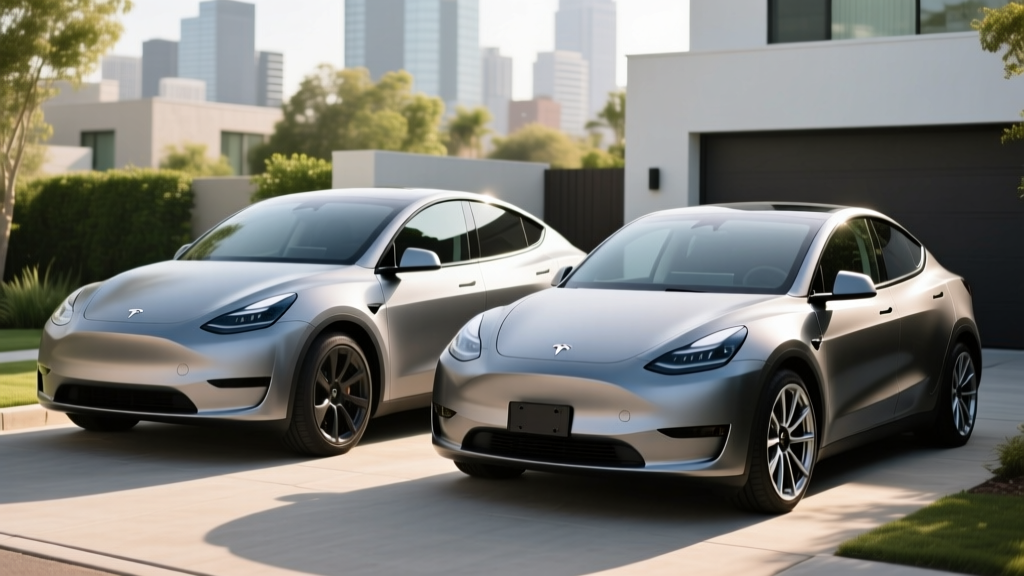
The Model Y remains Tesla's best-selling vehicle globally and the most likely candidate for current Tesla promotions. It's a compact crossover that balances range, cargo space, and performance in a way few competitors match.
| Attribute | Long Range RWD | Long Range AWD | Performance |
|---|---|---|---|
| EPA Range | 320 miles | 310 miles | 285 miles |
| Battery (usable) | ~75 kWh (LFP) | ~75 kWh (NMC) | ~75 kWh (NMC) |
| 0-60 mph | 5.8 sec | 4.8 sec | 3.5 sec |
| Horsepower | 295 hp | 384 hp | 456 hp |
| Drivetrain | RWD | Dual-Motor AWD | Dual-Motor AWD |
| MPGe (combined) | 123 MPGe | 117 MPGe | 111 MPGe |
| Base MSRP | $44,990 | $47,990 | $52,490 |
Charging Speed: DC Fast & Home Level 2
| Charging Level | Power (kW) | Speed / Time |
|---|---|---|
| Level 1 (120V) | ~1.4 kW | ~3–4 miles per hour |
| Level 2 (240V, 48A) | 11.5 kW | ~37 miles per hour |
| DC Fast (V3 Supercharger) | 250 kW peak | 10–80% in ~25 minutes |
| DC Fast (V4 Supercharger) | Up to 350 kW* | 10–80% in ~18 minutes* |
*V4 Supercharger availability is still expanding. Peak rates depend on battery preconditioning and state of charge. Expect tapering above 60% SoC — the last 20% takes roughly as long as the first 60%.
Cargo & Passenger Space
The Model Y offers 76 cu ft of cargo volume with the second row folded (30 cu ft behind the second row). Rear legroom measures 40.5 inches, adequate for adults on longer trips. The front trunk (frunk) adds 4.1 cu ft — useful for charging cables or groceries.
2026 Tesla Model 3: The Entry Point
The refreshed Model 3 (internally called "Highland" and further updated for 2026) is Tesla's most affordable sedan and a frequent target of current Tesla promotions, particularly referral discounts and reduced-APR financing events.
| Attribute | RWD | Long Range AWD | Performance |
|---|---|---|---|
| EPA Range | 272 miles | 341 miles | 315 miles |
| Battery (usable) | ~57.5 kWh (LFP) | ~75 kWh (NMC) | ~75 kWh (NMC) |
| 0-60 mph | 5.8 sec | 4.2 sec | 2.9 sec |
| Horsepower | 271 hp | 346 hp | 510 hp |
| MPGe (combined) | 132 MPGe | 125 MPGe | 118 MPGe |
| Base MSRP | $38,990 | $45,990 | $52,990 |
Model 3 Charging Speed
The RWD trim peaks at 170 kW on DC fast chargers (10–80% in ~30 minutes), while the Long Range and Performance trims reach 250 kW (10–80% in ~25 minutes) on V3 Superchargers. Home Level 2 charging at 11.5 kW (48A) adds about 44 miles per hour for the Long Range — enough to fully replenish overnight.
Federal Tax Credit & Current Tesla Promotions Stacking
The IRS §30D Clean Vehicle Credit offers up to $7,500 for qualifying new EVs. However, eligibility is not automatic. Here's the 2026 checklist:
- MSRP cap: SUVs (Model Y) must be under $80,000; sedans (Model 3) under $55,000
- Buyer income cap: AGI must not exceed $150,000 (single), $225,000 (head of household), or $300,000 (joint)
- Battery sourcing: Critical minerals and battery components must meet phased-in domestic/free-trade-area sourcing thresholds (increasing yearly through 2026)
- Point-of-sale transfer: You can transfer the credit to Tesla at purchase, reducing your out-of-pocket cost immediately
- Assembly: Vehicle must be assembled in North America (all US-market Teslas qualify)
| Model / Trim | MSRP | Est. Credit | Effective Price |
|---|---|---|---|
| Model 3 RWD | $38,990 | $7,500* | ~$31,490 |
| Model 3 Long Range AWD | $45,990 | $7,500* | ~$38,490 |
| Model Y Long Range RWD | $44,990 | $7,500* | ~$37,490 |
| Model Y Long Range AWD | $47,990 | $7,500* | ~$40,490 |
| Model S Dual Motor | $74,990 | $0** | $74,990 |
*Credit amount depends on battery-sourcing compliance at time of purchase and buyer income eligibility. Verify at irs.gov and with a tax professional.
**Model S exceeds the $55,000 sedan MSRP cap and does not qualify for §30D.
Typical Current Tesla Promotions (2026)
Tesla rarely offers traditional cash-back deals. Instead, current Tesla promotions tend to include:
- Referral credits: $500–$1,000 off via an existing owner's referral link, applied at checkout
- Reduced APR financing: Periodic 0.99%–2.99% financing events on select trims (vs. standard 5.99%+)
- Free Supercharging: Limited-time 10,000–15,000 Supercharger miles on inventory or end-of-quarter vehicles
- Inventory discounts: $1,000–$3,000 off existing (non-custom-order) vehicles, especially near quarter-end
- FSD transfer: Occasional promotions allowing FSD (Supervised) license transfer from an existing Tesla to a new purchase
Warranty, Tech & Driver Assistance
All 2026 Teslas include:
- Basic warranty: 4 years / 50,000 miles
- Battery & drive unit warranty: 8 years / 100,000 miles (Model 3/Y RWD with LFP); 8 years / 120,000 miles (Long Range/Performance with NMC). Tesla guarantees ≥70% capacity retention during the warranty period.
- Autopilot (standard): SAE Level 2 driver assist — adaptive cruise, lane centering, automatic emergency braking. The driver must remain fully engaged at all times.
- FSD (Supervised): Optional $8,000 add-on (or $99/month subscription) adding traffic-light recognition, autosteer on city streets, and smart summon. Still SAE Level 2 — not autonomous.
- Infotainment: 15.4" center touchscreen, no Apple CarPlay/Android Auto (Tesla's native OS), over-the-air updates, integrated navigation with real-time Supercharger routing and battery preconditioning.
Pros & Cons at a Glance
✅ Pros
- Class-leading Supercharger network (~17,000+ stalls in North America, expanding with NACS adoption)
- Over-the-air updates continuously add features post-purchase
- LFP battery on RWD trims allows daily 100% charging with minimal degradation
- Strong efficiency (kWh/100mi) translates to lower charging costs
- Point-of-sale tax credit transfer reduces upfront cost
- Minimalist interior with premium materials on 2026 refresh
❌ Cons
- No Apple CarPlay or Android Auto — a dealbreaker for some
- Repair costs and insurance premiums remain above segment average
- Ride quality firm on Performance trims with 21" wheels
- FSD (Supervised) costs $8,000 and remains Level 2 — questionable value for many buyers
- Panel gaps and paint quality still occasionally inconsistent
- No physical buttons for climate/media — all touchscreen-dependent
Is a Tesla Worth It vs. Competitors in 2026?
The Model Y competes with the Hyundai Ioniq 5, Ford Mustang Mach-E, Kia EV6, and Chevrolet Equinox EV. The Model 3 faces the BMW i4, Hyundai Ioniq 6, and Polestar 2.
Tesla's advantages: the Supercharger network (still the most reliable DC fast-charging ecosystem), strong software integration, and aggressive pricing after tax credits. Competitors counter with more traditional interiors, CarPlay support, and in some cases faster peak charging (the Ioniq 5/6 peaks at 350 kW on 800V architecture).
- You road-trip frequently and value the Supercharger network
- You want OTA updates and cutting-edge software
- You can charge at home and want the lowest cost per mile
- You prefer the minimalist, screen-centric interior
- You need Apple CarPlay / Android Auto
- You prefer physical buttons and a more traditional cockpit
- You want 800V ultra-fast charging (Ioniq 5/EV6) for shorter road-trip stops
- Dealer service centers are important to you
Frequently Asked Questions
What current Tesla promotions are available right now?
Tesla's promotions rotate frequently and are often tied to end-of-quarter delivery pushes. Common offers include referral credits ($500–$1,000), reduced-APR financing (0.99%–2.99%), free Supercharging miles, and discounts on existing inventory. Check Tesla's website directly or use a referral link from an existing owner for the latest offers. Tesla does not publish a traditional "incentives" page like legacy automakers.
Does the Model Y still qualify for the $7,500 federal tax credit?
The Model Y qualifies for up to $7,500 under IRS §30D, provided you meet the income cap ($300,000 joint / $150,000 single), the vehicle's MSRP is under $80,000 (it is), and the battery meets critical-mineral and component sourcing thresholds for the 2026 tax year. You can transfer the credit to Tesla at point of sale to reduce your purchase price immediately. Always verify current eligibility on irs.gov or with a tax professional — sourcing rules tighten each year.
What is the real-world range of the 2026 Model Y?
EPA estimates 310–320 miles depending on trim. In real-world highway driving at 70–75 mph, expect 250–275 miles. In cold weather (below freezing), range drops 15–25%, yielding roughly 210–235 miles. City driving with regenerative braking can exceed EPA estimates. Preconditioning the battery before fast charging is critical for reaching peak charge rates.
How fast does the Model 3 charge at home and on road trips?
At home on a Level 2 (240V, 48A) charger, the Model 3 Long Range gains about 44 miles per hour — a full charge in ~8 hours. On a V3 Supercharger (250 kW peak), the Long Range goes 10–80% in about 25 minutes. The RWD trim peaks lower at ~170 kW due to its LFP battery, taking roughly 30 minutes for 10–80%.
Is FSD (Supervised) worth $8,000?
For most buyers, no. FSD (Supervised) is an SAE Level 2 system — you must remain fully attentive. It handles many city-street scenarios impressively but still makes errors at complex intersections, construction zones, and unusual road geometries. The $99/month subscription is a lower-risk way to try it. Unless you commute in heavy traffic daily and value the reduced cognitive load, the standard Autopilot included with every Tesla is sufficient for highway driving.
Should I buy a Tesla now or wait?
If current Tesla promotions align with your budget and you can charge at home, the Model 3 RWD at ~$31,500 after the tax credit is one of the best value propositions in the EV market. Waiting makes sense if you need the next-generation platform (rumored for future Model Y refreshes) or want to see if competitors' 800V charging ecosystems mature further. End-of-quarter (March, June, September, December) is historically the best time to find inventory discounts and promotional financing from Tesla.