Creative Uses for Electric Scooters: Quick Answer
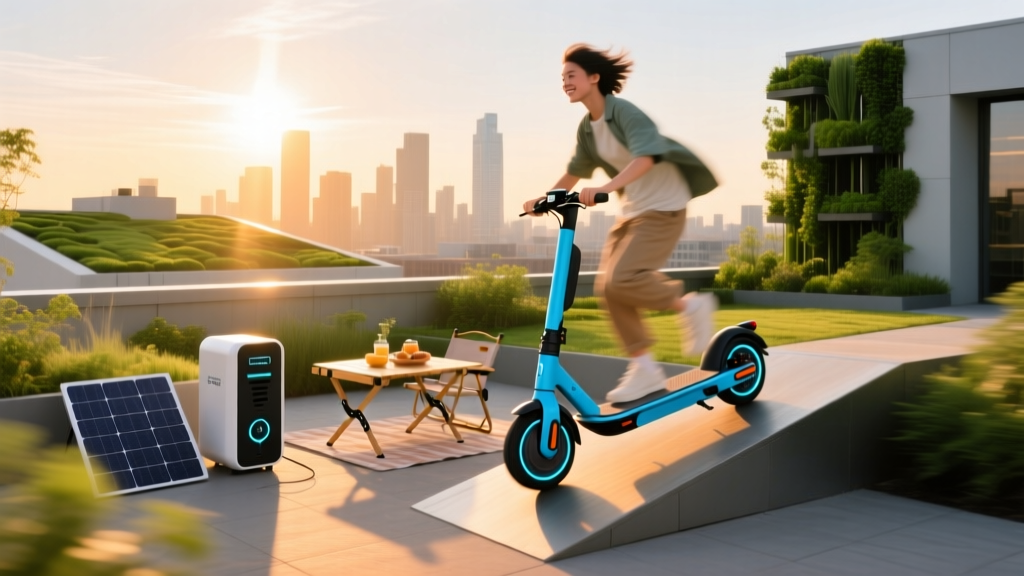
Creative uses for electric scooters in 2026 extend far beyond the daily commute. Practical applications include last-mile delivery for small businesses (saving $0.12–$0.18 per mile vs. gas cars), campus and corporate-park mobility, RV and boat-dock transport, neighborhood errand-running (grocery pickups, pharmacy trips under 5 miles), and eco-tourism rentals in pedestrian-heavy districts. Most commuter-grade scooters ($600–$1,800 MSRP) offer 20–40 miles of real-world range, charge fully in 4–8 hours on a standard 120V outlet, and cost under $0.01 per mile to operate on average US electricity rates ($0.17/kWh). The key limitation: scooters with under 30 miles of EPA-equivalent range and no weather protection are best suited for fair-climate, short-trip use cases — not highway-adjacent or cold-weather commuting.
Why Electric Scooters Are Expanding Beyond Commuting
The electric scooter market has matured considerably since the early shared-scooter boom. In 2026, personal e-scooter models from brands like Segway-Ninebot, Apollo, Niu, and Unagi offer battery capacities between 360 Wh and 1,500 Wh, pneumatic tires, suspension systems, and IP67 water resistance — making them viable tools for tasks previously reserved for cars or bicycles.
The economic case is straightforward. A mid-range scooter consuming roughly 15 Wh per mile costs approximately $0.0026 per mile to charge at the US average residential rate of $0.17/kWh. Compare that to a 30 MPG gas car at $3.40/gallon: $0.113 per mile in fuel alone. Over 3,000 miles of short trips per year, the scooter saves roughly $330 in fuel costs, not counting parking, insurance, or maintenance.
| Vehicle Type | Energy/Fuel Cost per Mile | Maintenance per Mile | Total Operating Cost per Mile |
|---|---|---|---|
| Electric Scooter (mid-range, 500W motor) | $0.003 | $0.015 | $0.018 |
| Toyota Prius (HEV, 57 MPG combined) | $0.060 | $0.065 | $0.125 |
| Honda Civic (Gas, 33 MPG combined) | $0.103 | $0.075 | $0.178 |
| Chevrolet Equinox EV (BEV, 3.5 mi/kWh) | $0.049 | $0.045 | $0.094 |
The scooter's advantage is most pronounced on short trips where car engines (and even hybrids) operate below peak efficiency. Cold-start emissions and fuel waste on sub-2-mile car trips are well documented by the EPA. An e-scooter eliminates that overhead entirely.
Seven Practical and Creative Use Cases
1. Last-Mile Delivery for Small Businesses
Restaurants, pharmacies, and local retailers in dense urban areas are deploying cargo-capable scooters (with rear racks rated for 15–25 lbs) for deliveries within a 3-mile radius. A scooter navigating bike lanes avoids traffic congestion, requires no parking spot, and costs a fraction of a delivery van's operating expense. Models like the Niu KQi3 Max (750W motor, ~30-mile range, $1,299 MSRP) handle payloads up to 265 lbs including rider and cargo.
2. Campus and Corporate-Park Mobility
University campuses and sprawling corporate parks (think research campuses, hospital complexes, warehouse districts) span 1–3 miles between buildings. E-scooters fold in under 10 seconds and fit under desks, making them ideal for intra-campus transit. Fleet purchases of 10–20 units at ~$800 each cost less than a single shuttle-van lease.
3. RV, Marina, and Campground Transport
RV owners and boaters use foldable scooters to run errands from campgrounds or marinas without unhitching or launching. A 28-lb folding scooter stows in an RV compartment and provides 15–25 miles of range — enough for grocery runs, fuel stops, or exploring a town from a campground.
4. Neighborhood Errand-Running
For trips under 5 miles — pharmacy pickups, coffee runs, school drop-offs in low-speed zones — a scooter replaces a car trip entirely. With a $20–$40 rear cargo rack and pannier bags, riders carry 2–3 grocery bags comfortably.
5. Eco-Tourism and Guided Tours
Tourism operators in pedestrian-friendly cities (Savannah, Key West, San Diego's Gaslamp Quarter) offer guided e-scooter tours. Fleet costs are $8,000–$15,000 for 10 scooters, with per-rider revenue of $45–$75 for a 90-minute tour. Charging 10 scooters overnight costs approximately $1.50–$3.00 total.
6. Property Management and Security Patrols
Large residential communities, HOAs, and commercial properties use scooters for security patrols and maintenance rounds. A guard on a scooter covers 3–4x the area of foot patrol at near-zero noise, and the scooter charges from any standard outlet at the guard station.
7. Multi-Modal Commuting (The "Last Mile" Solution)
Folding scooters bridge the gap between transit stops and final destinations. A commuter takes a bus or train for 8 miles, then unfolds a 25-lb scooter for the final 1.5 miles to the office. This eliminates the need for a car while keeping total commute time competitive.
Real Costs: Purchase, Charging, Maintenance, and Insurance
Understanding the true cost of scooter ownership requires looking beyond the purchase price. Here's a 3-year cost breakdown for a mid-range commuter scooter used 5 days per week, 6 miles per day (roughly 1,500 miles/year).
| Cost Category | Year 1 | Year 2 | Year 3 | 3-Year Total |
|---|---|---|---|---|
| Purchase (e.g., Segway-Ninebot Max G2, ~$899 MSRP) | $899 | — | — | $899 |
| Charging (1,500 mi/yr × 15 Wh/mi × $0.17/kWh) | $3.83 | $3.83 | $3.83 | $11.48 |
| Tire replacement (every ~2,000 mi) | — | $45 | — | $45 |
| Brake pad adjustment/replacement | $0 | $15 | $15 | $30 |
| Battery degradation reserve (est. 85% SoH at yr 3) | — | — | — | $0* |
| Insurance (optional, liability-focused policy) | $120 | $120 | $120 | $360 |
| Helmet, lock, accessories | $85 | — | — | $85 |
| Total | $1,107 | $184 | $139 | $1,430 |
*Most scooter batteries retain 80–90% capacity after 500 full charge cycles. At 1,500 miles/year, a 30-mile-range scooter cycles roughly 50 times per year — well within the battery's usable life over 3+ years.
For comparison, operating a Honda Civic for the same 4,500 miles over 3 years costs approximately $2,420 in fuel alone (at 33 MPG and $3.40/gallon), plus $900–$1,500 in maintenance and $3,600+ in insurance. The scooter saves $5,000–$7,000 over three years when it replaces car trips.
Electric Scooter vs. Electric Car: When Each Makes Sense
A common question from EV-curious buyers: should I get an e-scooter or a full electric vehicle? The answer depends on trip distance, climate, cargo needs, and infrastructure. This isn't an either/or decision — many households use both.
| Factor | Electric Scooter | Battery EV (e.g., Chevy Equinox EV) | Hybrid (e.g., Toyota Prius) |
|---|---|---|---|
| Upfront Cost | $600–$2,000 | $33,000–$45,000 | $28,000–$36,000 |
| Range (real-world) | 15–35 miles | 250–315 miles | 550+ miles (gas + electric) |
| Charging/Fueling Time | 4–8 hrs (120V) | ~30 min (DC fast, 10–80%) | 5 min (gas station) |
| Weather Protection | None (rider exposed) | Full climate control | Full climate control |
| Cargo Capacity | 15–25 lbs (with rack) | 2,000+ lbs | 1,000+ lbs |
| Federal Tax Credit (§30D) | Not eligible | Up to $7,500 (if eligible) | Not eligible (HEV) |
| Best For | Trips under 5 mi, fair weather | Daily driving, road trips | Mixed driving, no home charger |
The Federal EV Tax Credit Does NOT Apply to Scooters
Under IRS §30D rules, the federal clean vehicle credit applies only to four-wheeled vehicles with a gross vehicle weight rating under 14,000 lbs that meet battery-sourcing and critical-mineral requirements. Electric scooters, e-bikes, and motorcycles do not qualify. Some states and municipalities offer rebates for e-bikes and e-scooters — check your local transportation authority — but there is no federal incentive for scooter purchases in 2026.
Common Misconceptions About Electric Scooters
| Myth | Fact |
|---|---|
| "Scooters are toys, not real transportation." | Mid-range scooters sustain 18–25 MPH, carry 265-lb payloads, and cover 25+ real-world miles — sufficient for 60% of US car trips under 6 miles (fueleconomy.gov trip data). |
| "The battery will die in a year." | Quality lithium-ion scooter batteries (Samsung, LG cells) retain 80%+ capacity after 500 full charge cycles. At 50 cycles/year, that's 10 years of typical use before significant degradation. |
| "You need a special charger or outlet." | All consumer e-scooters charge on standard 120V household outlets. No Level 2 installation or electrical upgrade required. Charging draws 60–120W — comparable to a laptop. |
| "They're illegal on roads." | Most US states permit e-scooters on bike lanes and roads with speed limits up to 25–35 MPH. Sidewalk riding is restricted in many cities. Check local ordinances via your state DMV or DOT. |
| "Scooters are unsafe compared to cars." | Scooter riders face real injury risk without protective structure. However, at 15–20 MPH in bike lanes, kinetic energy is ~5% of a car at 45 MPH. Helmet use reduces head injury risk by 60–70% (NHTSA data on micro-mobility). |
Real-World Ownership Considerations
Climate and Weather
E-scooters are fair-weather vehicles. Rain, snow, and temperatures below 40°F significantly reduce both rider comfort and battery performance. Lithium-ion batteries lose 20–30% of usable capacity in freezing temperatures — a scooter rated for 30 miles at 70°F may deliver only 20–22 miles at 30°F. If you live in a climate with harsh winters, plan for seasonal scooter use and rely on a car, hybrid, or transit during cold months.
Charging Access Is Simple — But Plan for It
Unlike electric cars, scooters don't require dedicated charging infrastructure. You charge them from any standard wall outlet using the included power brick. A full charge on a 551 Wh battery (e.g., Segway-Ninebot Max G2) takes approximately 6 hours at 90W input. The practical habit: plug in when you get home, unplug in the morning. There's no need for a garage outlet or panel upgrade.
Driving Patterns and Trip Distance
The scooter's sweet spot is trips between 0.5 and 5 miles. Below 0.5 miles, walking is often faster (no lock/unlock/helmet overhead). Above 8–10 miles, range anxiety, saddle discomfort, and exposure to traffic make a car, e-bike, or transit more practical. Analyze your actual trip patterns before investing: if 70%+ of your non-highway trips fall in the 1–5 mile range, a scooter can replace hundreds of car trips per year.
Safety Gear and Legal Requirements
Budget $60–$120 for a certified helmet (CPSC or ASTM), $20–$40 for a U-lock or folding lock, and $15–$30 for front/rear lights if not built-in. Some states require registration or a driver's license to operate an e-scooter on public roads. Insurance is optional in most states but recommended — a personal liability umbrella policy or a micro-mobility-specific policy costs $8–$15/month.
Decision Framework: Is a Scooter Right for Your Use Case?
If-Then Guide: Choosing Your Electric Scooter Use Case
- If your trips are under 5 miles, in fair weather, and you have secure storage at both ends → a mid-range commuter scooter ($700–$1,200) is ideal for errands, last-mile transit, or campus use.
- If you need to carry 20+ lbs of cargo regularly → choose a scooter with a rated rear rack and wide deck (e.g., Apollo City Pro, Niu KQi3 Max) or consider an e-bike with panniers instead.
- If you live in a hilly area with 8%+ grades → prioritize a 500W+ motor and expect 30–40% range reduction on steep routes. Dual-motor models (e.g., Apollo Phantom, $1,899) handle hills but weigh 65+ lbs.
- If you need year-round, all-weather transportation → an e-scooter alone is insufficient. Pair it with a hybrid (Toyota Prius, 57 MPG) or a BEV (Chevy Equinox EV, 315 mi EPA range) for primary transport.
- If you're a small business owner making local deliveries under 3 miles → a cargo-capable scooter saves $1,500–$3,000/year vs. car-based delivery in fuel, parking, and maintenance.
- If you're an RV owner or boater → a sub-30-lb folding scooter ($500–$900) provides campground/marina mobility without unhitching or towing a second vehicle.
Frequently Asked Questions
How far can a typical electric scooter go on a single charge?
Most mid-range scooters ($700–$1,200) deliver 20–35 miles of real-world range at 15 MPH on flat terrain with a 170-lb rider. Heavier riders, hilly terrain, cold weather, and higher speeds reduce range by 20–40%. Premium models (e.g., Apollo Pro 2026, $2,499) with 1,200+ Wh batteries can reach 45–55 real-world miles.
Can I use an electric scooter for food delivery?
Yes, in dense urban areas. A scooter with a 30-mile range and a rear cargo rack handles 8–12 deliveries per charge within a 2-mile radius. Operating cost is under $0.02/mile. However, most gig-delivery platforms (DoorDash, Uber Eats) require a car or motorcycle for insurance purposes — check platform policies before relying on a scooter commercially.
Do electric scooters require maintenance?
Minimal but real maintenance: tire pressure checks weekly (pneumatic tires), brake adjustment every 500–1,000 miles, tire replacement every 1,500–3,000 miles ($25–$50 per tire), and firmware updates via the manufacturer's app. Total annual maintenance costs $30–$80 for typical use — a fraction of car maintenance.
Are electric scooters street-legal in 2026?
In most US states, e-scooters with motors under 750W and top speeds under 20–25 MPH are legal on bike lanes and roads with speed limits up to 35 MPH. Sidewalk riding is prohibited in most cities. Some states (California, New York, Texas) have specific e-scooter statutes; others classify them under bicycle rules. Always check your state DMV and local municipal codes.
How long does a scooter battery last before replacement?
Quality scooter batteries retain 80% capacity after 500 full charge cycles. At typical use (50–80 partial cycles per year), a battery lasts 5–10 years before noticeable degradation. Replacement batteries cost $150–$400 depending on capacity and brand. Unlike EV batteries, scooter batteries are often user-replaceable with basic tools.
What's the difference between kW and kWh for scooters?
kW (kilowatts) measures power — the motor's output. A 500W (0.5 kW) motor provides moderate acceleration; a 1,000W (1.0 kW) motor handles hills and heavier riders. kWh (kilowatt-hours) measures energy — the battery's capacity. A 0.55 kWh (550 Wh) battery stores enough energy for roughly 30–35 miles. Think of kW as how fast you can go, and kWh as how far you can go.