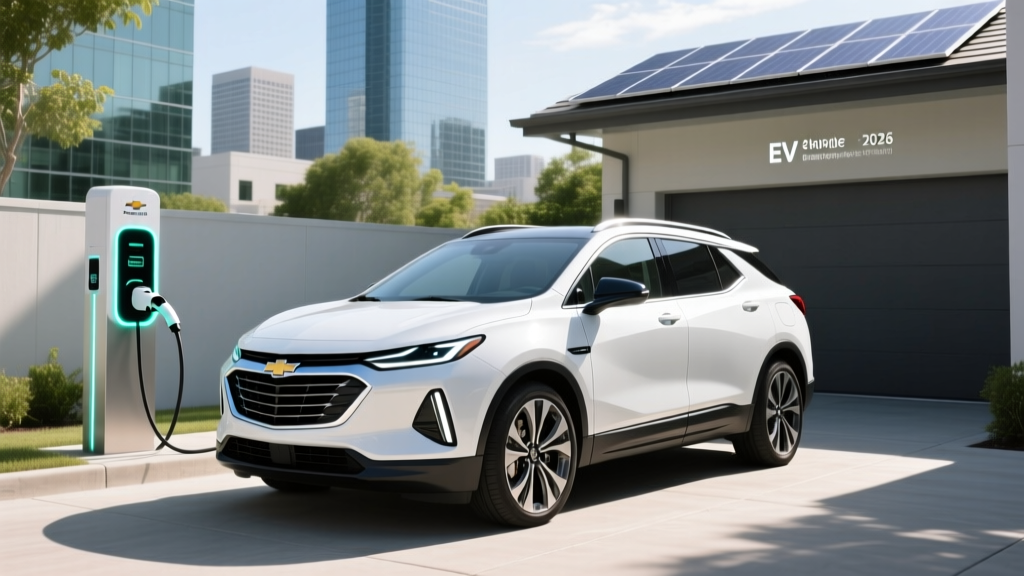
If you've searched for an affordable electric SUV lately, you've likely encountered the phrase Costco Equinox EV — a reference to Costco Auto Program pricing on the Chevrolet Equinox EV, which has become one of the most talked-about budget-friendly electric crossovers on the market. But a low sticker price is only the beginning of the ownership equation. Between shifting federal tax credit rules, higher-than-average EV insurance premiums, and charging costs that vary wildly depending on your utility, the real cost of owning a 2026 Chevy Equinox EV requires a hard look at the numbers.
This guide breaks down every dollar — from purchase price through five years of ownership — so you can decide whether the Costco Equinox EV pricing actually translates into long-term savings.
What the Costco Auto Program Actually Offers on the Equinox EV
The Costco Auto Program negotiates pre-arranged pricing with participating dealerships, typically saving members several hundred to a couple of thousand dollars off MSRP without haggling. For the 2026 Chevrolet Equinox EV, which starts at an MSRP of approximately $33,600 for the LT 2 (FWD, standard range) and climbs to around $43,400 for the RS 3 (AWD, extended range), even modest Costco member pricing can make a meaningful difference — especially when it brings a trim under critical price thresholds for tax credit eligibility.
Here's a quick snapshot of the 2026 Equinox EV lineup:
| Trim | Drivetrain | EPA Range | Battery (usable) | MSRP |
|---|---|---|---|---|
| LT 2 | FWD | ~319 mi | 85 kWh (NMC) | $33,600 |
| LT 3 | FWD | ~319 mi | 85 kWh (NMC) | $36,600 |
| RS 2 | AWD | ~285 mi | 85 kWh (NMC) | $38,900 |
| RS 3 | AWD | ~307 mi | 85 kWh (NMC) | $43,400 |
Federal Tax Credit: Do You Qualify for §30D on the Equinox EV?
The IRS §30D Clean Vehicle Credit can reduce your federal tax liability by up to $7,500 — and as of 2024, it can be transferred to the dealer at the point of sale, effectively reducing your purchase price upfront. But eligibility is not automatic. The rules tightened significantly under the Inflation Reduction Act, and the Equinox EV's qualification depends on your income, the trim's MSRP, and battery mineral sourcing.
- Vehicle MSRP cap: SUVs/crossovers must have an MSRP ≤ $80,000 (all Equinox EV trims qualify)
- Buyer income cap: Modified AGI ≤ $150,000 (single), ≤ $225,000 (head of household), ≤ $300,000 (joint)
- Battery sourcing: Must meet critical minerals AND battery component requirements (phased thresholds increase annually — GM has largely shifted to North American sourcing for Ultium batteries, but verify with your dealer for the specific VIN)
- Assembly: Final assembly must occur in North America (Equinox EV is built in Ramos Arizpe, Mexico — confirm current-year eligibility as sourcing rules update)
- Point-of-sale transfer: You can elect to transfer the credit to the dealer, reducing your out-of-pocket cost at purchase rather than waiting for tax filing
- No prior transfer: The vehicle must be new and not previously transferred under §30D
Key caveat: The Equinox EV's Mexican assembly has been a sticking point. Under current IRS guidance, vehicles assembled outside the U.S. may not qualify for the full credit depending on the model year and specific battery sourcing certification. Always verify eligibility on fueleconomy.gov using the exact trim and VIN before signing a purchase agreement. Costco pricing may help bring the effective price down further if partial credit applies.
5-Year Total Cost of Ownership: Equinox EV vs. Gas Crossover
To understand whether the Costco Equinox EV deal delivers genuine savings, we modeled a 5-year / 75,000-mile ownership scenario against a comparable gas-powered compact SUV (we used a 2026 Toyota RAV4 LE AWD at ~$30,000 MSRP and 30 MPG combined as our baseline).
| Category | Equinox EV LT 2 (FWD) | Gas Crossover Baseline |
|---|---|---|
| Purchase Price (after Costco discount est.) | $31,800 | $29,500 |
| Federal Tax Credit (if eligible) | −$7,500 | $0 |
| Effective Purchase | $24,300 | $29,500 |
| Charging / Fuel (75,000 mi) | $3,940 | $9,375 |
| Insurance (5 years) | $10,250 | $7,750 |
| Maintenance (5 years) | $1,200 | $3,500 |
| Depreciation (est.) | $11,500 | $10,800 |
| Total 5-Year Cost | $51,190 | $60,925 |
Assumptions: Electricity at $0.14/kWh national average (home charging) with 15% DC fast charging at $0.40/kWh; gas at $3.50/gallon; Equinox EV efficiency at 3.0 mi/kWh (≈112 MPGe). Insurance estimates based on national EV averages for compact SUVs. Depreciation based on current EV resale trends (see section below).
Charging Cost vs. Gas: The Per-Mile Math
Electricity costs are where EV ownership either shines or disappoints, depending entirely on how and where you charge. Here's the concrete math for the Equinox EV:
| Scenario | Cost/kWh or Gallon | Efficiency | Cost/Mile |
|---|---|---|---|
| Home Level 2 (national avg) | $0.14/kWh | 3.0 mi/kWh | $0.047 |
| Home Level 2 (CA/high-cost) | $0.28/kWh | 3.0 mi/kWh | $0.093 |
| DC Fast Charging (public) | $0.40/kWh | 3.0 mi/kWh | $0.133 |
| Gas Crossover (30 MPG) | $3.50/gal | 30 mi/gal | $0.117 |
At the national average electricity rate with predominantly home charging, the Equinox EV costs roughly $0.05/mile to "fuel" — less than half the cost of gas. But if you rely heavily on DC fast charging (apartment dwellers, road-trippers), your cost per mile can actually exceed gasoline. This is the single most important variable in EV ownership economics.
The Equinox EV supports up to 150 kW peak DC fast charging, achieving a 10–80% charge in approximately 32 minutes. On Level 2 (11.5 kW onboard charger), a full charge takes roughly 8.5 hours — practical for overnight home charging.
Maintenance Savings: Fewer Parts, Lower Bills
EVs eliminate the maintenance items that plague gas vehicles over time. Here's what you won't be paying for with the Equinox EV:
| Service Item | Equinox EV | Gas Crossover |
|---|---|---|
| Oil changes (every 5,000–10,000 mi) | $0 | $750–$1,500 |
| Transmission fluid | $0 (single-speed) | $150–$300 |
| Brake pads (regen extends life) | $0–$200 | $600–$1,200 |
| Engine air filter | $0 (no engine) | $100–$200 |
| Cabin air filter | $100–$150 | $100–$150 |
| Tire rotation/replacement | $800–$1,200* | $600–$1,000 |
| Coolant, belts, spark plugs | $0–$100 | $300–$600 |
| Total Estimated | $1,000–$1,650 | $2,600–$4,950 |
*EV tires tend to wear 15–25% faster due to higher vehicle weight and instant torque delivery. Budget for one extra tire set over 75,000 miles compared to a gas equivalent.
Chevrolet's 8-year/100,000-mile battery and powertrain warranty (covering the Ultium battery pack, drive motors, and power electronics) provides substantial protection against the most expensive potential failure. The battery is warranted to retain at least 60% of original capacity during that period, though real-world Ultium degradation data suggests most packs retain 85–90% capacity at 100,000 miles.
Insurance Reality: The Hidden EV Cost
EV insurance premiums run 15–30% higher than equivalent gas vehicles, and the Equinox EV is no exception. Expect to pay approximately $2,050/year for full coverage on an Equinox EV versus roughly $1,550/year for a gas compact SUV. Over five years, that's an additional $2,500 in insurance costs.
The reasons are structural, not arbitrary:
- Higher repair costs: EV battery packs and power electronics are expensive to replace after collision damage, and specialized high-voltage training is required for body shops
- Higher vehicle values: Even after depreciation, EVs tend to carry higher insured values
- Total-loss thresholds: Battery damage in even minor accidents can trigger total-loss declarations, increasing insurer payouts
- Limited repair network: Fewer certified EV body shops mean longer rental car periods and higher claims
Cost-offset tip: Shop quotes from insurers with dedicated EV programs (Geico, Progressive, and Liberty Mutual have competitive EV rates). Some utilities and automakers also offer insurance discounts for EV owners — GM's OnStar Insurance program occasionally includes EV-specific pricing.
Depreciation and Resale Value: What to Expect
EV depreciation has been steeper than gas vehicles over the past three years, driven by rapid price cuts on new models (particularly Tesla's aggressive repricing), improving technology making older EVs feel dated, and consumer uncertainty about battery longevity.
Current data from sources like iSeeCars and Kelley Blue Book suggests compact EV SUVs retain approximately 40–50% of their value after 5 years, compared to 50–60% for gas equivalents. For the Equinox EV purchased at an effective $24,300 (after Costco pricing and tax credit), expect a resale value around $12,000–$13,500 at the five-year mark.
However, there's a critical nuance: if you received the $7,500 tax credit, your effective cost basis is lower, meaning your actual out-of-pocket depreciation loss is smaller than the headline percentage suggests. You paid $24,300 and sell for $13,000 — that's $11,300 in real depreciation, which is competitive with many gas vehicles bought at full MSRP.
Frequently Asked Questions
How much does it really cost to own an Equinox EV over 5 years?
With Costco pricing and full federal tax credit eligibility, approximately $51,000 all-in over five years and 75,000 miles (including purchase, charging, insurance, maintenance, and depreciation). Without the tax credit, expect closer to $58,500. The tax credit eligibility is the single largest variable.
Does the Costco Auto Program discount stack with the federal tax credit?
Yes. The Costco member price reduces the negotiated purchase price, and the §30D credit applies separately based on your income, the vehicle's MSRP, and battery sourcing compliance. They are independent benefits. However, the point-of-sale transfer of the tax credit reduces the amount financed, which may interact with dealer-specific financing offers.
How much do I save on fuel and maintenance vs. gas?
Combined fuel and maintenance savings average $7,700 over five years (assuming predominantly home charging at national average electricity rates). If you rely heavily on public DC fast charging, fuel savings shrink to approximately $4,000. Maintenance savings of roughly $2,000 are more consistent regardless of charging method.
Are EVs more expensive to insure than gas cars?
Yes — typically 15–30% more. For the Equinox EV, budget an extra $500/year ($2,500 over five years) compared to a gas equivalent. Higher repair costs, battery replacement risk, and specialized labor drive the premium difference. Shop multiple insurers and ask about EV-specific discounts.
How well do EVs hold their value compared to gas vehicles?
EVs currently depreciate faster — retaining roughly 40–50% of value after five years versus 50–60% for gas vehicles. However, the lower effective purchase price (after tax credits) means your actual dollar loss can be comparable or even better. The Equinox EV's relatively low starting MSRP helps limit absolute depreciation dollars compared to premium EVs that lose larger sums in percentage terms.
What is the Equinox EV's charging speed and battery chemistry?
The 2026 Equinox EV uses an 85 kWh usable Ultium NMC (nickel manganese cobalt) battery pack. It supports up to 150 kW peak DC fast charging (10–80% in ~32 minutes) and 11.5 kW Level 2 AC charging. NMC chemistry offers higher energy density than LFP but benefits from keeping charge between 20–80% for daily use to minimize long-term degradation — reserve 100% charges for road trips.