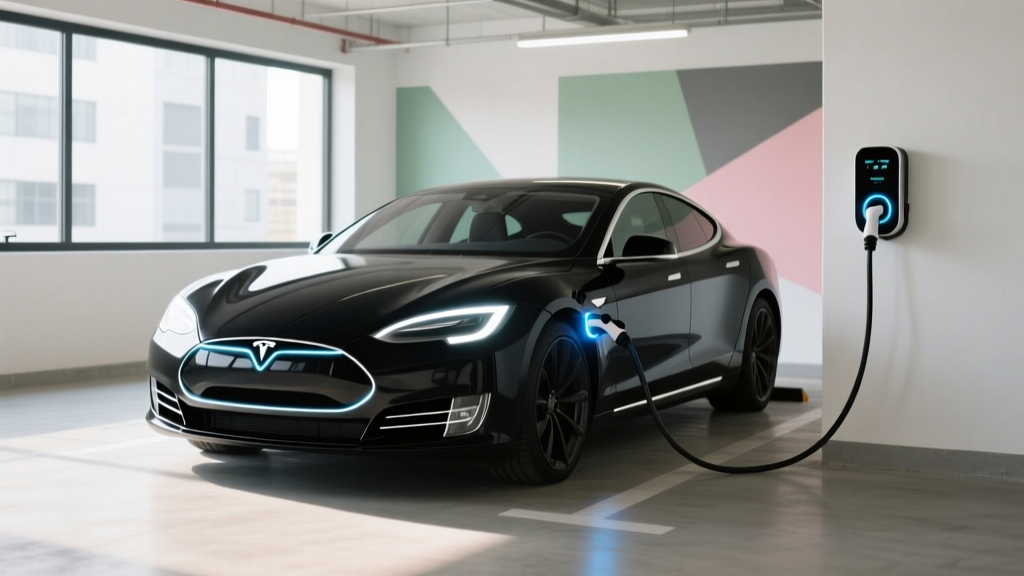
The Real Cost of Charging a Tesla Model S in 2026
If you've ever wondered how much does it cost to charge a Tesla fully, the answer depends on where and how you plug in. For the 2026 Tesla Model S Long Range, a full charge can cost as little as $10.50 at home or up to $26 on the road. Let's unpack those numbers and pair them with everything else you need to know about Tesla's flagship sedan.
2026 Tesla Model S Long Range: Core Specifications
| Specification | Value |
|---|---|
| EPA Estimated Range | 402 miles |
| Battery Capacity | 100 kWh (usable ~95 kWh), NMC chemistry |
| Max DC Fast-Charge Rate | 250 kW peak |
| 10-80% DC Fast Charge | ~27 minutes |
| Level 2 Home Charge Rate | 11.5 kW (~44 miles/hr) |
| 0-60 mph | 3.1 seconds |
| Horsepower | 670 hp (dual-motor AWD) |
| EPA Efficiency | 120 MPGe combined / 28 kWh/100mi |
| Cargo Volume | 28 cu ft (rear), + ~5 cu ft frunk |
| Rear Legroom | 35.4 inches |
| Base MSRP | $74,990 |
| As-Tested (Plaid) | $89,990 |
| Battery Warranty | 8 years / 150,000 miles (70% retention) |
Real-World Range: What the EPA Sticker Doesn't Tell You
EPA Estimate: 402 miles
Real-World Highway (70 mph): ~320-340 miles
Cold Weather (below 32°F): ~280-310 miles
Mixed Commute (city/regen-heavy): ~370-390 miles
The Model S's 100 kWh NMC pack delivers strong range, but physics still applies. Highway driving at sustained speeds reduces efficiency by 15-20%. Winter cold increases battery resistance and cabin heating loads, cutting range further. Preconditioning the battery while plugged in mitigates some of this loss.
How Much Does It Cost to Charge a Tesla Fully? The Math
Using the usable 95 kWh capacity, here's what a full 0-100% charge costs across scenarios:
| Charging Method | Rate | Cost per kWh | Full Charge Cost | Time |
|---|---|---|---|---|
| Home Level 1 (120V) | 1.4 kW | $0.13 avg | $12.35 | ~68 hours |
| Home Level 2 (240V) | 11.5 kW | $0.13 avg | $12.35 | ~8.5 hours |
| Tesla Supercharger V3 | 250 kW peak | $0.28 avg | $26.60 | ~27 min (10-80%) |
| Destination Charger | 7-11.5 kW | Often free | $0 | 4-14 hours |
National residential electricity averages $0.16/kWh as of late 2025, but rates vary from $0.10 in Louisiana to $0.30+ in California. Supercharger pricing fluctuates by location and time-of-use.
Charging Speed Deep Dive: The Curve Matters
Tesla's 250 kW peak is impressive, but sustained rates matter more. The Model S charges at peak power only between ~10-30% State of Charge. Above 50%, the rate tapers to ~150 kW, and above 80% it drops further to protect battery health. This is why the 10-80% metric (27 minutes) is more useful than peak kW alone.
For road trips, plan 15-20 minute stops every 200-250 miles rather than waiting for a full charge. The navigation system's battery preconditioning feature warms the pack when a Supercharger is set as your destination, enabling faster charging on arrival.
Federal Tax Credit Eligibility (IRS §30D)
The 2026 Model S faces challenges under current federal EV tax credit rules:
- MSRP Cap: Sedans must be under $55,000 — Model S at $74,990 does NOT qualify
- Income Limits: $150K single / $300K joint (moot due to MSRP cap)
- Battery Sourcing: Critical minerals and component requirements phase in annually
Bottom line: The Model S does not qualify for the $7,500 federal credit. Some states offer their own incentives — check your local DMV or energy office.
Who Should Buy the 2026 Tesla Model S?
Choose the Model S if:
- You need 400+ mile range for frequent long-distance travel
- You value Supercharger network access and reliability
- You want flagship performance (3.1s 0-60) with practicality
- Home Level 2 charging is available to minimize costs
Consider alternatives if:
- Budget is under $60K (look at Model 3, Hyundai Ioniq 6)
- You need SUV cargo space (Model X or Rivian R1S)
- Federal tax credit eligibility is critical to your economics
Pros and Cons
Pros
- Class-leading 402-mile EPA range
- Extensive Supercharger network (17,000+ stalls in North America)
- Excellent efficiency (120 MPGe combined)
- Strong acceleration and handling for a luxury sedan
- Over-the-air updates continuously add features
Cons
- $75K+ price excludes most buyers and tax credit eligibility
- Rear seat space trails German luxury competitors
- Minimalist interior polarizes — no traditional instrument cluster
- Repair costs and insurance premiums run high
- FSD (Supervised) remains Level 2 driver-assist, not autonomous
Frequently Asked Questions
Is it cheaper to charge a Tesla at home or at a Supercharger?
Home charging costs roughly half what Supercharging does. At $0.13/kWh residential vs $0.28/kWh Supercharger average, you'll save $14+ per full charge by plugging in at home.
How long does a Tesla battery last before replacement?
Tesla warranties the Model S battery for 8 years/150,000 miles with 70% capacity retention guaranteed. Real-world data shows NMC packs retaining 85-90% capacity at 150K miles when not routinely charged to 100%.
Does the Model S qualify for any tax credits in 2026?
Not the federal §30D credit due to the $55K MSRP cap for sedans. Some states (California, Colorado, Massachusetts) offer separate rebates — check local programs.
How does Model S range compare to competitors?
The Lucid Air Grand Touring leads at 516 miles EPA, but starts at $125K. The Mercedes EQS 450+ achieves 350 miles. The BMW i5 eDrive40 manages 295 miles. Model S balances range, performance, and price effectively.
What's the total cost of ownership vs a gas sedan?
Over 5 years/75K miles, Model S fuel savings (~$6,500 vs premium gas) partially offset higher purchase price, insurance, and potential tire costs. Break-even depends on your local electricity rates, driving patterns, and whether you'd otherwise buy a $75K gas sedan.