Why Tesla Killed the Rear-Wheel-Drive Cybertruck
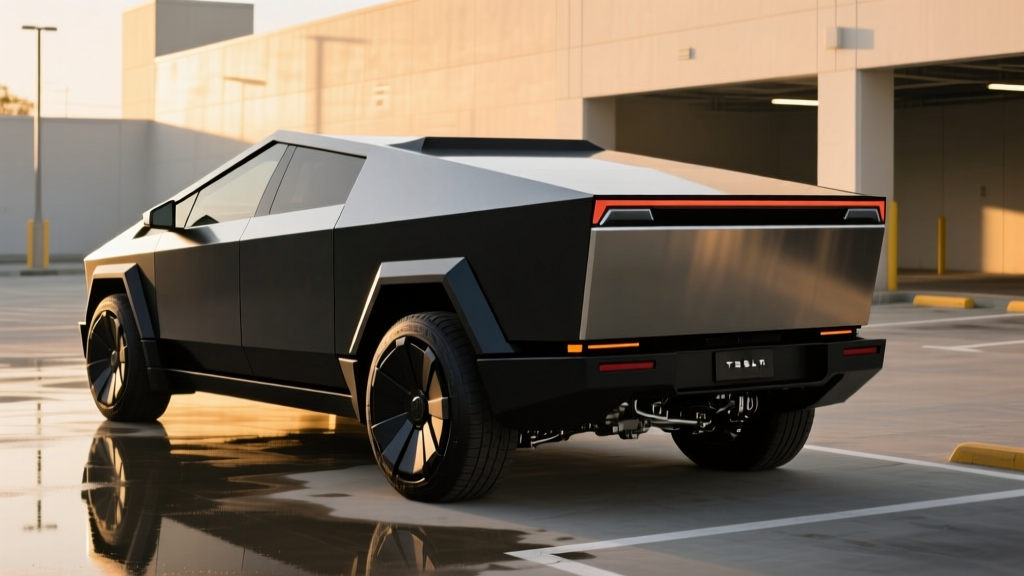
When Tesla first unveiled the Cybertruck pricing structure, a rear-wheel-drive (RWD) base model was listed at a headline-grabbing price point. By late 2024, Tesla had already begun pivoting away from that configuration, and as of the 2026 model year, the Tesla Cybertruck rear-wheel-drive discontinuation is complete. The RWD variant no longer appears on Tesla's configurator or in EPA filings. The move reflects both engineering realities — the Cybertruck's 6,800+ lb curb weight demands the traction and power of dual- or tri-motor setups — and market dynamics: the vast majority of Cybertruck buyers were already selecting the Long Range AWD or Cyberbeast trims.
For buyers who were holding out for an entry-level, single-motor Cybertruck, the discontinuation means the effective starting price has climbed. Here's a comprehensive look at what's available now, what the remaining trims deliver, and whether the Cybertruck still makes sense in 2026's increasingly competitive electric truck landscape.
2026 Tesla Cybertruck: Remaining Trims and Specs
With the RWD model gone, the 2026 Cybertruck lineup consists of two primary configurations. Both use a dual-motor all-wheel-drive architecture as a baseline, with the Cyberbeast adding a third motor on the rear axle.
| Spec | Long Range AWD | Cyberbeast (Tri-Motor AWD) |
|---|---|---|
| Drivetrain | Dual-Motor AWD | Tri-Motor AWD |
| Horsepower | 600 hp | 845 hp |
| 0–60 mph | 4.1 seconds | 2.6 seconds |
| Battery (usable, est.) | ~123 kWh (NMC) | ~123 kWh (NMC) |
| EPA Range | 340 miles | 320 miles |
| MPGe (combined) | ~68 MPGe | ~63 MPGe |
| Max DC Fast Charge | 250 kW (peak) | 250 kW (peak) |
| 10–80% DC Charge Time | ~28 minutes | ~28 minutes |
| Level 2 Home Charging | 11.5 kW (~37 mi/hr) | 11.5 kW (~37 mi/hr) |
| Towing Capacity | 11,000 lbs | 11,000 lbs |
| Payload Capacity | 2,500 lbs | 2,500 lbs |
| Bed Length | 6 ft (72 in) | 6 ft (72 in) |
| Cargo Volume (bed) | ~67 cu ft | ~67 cu ft |
| Frunk Volume | ~7 cu ft | ~7 cu ft |
| Base MSRP | $79,990 | $99,990 |
| Warranty (Battery/Drive Unit) | 8 yr / 120,000 mi | 8 yr / 120,000 mi |
The EPA rates the Long Range AWD at 340 miles, but real-world results vary significantly. In highway-dominant driving at 70–80 mph, expect roughly 270–295 miles before needing a charge. In cold weather (below 32°F), range can drop an additional 15–25%, bringing effective highway range down to 220–250 miles. The Cyberbeast's higher power output and stickier tires reduce its real-world highway range to approximately 250–275 miles under normal conditions. The Cybertruck's 800V-class architecture helps recover range quickly on DC fast chargers, but the massive battery and 6,800-lb mass work against efficiency — expect roughly 48–52 kWh/100 mi in mixed driving, per fueleconomy.gov data.
Charging Speed: DC Fast and Home Level 2
The Cybertruck uses the North American Charging Standard (NACS) connector natively — no adapter needed for Tesla Superchargers. It can also access third-party networks that have adopted NACS (increasingly common through 2025–2026).
| Charge Level | Power | Miles Added per Hour | Notes |
|---|---|---|---|
| Level 1 (120V) | ~1.4 kW | ~3–4 mi/hr | Emergency/trickle only |
| Level 2 (240V, 48A) | 11.5 kW | ~37 mi/hr | Full charge overnight (~9 hrs) |
| DC Fast (V3 Supercharger) | 250 kW peak | ~200 mi in 15 min | Peak only below 40% SoC; tapers significantly above 80% |
| DC Fast (V4 Supercharger) | Up to 325 kW* | ~220 mi in 15 min | *Vehicle-side acceptance may limit to ~250 kW |
Charging curve reality: The Cybertruck's ~123 kWh battery means that even at 250 kW peak, a 10–80% charge takes approximately 28 minutes. The charge curve is aggressive early — you'll see 200+ kW from roughly 5% to 35% State of Charge — but above 60% SoC, the rate tapers to ~100 kW, and above 80% it drops below 50 kW. This is standard lithium-ion behavior to protect cell longevity, but it means the last 20% can add 15+ minutes to a charging stop. Plan road trips around 60–70% charges for the fastest stops.
Pricing, Tax Credits, and Total Cost
The discontinuation of the RWD model removed what would have been the most affordable Cybertruck entry point (originally projected around $60,990). The current lineup starts at $79,990 for the Long Range AWD.
| Trim | Base MSRP | Federal §30D Credit | Effective Price (if eligible) |
|---|---|---|---|
| Long Range AWD | $79,990 | Up to $7,500 | ~$72,490 |
| Cyberbeast | $99,990 | $0 (exceeds MSRP cap) | $99,990 |
- MSRP Cap: Trucks must be at or below $80,000 MSRP. The Long Range AWD at $79,990 qualifies; the Cyberbeast at $99,990 does not.
- Buyer Income Limits: AGI must not exceed $150,000 (single), $225,000 (head of household), or $300,000 (joint filers).
- Battery Sourcing: The $7,500 credit requires meeting both critical-minerals and battery-component sourcing thresholds per IRS rules. Tesla's supply chain has been evolving — verify current eligibility on the IRS qualified vehicles list before purchasing.
- Point-of-Sale Transfer: Eligible buyers can transfer the credit to the dealer at purchase for an immediate price reduction rather than waiting for a tax refund.
- Consult a tax professional — eligibility rules are subject to change and individual circumstances vary.
Destination and options note: Tesla's $1,390 destination charge pushes the Long Range AWD above $80,000 on the window sticker. However, the §30D MSRP cap is evaluated on base MSRP before destination, so eligibility should hold — but confirm at point of sale. Adding the Foundation Series package or other options can further complicate this.
Performance, Tech, and Daily Livability
The dual-motor Long Range AWD delivers 600 hp and a 4.1-second 0–60 time — quick for any vehicle, let alone a 6,800-lb stainless-steel truck. The Cyberbeast's 845 hp and 2.6-second sprint are supercar-territory numbers, though sustaining that performance generates significant heat and battery drain.
Standout tech features:
- 18.5-inch center touchscreen with Tesla's latest UI (no traditional instrument cluster)
- Rear-seat 9.4-inch touchscreen for climate and entertainment
- Autopilot standard (SAE Level 2 driver assistance — not self-driving; driver must remain fully engaged)
- Full Self-Driving (Supervised) available as a $8,000 add-on or $99/month subscription — still SAE Level 2
- 48V electrical architecture (industry-first for a production truck) enabling steer-by-wire and reduced wiring harness weight
- Adaptive air suspension with up to 16 inches of ground clearance in Extract mode
- Powered tonneau cover with 300-lb load rating on the bed
- V2L (vehicle-to-load) capability: 120V and 240V outlets in the bed and cabin
- Visibility: The angular design and thick A-pillars create significant blind spots; the camera-based mirror system (optional) helps but has a learning curve.
- Ride quality: The stainless-steel exoskeleton and solid rear axle (with adaptive dampers) transmit more road imperfections than unibody competitors like the Rivian R1T.
- Bed access: The high bed floor (due to under-floor battery) and powered tonneau make loading tall items awkward without the tailgate ramp.
- No Apple CarPlay/Android Auto: Tesla's closed infotainment ecosystem remains a dealbreaker for some buyers.
- Insurance costs: Cybertruck insurance premiums run 30–50% higher than comparable trucks due to repair complexity with stainless-steel panels and low parts availability.
Tesla Autopilot and FSD (Supervised) are SAE Level 2 systems. This means the vehicle can simultaneously control steering and acceleration/braking under certain conditions, but the driver must continuously monitor the road and remain prepared to take over immediately. These are not autonomous or self-driving systems. Only Level 4 services like Waymo operate without a driver engaged. See SAE International's J3016 standard for full definitions.
Interior Space and Practicality
The Cybertruck seats five (three-across bench-style rear seating is tight for adults on long trips). Front legroom is generous at approximately 41.5 inches, while rear legroom comes in around 38.2 inches — adequate but not class-leading.
The 6-foot bed offers roughly 67 cubic feet of volume with the tonneau closed. The lockable under-bed storage and front trunk (frunk) at ~7 cu ft add useful secure cargo space. However, the bed's width between the wheel wells (~43 inches) won't accommodate a standard 4×8 sheet of plywood flat — a practical limitation for contractor buyers.
How It Compares: Cybertruck vs. Key Rivals
With the RWD model discontinued, the Cybertruck Long Range AWD at ~$79,990 competes directly with:
- Rivian R1T Dual-Motor Max Pack: ~400 miles EPA range, ~$87,000, more refined ride, better bed utility, but no federal credit.
- Ford F-150 Lightning Extended Range: ~320 miles EPA, ~$72,000, more conventional truck ergonomics, qualifies for §30D credit.
- Chevrolet Silverado EV 4WT: ~400 miles EPA range, fleet-oriented pricing, available NACS charging for 2026.
The Cybertruck's advantages are its charging speed (250 kW peak vs. the Lightning's ~150 kW), the Supercharger network, and raw performance. Its disadvantages are bed practicality, visibility, and the premium price now that the budget RWD option is gone. The IIHS has not yet published full crash-test ratings for the Cybertruck as of early 2026 — a consideration for safety-focused buyers.
Who Should Buy the 2026 Cybertruck (and Who Shouldn't)
- You need a truck with best-in-class DC fast charging and access to the Supercharger network for road trips
- Performance matters — 4.1s (or 2.6s Cyberbeast) 0–60 in a truck is unmatched
- You want V2L capability for job-site power or camping
- You value Tesla's software ecosystem and OTA update cadence
- You need a practical work truck with easy bed loading and a flat-load plywood-capable bed
- Visibility and ease of parking in urban environments are priorities
- Your budget was anchored to the discontinued RWD's projected ~$61K price
- You prefer Apple CarPlay or a traditional truck interior layout
- You want IIHS/NHTSA crash-test data before committing
Frequently Asked Questions
Why did Tesla discontinue the rear-wheel-drive Cybertruck?
The RWD Cybertruck was originally announced as an entry-level model at approximately $60,990. Tesla removed it from the lineup because demand overwhelmingly favored the dual- and tri-motor AWD variants, and the truck's extreme weight (~6,800 lbs) made a single-motor RWD configuration less compelling for both towing traction and performance. The RWD model was never delivered to customers in meaningful volume before being discontinued.
What is the real-world range of the 2026 Cybertruck?
The EPA rates the Long Range AWD at 340 miles. In real-world highway driving at 70–80 mph, expect 270–295 miles. In cold weather (below freezing), that drops to roughly 220–250 miles. The Cyberbeast delivers approximately 250–275 miles real-world highway. These figures assume no towing — towing an 8,000-lb trailer can cut range nearly in half.
How fast does the Cybertruck charge at home and on the road?
At home on a Level 2 (240V, 48A) charger, the Cybertruck adds approximately 37 miles of range per hour, requiring about 9 hours for a full charge. On a Tesla V3 Supercharger (250 kW peak), a 10–80% charge takes roughly 28 minutes. The charge rate tapers significantly above 80% SoC to protect the NMC battery cells.
Does the 2026 Cybertruck qualify for the federal EV tax credit?
The Long Range AWD at $79,990 MSRP falls under the §30D $80,000 MSRP cap for trucks and may qualify for up to $7,500, depending on the buyer's income, the vehicle's battery-sourcing compliance, and current IRS rules. The Cyberbeast at $99,990 exceeds the MSRP cap and does not qualify. Always verify current eligibility on the IRS qualified vehicles list and consult a tax professional.
Is the Cybertruck worth buying vs. the Rivian R1T or F-150 Lightning?
It depends on priorities. The Cybertruck wins on DC fast-charge speed, Supercharger network access, and raw acceleration. The Rivian R1T offers better ride quality, a more practical bed system (including the Gear Tunnel), and longer EPA range with the Max Pack. The F-150 Lightning provides conventional truck ergonomics, Pro Power Onboard, and a lower effective price after the federal credit. If you're a Tesla ecosystem loyalist who values charging infrastructure and performance, the Cybertruck delivers. If bed utility and ride comfort matter more, the R1T or Lightning are stronger choices.
What's the battery warranty on the Cybertruck?
Tesla covers the Cybertruck's battery and drive units for 8 years or 120,000 miles (whichever comes first), with a minimum 70% capacity retention threshold during that period. This is competitive with the industry standard and slightly better than some rivals on the mileage cap. The vehicle's basic limited warranty is 4 years / 50,000 miles.