Buying a used Tesla in 2026 is a fundamentally different proposition than it was even two years ago. Depreciation has battered resale values across the lineup, making late-model examples some of the most compelling used-EV values on the market. But a low sticker price is only the beginning of the ownership equation. Battery degradation, warranty transferability, used-EV tax credit eligibility, and the realities of charging speed all determine what a used Tesla actually costs you over time.
This guide breaks down the real cost of ownership for the four core Tesla models available on the used market — Model 3, Model Y, Model S, and Model X — with exact figures on range, charging, battery chemistry, and what you should pay.
Used Tesla Pricing in 2026: What You'll Actually Pay
Used EV prices have corrected significantly since the 2022-2023 peak. According to iSeeCars and industry data, Tesla models have experienced some of the steepest depreciation in the EV segment, driven by aggressive new-car price cuts, increased competition, and a flooded lease-return market. Here's where pricing sits in early 2026:
| Model | Model Years | Mileage Range | Price Range | New MSRP (when sold) |
|---|---|---|---|---|
| Model 3 RWD | 2022–2024 | 15,000–45,000 mi | $18,000–$26,000 | $38,990–$42,990 |
| Model 3 Long Range AWD | 2022–2024 | 15,000–45,000 mi | $22,000–$30,000 | $44,990–$49,990 |
| Model Y Long Range | 2022–2024 | 15,000–50,000 mi | $24,000–$34,000 | $52,990–$58,990 |
| Model Y Performance | 2022–2024 | 10,000–40,000 mi | $28,000–$36,000 | $56,990–$65,990 |
| Model S Long Range | 2021–2023 | 20,000–55,000 mi | $38,000–$52,000 | $89,990–$94,990 |
| Model X Long Range | 2021–2023 | 20,000–50,000 mi | $42,000–$58,000 | $99,990–$109,990 |
The headline takeaway: a 2023 Model 3 RWD with 30,000 miles routinely sells for $20,000–$23,000 — roughly half its original MSRP. Model Y holds value slightly better due to SUV demand but still trades at 45-55% of original price. Model S and X depreciation is severe, with examples selling at 35-45% of original sticker.
Battery Health: The Single Biggest Cost Variable
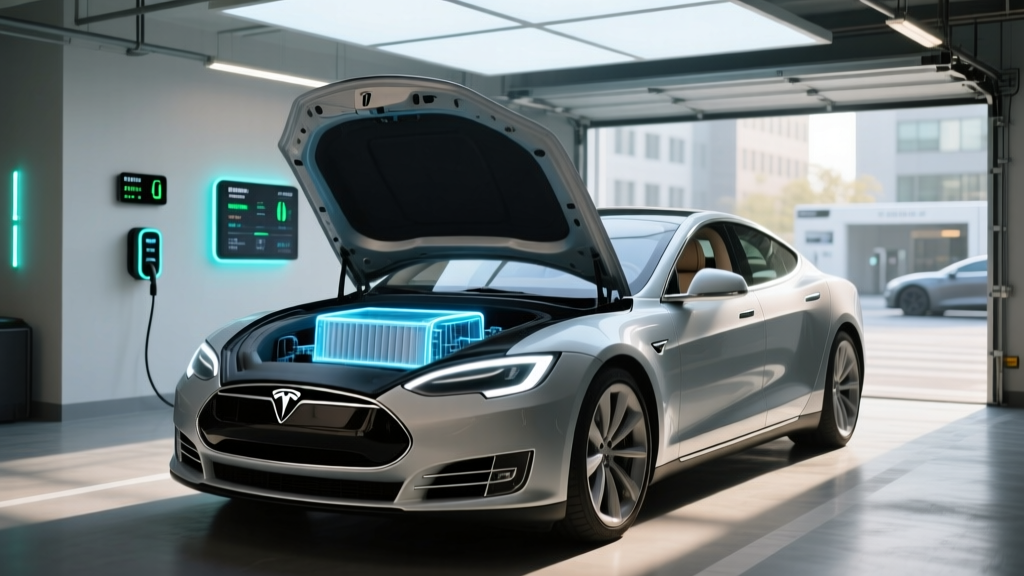
When evaluating the cost of a used Tesla, battery state of health (SoH) matters more than any other factor. The traction battery represents $12,000–$22,000 in replacement value depending on the model, and its degradation profile determines your real-world range for years to come.
Tesla uses two primary battery chemistries across its fleet, and knowing which one your prospective car has is critical:
| Chemistry | Models/Trims | Energy Density | Cycle Life | Degradation Profile | Charging Recommendation |
|---|---|---|---|---|---|
| LFP (Lithium Iron Phosphate) | Model 3 RWD (2022+), some Model Y RWD | Lower (~160 Wh/kg cell) | 3,000+ cycles | Slower, more linear; ~5-8% loss at 100k mi | Charge to 100% regularly recommended |
| NMC/NCA (Nickel-based) | Model 3 LR, Model Y LR/Perf, Model S, Model X | Higher (~250 Wh/kg cell) | 1,500–2,000 cycles | Early drop then plateau; ~8-12% loss at 100k mi | Daily charge to 80-90%; 100% for trips only |
How to check battery health before buying: Navigate to Settings → Software on the car's touchscreen to view the battery's rated range at 100% charge. Compare this to the EPA-rated range when new. A 2022 Model 3 Long Range originally rated at 358 miles showing 325 miles at 100% indicates roughly 9% degradation — normal for 35,000 miles. Anything over 12% on a vehicle under 50,000 miles warrants scrutiny.
Tesla's battery warranty transfers to subsequent owners: 8 years or 100,000 miles (Model 3/Y RWD) or 8 years or 120,000 miles (Long Range, Performance, Model S/X), whichever comes first. The warranty guarantees the battery retains at least 70% of its original capacity. If degradation exceeds 30% within the warranty window, Tesla replaces or remanufactures the pack at no cost.
The EPA range on a used Tesla's window sticker was calculated when the battery was new. Expect a 5-12% reduction depending on mileage and chemistry. Beyond that:
- Highway driving at 75 mph: subtract 10-15% from the degraded rated range
- Cold weather (below 32°F): subtract 20-30% — Teslas without a heat pump (pre-2021 Model 3/Y) lose more
- Combined real-world expectation for a 2023 Model 3 LR with 30k miles: EPA was 358 mi → degraded rated range ~325 mi → real-world highway ~275-290 mi, winter ~230-250 mi
Charging Speed: Model-by-Model Breakdown
Charging speed directly affects road-trip practicality and daily convenience. Used Teslas span multiple hardware generations, so peak DC fast-charge rates vary significantly by model year and trim.
| Model/Year | Battery (kWh usable) | Peak DC Fast Charge (kW) | 10-80% Time | Level 2 Home Rate (kW) | Miles per Hour (L2) |
|---|---|---|---|---|---|
| Model 3 RWD 2022-2024 (LFP) | 57.5–60 | 170 kW | ~28–32 min | 11.5 kW (48A) | ~37 mi/hr |
| Model 3 LR 2022-2023 (NMC) | 75–79 | 250 kW | ~18–22 min | 11.5 kW (48A) | ~41 mi/hr |
| Model 3 Highland 2024 (NMC) | 75–79 | 250 kW | ~18–20 min | 11.5 kW (48A) | ~44 mi/hr |
| Model Y LR 2022-2024 (NMC) | 75–79 | 250 kW | ~20–24 min | 11.5 kW (48A) | ~37 mi/hr |
| Model S LR 2021-2023 (NMC) | 95–100 | 250 kW | ~25–30 min | 11.5 kW (48A) | ~34 mi/hr |
| Model X LR 2021-2023 (NMC) | 95–100 | 250 kW | ~25–32 min | 11.5 kW (48A) | ~30 mi/hr |
Key charging-curve reality: The "250 kW" peak on Long Range models applies only between roughly 10-30% state of charge. Above 50%, the rate tapers to ~100-120 kW, and above 80% it drops below 50 kW. This is why the 10-80% time matters more than peak kW. LFP-equipped Model 3 RWD variants peak lower (170 kW) but sustain a flatter curve, so the real-world time difference is smaller than the peak numbers suggest.
For home charging, all used Teslas accept up to 11.5 kW on a Level 2 wall connector (48 amps on a 60-amp circuit). Expect a full charge from 20% in roughly 6-7 hours for a Long Range model — adequate for overnight replenishment. If your home has only a standard 120V outlet (Level 1), plan on 3-5 miles of range per hour, which works only for low-mileage commuters.
Performance, Efficiency, and Space by Model
Each Tesla model targets a different buyer. Here's the spec-by-spec breakdown with the figures that matter for daily ownership.
Model 3 (2022-2024)
| Spec | RWD | Long Range AWD | Performance |
|---|---|---|---|
| 0-60 mph | 5.8 sec | 4.2 sec | 3.1 sec |
| Horsepower | 283 hp | 346 hp | 450 hp |
| Drivetrain | RWD (single motor) | AWD (dual motor) | AWD (dual motor) |
| EPA Range (new) | 272 mi | 358 mi | 315 mi |
| MPGe (combined) | 132 MPGe | 131 MPGe | 125 MPGe |
| kWh/100 mi | 25 kWh | 26 kWh | 27 kWh |
| Cargo (trunk + frunk) | 23 cu ft | 23 cu ft | 23 cu ft |
| Rear legroom | 35.2 in | 35.2 in | 35.2 in |
Model Y (2022-2024)
| Spec | RWD | Long Range AWD | Performance |
|---|---|---|---|
| 0-60 mph | 6.6 sec | 4.8 sec | 3.5 sec |
| Horsepower | 295 hp | 384 hp | 456 hp |
| Drivetrain | RWD (single motor) | AWD (dual motor) | AWD (dual motor) |
| EPA Range (new) | 260 mi | 330 mi | 303 mi |
| MPGe (combined) | 123 MPGe | 122 MPGe | 117 MPGe |
| kWh/100 mi | 27 kWh | 28 kWh | 29 kWh |
| Cargo (behind 2nd row) | 30 cu ft | 30 cu ft | 30 cu ft |
| Cargo (max, seats folded) | 76 cu ft | 76 cu ft | 76 cu ft |
| Rear legroom | 41.6 in | 41.6 in | 41.6 in |
For EPA-verified efficiency and range data, always cross-reference the specific model year and trim, as Tesla made running changes to battery packs and motors throughout these production years.
Used EV Tax Credit: Can You Get $4,000?
The federal used-EV tax credit under IRS §25E offers up to $4,000 (or 30% of the sale price, whichever is lower) on eligible pre-owned electric vehicles. This is separate from the new-vehicle §30D credit and has its own rules. Here's the eligibility checklist:
- Sale price cap: The vehicle must sell for $25,000 or less. This eliminates most used Model S/X and higher-trim Model Y examples, but many Model 3 variants qualify.
- Buyer income cap: Adjusted gross income cannot exceed $75,000 (single), $112,500 (head of household), or $150,000 (joint filers).
- Vehicle age: The vehicle must be at least 2 model years old (a 2024 model purchased in 2026 qualifies).
- Dealer requirement: The vehicle must be purchased from a licensed dealer — private-party sales do not qualify.
- First transfer: The credit applies only to the first qualified sale since the vehicle became eligible (August 16, 2022, onward). Subsequent resales of the same vehicle don't re-trigger the credit.
- Claim frequency: You can claim this credit once every 3 years.
Insurance, Maintenance, and Total Cost of Ownership
The purchase price is only the entry fee. Here's what ongoing ownership costs look like for a used Tesla compared to a comparable used gas sedan or crossover:
| Cost Category | Used Model 3 LR ($24,000) | Used BMW 330i ($24,000) |
|---|---|---|
| Purchase price | $24,000 | $24,000 |
| Federal tax credit | −$4,000 | $0 |
| Insurance (5 yrs) | $11,500–$14,000 | $8,500–$11,000 |
| Energy/fuel (5 yrs, 60k mi) | $3,000–$4,500 | $7,500–$9,000 |
| Maintenance (5 yrs) | $1,200–$2,000 | $3,500–$5,000 |
| Tires (5 yrs) | $2,000–$3,000 | $1,600–$2,400 |
| Estimated depreciation (5 yrs) | $8,000–$10,000 | $7,000–$9,000 |
| Net 5-year cost | $37,700–$43,500 | $45,100–$51,400 |
Where Teslas cost more: Insurance premiums run 15-30% higher than comparable gas vehicles due to repair costs and Tesla's direct-to-consumer collision repair network limitations. Tire wear is accelerated on heavier EVs with instant torque — expect replacement at 25,000-35,000 miles rather than 40,000-50,000.
Where Teslas cost less: No oil changes, no transmission fluid, no spark plugs, no emissions testing. Brake pad life extends well past 80,000 miles thanks to regenerative braking. Home charging at $0.12-$0.16/kWh delivers fuel costs roughly one-third to one-quarter of gasoline at $3.20/gallon.
Tech, Driver Assistance, and Feature Considerations
Used Teslas retain access to Tesla's software ecosystem, including over-the-air updates, the Supercharger network, and the mobile app. However, feature availability depends on the hardware generation:
Autopilot and FSD: Every Tesla from this era includes basic Autopilot (lane centering + adaptive cruise), which is an SAE Level 2 driver-assist system — not self-driving. Full Self-Driving (Supervised) capability, if previously purchased by the original owner, may or may not transfer with the vehicle. Tesla has periodically removed FSD from used cars sold through third-party dealers. Verify FSD status in the car's Software menu before purchasing.
Hardware 3 vs. Hardware 4: Vehicles built from approximately March 2023 onward may have HW4 (AI4) cameras with higher resolution and better low-light performance. Earlier cars have HW3. This matters primarily for FSD performance, not basic Autopilot.
Supercharger access: All used Teslas retain full Supercharger network access, which remains the most reliable DC fast-charging network in the US. NACS (Tesla's charging connector) is now the industry standard, with Ford, GM, Rivian, and others adopting it through 2025-2026.
- Steep depreciation = exceptional value vs. new
- Supercharger network access (best in the US)
- OTA updates keep software current
- Minimal maintenance vs. gas vehicles
- LFP batteries (Model 3 RWD) offer outstanding longevity
- $4,000 used-EV tax credit on qualifying examples
- Insurance premiums 15-30% above segment average
- No physical controls — touchscreen-only HVAC, wipers, glovebox
- Panel gaps and paint quality inconsistent on 2022-2023 builds
- FSD transfer is unreliable on third-party dealer sales
- Model S/X air suspension repairs costly out of warranty ($2,500-$4,000 per corner)
- Pre-2021 models lack heat pump (worse cold-weather range)
Who Should Buy a Used Tesla — And Which Model?
Choose a used Model 3 RWD if: You're a commuter driving under 40 miles daily, want the lowest entry price, and prioritize battery longevity. The LFP pack is the most durable chemistry Tesla offers, and at $18,000-$22,000 after the used-EV credit, it's one of the cheapest ways into a modern EV.
Choose a used Model 3 Long Range if: You take regular road trips and need 300+ miles of real-world range. Dual-motor AWD adds winter confidence. This is the best all-around used EV sedan value in 2026.
Choose a used Model Y Long Range if: You need family space (76 cu ft cargo, available 7-seat option on some builds), tow occasionally (3,500-lb rating), and want crossover ride height. Expect to pay $26,000-$32,000 — above the used-EV credit price cap.
Choose a used Model S if: You want luxury-sedan performance at a fraction of its original $90,000+ price. Air suspension and premium interior remain compelling, but budget $3,000-$5,000 for potential out-of-warranty suspension or drive unit repairs.
Choose a used Model X if: You need three rows and falcon-wing doors genuinely solve a parking-lot car-seat-loading problem. Otherwise, a Model Y or a used Rivian R1S offers more practicality for less money.
Frequently Asked Questions
What is the real-world range of a used Tesla Model 3?
A 2023 Model 3 Long Range originally rated at 358 EPA miles will typically show 325-340 rated miles at 100% charge with 20,000-40,000 miles on the odometer. In real-world highway driving at 70-75 mph, expect 275-290 miles in mild weather and 230-250 miles in sub-freezing temperatures. The RWD/LFP variant starts at 272 EPA miles and delivers roughly 215-230 real-world highway miles.
How fast does a used Tesla charge at home and on the road?
On a home Level 2 charger (11.5 kW / 48A), expect 37-44 miles of range per hour depending on the model — a full overnight charge is standard. On DC fast charging, Long Range models peak at 250 kW and charge from 10-80% in 18-24 minutes. The LFP Model 3 RWD peaks at 170 kW with a 10-80% time of 28-32 minutes. All models taper significantly above 80% SoC.
How much does a used Tesla cost after tax credits?
A qualifying used Model 3 RWD purchased from a dealer for $22,000 nets $4,000 via the §25E used-EV credit, bringing the effective cost to $18,000 — provided your income falls under the cap ($75k single / $150k joint). Model Y and Model S/X examples typically exceed the $25,000 sale-price cap and do not qualify for the used-EV credit.
Is a used Tesla worth it vs. a used Hyundai Ioniq 5 or Ford Mustang Mach-E?
For charging infrastructure alone, Tesla wins — the Supercharger network remains the most reliable and extensive DC fast-charging system in the US. The Ioniq 5 charges faster on paper (800V architecture, 10-80% in ~18 min) but relies on Electrify America and third-party networks. The Mach-E offers a more traditional interior with physical controls. If Supercharger access matters to your road-trip habits, the used Tesla has a meaningful advantage.
Does a used Tesla qualify for any federal EV tax credit?
Yes — the §25E used clean vehicle credit offers up to $4,000 on EVs selling for $25,000 or less, subject to buyer income limits ($75k/$112.5k/$150k by filing status). The vehicle must be at least 2 model years old and purchased from a licensed dealer. The new-vehicle §30D credit ($7,500) does not apply to used purchases. Always confirm eligibility with a tax professional and the IRS §25E guidelines.
What should I inspect before buying a used Tesla?
Check battery rated range at 100% SoC vs. original EPA rating (over 12% degradation is a flag). Verify FSD transfer status in the Software menu. Inspect panel gaps and paint — 2022-2023 Fremont builds had inconsistent quality. Test all cameras and Autopilot. Confirm the car has no salvage title (Tesla will refuse to service salvaged vehicles). For Model S/X, listen for air suspension compressor cycling and check for uneven ride height. Review service history in the Tesla app if the seller provides access.