Why EV Owners Are Researching the Cost of Tesla Roof Shingles
If you own an electric vehicle—or plan to buy one—the question of where your charging electricity comes from is no longer abstract. Home solar paired with EV charging is the closest thing to "free fuel" in the electrified-transportation world, and Tesla's integrated solar roof is one of the most searched solutions. But the cost of Tesla roof shingles in 2026 remains a point of confusion: is it a roof, a solar array, or both? And does the math actually work for an EV-owning household?
This guide breaks down the real pricing, energy output, and ownership economics of Tesla's Solar Roof (the glass-tile product commonly called "Tesla roof shingles") specifically through the lens of an EV owner trying to offset home charging costs. We'll compare it to conventional solar panels, factor in federal incentives, and give you a concrete decision framework.
What Tesla Solar Roof Shingles Actually Are
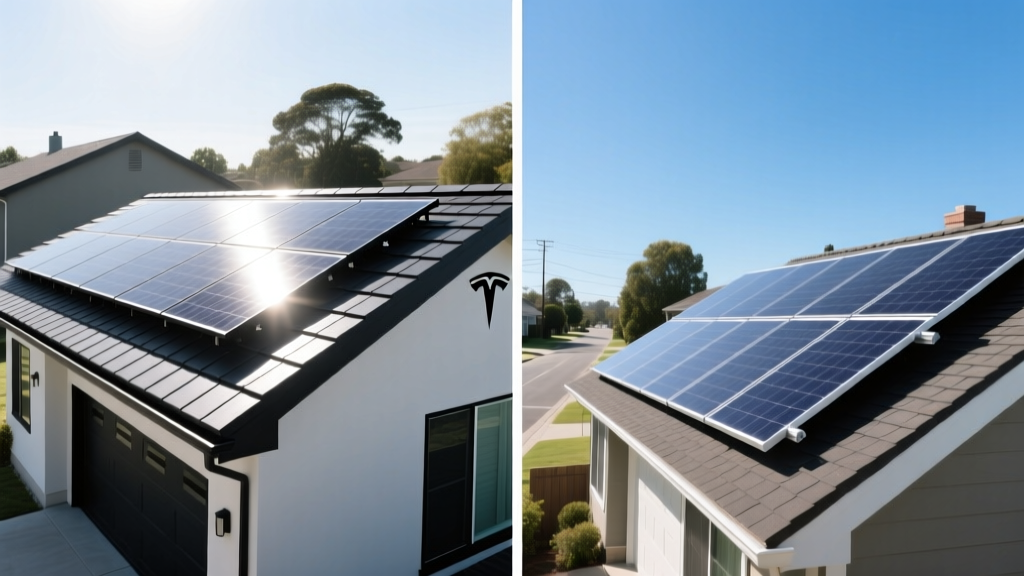
Tesla's Solar Roof replaces your existing roofing material with tempered-glass tiles. Some tiles contain monocrystalline solar cells (active tiles); others are purely aesthetic (inactive tiles) that match the look without generating power. The result is a roof that doubles as a distributed solar array—no rack-mounted panels bolted on top.
For EV owners, the value proposition is specific: a well-sized Solar Roof can generate enough electricity to cover both household loads and daily EV charging, effectively reducing your per-mile driving cost to near zero (after the system payback period).
The Real Cost of Tesla Roof Shingles in 2026
Pricing for the Tesla Solar Roof depends on three variables: your roof's square footage, the percentage of active (solar) tiles vs. inactive tiles, and your local permitting/labor environment. Here's what current estimates look like:
| Home Size | Roof Sq Ft (approx.) | System Size (kW) | Estimated Installed Cost | Cost per Watt |
|---|---|---|---|---|
| Small (1,200 sq ft home) | ~1,500 | 4–6 kW | $35,000–$48,000 | $5.80–$8.00 |
| Medium (2,000 sq ft home) | ~2,200 | 8–12 kW | $55,000–$78,000 | $5.80–$6.90 |
| Large (3,000+ sq ft home) | ~3,200 | 14–18 kW | $82,000–$115,000 | $5.50–$6.40 |
Key context: A comparable conventional rack-mounted solar panel system (same kW output) typically costs $2.70–$3.50 per watt installed in 2026, meaning a 10 kW system runs roughly $27,000–$35,000. Tesla's Solar Roof commands a significant premium—often 2x or more—because you're paying for both a full roof replacement and the solar generation layer simultaneously.
If your existing roof is nearing end-of-life (15–20+ years old, damaged, or needs replacement anyway), the incremental cost of going Solar Roof vs. a new conventional roof plus separate solar panels narrows considerably. If your roof is in good shape, the economics tilt sharply toward standard panels.
Federal Tax Credit and Incentive Impact
The federal solar tax credit (IRC §25D) applies to Tesla Solar Roof installations. As of 2026, the credit remains at 30% of total installed cost for systems placed in service through 2032, per IRS guidelines. This is distinct from the §30D EV tax credit—it applies to home energy equipment, not vehicles.
§25D Solar Tax Credit Requirements (2026):
- 30% credit on total system cost (materials + labor + permitting)
- No maximum dollar cap (unlike the EV credit's $7,500 ceiling)
- No income cap—available to all federal taxpayers with tax liability
- Must be installed on your primary or secondary US residence
- System must be new and placed in service during the tax year
- Nonrefundable credit (can only offset tax liability, not create a refund—excess carries forward)
Example math: A $65,000 Tesla Solar Roof installation yields a $19,500 federal tax credit, bringing the net cost to $45,500. Many states offer additional credits or rebates (California's SGIP for battery storage, for example), but these vary by jurisdiction—check your state energy office or DSIRE database for specifics.
Energy Output vs. EV Charging Demand
The critical question for EV owners: can a Tesla Solar Roof actually produce enough energy to cover your driving?
| System Size | Annual Output (kWh)* | EV Charging Equivalent** | Covers Daily Driving? |
|---|---|---|---|
| 6 kW | 8,400–9,600 | 24,000–27,000 EV miles | Yes (avg commuter) |
| 10 kW | 14,000–16,000 | 40,000–45,000 EV miles | Yes (2 EVs or high mileage) |
| 15 kW | 21,000–24,000 | 60,000–68,000 EV miles | Yes (heavy use + home loads) |
*Output estimates assume 1,400–1,600 peak sun hours/year (national average; Southwest states significantly higher, Pacific Northwest lower). **Based on an average EV efficiency of 3.5 miles/kWh (e.g., Tesla Model Y, Hyundai Ioniq 5).
A typical two-car EV household driving 24,000 combined miles per year consumes roughly 6,800–7,500 kWh annually for charging alone. A 6–8 kW Solar Roof system in a moderate-sun state can cover this entirely, with surplus generation offsetting household electricity use.
Tesla Solar Roof vs. Conventional Panels: EV Owner Comparison
| Factor | Tesla Solar Roof | Conventional Rack-Mounted Panels |
|---|---|---|
| Cost per watt (installed) | $5.50–$8.00 | $2.70–$3.50 |
| Aesthetics | Seamless, integrated look | Visible panels on roof |
| Roof replacement included? | Yes (full tear-off + new roof) | No (existing roof must be sound) |
| Efficiency (tile/panel level) | ~22–23% (active tiles) | ~21–24% (premium panels) |
| Warranty (weatherization) | 25 years | 25 years (most premium panels) |
| Power output warranty | ≥80% at 25 years | ≥85–92% at 25 years (varies) |
| Installation timeline | 1–3 weeks + potential delays | 1–3 days typical |
| Best for EV owner who... | Needs new roof AND solar | Has a good roof, wants lowest $/watt |
Pairing Solar Roof with Powerwall and EV Charging
For EV owners, the most operationally effective setup pairs the Tesla Solar Roof with a Tesla Powerwall (or two) and a Level 2 home charger like the Tesla Wall Connector. Here's why the battery matters:
Time-of-use arbitrage: Many utilities charge higher rates during evening peak hours (4–9 PM). A Powerwall stores midday solar surplus and discharges it during peak windows—meaning your EV charges on stored solar even after sunset, avoiding expensive grid rates.
Outage resilience: If your grid goes down, a solar-plus-Powerwall system can continue charging your EV (at reduced rate), preserving mobility during multi-day outages—a tangible benefit in storm- or wildfire-prone regions.
A single Powerwall 3 (13.5 kWh usable, 11.5 kW continuous output) adds approximately $12,000–$15,000 installed to your project. Two units ($24,000–$30,000) can store enough energy to fully recharge most EV batteries overnight from daytime solar alone.
Payback Period for EV Owners
The payback math for a Tesla Solar Roof changes significantly when you factor in avoided EV fuel costs:
Scenario: 2,000 sq ft home, 10 kW Solar Roof, 2 EVs driving 24,000 miles/year combined
- Installed cost: ~$65,000
- Federal tax credit (30%): –$19,500
- Net cost: ~$45,500
- Annual electricity offset (home + EV): ~$3,200–$4,100/year (varies by utility rate)
- Estimated payback: 11–14 years
- System warranted life: 25 years
Compare this to conventional panels on a sound existing roof: a 10 kW system at $30,000 installed, minus $9,000 credit = $21,000 net, with the same annual savings yielding a 5–7 year payback. The Solar Roof's premium buys aesthetics and a new roof, not faster ROI.
Decision Framework: Is the Tesla Solar Roof Right for Your EV Household?
Choose Tesla Solar Roof if:
- Your current roof needs replacement within 1–3 years
- You live in a neighborhood with strict HOA aesthetic requirements that prohibit visible panels
- You value the integrated look enough to pay a 60–100% premium over panels
- You're pairing with Powerwall for backup + TOU optimization
- You own a Tesla vehicle and want ecosystem integration (Tesla app manages solar, battery, and charging)
Choose conventional solar panels if:
- Your roof is less than 10 years old and in good condition
- Your priority is lowest cost per watt and fastest payback
- You want maximum flexibility in panel brand and installer choice
- You don't need a roof replacement and want to minimize upfront spend
Frequently Asked Questions
How much do Tesla roof shingles cost per square foot?
Tesla Solar Roof pricing typically ranges from $35 to $52 per square foot of roof area (installed), depending on system size, active-to-inactive tile ratio, and local labor costs. This compares to $5–$12/sq ft for a standard asphalt shingle roof replacement and $15–$25/sq ft for premium architectural shingles.
Can I charge my EV entirely from a Tesla Solar Roof?
Yes, in most climates. A properly sized system (8–12 kW for a two-EV household) generates 11,000–19,000 kWh annually—enough to cover 30,000–54,000 miles of EV driving at average efficiency. Pairing with a Powerwall ensures you can charge after dark using stored solar energy.
Does the Tesla Solar Roof qualify for the same tax credit as buying an EV?
No. The Solar Roof qualifies for the §25D Residential Clean Energy Credit (30%, no dollar cap, no income cap), which is separate from the §30D Clean Vehicle Credit that applies to EV purchases. You can claim both in the same tax year if you buy an EV and install solar—subject to your total tax liability, as neither credit is refundable (though §25D excess carries forward).
How long does Tesla Solar Roof installation take?
Physical installation typically takes 5–15 business days depending on roof complexity, but total project timeline from contract to completion often spans 2–6 months due to permitting, utility interconnection approval, and Tesla's scheduling backlog in high-demand markets.
What happens to my EV charging if the Solar Roof underproduces in winter?
Solar output drops 30–50% in winter months (shorter days, lower sun angle, potential snow cover). Most EV owners remain grid-connected and simply draw supplemental power from the utility. Net metering credits from summer overproduction typically offset winter shortfalls on an annualized basis in states with full-retail net metering policies.