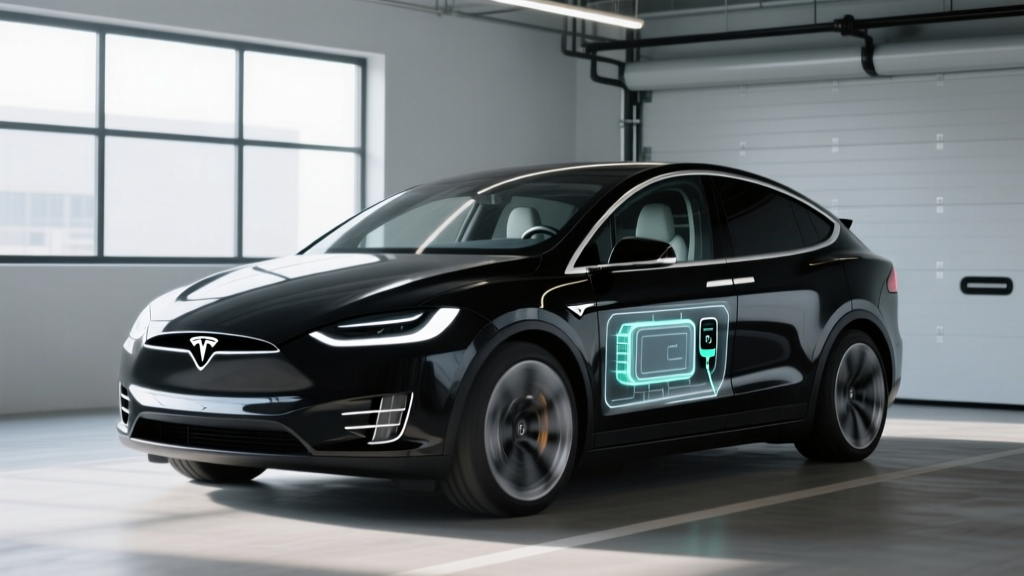
If you're researching the cost of Model X Tesla ownership in 2026, you're looking at one of the most capable — and expensive — three-row electric SUVs on the market. With falcon-wing doors, a 1,021-horsepower Plaid variant, and access to Tesla's Supercharger network, the Model X delivers premium utility. But the sticker price is only the beginning of the financial picture.
This review breaks down every layer of Model X pricing: trim-level MSRPs, federal tax credit eligibility under IRS §30D rules, real-world charging costs, insurance realities, and five-year total cost of ownership. We also pair EPA range estimates with real-world expectations so you know exactly what you're buying.
2026 Tesla Model X Pricing by Trim Level
Tesla prices shift frequently — sometimes weekly — but as of early 2026, the Model X lineup holds two primary trims. Here's what the base and as-tested costs look like before incentives, options, or destination fees.
| Trim | Drivetrain | 0-60 mph | Horsepower | Base MSRP | As-Tested (typical config) |
|---|---|---|---|---|---|
| Model X Long Range | Dual Motor AWD | 3.8 sec | 670 hp | $81,630 | $87,000–$93,000 |
| Model X Plaid | Tri-Motor AWD | 2.5 sec | 1,021 hp | $96,630 | $103,000–$112,000 |
Destination and order fees add approximately $1,390. Common options that push the as-tested price higher include:
- Full Self-Driving (Supervised): $8,000 one-time purchase or $99/month subscription
- 22-inch Turbine wheels: reduces EPA range by ~15 miles vs. standard 20-inch
- Six-seat interior (second-row captains chairs): no additional charge but reduces max passenger count
- Premium paint colors: $1,500–$2,500 depending on selection
Does the Tesla Model X Qualify for the Federal EV Tax Credit?
This is where many buyers encounter confusion. Under current IRS §30D rules, the Model X faces a significant hurdle: the MSRP cap for SUVs is $80,000. Since both the Long Range ($81,630) and Plaid ($96,630) trims exceed this threshold, the 2026 Model X does not qualify for the $7,500 federal tax credit as a new vehicle purchase.
- ✅ Vehicle is a BEV with sufficient battery capacity
- ✅ Assembled in North America (Fremont, CA)
- ❌ MSRP exceeds $80,000 SUV cap (Long Range starts at $81,630)
- ⚠️ Buyer income caps still apply: $300K joint / $225K head of household / $150K individual
- ⚠️ Critical mineral and battery component sourcing requirements must also be met independently
Source: IRS §30D Clean Vehicle Credit. Consult a tax professional before making purchase decisions based on credit eligibility.
Used Model X alternative: A pre-owned Model X purchased through a licensed dealer for $25,000 or more may qualify for the up-to-$4,000 used clean vehicle credit (30% of sale price, max $4,000), subject to income caps and the vehicle being at least two model years old. This is often the most realistic path to federal incentives on a Model X.
Range, Battery, and Real-World Efficiency
The Model X Long Range carries an EPA-estimated 335 miles of range. The Plaid drops to 326 miles due to the tri-motor powertrain's higher energy consumption. But EPA stickers don't tell the whole story.
EPA estimate (Long Range): 335 miles
Highway driving at 70+ mph: ~275–295 miles
Cold weather (below 30°F) with cabin heating: ~235–270 miles
Combined mixed driving (typical owner): ~290–310 miles
The Model X's large frontal area and boxy SUV shape penalize highway efficiency more than a sedan like the Model S. Expect a 10–15% range reduction at sustained highway speeds and up to 30% loss in deep winter conditions. Tesla's heat pump helps mitigate cold-weather losses compared to resistive heating systems.
| Specification | Long Range | Plaid |
|---|---|---|
| Battery capacity (usable) | ~100 kWh | ~100 kWh |
| Battery chemistry | NMC (nickel manganese cobalt) | NMC |
| EPA range | 335 mi | 326 mi |
| EPA efficiency (combined) | 100 MPGe | 98 MPGe |
| Energy consumption | ~34 kWh/100 mi | ~35 kWh/100 mi |
The NMC chemistry provides higher energy density than LFP, which is necessary for a vehicle of this size and weight. Tesla's structural battery pack integrates the cells into the chassis for rigidity and space efficiency. EPA fueleconomy.gov confirms the combined efficiency figures.
Charging Speed: DC Fast Charging and Home Level 2
Charging speed is where the Model X benefits from Tesla's proprietary architecture and the expanding Supercharger network — now with NACS as the industry standard adopted by most major automakers.
| Charging Level | Power / Rate | Time / Speed | Connector |
|---|---|---|---|
| Level 1 (120V household) | ~1.4 kW | ~3–4 miles per hour | NACS (mobile connector) |
| Level 2 (240V home Wall Connector) | 11.5 kW (48A) | ~34 miles per hour; full charge in ~9.5 hours | NACS |
| DC Fast Charge (Supercharger V3/V4) | Peak 250 kW | 10–80% in ~30 minutes | NACS |
| DC Fast Charge (third-party CCS via adapter) | Up to 250 kW (station dependent) | Varies by station | NACS-to-CCS adapter (included) |
Charging curve reality check: The Model X peaks at 250 kW only at a low state of charge (typically 5–15% SoC) and on a V3 or V4 Supercharger stall. By 50% SoC, the rate tapers to roughly 120–150 kW, and above 80% it drops below 50 kW. This is normal lithium-ion charge-curve behavior — the 10–80% time of ~30 minutes reflects this taper. Plan road-trip stops around 15–80% SoC for the fastest average charge rate.
Home charging setup: The Tesla Wall Connector at 48 amps on a 60-amp circuit delivers the fastest Level 2 charge. Installation costs typically range from $800 to $2,500 depending on panel proximity and local permit requirements, on top of the $475 Wall Connector hardware cost. A panel upgrade to 200A service may add $1,500–$3,500 if your home has older 100A service.
Performance, Cargo, and Daily Practicality
The Model X remains one of the quickest SUVs in production. The Long Range hits 60 mph in 3.8 seconds with 670 horsepower from its dual-motor all-wheel-drive system. The Plaid's tri-motor setup delivers 1,021 hp and a 2.5-second 0–60 time — supercar territory in a three-row family hauler.
| Measurement | Specification |
|---|---|
| Seating capacity | 5, 6, or 7 passengers (config dependent) |
| Cargo volume (behind 3rd row) | ~15 cu ft |
| Cargo volume (3rd row folded) | ~43 cu ft |
| Cargo volume (max, all rows folded) | ~85 cu ft |
| Front trunk (frunk) | ~7 cu ft |
| Max towing capacity | 5,000 lbs |
| Ground clearance | ~7.5 in (adjustable air suspension) |
| 2nd-row legroom | ~40.0 in |
| 3rd-row legroom | ~32.7 in (best for children) |
Standout tech features include the 17-inch center touchscreen with full web browser and streaming, yoke or standard steering wheel options, Tesla Autopilot (SAE Level 2 driver assistance), over-the-air software updates, HEPA air filtration with Bioweapon Defense Mode, and the signature rear falcon-wing doors that open vertically for easier third-row access in tight parking spaces.
Notable drawbacks: The Model X has a history of panel-gap inconsistencies, and the falcon-wing doors, while dramatic, add mechanical complexity and can be slower to open than conventional doors. Third-row space is tight for adults on longer trips. The yoke steering wheel remains polarizing and is not ideal for low-speed maneuvering. Insurance premiums for the Model X run 30–50% higher than comparable non-performance SUVs due to repair costs and performance classification.
Five-Year Cost of Ownership Estimate
Understanding the true cost of Model X Tesla ownership means looking beyond the sticker. Here's a five-year projection for the Long Range trim driven 12,000 miles per year, using national averages.
| Category | Estimated 5-Year Cost | Notes |
|---|---|---|
| Purchase price (Long Range base) | $81,630 | Before destination, options, taxes |
| Federal tax credit | $0 | Exceeds $80K SUV MSRP cap |
| Depreciation (5 years) | ~$38,000–$44,000 | EVs have seen higher depreciation in recent years |
| Electricity (home charging, $0.16/kWh avg) | ~$3,300 | 60,000 mi × 34 kWh/100 mi × $0.16 |
| Public DC fast charging (road trips) | ~$1,800–$2,500 | ~15% of charging at $0.35–$0.48/kWh |
| Insurance | ~$18,000–$24,000 | $3,600–$4,800/year; varies by state and driver |
| Maintenance & tires | ~$3,500–$5,000 | No oil changes; tire wear is accelerated on heavy EVs |
| Total estimated 5-year cost | ~$108,000–$122,000 | Highly dependent on config, state, and driving habits |
For comparison, a BMW iX xDrive50 (starting ~$87,000) carries similar insurance costs but benefits from slightly lower depreciation and a comparable efficiency profile. A Rivian R1S (starting ~$79,900 for Dual-Motor) qualifies for the federal tax credit on eligible configurations under the $80,000 cap, potentially saving $7,500 at the point of sale.
Warranty Coverage
Tesla provides the following warranty coverage for the 2026 Model X:
- Basic vehicle limited warranty: 4 years or 50,000 miles, whichever comes first
- Battery and drive unit warranty: 8 years or 150,000 miles, whichever comes first, with minimum 70% battery capacity retention
- Restraint system warranty: 5 years or 60,000 miles
The 8-year/150,000-mile battery warranty is competitive with the industry standard. Tesla defines a defect as the battery retaining less than 70% of its original capacity within the warranty period. Real-world data from Tesla's impact reports and third-party fleet analyses suggest Model X batteries typically retain 85–90% capacity after 100,000 miles, with NMC chemistry showing a steeper initial drop in the first 10,000 miles before stabilizing. Full battery replacement outside of warranty on a 100 kWh pack typically ranges from $15,000 to $22,000 including labor.
Is the 2026 Tesla Model X Worth It? Pros, Cons, and Verdict
Pros
- Best-in-class Supercharger network access (20,000+ stalls in North America)
- Class-leading acceleration, especially Plaid
- 5,000-lb towing capacity for an EV SUV
- Falcon-wing doors ease third-row access
- Continuous OTA updates add features post-purchase
- HEPA cabin air filtration
Cons
- Exceeds $80K MSRP cap — no federal tax credit on new purchases
- High insurance costs ($3,600–$4,800/yr)
- Third-row legroom tight for adults (~32.7 in)
- Falcon-wing doors add complexity and potential repair cost
- Panel-gap quality inconsistency
- Heavy depreciation relative to purchase price
- Choose the Model X if: you need three rows, want Supercharger access for frequent road trips, value performance, and your budget comfortably exceeds $85,000 without relying on federal incentives.
- Consider the Rivian R1S if: you want comparable space with potential tax credit eligibility, prefer a more rugged aesthetic, and value off-road capability.
- Consider the BMW iX if: you only need two rows, prioritize interior luxury and build quality, and want similar range with a slightly lower starting price.
- Consider a used Model X if: you want the platform at a lower entry point and can capture the up-to-$4,000 used EV credit.
Frequently Asked Questions
What is the real-world range of the Tesla Model X?
The EPA rates the 2026 Model X Long Range at 335 miles and the Plaid at 326 miles. In real-world mixed driving, expect 290–310 miles. Sustained highway speeds above 70 mph reduce range to roughly 275–295 miles. In freezing temperatures with cabin heating, plan for 235–270 miles. These reductions are consistent with large, heavy EV SUVs and are not unique to Tesla.
How fast does the Model X charge at home and on the road?
At home on a 240V Tesla Wall Connector (48A), the Model X charges at 11.5 kW, adding approximately 34 miles per hour and reaching a full charge from empty in about 9.5 hours. On a V3 or V4 Supercharger, it peaks at 250 kW and charges from 10–80% in roughly 30 minutes. The charge rate tapers significantly above 80% SoC, so avoid planning road-trip stops that require charging past 80%.
How much does a Tesla Model X cost after tax credits?
The 2026 Model X Long Range starts at $81,630 and does not qualify for the $7,500 federal new-vehicle tax credit because its MSRP exceeds the $80,000 SUV cap under IRS §30D rules. Your actual out-of-pocket cost will be $81,630 plus destination fees, options, and state/local taxes. Some states offer additional rebates (e.g., California, Colorado, New York) that may apply — check your state's energy office for current programs. A used Model X purchased for $25,000+ may qualify for up to $4,000 under the used-vehicle credit.
Is the Model X worth buying vs. the Rivian R1S or BMW iX?
The Model X wins on Supercharger access, acceleration, and falcon-wing utility. The Rivian R1S competes on off-road capability, potential tax credit eligibility, and a more adventure-oriented design, though its charging network is still expanding. The BMW iX offers superior interior fit-and-finish and a quieter cabin but lacks a third row. Your priority — performance, luxury, utility, or incentive eligibility — determines the best choice.
Does the Model X have Autopilot, and is it self-driving?
Every Model X includes Tesla Autopilot, which provides adaptive cruise control and lane-centering on highways. FSD (Supervised) is available as a $8,000 upgrade or $99/month subscription and adds automated lane changes, traffic-light recognition, and city-street navigation. However, both Autopilot and FSD are SAE Level 2 driver-assistance systems — the driver must remain fully attentive and keep hands on the steering wheel at all times. This is not a self-driving vehicle. Only Level 4 robotaxi services like Waymo operate without a human driver in geofenced areas.
What does it cost to insure a Tesla Model X?
Insurance for the Model X averages $3,600–$4,800 per year depending on your state, driving record, age, and coverage level. This is 30–50% higher than a comparable non-performance luxury SUV, driven by the Model X's high repair costs, aluminum construction, and performance classification. Tesla offers its own insurance product in some states that uses real-time driving data to adjust premiums, which can reduce costs for careful drivers.
Pricing and specifications reflect Tesla's published figures as of early 2026 and are subject to change. Always verify current pricing on Tesla's configurator and tax credit eligibility on IRS.gov before purchasing. Safety ratings available at NHTSA.gov.