Quick Answer: Is There an Electric Corvette?
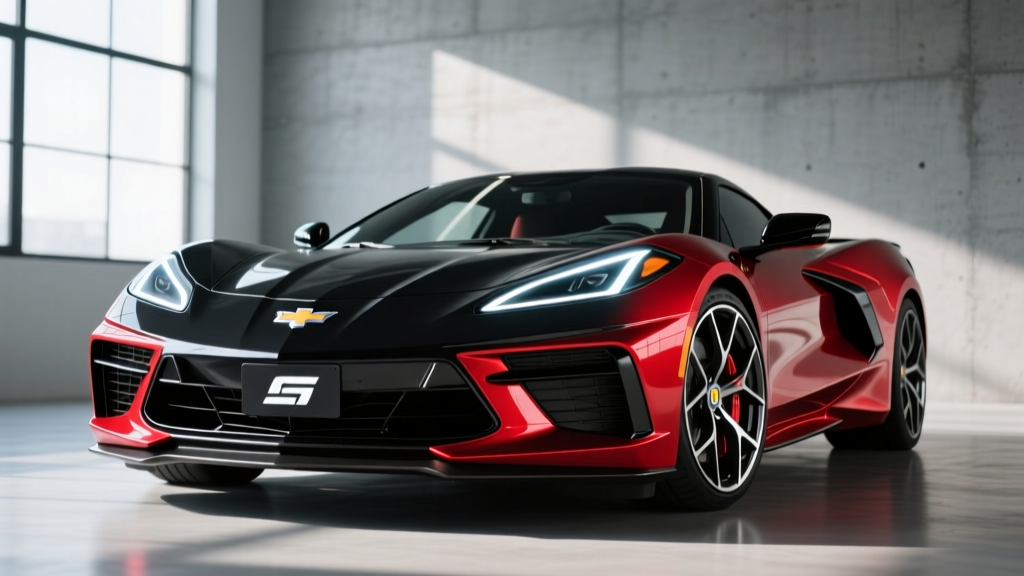
As of early 2026, there is no fully electric (BEV) Corvette available for purchase. However, Chevrolet has confirmed an electrified Corvette is in development, and the current C8 Corvette lineup includes the E-Ray — a performance hybrid (HEV) that pairs a 6.2L V8 with an electric front axle for all-wheel drive and 655 combined horsepower. A fully electric or plug-in hybrid Corvette variant is widely expected by the 2027–2028 model year, but no official specs, range, or pricing have been published by GM. If you want an electrified Corvette today, the E-Ray is your only option starting at approximately $104,900 MSRP.
The Electrified Corvette Timeline: What GM Has Confirmed
General Motors has been signaling an electrified Corvette since 2022, when then-president Mark Reuss confirmed the next-generation Corvette would feature some form of electrification. The C8 E-Ray, introduced for the 2024 model year, was the first step — a hybrid that uses a compact electric motor on the front axle to supplement the rear-mounted V8.
What we know so far about the broader electrification plan:
- C8 E-Ray (available now): Performance hybrid (HEV, not plug-in). 655 hp combined. 0–60 mph in 2.5 seconds. No electric-only range to speak of — the front electric motor assists during launches and enables AWD, but cannot propel the car on battery alone for meaningful distances.
- Future electrified Corvette (announced, unreleased): GM has confirmed electrification is coming to the Corvette lineup beyond the E-Ray. Industry reporting suggests this could include a plug-in hybrid (PHEV) variant and potentially a full BEV, possibly under a "Zora" nameplate honoring Zora Arkus-Duntov. No specs, battery size, range, or pricing have been officially released.
- Ultium platform compatibility: GM's Ultium battery architecture underpins the Silverado EV, Blazer EV, and Cadillac Lyriq. A fully electric Corvette would likely use a performance-tuned variant of this platform, but GM has not confirmed this.
For buyers researching a "Corvette electric" model, the critical distinction is between the currently available E-Ray hybrid and the announced but unreleased full EV or PHEV variant. We'll break down both below.
2026 Corvette E-Ray: The Electrified Corvette You Can Buy Today
The E-Ray is not a plug-in hybrid and not a full EV. It's a performance hybrid (HEV) that uses electrification for traction and acceleration, not for emissions-free commuting. Here are the key specifications:
| Specification | 2026 Corvette E-Ray |
|---|---|
| Powertrain | 6.2L V8 (rear) + electric motor (front axle) |
| Combined Output | 655 hp / 595 lb-ft torque |
| 0–60 mph | 2.5 seconds |
| Drivetrain | AWD (first AWD Corvette ever) |
| Battery | ~1.9 kWh (lithium-ion, not plug-in) |
| EPA Fuel Economy | ~19 mpg combined (estimated; check fueleconomy.gov for official figures) |
| Electric-Only Range | Not applicable — motor assists only |
| Base MSRP (1LZ Coupe) | ~$104,900 |
| Body Styles | Coupe and convertible |
| Warranty | 3 yr / 36,000 mi basic; 5 yr / 60,000 mi powertrain |
The E-Ray's hybrid system is designed for performance, not efficiency. The front electric motor provides instant torque during launches and enables all-wheel-drive grip — critical for the 2.5-second 0–60 time. But the small ~1.9 kWh battery pack charges only through regenerative braking and engine power; you cannot plug it in.
Real-World Ownership: The E-Ray vs. a Gas Stingray
If you're cross-shopping the E-Ray against the standard C8 Stingray, here's the practical comparison:
| Factor | E-Ray (Hybrid AWD) | Stingray (Gas RWD) |
|---|---|---|
| Horsepower | 655 hp | 495 hp (Z51) |
| 0–60 mph | 2.5 sec | 2.9 sec (Z51) |
| Drivetrain | AWD | RWD |
| EPA Combined MPG | ~19 mpg | ~19 mpg |
| Base MSRP | ~$104,900 | ~$68,300 |
| Annual Fuel Cost (12k mi) | ~$2,275 (at $3.60/gal, 19 mpg) | ~$2,275 |
| Maintenance (annual avg) | Higher (hybrid system + AWD) | Standard |
| Federal Tax Credit | Not eligible (HEV, not PHEV/BEV) | Not eligible |
The E-Ray costs roughly $36,000 more than a Stingray Z51 at base. You get 160 additional horsepower, AWD traction, and a half-second advantage to 60 mph. Fuel economy is essentially identical — the hybrid system isn't tuned for efficiency gains. For buyers who want the fastest production Corvette and live in climates where AWD matters, the E-Ray delivers. For those prioritizing value, the Stingray remains the bargain of the supercar world.
What a Fully Electric Corvette Could Look Like
While GM hasn't released official specs for a BEV Corvette, we can make informed projections based on the Ultium platform's capabilities and competitive positioning against the Porsche Taycan, Tesla Model S Plaid, and Lucid Air.
Projected Specs (Unofficial — Based on Platform Analysis)
These figures are estimates based on existing Ultium-based vehicles and industry analysis. Final specs may differ significantly when GM makes an official announcement.
- Battery capacity: 85–110 kWh usable (NMC chemistry likely, given performance focus)
- Range: 250–350 miles EPA (sports car aerodynamics and performance tires reduce efficiency vs. sedans)
- Peak DC fast charge rate: 250–350 kW (Ultium supports up to 350 kW on compatible architectures)
- 10–80% charge time: ~20–25 minutes at a capable DC fast charger
- Horsepower: 600–1,000+ hp (dual or tri-motor configurations)
- 0–60 mph: Sub-2.5 seconds possible with tri-motor AWD
- Estimated MSRP: $120,000–$200,000+ depending on variant
Common Misconceptions About an Electric Corvette
| Myth | Fact |
|---|---|
| "The E-Ray is an electric Corvette." | The E-Ray is a hybrid (HEV). It cannot drive on electric power alone and does not plug in. |
| "An electric Corvette will have 500+ miles of range." | Unlikely. Sports car packaging, low rooflines, and wide performance tires limit battery size and efficiency. Expect 250–350 miles EPA. |
| "It'll qualify for the $7,500 federal tax credit." | Not guaranteed. The IRS §30D credit requires MSRP under $80,000 for cars (sports cars may fall under different classification), buyer income caps, and battery-sourcing compliance. A $120K+ EV Corvette would almost certainly exceed MSRP caps. |
| "Electric means it won't feel like a Corvette." | Electric motors deliver instant torque. The Tesla Model S Plaid does 0–60 in 1.99 seconds. Performance won't be the issue — sound and weight will be the debates. |
| "I can pre-order one now." | No fully electric Corvette is available for order. Any website claiming otherwise is misleading. |
Real Costs: Electrified Corvette Ownership Breakdown
Whether you're considering the E-Ray today or waiting for a potential BEV, here's what ownership actually costs.
2026 E-Ray: 5-Year Estimated Cost of Ownership
| Cost Category | E-Ray (Hybrid) | Stingray Z51 (Gas) | Notes |
|---|---|---|---|
| Purchase Price (base) | $104,900 | $73,300 | Before options, taxes, destination |
| Fuel / Energy (5 yr, 60k mi) | $11,370 | $11,370 | At 19 mpg, $3.60/gal |
| Insurance (5 yr avg) | $18,000–$24,000 | $15,000–$20,000 | E-Ray's higher value + AWD complexity |
| Maintenance (5 yr) | $4,500–$6,000 | $3,500–$5,000 | Hybrid system adds service complexity |
| Federal Tax Credit | $0 | $0 | Neither qualifies (HEV/ICE) |
| Depreciation (est. 5 yr) | $35,000–$45,000 | $25,000–$35,000 | Corvettes hold value well; E-Ray's premium may soften |
| Total 5-Year Cost | $138,770–$161,270 | $103,170–$124,670 | Wide ranges reflect insurance/depreciation variability |
If a BEV Corvette Arrives: Projected Cost Comparison
A full electric Corvette would shift costs dramatically. Based on comparable high-performance EVs:
- Energy cost: At $0.14/kWh national average and ~3.0 miles/kWh efficiency, 60,000 miles would cost approximately $2,800 in electricity — a savings of ~$8,500 over gas.
- Maintenance: EVs have no oil changes, no spark plugs, fewer brake replacements (regen braking). Expect $1,500–$2,500 over 5 years.
- Insurance: Performance EVs carry premium insurance. Expect $20,000–$28,000 over 5 years, similar to or above the E-Ray.
- Tax credit: Likely ineligible due to MSRP exceeding the $80,000 cap for sedans/coupes under §30D rules. Verify current rules at irs.gov.
Charging and Practical Ownership: What First-Time EV Buyers Should Know
If you're considering waiting for a BEV Corvette — or any high-performance EV — here's what you need to plan for.
Home Charging Is Essential
A performance EV with a large battery (85–110 kWh) requires Level 2 home charging for practical ownership. Charging on a standard 120V outlet (Level 1) would add only ~3–5 miles of range per hour — meaning a full charge could take over 24 hours.
- Level 2 home charger (240V, 48A): Adds ~30–40 miles of range per hour. A full charge from 10–100% takes approximately 8–10 hours (overnight).
- Installation cost: $800–$2,500 for the charger and electrician, depending on panel capacity and run length. A panel upgrade (to 200A service) can add $1,500–$3,500.
- Ongoing electricity cost: At $0.14/kWh, charging a 100 kWh battery from 10–80% costs approximately $9.80 — adding roughly 230 miles of range.
Cold-Weather and Highway Range Reality
Any future electric Corvette will face the same physics as every other EV:
- Cold weather: Expect 20–30% range reduction at freezing temperatures. Battery chemistry (likely NMC for performance) is more cold-sensitive than LFP.
- Highway driving: EPA range is measured on mixed cycles. Sustained 75+ mph highway driving typically yields 10–15% less range than the EPA sticker.
- Performance driving: Track use or aggressive acceleration will dramatically reduce range. High-performance EVs like the Taycan Turbo S can consume energy at 2–3× the rated rate under hard driving.
Decision Framework: Should You Buy, Wait, or Look Elsewhere?
Choose Your Path
Buy the E-Ray now if:
- You want the fastest production Corvette available today (2.5 sec 0–60)
- AWD traction matters for your climate or driving style
- You have no interest in plug-in charging and want a traditional ownership experience
- Budget allows for a $105K+ sports car with premium insurance and maintenance
Wait for a BEV/PHEV Corvette if:
- You want electric-only driving capability for short commutes (PHEV) or zero tailpipe emissions (BEV)
- You have reliable home Level 2 charging access or are willing to install it
- You're comfortable with a 2027–2028+ timeline and unknown pricing
- Instant electric torque and sub-2.5-second 0–60 times appeal to you
Look at alternatives if:
- You want a high-performance EV today: Porsche Taycan Turbo GT (0–60 in 2.1 sec, ~$190K), Tesla Model S Plaid (1.99 sec, ~$90K), Lucid Air Sapphire (1.89 sec, ~$250K)
- Your budget is under $80K: The standard Stingray Z51 delivers supercar performance at $73K
- You need practicality alongside performance: The Taycan offers a rear hatch and more daily-driver comfort
Frequently Asked Questions
Is the Corvette E-Ray a plug-in hybrid?
No. The E-Ray is a conventional hybrid (HEV). Its small ~1.9 kWh battery charges through regenerative braking and the engine — you cannot plug it in. It does not offer meaningful electric-only driving range. A plug-in hybrid (PHEV) Corvette has not been announced but is considered a possibility for future model years.
Will an electric Corvette qualify for the federal EV tax credit?
Almost certainly not, based on current IRS §30D rules. The credit has an MSRP cap of $80,000 for cars (sedans, coupes, wagons). An electric Corvette would likely start well above $120,000. Additionally, buyer income caps ($150K single / $300K joint) and battery-sourcing requirements further limit eligibility. Always consult a tax professional for your specific situation.
How fast would an electric Corvette be?
Based on comparable performance EVs, a dual- or tri-motor electric Corvette could realistically achieve 0–60 mph in under 2.5 seconds, potentially challenging the 1.99-second mark of the Tesla Model S Plaid. Electric motors deliver peak torque from 0 RPM, which gives EVs a fundamental launch advantage over internal combustion engines.
Can I charge a future electric Corvette at Tesla Superchargers?
Very likely, yes. GM has committed to adopting the North American Charging Standard (NACS) connector across its EV lineup starting with 2025 model-year vehicles. A future electric Corvette would almost certainly ship with a NACS port, granting native access to the Tesla Supercharger network — currently the largest and most reliable DC fast-charging network in North America.
What's the biggest risk of waiting for an electric Corvette?
Timeline uncertainty. GM has confirmed electrification is coming to the Corvette but has not committed to a model year, specs, or pricing. The vehicle could arrive as a PHEV, a BEV, or both — and pricing could land anywhere from $100K to $200K+. If you want an electrified Corvette experience now, the E-Ray is a known quantity with real, tested performance. Waiting means accepting an open-ended timeline and the possibility that the final product may not match current expectations.
Does the E-Ray's hybrid system require special maintenance?
The E-Ray's front-axle electric motor and small battery pack add complexity over a standard Stingray, but GM's hybrid components are covered under the 5-year / 60,000-mile powertrain warranty. Long-term hybrid battery replacement cost is not yet well-documented for the E-Ray specifically, but comparable GM hybrid battery replacements typically range from $2,000–$5,000 out of warranty. The E-Ray's system is far simpler than a full EV or PHEV battery, so degradation risk is lower.