Quick Answer: The Electric Corvette in Blue — What We Know
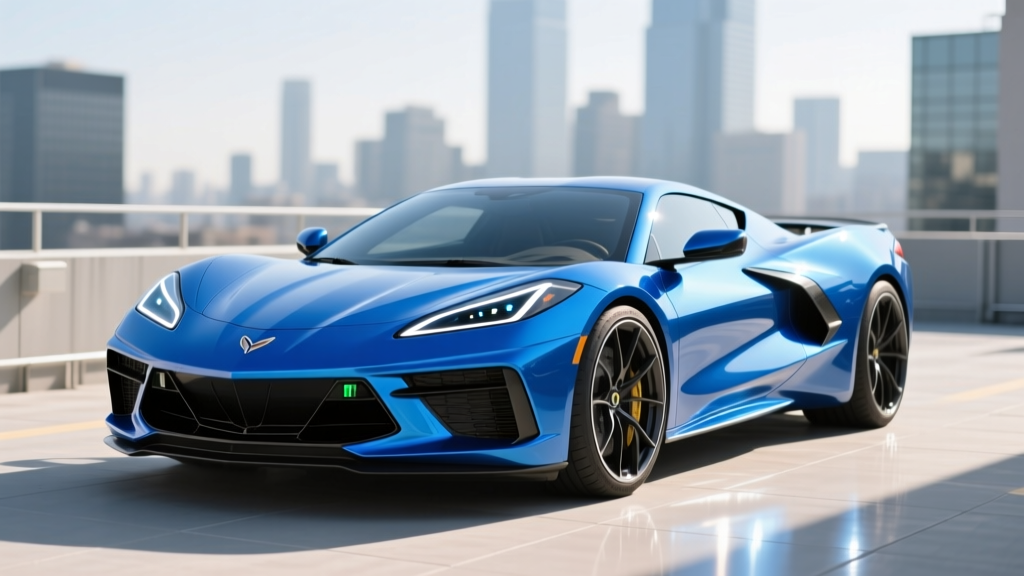
Chevrolet's next-generation electric Corvette is announced but not yet available for purchase as of 2026. GM has confirmed an electrified Corvette is in development, building on the Ultium (now branded BEV3) platform, and a signature blue exterior — echoing the iconic "Electric Blue" and "Accelerate Blue Metallic" hues from the C8 Stingray — is widely expected to carry over as a launch color. No official EPA range, battery capacity, or MSRP has been published yet. Until GM releases final specifications, all performance and pricing figures remain preliminary estimates based on the current BEV3 architecture and competitive benchmarks from the Porsche Taycan, Lotus Evija, and Tesla Roadster programs.
Why an Electric Corvette Matters for the Sports Car Segment
The C8 Corvette Stingray has been one of the best performance-per-dollar vehicles on the market — a mid-engine V8 delivering 490 hp and a 0-60 mph time of roughly 2.9 seconds for a starting MSRP around $66,300. An electric successor or parallel model would trade the 6.2L LT2 V8 for dual or tri-motor electric propulsion, potentially pushing output well past 600 hp while dropping the 0-60 time into the low-2-second range. The trade-off: significantly higher curb weight (likely 4,800–5,200 lbs vs. the C8's ~3,637 lbs) and a price tag that could push past $100,000 to remain viable against European electric GT competition.
For buyers researching "corvette electric blue" — whether they are tracking the upcoming model, considering a current C8 with the Accelerate Blue Metallic paint option, or evaluating whether an EV sports car fits their driving life — the decision comes down to three variables: range tolerance, charging access, and whether you prioritize instant torque or internal-combustion character.
Estimated Specs: Electric Corvette vs. Gas C8 Stingray
The following table compares the current C8 Stingray 3LT against projected electric Corvette figures based on GM's BEV3 platform capabilities and segment norms. All electric Corvette numbers are estimates until GM publishes official data.
| Specification | 2026 C8 Stingray 3LT (Gas) | Electric Corvette (Estimated) |
|---|---|---|
| Powertrain | 6.2L LT2 V8, RWD | Dual/Tri-Motor AWD (BEV3) |
| Horsepower | 490 hp (495 w/Z51) | 600–800 hp (est.) |
| 0-60 mph | ~2.9 sec | ~2.0–2.5 sec (est.) |
| Top Speed | 194 mph | 160–180 mph (est., EV taper) |
| EPA Range / Tank | ~370 mi (19 gal tank, ~19.5 combined mpg) | 280–350 mi (est.) |
| Energy Capacity | 19-gallon fuel tank | 100–120 kWh usable (est., NMC) |
| DC Fast Charge | N/A | ~200–270 kW peak (est.) |
| 10-80% Charge Time | ~5 min (gas pump) | ~20–28 min (est.) |
| Curb Weight | ~3,637 lbs | ~4,800–5,200 lbs (est.) |
| Starting MSRP | ~$66,300 | $90,000–$120,000 (est.) |
| §30D Federal Tax Credit | Not eligible | Up to $7,500 if sourcing/income rules met |
Sources: fueleconomy.gov — 2025/2026 Corvette Stingray, chevrolet.com/corvette. Electric Corvette figures are editorial estimates and will be updated when GM releases official specifications.
Real Costs: Buying, Charging, and Maintaining an Electric Sports Car
Even without a confirmed MSRP, we can model ownership costs using segment data. Here's a five-year cost projection comparing the gas C8 against an estimated $105,000 electric Corvette, assuming 8,000 miles/year (typical sports car usage).
| Cost Category (5 Years / 40k Miles) | C8 Stingray Gas (~$66k) | Electric Corvette (~$105k est.) |
|---|---|---|
| Purchase Price (after incentives) | $66,300 | $97,500 (est. after $7,500 credit) |
| Fuel / Electricity | $5,800 (premium @ $4.50/gal, 17 mpg avg) | $2,400 (home L2 @ $0.14/kWh, 3.0 mi/kWh) |
| Maintenance (oil, brakes, fluids) | $3,200 | $800 (no oil; regen saves brake pads) |
| Insurance (specialty sports car) | $9,500 | $11,000 (higher replacement cost) |
| Tires (high-performance) | $4,800 (2 sets) | $5,600 (heavier vehicle, faster wear) |
| Estimated Depreciation | $19,900 (~30%) | $36,750 (~35%, EV sports car uncertainty) |
| 5-Year Total Cost | ~$109,500 | ~$154,050 |
| Cost Per Mile | $2.74 | $3.85 |
Fuel/electricity costs based on U.S. averages. Insurance varies by driver profile, ZIP code, and carrier. Depreciation estimates are speculative for an unreleased model. Consult a tax professional for IRS §30D credit eligibility — the credit has MSRP caps ($55,000 for sedans, $80,000 for SUVs/pickups/vans — a sports car classification may fall under the $55,000 cap, which could disqualify the electric Corvette unless reclassified).
Range Reality Check for an Electric Corvette
Estimated EPA range: 280–350 miles.
Real-world expectation: At sustained highway speeds (75+ mph), expect a 15–25% reduction — roughly 220–290 miles. In cold weather (below 30°F), lithium-ion NMC batteries lose an additional 15–30% of range due to increased internal resistance and cabin/climate load. Track-day driving with aggressive throttle use will cut range dramatically, potentially to under 120 miles per session. This is physics, not a flaw — high power output and aerodynamic drag at speed demand energy at a steep rate.
Charging an Electric Corvette: What You'd Need at Home
A sports car with a ~100–120 kWh battery demands robust home charging. Here's what a realistic Level 2 setup looks like:
- 48-amp Level 2 charger (11.5 kW): Adds roughly 30–35 miles of range per hour. A full 10–100% charge on a 110 kWh pack would take approximately 10–11 hours — fine for overnight, but you'd want to precondition the battery via the vehicle's scheduled-departure feature.
- 60-amp circuit required: NEC code mandates a 125% overhead, so a 48A charger needs a dedicated 60A breaker. Many homes with 200A panels can accommodate this; older 100A panels may require an upgrade ($1,500–$3,000).
- Installation cost: Equipment ($500–$800 for a quality EVSE like ChargePoint Home Flex or Emporia V2) plus electrician labor ($800–$2,500 depending on run length, conduit, and panel capacity) puts total home install at roughly $1,300–$3,300.
- DC fast charging on road trips: At a 250 kW peak (estimated), a 10–80% session would take roughly 22–28 minutes. However, charge curves taper significantly above 80% — the last 20% can take as long as the first 70%. Plan stops around the 10–80% window for efficiency.
If you lack home charging access (apartment, street parking, HOA restrictions), owning an electric sports car becomes significantly more challenging. Public DC fast charging costs $0.30–$0.50/kWh in most markets — roughly doubling the per-mile energy cost vs. home charging and eroding the fuel-cost advantage over the gas C8.
Common Misconceptions About Electric Sports Cars
| Myth | Fact |
|---|---|
| "EVs can't be real sports cars — no soul, no sound." | Electric motors deliver instant torque with zero lag. The 0-60 experience is brutal and immediate. Sound is subjective — many EVs synthesize audio feedback, and the silence lets you hear tire slip and suspension dynamics more clearly. |
| "An electric Corvette will qualify for the full $7,500 tax credit." | Under current IRS §30D rules, the MSRP cap for sedans and "other" vehicles is $55,000. Unless GM classifies it as a truck/SUV (unlikely for a coupe), the electric Corvette may exceed the cap. Additionally, battery-component and critical-mineral sourcing requirements must be met, and buyer AGI caps apply ($150k single / $300k joint). |
| "The battery will need replacing in 5 years." | NMC batteries in liquid-cooled packs (standard on BEV3) typically retain 85–92% capacity after 100,000 miles based on NHTSA and real-world fleet data. GM's battery warranty is expected to cover 8 years/100,000 miles with a minimum 70% capacity retention threshold. Replacement cost for a 100+ kWh pack is currently $12,000–$20,000 out of warranty. |
| "Electric cars are heavier, so they handle worse." | Weight is higher, but the battery pack sits low in the chassis, giving EVs an exceptionally low center of gravity. Torque-vectoring AWD can rotate the car more effectively than mechanical differentials. The Lotus Emeya and Porsche Taycan demonstrate that heavy EVs can still deliver world-class handling when the suspension is engineered for the mass. |
| "I can charge at any public station." | Connector compatibility matters. GM has adopted the NACS (Tesla-style) connector for its new EVs, meaning the electric Corvette will likely use NACS natively. This gives access to Tesla Superchargers (the most reliable U.S. DC network) but may require an adapter for legacy CCS stations. CHAdeMO is effectively dead for new vehicles. |
Decision Framework: Should You Wait or Buy Now?
Choose the Gas C8 Stingray (or a used C8 in Accelerate Blue Metallic) If:
- You want a proven, available sports car with a $66,300 starting price and sub-3-second 0-60.
- You lack reliable home Level 2 charging access.
- You drive in extreme cold regularly and want consistent range regardless of temperature.
- You enjoy the mechanical engagement of a V8 — exhaust note, gear shifts, and engine character matter to you.
- You plan track days and don't want to manage battery thermal limits between sessions.
- You want predictable depreciation on a known quantity.
Wait for the Electric Corvette If:
- You have home Level 2 charging and drive in a climate with moderate winters.
- Instant, lag-free torque and sub-2.5-second 0-60 runs excite you more than engine sound.
- You're willing to budget $100,000+ and accept early-adopter depreciation risk.
- You want the lowest per-mile operating cost for a daily-drivable sports car (home charging at $0.14/kWh ≈ 4.7¢/mile vs. premium gas at ~29¢/mile in the C8).
- You value over-the-air updates, advanced ADAS (likely GM Super Cruise with hands-free highway driving — SAE Level 2, driver supervision required), and a frunk for extra cargo.
First-Time EV Buyer Checklist for a Sports Car Purchase
If the electric Corvette would be your first EV, work through these items before reserving:
- Verify home electrical capacity: Hire a licensed electrician to assess your panel. A 200A panel with available breaker slots is ideal. Budget $1,300–$3,300 for a full Level 2 install.
- Confirm tax credit eligibility: Check the IRS §30D requirements — your AGI, the vehicle's MSRP classification, and battery sourcing all factor in. The point-of-sale transfer option lets you apply the credit at purchase rather than waiting for tax filing.
- Map your charging network: Download the Tesla, Electrify America, and EVgo apps. Check DC fast charger density along routes you'd actually drive the car. NACS compatibility opens the Supercharger network — the most reliable option for road trips.
- Understand cold-weather range loss: If you live north of the 37th parallel, budget 20–30% less range in winter. Preconditioning (warming the battery while plugged in) mitigates this and improves charge speed.
- Insure before you buy: Get a quote for a $100k+ EV sports car. Expect premiums 15–30% higher than the gas C8 due to repair cost and battery replacement exposure.
- Set realistic range expectations: The EPA number is a laboratory estimate. Highway driving at 75 mph, cold weather, elevation gain, and aggressive throttle use all reduce it. Plan road trips around 70% of the EPA figure for comfort.
Frequently Asked Questions
Is the electric Corvette officially confirmed for production?
GM has confirmed an electrified next-generation Corvette is in development. Whether it will be a fully battery-electric vehicle (BEV) or include a plug-in hybrid variant alongside a BEV has not been definitively stated. No official release date, pricing, or specifications have been published as of 2026.
Will the electric Corvette come in blue?
While no official color palette has been released, Chevrolet has historically offered signature blue shades on the Corvette — including "Accelerate Blue Metallic" and "Amplify Orange Tintcoat" on the C8. A blue launch color is widely expected given the model's heritage.
How fast will the electric Corvette charge?
Based on GM's BEV3 platform capabilities (shared with the Silverado EV and Blazer EV), a peak DC fast charge rate of 200–270 kW is a reasonable estimate. At that rate, a 10–80% session would take approximately 22–28 minutes. Actual charge speed depends on battery temperature, state of charge, and station output — peak kW is only sustained for a portion of the curve before tapering.
Will an electric sports car hold its value?
EV depreciation has historically been steeper than ICE sports cars, driven by rapid technology iteration and battery health uncertainty. The C8 Stingray has held value well (some trims selling above MSRP in recent years). The electric Corvette's resale trajectory will depend on battery longevity data, software support longevity, and whether GM limits production volume.
Can I use Tesla Superchargers with the electric Corvette?
Yes — GM has adopted the NACS connector for its EV lineup. The electric Corvette is expected to ship with a native NACS charge port, granting direct access to Tesla's Supercharger network without an adapter. For legacy CCS stations, a NACS-to-CCS adapter may be required.
What is the kW vs. kWh difference I keep seeing?
kW (kilowatts) measures power — the rate of energy flow, like water pressure in a hose. It determines how fast you charge. kWh (kilowatt-hours) measures energy — the total capacity, like the size of a fuel tank. A 110 kWh battery charged at 250 kW doesn't fill in 26 minutes because the charge rate tapers as the battery fills. Think of kW as the speedometer and kWh as the odometer.