The Short Answer: Is There a Corolla Electric Vehicle You Can Buy Today?
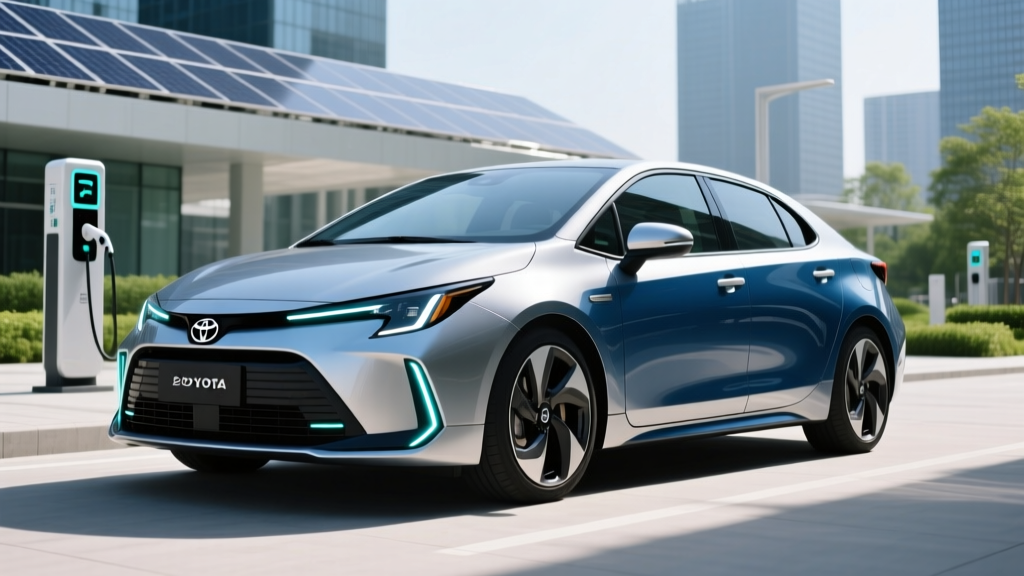
No. As of early 2026, Toyota has not released a Corolla electric vehicle (BEV) for the U.S. market. The Corolla lineup currently includes the traditional gas-powered Corolla sedan/hatchback and the Corolla Hybrid (HEV), which achieves an EPA-estimated 50 MPG combined. Toyota has announced a next-generation EV platform and teased a compact electric sedan concept, but a production Corolla BEV remains unannounced for U.S. sale. If you want an electrified Corolla today, the Corolla Hybrid is your option. If you want a compact EV in the Corolla's price class, alternatives like the Chevrolet Equinox EV (EPA 319 mi, ~$33,600 base) and Hyundai Kona Electric (EPA 261 mi, ~$32,975) are available now.
Why the Corolla Electric Vehicle Matters to Toyota's Lineup
The Corolla is the best-selling nameplate in automotive history, with over 50 million units sold globally. Toyota has been notably cautious in the BEV space compared to Hyundai, Kia, and Ford, instead leaning heavily into hybrids and plug-in hybrids. That strategy is shifting. Toyota's revised EV roadmap, updated through 2026, commits to launching 30 battery-electric models globally by 2030, including a next-generation platform with improved energy density and a target production cost reduction of 40%.
A Corolla-class BEV would fill a critical gap: an affordable, compact electric sedan for buyers priced out of the Tesla Model 3 (starting ~$38,990) and seeking Toyota's reliability reputation. Industry analysts expect a production Corolla EV to target a base MSRP in the $28,000–$33,000 range, undercutting most current compact EVs.
Expected Specs: What a Corolla EV Could Deliver
While Toyota has not published official specifications for a Corolla BEV, we can project based on the company's announced battery technology roadmap and competitive benchmarks in the segment. The following figures are estimated and preliminary — not confirmed by Toyota.
| Spec | Estimated Corolla EV | Chevy Equinox EV (2026) | Hyundai Kona Electric (2026) |
|---|---|---|---|
| EPA Range | ~280–320 mi (est.) | 319 mi (3RS trim) | 261 mi |
| Battery Capacity | ~60–65 kWh (est.) | 85 kWh (usable) | 64.8 kWh |
| Battery Chemistry | LFP (likely, for base trim) | NMC (Ultium) | NMC |
| Peak DC Fast Charge | ~150 kW (est.) | 150 kW | 100 kW |
| 10–80% DC Charge Time | ~30 min (est.) | ~20 min | ~43 min |
| Level 2 Charge Rate | ~11 kW (est.) | 11.5 kW | 7.2 kW |
| Motor Output | ~180–200 HP (est.) | 213 HP (FWD) | 201 HP |
| 0–60 mph | ~7.5 sec (est.) | ~7.8 sec | ~7.5 sec |
| Base MSRP | ~$28,000–$33,000 (est.) | $33,600 | $32,975 |
| Drivetrain | FWD (est.) | FWD / AWD | FWD |
Key battery insight: Toyota has signaled a transition toward LFP (lithium iron phosphate) chemistry for entry-level models to reduce costs and avoid cobalt/nickel supply constraints. LFP batteries offer longer cycle life (3,000+ full cycles before significant degradation) and greater thermal stability, but carry ~15% lower energy density than NMC. This means a Corolla EV on LFP might need a slightly larger pack to hit 300+ miles, or it may settle in the 260–280 mi range to keep costs down.
Real-World Range Reality Check
If the Corolla EV achieves an EPA rating of ~300 miles, expect approximately 240–260 miles in sustained highway driving at 70+ mph, and 200–230 miles in freezing temperatures (below 32°F). Cold weather reduces battery efficiency by 20–30% due to increased internal resistance and cabin heating loads. A heat pump, which Toyota has included on the bZ4X, would mitigate some of this loss.
Corolla Hybrid vs. Waiting for a Corolla EV: A Cost Comparison
For buyers deciding between buying a Corolla Hybrid now or waiting for a potential Corolla BEV, the economics matter. Here's a five-year ownership comparison using concrete numbers.
| Factor | 2026 Corolla Hybrid (HEV) | Projected Corolla EV | 2026 Chevy Equinox EV (Current Option) |
|---|---|---|---|
| Base MSRP | $23,500 | ~$30,000 (est.) | $33,600 |
| Federal Tax Credit (§30D) | $0 (HEV ineligible) | Up to $7,500 (est., if sourcing rules met) | Up to $7,500 (eligible) |
| Effective Purchase Price | $23,500 | ~$22,500 (est.) | $26,100 |
| Annual Fuel/Energy Cost | ~$1,050/yr (gas at $3.40/gal, 12k mi/yr) | ~$540/yr (electric at $0.15/kWh, home charging) | ~$540/yr |
| 5-Year Energy Cost | $5,250 | $2,700 | $2,700 |
| 5-Year Maintenance (est.) | ~$2,200 | ~$900 | ~$900 |
| 5-Year Total Cost (purchase + energy + maint.) | $30,950 | ~$26,100 | $29,700 |
| EPA Efficiency | 50 MPG combined | ~120 MPGe (est.) | 114 MPGe combined |
Important §30D tax credit caveats: The federal EV tax credit under IRS §30D is subject to buyer income caps ($150,000 single / $300,000 joint), vehicle MSRP caps ($55,000 for sedans), and critical-mineral/battery-component sourcing requirements that tighten annually. A Corolla EV, if produced with sufficient North American battery sourcing, could qualify — but eligibility is never guaranteed and changes yearly. As of 2026, the credit can be transferred to the dealer at point of sale, effectively reducing the purchase price upfront. Always verify current rules with a tax professional.
Ownership Realities: What First-Time EV Buyers Must Know
If a Corolla EV arrives and you're considering it as your first electric vehicle, these are the practical factors that determine whether EV ownership works for you.
Home Charging Access Is the Make-or-Break Factor
Charging at home on a Level 2 (240V) outlet is the single biggest determinant of EV satisfaction. A typical Level 2 charger at 11 kW adds roughly 35–40 miles of range per hour, meaning an overnight session easily replenishes a full day's driving. Installation costs vary widely:
| Item | Typical Cost Range |
|---|---|
| Level 2 Charger (hardware) | $300–$700 |
| Electrician labor (240V outlet, 40A circuit) | $500–$2,000 |
| Permit & inspection | $50–$300 |
| Panel upgrade (if needed, 100A → 200A) | $1,500–$4,000 |
| Total (no panel upgrade) | $850–$3,000 |
| Total (with panel upgrade) | $2,350–$7,000 |
If you live in an apartment or lack dedicated parking with electrical access, you'll rely on public DC fast charging and workplace chargers. This is viable but adds time (30+ minutes per session) and cost (public DC charging averages $0.35–$0.50/kWh vs. $0.12–$0.18/kWh at home). Toyota's bZ4X currently includes one year of complimentary charging on the EVgo network — a Corolla EV may include a similar perk.
Cold Climate Range Loss Is Real
Battery chemistry slows in freezing temperatures. Expect 20–30% range reduction at 20°F compared to the EPA rating. If the Corolla EV is rated at 300 miles EPA, plan for roughly 210–240 miles in deep winter. Preconditioning (warming the battery while plugged in) recovers some of this loss, and a heat pump — standard on many 2026-era EVs — reduces cabin-heating energy draw by 30–50%.
Charging Speed: Peak kW Is Not Sustained kW
Manufacturers advertise peak DC fast-charge rates (e.g., "150 kW"), but that speed only applies in a narrow State of Charge (SoC) window, typically 10–50%. Above 80%, charging slows dramatically to protect battery health. A Corolla EV rated at 150 kW peak might average 90–110 kW over a full 10–80% session. This is why the 10–80% time (not the peak kW number) is the metric that matters for road trips.
Myths vs. Facts: Common Corolla EV Misconceptions
| Myth | Fact |
|---|---|
| "A Corolla EV already exists and I can buy one." | No production Corolla BEV is available in the U.S. as of 2026. Only the Corolla Hybrid (HEV) is currently sold. |
| "EV batteries need replacing every 5 years." | Modern EV batteries are warranted for 8 years/100,000 miles (federally mandated minimum). Data from the DOE shows most retain 85–90% capacity after 100,000 miles. |
| "A Corolla EV will qualify for the full $7,500 tax credit." | Eligibility depends on MSRP caps, buyer income, and battery sourcing rules that change annually. Never assume full credit eligibility. |
| "EVs cost more to insure." | Often true: EV insurance premiums run 10–25% higher than equivalent gas cars due to higher repair costs and battery replacement expense. Get quotes before purchasing. |
| "I'll never be able to road-trip in an EV." | The U.S. DC fast-charging network exceeded 50,000 ports in 2025. With 150 kW+ charging, a Corolla EV could add 150+ miles in a 20-minute stop. Route planning apps (A Better Routeplanner, PlugShare) make this practical. |
Decision Framework: Should You Buy Now or Wait?
Buy a Corolla Hybrid Now If:
- You need a vehicle immediately and your budget is under $28,000.
- You lack reliable home charging access and can't install a Level 2 outlet.
- You regularly drive in extreme cold (below 10°F) where EV range loss is most severe.
- You want proven Toyota reliability with minimal new-technology risk.
- Your daily commute is short but you take frequent 500+ mile road trips.
Buy a Current Compact EV (Equinox EV, Kona Electric) If:
- You want a BEV now and can't wait for an unannounced model.
- You have home charging and a daily commute under 80 miles round-trip.
- You qualify for the §30D tax credit, bringing effective prices near $26,000.
- You want the lowest per-mile energy cost and minimal maintenance.
Wait for a Corolla Electric Vehicle If:
- You're a Toyota loyalist willing to wait 12–24 months for a potential release.
- You want a compact EV with Toyota's resale value and dealer network.
- Your current vehicle is functional and you're not in a rush.
- You want to see whether Toyota adopts NACS (Tesla Supercharger) compatibility, which would dramatically expand fast-charging access.
What Toyota Has Said About a Compact EV Future
Toyota's CEO Akio Toyoda (now Chairman) and current CEO Koji Sato have outlined a multi-pathway strategy that includes BEVs, hybrids, plug-in hybrids, and hydrogen fuel cells. In 2023, Toyota announced a next-generation BEV platform targeting a 620-mile (1,000 km) range with solid-state batteries — though that technology is expected in premium models first, not a Corolla-class vehicle.
For a Corolla EV, the more relevant technology is Toyota's announced standard-range battery using bipolar LFP cells, targeting 20% cost reduction and a range of approximately 400 km (~250 miles). This aligns with what a competitively priced Corolla BEV would require. Toyota has also confirmed that its next-gen EVs will feature a redesigned infotainment platform and over-the-air update capability, addressing criticism of the bZ4X's software.
According to NHTSA filings and Toyota's product roadmap disclosures, a Corolla-class BEV for the U.S. market is plausible for the 2028 model year, though Toyota has not confirmed this timeline. Buyers should monitor Toyota's U.S. press site for official announcements rather than relying on concept-car speculation.
Frequently Asked Questions
Does Toyota make any all-electric vehicle I can buy right now?
Yes. The Toyota bZ4X is Toyota's only all-electric vehicle currently sold in the U.S. It offers an EPA-estimated 252 miles of range (FWD), a 71.4 kWh battery, and starts at approximately $43,070. It's a compact SUV — larger and more expensive than a Corolla EV would be. Toyota also sells the bZ4X's twin, the Subaru Solterra.
Is the Corolla Hybrid a plug-in vehicle?
No. The Corolla Hybrid is a conventional HEV (hybrid electric vehicle). It charges its small battery through regenerative braking and the gas engine. You cannot plug it in. It achieves 50 MPG combined without any behavior change from a normal gas car. If you want plug-in capability from Toyota, the Prius Prime (PHEV) offers 44 miles of electric-only range and starts around $33,445.
Will a Corolla EV use the Tesla Supercharger network (NACS)?
Toyota announced in 2023 that future EVs in North America would adopt the NACS (North American Charging Standard) connector, granting access to Tesla's Supercharger network — the largest and most reliable DC fast-charging network in the U.S. with over 25,000 stalls. If a Corolla EV launches after 2025, it is very likely to ship with a native NACS port. The current bZ4X uses CCS1.
How much would it cost to charge a Corolla EV at home?
Assuming a ~60 kWh battery and the U.S. average residential electricity rate of ~$0.16/kWh (per EIA data), a full 0–100% home charge would cost approximately $9.60. For context, filling a Corolla Hybrid's 11.4-gallon tank at $3.40/gallon costs ~$38.76. Your actual cost depends on your utility rate, which ranges from $0.10/kWh in some states to $0.30+/kWh in California and the Northeast.
What battery warranty would a Corolla EV likely carry?
Federal law requires a minimum of 8 years / 100,000 miles for EV battery warranties (in CARB states, 10 years/150,000 miles). Toyota's current bZ4X warranty covers 8 years/100,000 miles against capacity loss below 70%. A Corolla EV would be expected to match or exceed this. LFP chemistry, if used, typically degrades more slowly than NMC, potentially retaining 90%+ capacity at the 100,000-mile mark based on industry data.
Should I buy a used EV instead of waiting for a Corolla EV?
A used EV can be a strong value, particularly with the §25E used clean vehicle credit, which offers up to $4,000 (30% of the sale price, capped) on EVs priced at $25,000 or less, subject to income limits. A used Tesla Model 3, Chevrolet Bolt EV, or Hyundai Ioniq 5 may fall in this range. However, verify battery State of Health (SoH) before purchasing — most manufacturers' battery warranties transfer to second owners.