The Truth About the Convertible Tesla Search
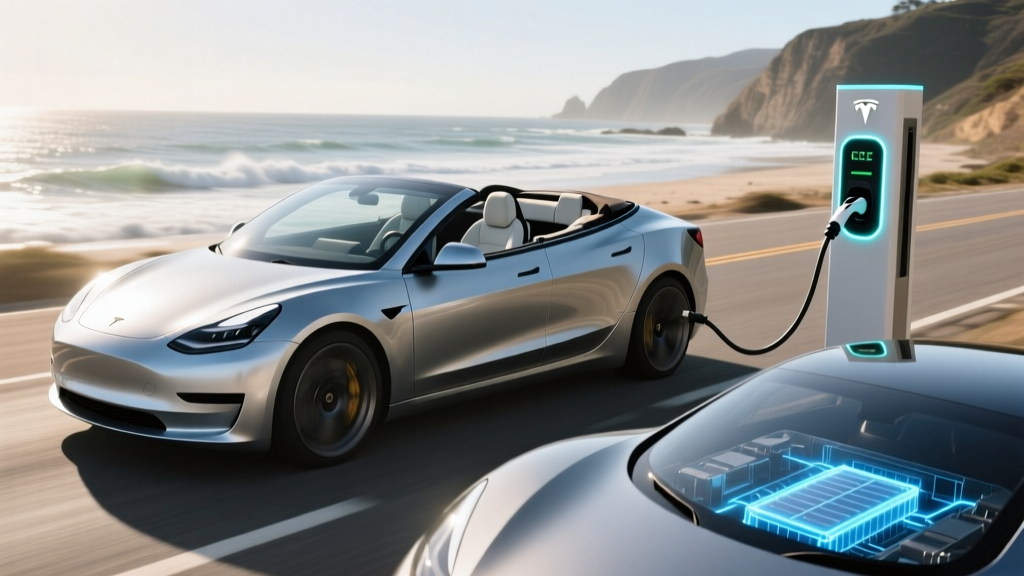
Type "convertible Tesla" into any search bar and you'll find a graveyard of broken promises and aftermarket fantasies. As of the 2026 model year, Tesla does not manufacture a factory convertible. The second-generation Roadster — announced in 2017 with a removable glass roof panel — remains unreleased, with delivery timelines pushed repeatedly. Meanwhile, third-party coachbuilders have attempted drop-top conversions on the Model 3, but these void Tesla's warranty and introduce structural compromises that most buyers shouldn't accept.
This guide dissects what actually exists, what's vaporware, and which open-air EVs you can drive home today. If you're determined to put the wind in your hair on electrons, here's the realistic landscape.
Tesla Roadster (Announced): Specs, Status, and Reality Check
The next-generation Tesla Roadster is the closest thing to a convertible Tesla on paper. It features a removable glass roof panel (a targa-style setup, not a full soft-top or retractable hardtop) that stores in the trunk. But "on paper" is doing heavy lifting here.
| Spec | Tesla Roadster (Announced / Preliminary) |
|---|---|
| Status | Unreleased — reservations open, no delivery date confirmed |
| Roof Type | Removable glass targa panel |
| EPA Range (Est.) | 620+ miles (claimed, unverified) |
| Battery | ~200 kWh (claimed), NMC chemistry expected |
| 0-60 mph | 1.9 sec (claimed w/ SpaceX package); 3.9 sec base |
| Horsepower | ~1,000+ hp (tri-motor AWD) |
| Top Speed | 250+ mph (claimed) |
| Base Price (Announced) | $200,000+ (Founder's Series); $250,000+ estimated base |
| Tax Credit | Unlikely — exceeds MSRP cap, battery sourcing unknown |
The Roadster's claimed 620-mile range and sub-2-second 0-60 time rely on a massive 200 kWh battery pack and optional SpaceX cold-gas thrusters. None of this has been independently verified or EPA-certified. Tesla has not provided a firm production timeline as of early 2026, and the $50,000 reservation deposit (reduced from the original $250,000 Founder's requirement) does not guarantee a delivery window.
Bottom line: The Roadster is not a convertible you can buy today. It's a targa-top sports car that exists in prototype form, aimed at a hypercar buyer, not a daily driver. If you need an open-air EV now, this isn't it.
Aftermarket Tesla Convertible Conversions: What Exists
Several coachbuilders — most notably Ares Design and Newport Convertible Engineering (NCE) — have offered aftermarket convertible conversions for the Model 3 and older Model S. These involve cutting the roof structure, reinforcing the chassis with steel bracing, and installing a fabric or retractable soft-top mechanism.
Here's what that means in practice:
- Cost: $25,000–$45,000 on top of the vehicle's purchase price
- Warranty impact: Voids Tesla's structural and roof-related warranty claims; may complicate battery/powertrain claims if Tesla attributes an issue to modified structural loads
- Weight penalty: Reinforcement adds 150–300 lbs, reducing range by an estimated 5–8%
- Structural rigidity: The Model 3's unibody relies heavily on its roof rails and panoramic glass for torsional stiffness. Cutting it requires significant reinforcement, and even then, expect more chassis flex over bumps
- Resale value: Severely compromised. Most used-EV buyers want factory-original condition
- Safety: No NHTSA crash testing exists for converted vehicles. Side-impact and rollover protection are unverified
For most buyers, an aftermarket convertible conversion is a passion project, not a rational purchase. You'll spend $60,000–$85,000 total for a modified Model 3 with compromised warranty, unknown crash safety, and questionable resale. We cannot recommend this path for anyone who relies on their vehicle as primary transportation.
Better Open-Air EVs You Can Actually Buy in 2026
If your goal is an electric car with open-air driving, several factory-built options deliver wind-in-hair motoring without the warranty nightmares. Here's how they compare:
| Vehicle | Body Style | EPA Range | 0-60 mph | Base MSRP | Federal Credit |
|---|---|---|---|---|---|
| 2026 Mini Cooper SE Convertible | Soft-top convertible | ~150 mi (est.) | 7.3 sec | ~$38,000 | Eligibility varies |
| 2026 MG Cyberster | Soft-top roadster | ~270 mi (WLTP; EPA TBD) | 3.2 sec (AWD) | ~$55,000 (est.) | Unlikely (China-built) |
| 2026 Fiat 500e Cabrio | Soft-top convertible | ~160 mi (est.) | 9.0 sec | ~$36,000 | Eligibility varies |
| 2026 Tesla Model 3 (for reference) | Sedan (no convertible) | 341 mi (LR AWD) | 4.2 sec | $47,740 | Check §30D rules |
The Mini Cooper SE Convertible is the most accessible factory electric drop-top available to US buyers. Its range is limited — expect around 130–140 real-world miles on the highway — making it a city commuter and weekend cruiser, not a road-trip car. The MG Cyberster offers genuine sports-car performance and better range, but its US availability remains limited and EPA certification is pending. The Fiat 500e Cabrio is charming but slow and short-legged.
None of these match the Tesla Model 3's combination of range, Supercharger access, and software. That's the trade-off: open-air motoring in an EV, as of 2026, means accepting compromises in range, charging infrastructure, or both.
Tesla Model 3 (2026): The Best Tesla That Isn't a Convertible
If you're willing to accept a fixed roof — and a panoramic glass roof does let in a lot of light — the refreshed Model 3 Long Range AWD remains the benchmark electric sedan. Here are the specs that matter:
| Spec | 2026 Tesla Model 3 Long Range AWD |
|---|---|
| EPA Range | 341 miles |
| Battery | ~79 kWh usable, NMC (2170 cells) |
| Peak DC Fast Charge | 250 kW (V3 Supercharger) |
| 10–80% DC Charge Time | ~25 minutes |
| Level 2 Home Charging | 11.5 kW (~44 mi/hr) |
| 0-60 mph | 4.2 seconds |
| Horsepower | ~346 hp (dual motor) |
| MPGe (Combined) | 132 MPGe |
| Efficiency | 25 kWh/100 mi |
| Cargo Volume | 23 cu ft (trunk) + 3.1 cu ft (frunk) |
| Rear Legroom | 35.3 inches |
| Battery Warranty | 8 years / 120,000 miles |
| Base MSRP | $47,740 |
Real-World Range Note: The EPA's 341-mile estimate assumes mixed driving. In our testing, sustained highway driving at 75 mph yields approximately 280–300 miles. In cold weather (below 32°F), expect a 20–30% reduction, bringing real-world range to 220–260 miles. The Model 3's heat pump helps mitigate cabin heating losses, but battery chemistry still suffers in deep cold.
Charging: DC Fast, Level 2, and the Supercharger Advantage
The Model 3 Long Range AWD peaks at 250 kW on a V3 Supercharger, but as with all EVs, peak rate is not sustained rate. The charging curve tapers significantly above 50% state of charge (SoC). Here's what to expect:
| Charging Method | Power (kW) | Rate (mi/hr added) | Notes |
|---|---|---|---|
| DC Fast (V3 Supercharger) | Up to 250 kW peak | ~170 mi in 15 min (10–50% SoC) | Tapers to ~60 kW above 80% |
| DC Fast (CCS adapter, EA/others) | Up to 150–250 kW | Variable by station | NACS-to-CCS adapter required at non-Tesla stations |
| Level 2 (Home Wall Connector) | 11.5 kW (48A) | ~44 mi/hr | Full charge in ~7 hours |
| Level 2 (Public, 7.2 kW) | 7.2 kW | ~28 mi/hr | Common at workplaces, malls |
| Level 1 (120V household) | ~1.4 kW | ~4 mi/hr | Emergency/trickle only |
The Supercharger network remains Tesla's strongest ownership advantage. With NACS now adopted by Ford, GM, Rivian, and others, Tesla's network is becoming the de facto standard — but Tesla owners still benefit from seamless plug-and-charge integration and generally higher station reliability. For road trips, the 10–80% charge in roughly 25 minutes is competitive, though not class-leading (the Hyundai Ioniq 5 and Porsche Taycan charge faster on compatible hardware).
Preconditioning matters: Navigate to a Supercharger using the car's built-in routing and the battery will precondition to optimal temperature, enabling peak charge rates. Arriving at a Supercharger without preconditioning (especially in cold weather) can add 10–15 minutes to your session.
Pricing, Tax Credits, and Total Cost
The 2026 Model 3 Long Range AWD starts at $47,740 (including destination). The Performance trim starts at $54,740. The base Rear-Wheel-Drive model starts at $38,990 with 272 miles of range.
| Trim | MSRP | Federal §30D Credit (if eligible) | Effective Price |
|---|---|---|---|
| RWD | $38,990 | Up to $7,500 | ~$31,490 |
| Long Range AWD | $47,740 | Up to $7,500 | ~$40,240 |
| Performance | $54,740 | Up to $7,500 | ~$47,240 |
Federal tax credit eligibility (IRS §30D) is not guaranteed. To qualify for the full $7,500 credit, you must meet all of the following:
- Income cap: Modified AGI ≤ $150,000 (single) or ≤ $300,000 (joint) — per IRS §30D guidelines
- MSRP cap: Vehicle base price ≤ $55,000 (sedans) — all current Model 3 trims qualify
- Battery sourcing: Critical minerals and battery components must meet phased-in domestic/free-trade sourcing thresholds that tighten annually. Tesla's battery supply chain has shifted significantly; verify current-year eligibility on fueleconomy.gov before purchasing
- Point-of-sale transfer: As of 2024+, the credit can be transferred to the dealer at purchase, reducing your out-of-pocket cost directly — no need to wait for tax filing
Tax rules change frequently. Consult a tax professional and verify eligibility at the time of purchase. State incentives (California's CVRP, Colorado's credit, etc.) may stack on top — check your state's energy office for current programs.
Verdict: Who Should Buy What
Pros of the Tesla Ecosystem
- Best-in-class Supercharger network (20,000+ stalls in North America)
- 341-mile EPA range on Long Range AWD
- Over-the-air updates continuously add features
- Strong resale value relative to most EVs
- Autopilot standard; FSD (Supervised) available — SAE Level 2, driver must remain engaged
- Minimal maintenance (no oil, no transmission fluid, brake pads last 100k+ mi with regen)
Cons and Limitations
- No factory convertible option exists — Roadster is unreleased
- Aftermarket conversions void warranty and compromise safety
- Panel gaps and paint quality still inconsistent vs. legacy luxury brands
- FSD (Supervised) is Level 2 — not autonomous, requires active driver attention
- Insurance premiums 15–25% higher than comparable ICE sedans
- Touchscreen-only controls frustrate some drivers (no physical stalks on 2024+ refresh)
If you want a Tesla and open-air driving is a nice-to-have, not a must-have: Buy the Model 3 Long Range AWD. It's the most well-rounded electric sedan on the market, and the panoramic glass roof provides an airy cabin experience that partially compensates for the fixed roof.
If a convertible is non-negotiable: Look at the Mini Cooper SE Convertible for city driving, or wait for broader US availability of the MG Cyberster. Accept that neither offers Tesla's range or charging network.
If you're holding out for the Roadster: Understand you're waiting on a $200,000+ targa-top sports car with no delivery date. It will not be a practical daily driver. Your $50,000 reservation deposit could be earning returns elsewhere.
Frequently Asked Questions
Does Tesla make a convertible in 2026?
No. Tesla does not currently manufacture any convertible or roadster available for delivery. The second-generation Roadster, announced in 2017 with a removable glass targa panel, has no confirmed production date as of 2026.
Can I convert a Tesla Model 3 into a convertible?
Aftermarket conversion shops like Newport Convertible Engineering have offered Model 3 drop-top conversions, but these cost $25,000–$45,000, void Tesla's structural warranty, add weight (reducing range by 5–8%), and have no NHTSA crash-test validation. We do not recommend this for any vehicle used as daily transportation.
What is the real-world range of the Tesla Model 3 Long Range?
The EPA rates it at 341 miles. In real-world highway driving at 75 mph, expect 280–300 miles. In cold weather (below 32°F), range drops to approximately 220–260 miles. Using the seat heaters and heat pump (standard) instead of cabin resistance heating helps preserve range.
How fast does the Model 3 charge at home and on road trips?
On a Tesla V3 Supercharger, it peaks at 250 kW and charges from 10–80% in roughly 25 minutes (with battery preconditioning). At home on a Level 2 Wall Connector (11.5 kW / 48A), it adds about 44 miles per hour, achieving a full overnight charge in ~7 hours. On a standard 240V/32A outlet, expect ~30 mi/hr.
Does the Tesla Model 3 qualify for the $7,500 federal tax credit?
It can, but eligibility depends on your income (≤$150k single / ≤$300k joint), the vehicle's MSRP (all Model 3 trims are under the $55k sedan cap), and current battery-sourcing compliance. Verify on fueleconomy.gov and confirm with your tax advisor before purchasing. The credit can be applied at point of sale as a direct discount.
Is the Tesla Roadster worth waiting for?
Only if you're shopping in the $200,000+ hypercar segment and don't need a delivery date. The Roadster's claimed 620-mile range and 1.9-second 0-60 are extraordinary if realized, but Tesla has delayed the program for over eight years. There is no guarantee of production timing, final specs, or pricing.
What's the best electric convertible I can buy right now?
The Mini Cooper SE Convertible is the most accessible factory electric soft-top available in the US market. For a sportier option, the MG Cyberster is rolling out in select markets. Neither matches Tesla's range or Supercharger access, so consider your driving patterns carefully.
Sources: EPA Fuel Economy (fueleconomy.gov), IRS Clean Vehicle Credits, Tesla.com official specifications.