The Real Cost of Going Electric in Connecticut
Connecticut has quietly become one of the more incentive-rich states for electric vehicle buyers, stacking federal credits, state rebates, and utility programs on top of each other. But stacking incentives only matters if the underlying math works. Before you sign a purchase agreement in Hartford, Stamford, or New Haven, you need a clear picture of what an EV actually costs to buy, charge, insure, and maintain over five years — and which incentives you can realistically claim.
This guide breaks down the Connecticut electric vehicle tax credit landscape, federal §30D eligibility, utility rebates from Eversource and United Illuminating, and a concrete total cost of ownership (TCO) comparison between a popular EV and its gas-powered equivalent. All figures reflect 2026 model-year pricing and current IRS rules, which are subject to change.
Federal §30D Tax Credit: What Connecticut Buyers Need to Know
The federal Clean Vehicle Credit under IRS §30D offers up to $7,500 for qualifying new EVs and up to $4,000 for qualifying used EVs (under IRC §25E). Since 2024, buyers can elect to transfer the credit to the dealer at the point of sale, effectively reducing the purchase price on the spot rather than waiting to claim it on a tax return.
However, eligibility is far from universal. Congress layered on MSRP caps, buyer income limits, and battery-component/critical-mineral sourcing requirements that disqualify many models. Here is the full checklist:
§30D New EV Credit Eligibility Checklist (2026)
- Vehicle MSRP cap: ≤ $80,000 for vans, SUVs, and pickups; ≤ $55,000 for sedans and other body styles
- Buyer AGI limits: ≤ $300,000 (married filing jointly); ≤ $225,000 (head of household); ≤ $150,000 (single or married filing separately)
- Battery components: Must be manufactured or assembled in North America (percentage threshold increases annually)
- Critical minerals: Must be sourced from the U.S. or a free-trade-agreement partner (percentage threshold increases annually)
- Final assembly: Must occur in North America
- FEOC restriction: No battery components from a "foreign entity of concern" (effective 2024+); no critical minerals from a FEOC (effective 2025+)
- Credit split: $3,750 for meeting the battery-component requirement + $3,750 for meeting the critical-minerals requirement = up to $7,500 total
- Transfer option: Buyer may elect point-of-sale transfer to dealer, reducing purchase price directly
Because the FEOC (foreign entity of concern) restrictions tightened significantly in 2025, several popular models that previously qualified for the full $7,500 now qualify for only $3,750 or nothing at all. Always verify a specific VIN's eligibility on fueleconomy.gov before relying on the credit in your budget.
Connecticut State Incentives and Utility Rebates
Connecticut does not currently offer a standalone state purchase tax credit that mirrors the federal §30D credit. The "Connecticut electric vehicle tax credit" that shoppers search for is usually a combination of the following programs:
Connecticut EV Incentive Programs (2026)
CHEAPR (Connecticut Hydrogen and Electric Automobile Purchase Rebate): Income-tiered rebates for new EV purchases or leases. Rebate amounts vary by vehicle MSRP and buyer income, typically ranging from $1,500 to $5,000 for new battery-electric vehicles, with higher amounts for lower-income buyers. Funding is limited and distributed on a first-come, first-served basis. Check current availability on the official CHEAPR site.
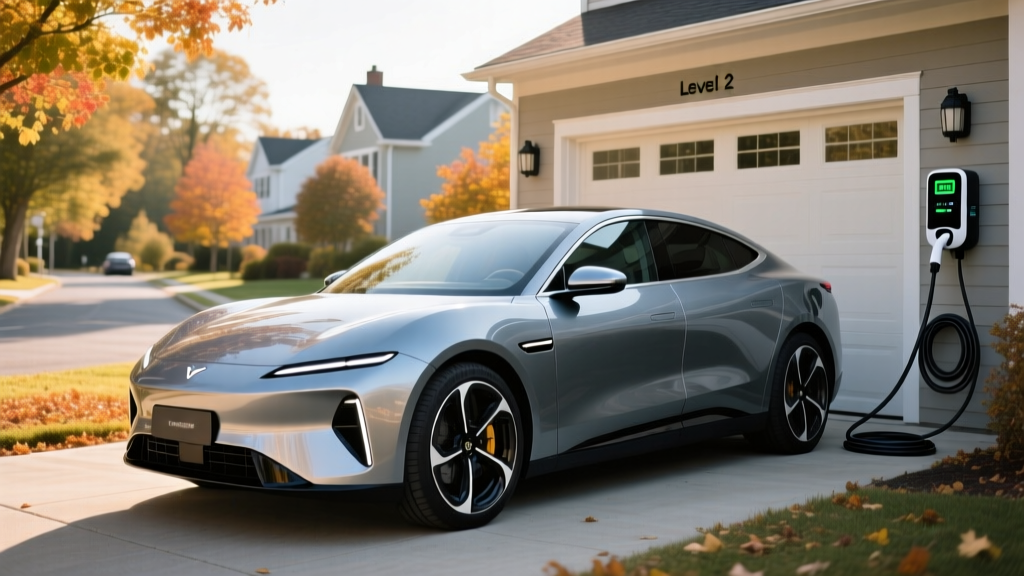
Utility rebates — Eversource: Eversource CT periodically offers residential EV charging rebates (e.g., up to $500–$1,000 toward a Level 2 home charger installation) and off-peak charging rate plans. Availability rotates by program cycle.
Utility rebates — United Illuminating (UI): UI has offered similar Level 2 charger rebates and time-of-use rate incentives for EV owners in its service territory (Bridgeport, New Haven area).
HVAC/EV panel upgrade assistance: Some CT programs and utility offerings include contributions toward electrical panel upgrades if a 200-amp service is needed for Level 2 charging — a common $1,500–$3,000 hidden cost in older CT homes.
Note: State and utility incentives change frequently. Always confirm current program status, funding availability, and income requirements directly with the administering agency before factoring rebates into your purchase decision.
When stacked, a Connecticut buyer might combine the $7,500 federal credit (if the vehicle qualifies), a $2,000–$5,000 CHEAPR rebate (if funding is available and income-eligible), and a $500–$1,000 utility charger rebate. That's potentially $10,000–$13,500 in combined incentives — but only if every program lines up. Budget conservatively.
Charging vs. Gasoline: The Per-Mile Cost in Connecticut
Connecticut's electricity rates are among the highest in the continental U.S., averaging roughly $0.25–$0.30 per kWh for residential service in 2026 (Eversource/UI standard rates). That erodes some of the fuel-cost advantage EVs enjoy in cheaper-electricity states. Here's how the math works out:
| Metric | EV (e.g., Tesla Model Y RWD) | Gas (e.g., Toyota RAV4 AWD) |
|---|---|---|
| Energy efficiency | 28 kWh/100 mi (EPA combined) | 30 MPG combined (EPA) |
| Energy cost | $0.27/kWh (CT residential avg.) | $3.50/gallon (CT avg. regular) |
| Cost per mile | $0.076 | $0.117 |
| Annual cost (12,000 mi) | $912 | $1,404 |
| 5-year fuel cost | $4,560 | $7,020 |
Even at Connecticut's elevated electricity rates, home charging saves roughly $492 per year or $2,460 over five years compared to gasoline at $3.50/gallon. The savings widen if you enroll in an off-peak charging rate (some CT utility plans drop to $0.10–$0.15/kWh overnight) or if gas prices spike. However, if you rely primarily on DC fast charging at public stations — where rates in CT can hit $0.40–$0.55/kWh — your per-mile cost can actually exceed gasoline. Home charging access is the single biggest variable in EV fuel economics.
Maintenance Savings: Where EVs Actually Save Money
Electric vehicles eliminate several recurring maintenance items that gas-car owners take for granted. No engine oil means no oil changes. No spark plugs, no timing belts, no exhaust systems, no catalytic converters. Regenerative braking dramatically reduces brake pad and rotor wear — many EV owners report original brake pads at 80,000+ miles.
| Maintenance Item | EV Cost (5 yr) | Gas Car Cost (5 yr) |
|---|---|---|
| Oil changes | $0 | $300–$500 |
| Brake pads/rotors | $0–$200 | $400–$800 |
| Engine air filter | $0 | $100–$150 |
| Cabin air filter | $100–$150 | $100–$150 |
| Tire rotation/replacement | $800–$1,200* | $600–$1,000 |
| Coolant / fluid service | $100–$200 | $200–$400 |
| Miscellaneous (wipers, 12V battery) | $200–$400 | $200–$400 |
| Total estimated | $1,200–$2,150 | $1,900–$3,400 |
*EVs tend to wear tires faster than equivalent gas cars due to instant torque and higher curb weight (batteries add 500–1,000 lbs). Budget for premium EV-rated tires at replacement.
Net maintenance savings over five years: roughly $700–$1,250. Not trivial, but not transformative on its own. The real ownership-cost story depends on purchase price, depreciation, and insurance.
The Insurance Reality: Why EVs Cost More to Insure
This is where the EV cost equation gets uncomfortable. Insurance premiums for electric vehicles are typically 15–30% higher than for comparable gasoline models, and Connecticut is no exception. Several factors drive this:
- Higher repair costs: EV battery packs, power electronics, and specialized structural components (like Tesla's gigacastings) are expensive to repair or replace after a collision. Fewer body shops have EV-certified technicians.
- Higher vehicle values: EVs generally carry higher MSRPs than gas equivalents, so total-loss payouts are larger.
- Parts availability: Some EV brands have longer parts lead times, extending rental-car reimbursements during repairs.
- Specialized labor: High-voltage system work requires certified technicians, commanding higher labor rates.
For a Tesla Model Y in Connecticut, expect annual premiums in the $1,800–$2,600 range for a driver with a clean record, versus $1,300–$1,800 for a similarly priced gas SUV. That's roughly $400–$800 more per year, or $2,000–$4,000 over five years — enough to offset a significant chunk of the fuel and maintenance savings. Always get a personalized insurance quote before finalizing your EV purchase decision.
Depreciation and Resale Value: The Wildcard
EV depreciation has been volatile. In 2023–2024, aggressive Tesla price cuts on new models triggered a cascade of used-EV value declines across all brands. By 2025–2026, the market has largely stabilized, but EVs as a category still depreciate faster than the average gas vehicle in many segments.
Key depreciation factors for Connecticut EV buyers:
- Battery health perception: Even though most modern EV batteries retain 85–95% capacity at 100,000 miles, buyer anxiety about replacement cost ($8,000–$20,000 depending on model) suppresses used values.
- Technology obsolescence: Newer EVs charge faster and go farther, making 3–4-year-old models feel dated more quickly than gas cars.
- Tax credit effect: When a new EV qualifies for $7,500 at point of sale, the effective new price drops, which compresses used values for the same model.
- Brand matters: Teslas have seen steep depreciation swings; Toyota and Hyundai/Kia EVs have held value somewhat better due to brand loyalty and more conservative initial pricing.
Expect a mainstream EV to retain roughly 40–55% of its purchase price after five years / 60,000 miles, versus 45–60% for a comparable gas vehicle. The gap is narrowing as the used-EV market matures, but plan for higher depreciation in your TCO calculation.
5-Year Total Cost of Ownership: EV vs. Gas in Connecticut
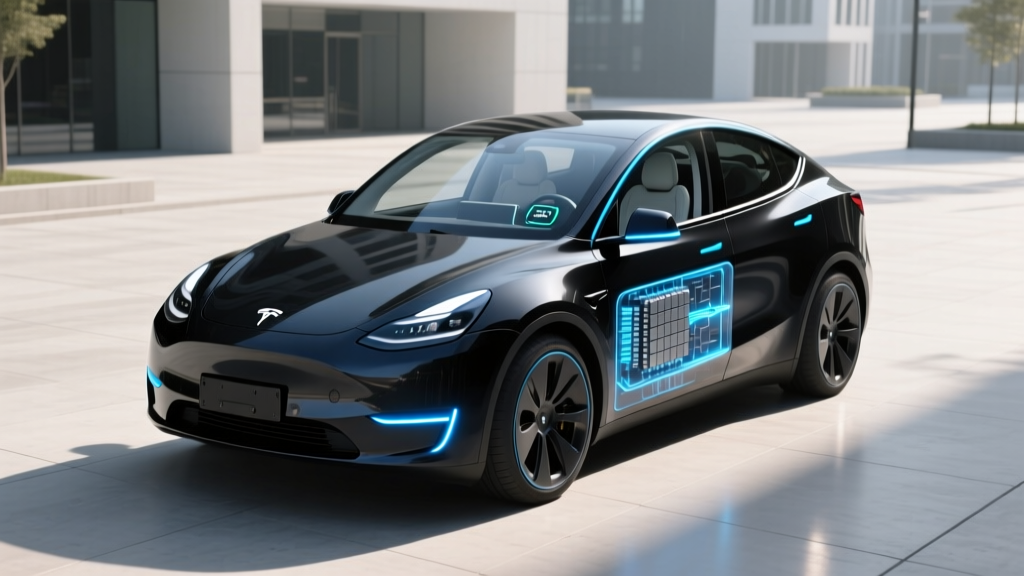
Let's put all the numbers together for a realistic Connecticut scenario. We'll compare a 2026 Tesla Model Y Long Range AWD (a popular EV choice) against a 2026 Toyota RAV4 AWD XLE (a popular gas crossover). Both are priced in a comparable range before incentives.
| Cost Category | 2026 Tesla Model Y LR AWD | 2026 Toyota RAV4 AWD XLE |
|---|---|---|
| Base MSRP | $48,990 | $34,500 |
| Federal §30D credit (point-of-sale) | –$7,500* | $0 |
| CT CHEAPR rebate (est., income-dependent) | –$2,000* | $0 |
| Effective purchase price | $39,490 | $34,500 |
| Sales tax (CT 6.35%) | $2,508 | $2,191 |
| Home Level 2 charger install | $1,200 | $0 |
| Energy/fuel (5 yr, 60k mi) | $4,560 | $7,020 |
| Maintenance (5 yr) | $1,700 | $2,650 |
| Insurance (5 yr, est.) | $11,000 | $7,750 |
| Estimated resale value (year 5) | –$22,000 | –$19,000 |
| Net 5-year TCO | ~$38,458 | ~$35,111 |
*Federal credit and CHEAPR rebate eligibility depend on buyer income, vehicle sourcing compliance, and program funding. Not all buyers will qualify. Verify before purchasing.
In this scenario, even with $9,500 in combined incentives, the Tesla Model Y costs roughly $3,300 more over five years than the RAV4 — primarily due to higher insurance and depreciation on a higher-priced vehicle. The gap narrows or flips if:
- You get off-peak electricity rates (saves $500–$1,000 over 5 years)
- Gas prices rise above $4.00/gallon (saves $1,000+ over 5 years)
- You drive more than 12,000 miles/year (EV fuel savings scale linearly)
- You choose a less expensive EV (e.g., Hyundai Ioniq 5 at ~$42,000 MSRP) or a more expensive gas vehicle
The honest conclusion: EVs in Connecticut save on fuel and maintenance but often cost more overall when insurance, depreciation, and higher purchase prices are included. The break-even point depends heavily on your specific driving mileage, electricity rate, insurance profile, and which incentives you actually qualify for.
Frequently Asked Questions
Is there a Connecticut state electric vehicle tax credit in 2026?
Connecticut does not offer a traditional state tax credit for EV purchases. Instead, the state administers the CHEAPR rebate program, which provides income-tiered purchase or lease rebates. These rebates are not tax credits — they are direct rebates applied at purchase (when funded). The "Connecticut electric vehicle tax credit" that many shoppers search for typically refers to the combination of the federal §30D credit and CHEAPR rebates.
Do I qualify for the $7,500 federal EV tax credit?
Qualification depends on three factors: your adjusted gross income (≤ $300K joint / $225K head of household / $150K single), the vehicle's MSRP (≤ $80K for SUVs/trucks/vans, ≤ $55K for sedans), and the vehicle's battery sourcing compliance (North American components + FTA-country critical minerals, with no FEOC involvement). Many popular EVs qualify for only $3,750 or nothing due to the FEOC critical-mineral restriction effective 2025. Check the specific VIN on fueleconomy.gov.
How much does home charging cost in Connecticut?
At Connecticut's average residential rate of ~$0.27/kWh, fully charging a 75 kWh battery (like the Model Y) costs about $20.25 for roughly 270 miles of range. That works out to about $0.075/mile. If you enroll in an off-peak time-of-use plan and charge overnight at $0.12–$0.15/kWh, the cost drops to $0.035–$0.045/mile — dramatically cheaper than gasoline.
Are EVs more expensive to insure in Connecticut?
Yes, typically 15–30% more expensive than comparable gas vehicles. Higher repair costs, specialized labor requirements, and higher vehicle values all contribute. Get a quote from your insurer before purchasing — the premium difference can be $400–$800/year, which meaningfully affects your total cost of ownership.
How well do EVs hold their value compared to gas cars?
EVs have historically depreciated faster than gas cars, retaining roughly 40–55% of purchase price after five years versus 45–60% for gas equivalents. Battery degradation concerns, rapid technology advancement, and new-vehicle price cuts all pressure used EV values. The gap has narrowed since 2024 but remains a factor in TCO calculations.
What happens if the CHEAPR program runs out of funding?
CHEAPR is funded on a periodic basis and has experienced funding pauses in the past. If funding is exhausted, new applicants are placed on a waitlist or must wait for the next funding cycle. Never assume CHEAPR availability — check the program website and confirm with your dealer before including the rebate in your purchase budget.
Can I claim both the federal credit and the CHEAPR rebate?
Yes, they are separate programs from separate entities (IRS and State of Connecticut). You can stack both if you qualify for each independently. Some buyers also add a utility charger rebate for a third layer of savings. However, each program has its own eligibility rules, and qualifying for one does not guarantee qualification for another.