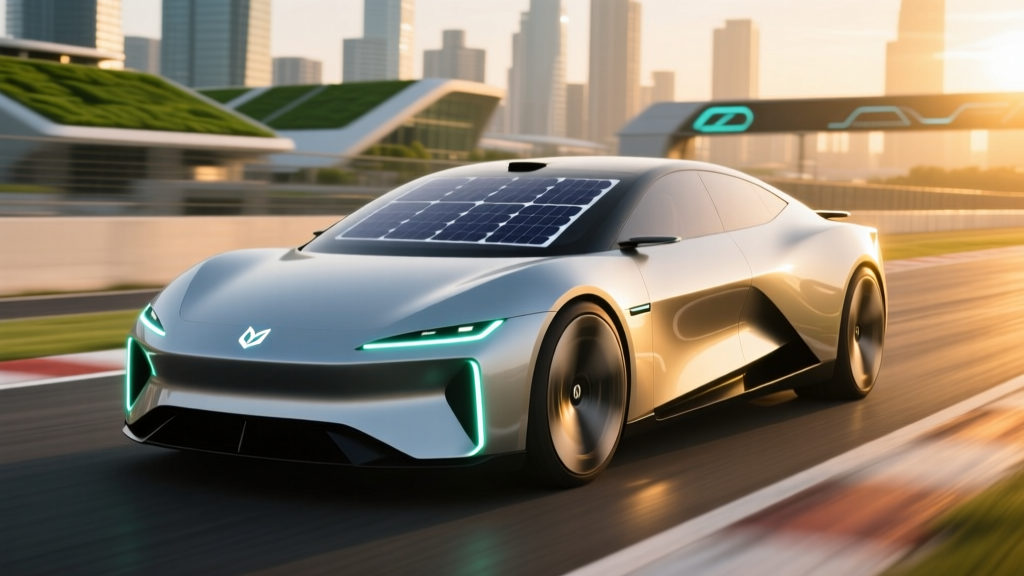
You've seen the sleek renders, the glowing underbody lighting, and the "500-mile range" promises splashed across auto-show floors and YouTube thumbnails. But when it comes to a concept car electric vehicle, the real question is simple: can you actually buy it, and does the production version match the hype?
The Short Answer
Most electric concept cars shown between 2023 and 2025 never reach production unchanged. Automakers typically trim battery capacity, reduce peak charge rates, and raise pricing before a concept becomes a showroom model. As of early 2026, roughly 1 in 3 major EV concepts from the last three auto-show cycles have reached US dealerships in a form close to what was announced. The rest were either canceled, delayed past 2027, or arrived with significantly revised specs. If you're shopping based on a concept, always wait for the official EPA certification and production MSRP before making any financial commitment.
Why Electric Concept Cars Exist (And What They Really Tell You)
Concept cars serve three purposes for automakers: testing public reaction to design language, previewing a new platform's capabilities, and generating press coverage ahead of investor meetings. For electric vehicles specifically, concepts have become a critical marketing tool because EV platforms allow more dramatic packaging flexibility — flat floors, short overhangs, and frunk space that gas cars can't match.
But here's what concept specs actually mean in practice:
- "Up to 500 miles of range" — Usually based on optimistic WLTP testing (European standard) or internal projections, not EPA certification. Expect 15-25% less in EPA terms, and another 10-20% less in real-world highway or cold-weather driving.
- "350 kW ultra-fast charging" — Peak charge rate measured under ideal battery temperature and low state-of-charge conditions. Sustained rates are typically 40-60% of peak. A "350 kW" car might average 175-210 kW across a 10-80% session.
- "Starting at $35,000" — Concept pricing often references a base trim that either doesn't exist at launch or is produced in extremely limited numbers. Real transaction prices for well-equipped models typically run $8,000-$15,000 higher.
2026 Scorecard: Which Concept Cars Electric Buyers Can Actually Purchase
Below is our tracking of major electric concepts shown at US and international auto shows from 2023-2025, categorized by their current production status as of early 2026.
| Concept Name | Shown | Concept Claim | Production Status (2026) | Reality Check |
|---|---|---|---|---|
| Cadillac SOLLEI | 2024 | Ultra-luxury EV, 400+ mi range | Announced for late 2026 | Specs preliminary; expect Celestiq-derived platform, $130,000+ MSRP |
| Hyundai INITIUM (Nexo successor) | 2024 | Fuel-cell SUV, 410 mi range | On sale (South Korea); US delayed | Hydrogen, not BEV; US availability uncertain past 2026 |
| BMW Neue Klasse Vision | 2023 | Next-gen platform, 30% more range | Production iX3 arriving 2026 | Platform confirmed; range claims validated within ~5% on early Euro specs |
| Toyota FT-Se | 2023 | Electric sports car, solid-state battery | Not confirmed for production | Solid-state timeline pushed to 2028+; this car may never ship |
| Jeep Wagoneer S | 2024 (from concept) | 400 mi range, 600 HP | On sale 2025-2026 | EPA 300 mi (trimmed from concept); $71,995 base MSRP |
| Ram 1500 REV | 2023 | 500 mi range, 150 kWh battery | Delayed to late 2026 | Original 500-mi claim reduced; EREV variant now the priority |
| Dodge Charger Daytona EV | 2022-2024 | 496 mi range, 670 HP | On sale (2025 MY) | EPA 317 mi (Scat Pack); range halved from concept claim |
| Nissan Hyper Urban / Punk concepts | 2023 | Various, V2H capability | Not confirmed | Design cues may appear in future Ariya/Leaf successor |
| Volkswagen ID.2all | 2023 | 280 mi range, €25,000 | EU launch 2026; US uncertain | May not come to US; pricing will be higher if it does |
The pattern is clear: range claims shrink by 20-40% from concept to EPA sticker, pricing climbs, and timelines slip by 12-24 months on average.
What Concept Car Claims Cost You in the Real World
Let's ground this in dollars. Suppose a concept car electric vehicle is announced with "500 miles of range at $40,000." Here's what the production reality typically looks like, and how it compares to the gas and hybrid alternatives you're cross-shopping.
| Factor | Concept Claim | Production Reality (Typical) | Gas Equivalent (2026 Midsize) | Hybrid (PHEV) |
|---|---|---|---|---|
| EPA Range / Tank | 500 mi | 320-370 mi | ~420 mi (14 gal × 30 MPG) | 30-40 mi electric + 380 mi gas |
| Base MSRP | $40,000 | $46,000-$52,000 | $30,000-$35,000 | $38,000-$44,000 |
| Fuel/Energy Cost per Mile | $0.04/mi (home L2) | $0.04-$0.05/mi (home); $0.12/mi (DCFC) | $0.11/mi ($3.30/gal, 30 MPG) | $0.05/mi blended |
| Annual Fuel Cost (12,000 mi) | $480 | $480-$600 (home); $1,440 (public) | $1,320 | $600-$800 |
| 5-Year Maintenance | ~$1,500 | $1,800-$2,500 | $3,500-$5,000 | $3,000-$4,000 |
| Insurance (Annual Avg) | Not disclosed | $1,800-$2,600 | $1,400-$1,900 | $1,500-$2,100 |
Key takeaway: even when an EV concept's production version falls short on range and exceeds its price target, the per-mile energy and maintenance savings remain significant — if you can charge at home. Public DC fast charging at $0.35-$0.50/kWh erases much of the fuel-cost advantage over a 30-MPG gas car.
The Cost Breakdown: Buying a Production EV That Started as a Concept
Let's use a real example. The Dodge Charger Daytona EV began as a concept promising nearly 500 miles of range. The production 2025 Scat Pack delivers an EPA-estimated 274 miles (R/T: 317 mi). Here's what ownership actually costs versus the gas Charger it replaces.
| 5-Year Cost Category | Dodge Charger Daytona R/T EV ($51,995 MSRP) | Dodge Charger R/T Gas (5.7L V8, ~$46,000 est.) |
|---|---|---|
| Purchase Price (after §30D credit) | ~$44,495 (if eligible for full $7,500) | $46,000 |
| Fuel/Energy (60,000 mi total) | $2,880 (home L2 at $0.13/kWh, 3.0 mi/kWh) | $7,260 (at $3.30/gal, 25 MPG combined) |
| Maintenance (5 years) | ~$2,000 | ~$4,200 |
| Insurance (5 years, avg) | ~$12,000 | ~$9,000 |
| Estimated Depreciation | ~$18,000 (EV depreciation still elevated) | ~$16,000 |
| 5-Year Total | ~$79,375 | ~$82,460 |
The EV comes out roughly $3,000 ahead over five years — but only if you qualify for the full federal tax credit and charge primarily at home. Higher insurance premiums and steeper EV depreciation eat into the fuel savings. Per IRS §30D rules, eligibility requires meeting income caps ($150,000 single / $300,000 joint), MSRP caps ($55,000 for sedans), and battery-sourcing requirements that change annually.
Real-World Ownership Factors Concept Cars Never Mention
When you're evaluating any EV — concept or production — these are the factors that determine whether ownership actually works for your life:
Home Charging Access
Level 2 home charging (240V, 7-11 kW) adds 25-44 miles of range per hour and costs $0.03-$0.06 per mile depending on your electricity rate. A Level 2 charger installation runs $800-$2,500 including equipment and electrician labor, assuming your panel has capacity. If you need a 200-amp panel upgrade, add $1,500-$3,000.
Without home charging, you'll rely on public DC fast charging, which costs 3-5x more per mile and adds 30-60 minutes to your week in charging stops.
Cold-Weather Range Loss
EV batteries lose 15-30% of their EPA range in sustained below-freezing temperatures. A car with a 320-mile EPA rating may deliver only 220-270 miles in January in Minnesota or Maine. Heat pumps (standard on most 2025-2026 models from Hyundai, Tesla, BMW, and others) reduce this penalty to roughly 15-20%, but don't eliminate it.
Charging Curve Reality
A concept may claim "10-80% in 18 minutes at 350 kW." In reality, the battery only sustains peak charge rate at low states of charge and ideal temperatures. A typical 350 kW-capable vehicle averages 200-240 kW across the 10-80% session, and the final 80-100% can take as long as the first 80% due to tapering. Plan real road trips around 25-35 minute stops, not the headline number.
Driving Patterns
If 80%+ of your driving is under 60 miles round-trip with overnight home charging, even a modest-range EV works seamlessly. If you regularly drive 250+ miles in a single day, tow, or live in a charging desert (rural routes in the Dakotas, West Virginia, or parts of the Southwest), a PHEV or HEV may be the more practical choice in 2026.
Common Myths About Electric Concept Cars — Debunked
| Myth | Fact |
|---|---|
| "Concept range claims are achievable in production." | Production EVs average 20-35% less range than concept claims due to added weight, safety equipment, EPA testing rigor, and real-world driving conditions. |
| "If it's shown at an auto show, it'll be on sale within a year." | Average concept-to-production timeline for EVs is 24-36 months. Many concepts (especially from startups) never reach production at all. |
| "Concept pricing reflects what you'll actually pay." | Announced concept pricing is typically the lowest possible trim, often before accounting for destination fees, mandatory packages, or market adjustments. Expect $5,000-$15,000 more for a well-equipped model. |
| "Solid-state battery concepts mean cheap, long-range EVs are imminent." | As of 2026, solid-state batteries remain in limited pilot production (Toyota, Nissan targeting 2028-2029). Costs are currently 2-4x conventional lithium-ion per kWh. |
| "All EV concepts from major brands will definitely ship." | Even established automakers cancel or indefinitely delay EV programs. The Ram 1500 REV has slipped twice; several startup concepts (Fisker, Canoo) never materialized. |
Decision Framework: Should You Wait for a Concept or Buy Now?
Choose to buy a current production EV if:
- You need a vehicle within 6 months
- Your daily commute is under 80 miles and you have home charging
- You want to lock in current §30D tax credit eligibility before sourcing rules tighten further
- You value known EPA ratings, established service networks, and verified reliability data
Choose to wait for a concept to reach production if:
- Your current vehicle is reliable and you can wait 18-36 months
- You specifically need capabilities no current EV offers (e.g., 400+ real-world highway miles, 800V charging on a sub-$45,000 vehicle, or a specific body style like a compact pickup)
- You're willing to accept that production specs will differ from concept claims by 20-40%
- You can monitor battery-sourcing and tax-credit rule changes as the launch approaches
Choose a PHEV instead of either if:
- You lack reliable home Level 2 charging access
- You regularly drive in areas with sparse DC fast-charging infrastructure
- You want electric commuting (30-40 mi) without range anxiety on road trips
- You live in a region with extreme cold (below 0°F sustained) where BEV range loss is significant
First-Time EV Buyer Checklist: Beyond the Concept Hype
If a concept car electric vehicle caught your eye and you're now seriously considering an EV purchase, here's what to verify before signing anything:
- Confirm EPA certification. Only the EPA range figure at fueleconomy.gov reflects standardized US testing. Manufacturer estimates and WLTP figures are not comparable.
- Check the charge rate curve, not just peak kW. A car that peaks at 250 kW but sustains 180+ kW from 10-60% is faster in practice than one that hits 350 kW for 3 minutes then drops to 100 kW.
- Verify §30D eligibility for the specific VIN. Battery component and critical mineral sourcing requirements change annually. Use the IRS's official tool and confirm with your dealer at point of sale.
- Get an insurance quote before purchasing. EV insurance premiums run 15-30% higher than comparable gas vehicles in most states, per IIHS data and industry analyses.
- Audit your home electrical panel. A licensed electrician can tell you in a $100-$200 assessment whether your panel supports a 40-amp or 60-amp Level 2 circuit, or whether you'll need a panel upgrade.
- Test the actual infotainment and ADAS. Concept cars often show futuristic interfaces that get dumbed down in production. Drive the production vehicle and test features like adaptive cruise, lane-keeping, and the charging-navigation integration.
Frequently Asked Questions
Are electric concept cars ever sold exactly as shown?
Almost never. Concepts use hand-built bodies, non-production battery cells, and stripped interiors to maximize visual impact. Production versions add crash structures, airbags, sound deadening, climate systems, and emissions compliance hardware — adding 500-1,500 pounds and reducing range accordingly.
How can I track when a concept car electric vehicle goes on sale?
Follow the manufacturer's official newsroom (not auto-show press releases), monitor EPA certification filings at fueleconomy.gov (vehicles appear in the database weeks before dealer deliveries), and check your state's DMV for model certification. Concept announcements at CES or auto shows are marketing — production timelines are confirmed through regulatory filings.
Do concept cars qualify for the federal EV tax credit?
No. The §30D credit applies only to production vehicles purchased new from a licensed dealer, with a valid VIN, meeting all income, MSRP, and battery-sourcing requirements. Concept vehicles are not for sale and have no VIN. Wait until the production version is EPA-certified and listed on the IRS's qualified vehicles list.
Why do concept cars show such unrealistic range numbers?
Concepts often cite WLTP (European) or CLTC (Chinese) testing standards, which produce 15-30% higher range figures than EPA testing. Some concepts also use prototype cells with higher energy density than what's validated for mass production. Always divide a concept's range claim by 1.3-1.5 to estimate the likely EPA figure.
Is it worth reserving a concept-based EV with a deposit?
Refundable deposits ($100-$1,000) are generally low-risk if you're genuinely interested, but understand that delivery timelines slip frequently, specs change, and your deposit doesn't guarantee a specific price or configuration. Never pay a non-refundable deposit on an unpriced, un-EPA-certified vehicle.