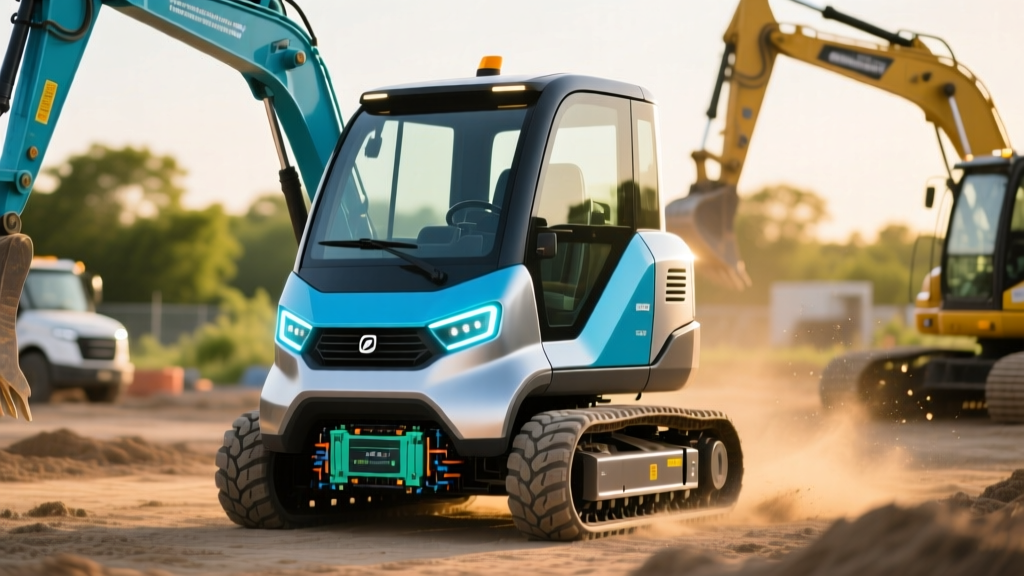
The compact electric construction equipment market in 2026 is no longer a niche experiment — it is a growing category of battery-powered mini excavators, compact wheel loaders, skid steers, and utility vehicles aimed at contractors, landscapers, and municipalities who want lower operating costs and zero tailpipe emissions on the job site. If you are evaluating whether to add electric iron to your fleet, the short answer is this: electric compact equipment typically costs 30–50% more upfront than diesel equivalents, but delivers 60–80% lower energy costs per operating hour, drastically less maintenance, and access to indoor or emission-sensitive job sites that diesel machines cannot touch.
Quick Answer: Is Electric Compact Equipment Worth It in 2026?
For most small-to-mid-size contractors running machines 4–8 hours per day with access to overnight Level 2 charging (240V, 40–80A), electric compact equipment pays back its price premium in 3–5 years through fuel and maintenance savings. For high-utilization fleet users or those without reliable charging, diesel or hybrid remains the pragmatic choice.
The 2026 Compact Electric Construction Equipment Landscape
The compact electric construction equipment market has matured quickly since 2022, when brands like Bobcat, Volvo CE, and JCB began shipping production battery-electric mini excavators and loaders. By the 2026 model year, the category includes machines ranging from 1-ton micro excavators to 5-ton compact wheel loaders, with battery packs from 20 kWh to over 100 kWh, and fast-charge capability that rivals passenger EVs.
Key players in the 2026 market include:
- Volvo CE: ECR25 Electric mini excavator (48 kWh LFP battery, ~6 hours typical duty), EC230 Electric mid-size excavator, and L25 Electric compact wheel loader.
- Bobcat: T7X electric compact track loader (62 kWh battery, zero hydraulics — fully electric drivetrain and actuators).
- JCB: 19C-1E mini excavator (20 kWh battery, 4-hour shift), and the larger 505-20E electric telehandler.
- Caterpillar (announced/preliminary): Battery-electric 301.9 mini excavator expected late 2026, specs not yet finalized.
- Takeuchi: TB20e electric mini excavator (25 kWh, ~4-hour runtime in mixed digging).
Unlike the passenger EV market, construction equipment buyers care less about 0–60 mph times and more about continuous power output (measured in kW), hydraulic flow rate (gallons per minute), breakout force, and shift-length runtime. Battery capacity in kWh still matters — it determines how many hours the machine can work before needing a recharge — but the duty cycle (digging vs. idle vs. travel) has an outsized impact on real-world runtime.
Electric vs. Diesel: Real Cost Comparison
The purchase price of electric compact equipment remains a barrier. A Bobcat T7X electric track loader lists around $130,000 in 2026, compared to roughly $75,000 for a comparable diesel T76. The Volvo ECR25 Electric mini excavator sits near $85,000 vs. $55,000 for the diesel ECR25. That 40–60% premium is significant, but operating costs tell a different story.
| Cost Category | Diesel ECR25 | Electric ECR25 |
|---|---|---|
| Purchase Price (MSRP) | $55,000 | $85,000 |
| Fuel/Energy (5 years) | $33,750 (diesel at $4.50/gal, 1.5 gal/hr) | $9,000 (electricity at $0.15/kWh, 8 kWh/hr avg) |
| Maintenance (5 years) | $12,500 (oil, filters, DEF, hydraulic fluid) | $3,000 (grease, cabin filter, minimal wear items) |
| Estimated Resale (Year 5) | –$22,000 | –$30,000 (higher retention due to battery SoH) |
| 5-Year Total Cost of Ownership | $79,250 | $67,000 |
At typical utilization rates, the electric machine breaks even around year 3–4 and pulls ahead after that. The savings widen further in regions with high diesel prices or where commercial electricity rates fall below $0.12/kWh. Note: these figures assume Level 2 overnight charging at a depot. Relying on DC fast charging at public stations would raise energy costs significantly and is rarely practical for heavy equipment.
For context on commercial EV incentives, the federal Commercial Clean Vehicle Credit (§45W) provides up to $40,000 for qualifying commercial electric vehicles and equipment — though eligibility depends on battery sourcing, MSRP caps, and entity type. Consult a tax professional and review current IRS guidance before purchasing, as rules shift annually.
Charging Infrastructure: The Job-Site Reality
Charging is where the compact electric construction equipment market diverges sharply from passenger EVs. You are not pulling up to an Electrify America station with a mini excavator. Most charging happens at the contractor's yard or depot overnight.
| Level | Power (kW) | Typical Charge Time (20–80%) | Infrastructure Needed |
|---|---|---|---|
| Level 1 (120V) | 1.4–1.9 kW | 24–48 hours (48 kWh pack) | Standard outlet — impractical for daily use |
| Level 2 (240V, 48A) | ~11.5 kW | 4–6 hours | Dedicated 60A circuit, wall-mounted EVSE ($1,500–$4,000 install) |
| Level 2 (240V, 80A) | ~19.2 kW | 2.5–3.5 hours | 100A circuit, hardwired charger ($3,000–$7,000 install) |
| DC Fast Charge (CCS) | 25–50 kW (typical for equipment) | 45–90 minutes | Commercial DC charger ($15,000–$40,000+ per unit) |
Most contractors find a 48A or 80A Level 2 charger sufficient. The machine plugs in at end of shift and is fully charged by morning. The key question is whether your shop has the electrical panel capacity. A single 80A Level 2 charger requires a 100A breaker — older shops with 200A total service may need a panel upgrade ($2,000–$5,000) before adding multiple chargers for a fleet.
Cold-weather caveat: Like passenger EVs, lithium-ion construction equipment batteries lose efficiency below freezing. Expect 15–25% reduced runtime in sub-30°F conditions, and longer charge times unless the machine has battery preconditioning. Volvo and Bobcat include thermal management systems, but not all brands do — verify before buying in northern climates.
Battery Chemistry, Degradation, and Longevity
The compact electric construction equipment market in 2026 has largely standardized on LFP (lithium iron phosphate) battery chemistry, and for good reason. LFP cells offer 3,000–5,000 full charge cycles before reaching 80% state of health (SoH), compared to roughly 1,000–2,000 cycles for NMC (nickel manganese cobalt). For a machine charged once daily, that translates to 10–15 years of service before meaningful degradation.
LFP also tolerates daily 100% charging without accelerated wear — a significant advantage over NMC, which prefers staying between 20–80% SoC for longevity. Construction equipment operators do not have time to babysit charge levels, so LFP's robustness is a practical win.
| Myth | Fact |
|---|---|
| "Electric excavators lack digging power." | Electric motors deliver peak torque at 0 RPM. The Bobcat T7X produces equivalent breakout force to its diesel counterpart, with faster cycle times in independent tests. |
| "Batteries will need replacement every 3–5 years." | LFP packs rated for 3,000+ cycles last 10–15 years at one cycle/day. Most OEMs warranty the battery for 5 years/5,000 hours with a 70–80% SoH guarantee. |
| "You can't use electric equipment in cold weather." | Machines with active thermal management (Volvo, Bobcat) operate in sub-zero temps. Runtime drops 15–25%, but the machine functions normally. |
| "Charging takes all day." | Overnight Level 2 charging (6–8 hours) covers a full shift for most compact machines. DC fast charging can restore 80% in under 90 minutes for mid-shift top-ups. |
What First-Time Electric Equipment Buyers Should Know
If you have never owned battery-electric heavy equipment, the transition involves more than swapping fuel tanks for battery packs. Here is what experienced fleet operators wish they had known:
- Right-size the battery for your duty cycle, not the spec sheet. A 48 kWh pack may be rated for 6 hours, but continuous heavy digging drains it in 3.5–4 hours. Match battery size to your most demanding typical day, not the average.
- Plan charging before you buy the machine. Have a licensed electrician assess your shop's panel capacity. Installing a Level 2 charger and upgrading service if needed can add $3,000–$8,000 and 4–8 weeks to your timeline.
- Electric machines are quieter — that is a safety consideration. On mixed job sites with diesel equipment and ground workers, the near-silence of electric machines requires backup alarms and spotter protocols.
- Maintenance shifts, not disappears. You eliminate engine oil, filters, DEF, and coolant changes. But you still service hydraulic systems (on machines that retain hydraulic actuators), grease pivot points, and maintain tracks or tires. Bobcat's T7X eliminates hydraulics entirely with electric actuators, cutting maintenance further — but that is the exception, not the norm.
- Resale values are still establishing. The used electric equipment market is young. Early data suggests strong retention due to low wear on electric drivetrains, but long-term depreciation curves are not yet proven across a full lifecycle.
Decision Framework: Should You Buy Electric Compact Equipment?
Choose Electric If:
- You have depot or yard access with 240V electrical service (or can install it).
- Your machines run 4–8 hours per day with predictable schedules (not 24/7 continuous operations).
- You work in emission-sensitive environments: indoor demolition, hospitals, schools, food processing, underground, or municipalities with clean-air mandates.
- You want to reduce maintenance downtime and simplify fleet servicing.
- Noise restrictions limit your work hours in residential areas — electric machines operate 50–75% quieter than diesel.
- You qualify for the §45W Commercial Clean Vehicle Credit or state-level incentive programs.
Stick With Diesel (or Hybrid) If:
- You operate in remote locations with no grid access and cannot tow a generator or portable charger.
- Your machines run 10+ hours per day in continuous heavy-duty cycles (trenching, road-building) with no mid-shift charging option.
- Your fleet is highly mobile — moving between distant job sites daily without time for charging stops.
- Your budget cannot absorb the upfront premium, and financing or incentive options are limited in your area.
Where the Market Is Heading
The compact electric construction equipment market is expanding into larger machine classes. By late 2026, expect production deliveries of 8–10 ton electric excavators and electric compact track loaders with 80+ kWh packs capable of full 8-hour shifts in heavy digging. Solid-state batteries remain in development and are not expected in production construction equipment before 2028–2029.
Charging infrastructure is also evolving. Portable DC fast chargers on trailers (25–50 kW output, powered by grid-tied batteries or generators) are entering the market, enabling job-site charging without permanent electrical installations. Companies like the U.S. Department of Energy have funded pilot programs for mobile construction-equipment charging in partnership with national labs.
Frequently Asked Questions
How much does a compact electric excavator cost in 2026?
Production models like the Volvo ECR25 Electric list around $85,000, while the JCB 19C-1E starts near $60,000. The Takeuchi TB20e is approximately $65,000. These represent a 35–55% premium over diesel equivalents, partially offset by the federal §45W credit (up to $40,000 for qualifying entities) and state incentive programs.
How long does a battery charge last on a job site?
Runtime depends heavily on duty cycle. A Volvo ECR25 Electric with a 48 kWh LFP battery delivers roughly 5–6 hours in mixed light-to-medium digging, but only 3–4 hours in continuous heavy trenching. Idle time between tasks extends effective shift coverage. Most operators find one full charge covers a standard 8-hour day when the machine is not in constant full-load use.
Can I charge electric construction equipment from a standard outlet?
Technically yes, via a 120V Level 1 connection, but it is impractical. A 48 kWh battery would take 24–48 hours to charge at 1.4–1.9 kW. A dedicated 240V Level 2 circuit (48A or 80A) is the minimum viable setup for daily commercial use.
What is the battery warranty on electric compact equipment?
Most OEMs provide 5-year / 5,000-hour battery warranties guaranteeing 70–80% state of health (SoH) at the end of the term. Volvo CE offers 5 years with a guaranteed 80% SoH threshold. Always confirm the specific warranty terms and what constitutes a "failure" vs. normal degradation before purchase.
Is electric equipment suitable for cold climates?
Yes, with caveats. Machines equipped with active battery thermal management (heating and cooling) operate in sub-zero temperatures. However, expect 15–25% reduced runtime in sustained sub-30°F conditions due to increased internal resistance and heating loads. Preconditioning the battery while still plugged in mitigates much of this loss.