Quick Answer: Are Commercial Electric Vehicles Worth It in 2026?
Bottom line: Commercial electric vehicles make financial sense for fleets running predictable, sub-200-mile daily routes with access to overnight depot charging. Expect 40–60% lower per-mile energy costs versus gasoline or diesel, dramatically reduced maintenance spend, and a 3–5 year payback period after incentives. However, upfront purchase prices remain 30–50% higher than ICE equivalents, DC fast-charging infrastructure adds $50,000–$150,000+ per depot, and real-world range can drop 25–40% in cold climates or under heavy payload. The math works for last-mile delivery, service vans, and regional haul — it does not yet work for long-haul trucking or rural routes without reliable charging corridors.
The Current Commercial EV Landscape: What's Actually Available
The commercial EV market has matured considerably. Fleet buyers now have proven platforms from established OEMs rather than startup promises. Here's what dominates the light- and medium-duty space for model year 2026:
| Vehicle | Class | EPA Range | Battery (kWh) | Payload | Max DC Charge | 10–80% Time | Base MSRP |
|---|---|---|---|---|---|---|---|
| Ford E-Transit (Cargo Van) | 2 | 159 mi | 89 kWh (NMC) | 3,880 lbs | 115 kW | ~45 min | $51,995 |
| BrightDrop Zevo 600 | 2–3 | 250 mi | 165 kWh (NMC) | 2,200 lbs | 120 kW | ~55 min | $75,000 (est.) |
| Mercedes-Benz eSprinter | 2 | 203 mi | 113 kWh (NMC) | 2,830 lbs | 115 kW | ~42 min | $72,950 |
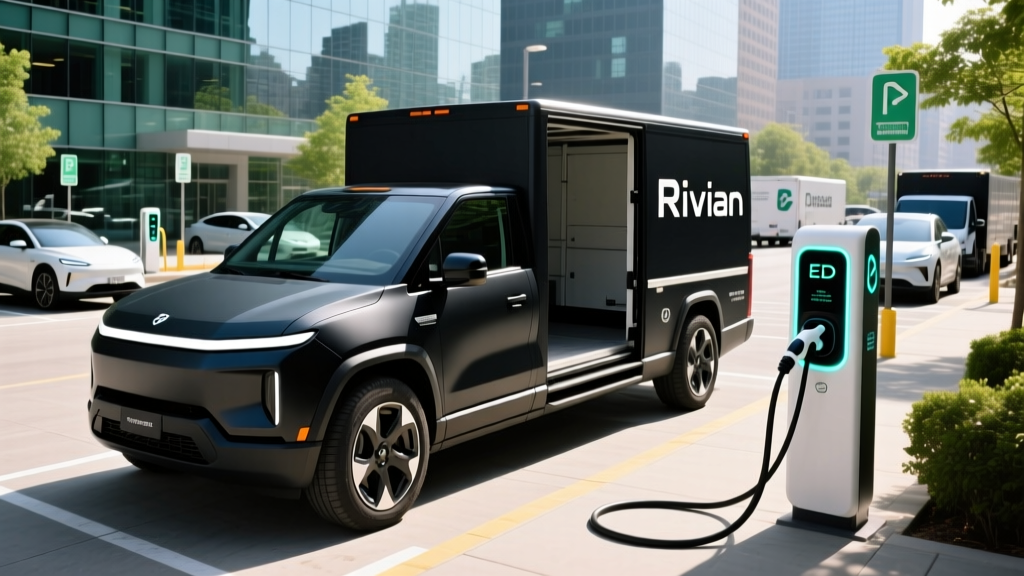
| Rivian EDV (Amazon Van) | 2 | 161 mi (std) / 200 mi (LR) | 110–149 kWh (NMC) | 2,500 lbs | 150 kW | ~35 min | Fleet contract only |
| Ford F-150 Lightning Pro (Commercial) | 2 | 240 mi (std) / 320 mi (ER) | 98–131 kWh (NMC) | 2,235 lbs | 150 kW | ~41 min | $54,995 |
| Chevrolet Silverado EV WT | 2–3 | 450 mi (max) | 200 kWh (NMC) | 1,300–1,800 lbs | 350 kW | ~20 min | $74,800 |
Real-world range caveat: EPA range figures assume moderate temperatures, light payload, and mixed driving. Fleet operators should budget for 70–80% of EPA range in summer with full payload, and 60–75% in sub-freezing winter conditions. Highway-dominant routes at sustained 65–70 mph will see 15–25% range reduction versus city stop-and-go routes where regenerative braking recovers energy.
Total Cost of Ownership: EV Fleet vs. Gas Fleet
The purchase price sticker shock is real — but fleet buying decisions should center on total cost of ownership (TCO) over the vehicle's service life. Commercial fleets typically operate vehicles 5–7 years and 100,000–150,000 miles. Here's how the math breaks down for a typical Class 2 cargo van in a last-mile delivery application (15,000 miles/year, 5-year hold period):
| Cost Category | Ford E-Transit (EV) | Ford Transit 3.5L EcoBoost (Gas) | Difference |
|---|---|---|---|
| Purchase Price | $51,995 | $42,500 | +$9,495 (EV) |
| Federal Tax Credit (§30D / §45W) | –$7,500 | $0 | –$7,500 (EV) |
| Energy/Fuel (5 years, 75,000 mi) | $5,625 ($0.075/mi) | $15,750 ($0.21/mi) | –$10,125 (EV) |
| Maintenance (5 years) | $1,800 | $5,400 | –$3,600 (EV) |
| Depot Charging Install (amortized) | $4,500 | $0 | +$4,500 (EV) |
| Insurance (5 years) | $9,500 | $7,800 | +$1,700 (EV) |
| Estimated Resale Value | –$14,000 | –$16,500 | +$2,500 (EV) |
| Net 5-Year Cost | $51,920 | $54,950 | –$3,030 (EV savings) |
Source: Energy costs based on EIA commercial electricity averages (~$0.12/kWh) and EIA gasoline averages (~$3.15/gal). Actual figures vary by utility rate structure, route efficiency, and local fuel pricing.
The maintenance advantage is significant: Commercial EVs eliminate oil changes, transmission fluid, spark plugs, exhaust systems, and most brake wear (regenerative braking handles 60–80% of deceleration). Fleet operators report 40–60% reductions in scheduled maintenance costs. Unscheduled downtime also decreases — fewer moving parts means fewer failures.
Charging Infrastructure: The Hidden Cost Most Fleets Underestimate
The vehicle is only half the equation. Depot charging infrastructure is where many commercial EV deployments hit delays and cost overruns. Here's what to budget:
| Component | Level 2 (19.2 kW) | DC Fast (50–150 kW) |
|---|---|---|
| Charging Equipment | $5,000–$12,000 | $35,000–$85,000 |
| Electrical Work (conduit, wiring, panel) | $3,000–$15,000 | $20,000–$80,000 |
| Utility Service Upgrade (if needed) | $0–$10,000 | $25,000–$200,000+ |
| Permits & Engineering | $1,500–$5,000 | $5,000–$25,000 |
| Software/Network Fees (annual) | $300–$800/yr | $1,000–$3,000/yr |
| Total Per Charger | $9,800–$42,800 | $86,000–$393,000 |
Key insight for fleet planners: Most last-mile delivery vans can operate entirely on Level 2 overnight charging. A Ford E-Transit with an 89 kWh battery charging at 19.2 kW recovers roughly 45–50 miles of range per hour — sufficient to fully replenish a 159-mile-range van in 5–6 hours. Reserve DC fast chargers for mid-day top-ups or emergency situations. This approach cuts infrastructure costs by 60–80%.
Always engage your utility company early. Many utilities offer commercial EV charging incentive programs covering make-ready costs, demand charge management, and time-of-use rate optimization. Lead times for utility transformer upgrades can run 6–18 months.
Federal and State Incentives: What Fleet Buyers Can Actually Claim
The incentive landscape for commercial EVs differs from consumer credits. Here's what applies:
§45W Commercial Clean Vehicle Credit (Fleet Buyers)
- Credit amount: Up to $7,500 for vehicles under 14,000 lbs GVWR; up to $40,000 for vehicles over 14,000 lbs GVWR
- Eligibility: Vehicles placed in service for business use; must meet IRS §45W requirements for battery component and critical mineral sourcing
- No MSRP cap: Unlike the consumer §30D credit, there is no manufacturer's suggested retail price cap
- No buyer income cap: Available to any business entity regardless of revenue
- Transferability: Can be transferred to the dealer/seller for point-of-sale discount (effective 2024 onward)
- Depreciation: EVs may also qualify for bonus depreciation under §168, further reducing effective cost
State and utility incentives stack on top: California's HVIP, New York's Truck Voucher Incentive Program, and dozens of utility make-ready programs can reduce effective vehicle cost by an additional $10,000–$75,000+ for medium- and heavy-duty applications. Consult a tax professional for your specific situation — incentive rules change frequently.
Common Misconceptions About Commercial EVs
| Myth | Fact |
|---|---|
| "EVs can't handle full payload" | Modern commercial EVs like the E-Transit carry 3,880 lbs — comparable to gas equivalents. Range decreases ~10–15% at max payload, but most fleets don't run at max capacity daily. |
| "Batteries won't last the vehicle's life" | OEM warranties cover 8 years/100,000 miles minimum (Ford, Mercedes). Real-world degradation data from early fleet deployments shows 8–12% capacity loss at 100,000 miles. LFP battery options are emerging with 3,000+ cycle life. |
| "Charging takes too long for commercial use" | Overnight Level 2 charging handles 80%+ of fleet use cases. A 19.2 kW charger adds ~50 miles/hour — more than enough for a 150-mile daily route. Mid-day DC fast charging at 115+ kW adds 80+ miles in 30 minutes. |
| "Cold weather makes EVs impractical" | Range loss is real — expect 25–40% reduction below 20°F. But with proper route planning, depot preconditioning (plugged-in cabin heating before departure), and right-sized batteries, cold-climate fleets operate successfully. Routes should be 60–65% of EPA range in winter. |
| "Grid can't handle fleet charging" | Managed charging software staggers vehicle charging across overnight hours, avoiding peak demand. A 20-van depot on Level 2 draws roughly the same peak power as a small grocery store. Utility partnerships and V2G (vehicle-to-grid) capabilities are emerging as grid assets. |
Decision Framework: Is a Commercial EV Right for Your Fleet?
Choose Commercial EVs If:
- Daily routes are under 150 miles (or under 100 miles in cold climates) with predictable stops
- You have depot parking with access to electrical infrastructure or utility partnership
- Vehicles return to base nightly for 8+ hours of dwell time (overnight charging)
- Your fleet operates in urban/suburban areas with stop-and-go driving (maximizes regenerative braking efficiency)
- You hold vehicles 5+ years — TCO advantage compounds over time
- Local incentives are available (state vouchers, utility rebates, air quality district grants)
- ESG reporting or sustainability mandates require fleet electrification timelines
Stick with Gas/Diesel or Consider Hybrids If:
- Daily routes exceed 200+ miles with no mid-day charging opportunity
- Vehicles operate in extreme cold (sustained below 0°F) without garage parking
- You lack depot charging access and rely on street parking or remote job sites
- Routes are highway-dominant at sustained 70+ mph (EV efficiency drops significantly vs. city)
- Vehicle hold period is under 3 years — insufficient time to recoup higher upfront cost
- Towing requirements exceed 5,000 lbs regularly (range and efficiency penalties are severe)
- You operate in charging deserts — rural regions with no public DC fast infrastructure for backup
First-Time Commercial EV Buyer: What You Must Know Before Ordering
1. Start with route telematics analysis. Before selecting a vehicle, pull 90 days of GPS/telematics data from your current fleet. Map daily mileage, stop frequency, dwell time, and payload weight. This data — not EPA stickers — determines which EV platform fits your operation.
2. Pilot before scaling. Order 2–5 vehicles for a 6–12 month pilot program. Measure actual energy consumption (kWh/mile), real-world range with payload, driver acceptance, charging logistics, and maintenance savings. Use pilot data to validate TCO projections before committing to a full fleet transition.
3. Engage your utility on day one. Utility interconnection studies, transformer upgrades, and rate structure negotiations take 6–18 months. Start this process before you order vehicles. Ask about commercial EV rates, demand charge management, and make-ready incentive programs.
4. Budget for charging management software. Platforms like ChargePoint Fleet, EV Connect, or AmpUp optimize charge scheduling, manage demand charges, and provide per-vehicle energy reporting. Expect $5–$15/vehicle/month — a small cost that prevents expensive utility demand-charge spikes.
5. Train drivers on EV-specific operation. Regenerative braking changes driving behavior. Preconditioning (heating/cooling the cabin while plugged in) preserves 5–10% of range in extreme weather. Drivers who understand charge-curve taper (charging slows significantly above 80% SoC) will plan mid-day top-ups more efficiently.
6. Understand battery warranty terms. Most commercial EV warranties guarantee 70% battery capacity retention at 8 years/100,000 miles. Know what triggers a warranty claim, what documentation is required, and whether your dealer has certified EV service capability. Replacement battery costs for commercial platforms run $15,000–$30,000+ out of warranty.
Frequently Asked Questions
How long do commercial EV batteries last before replacement?
Current NMC battery packs in commercial applications show 8–12% degradation at 100,000 miles based on early fleet data. OEM warranties guarantee 70% capacity retention at 8 years/100,000 miles. Realistically, most commercial EV batteries will provide adequate range for 150,000–200,000 miles before capacity loss impacts daily operations. Emerging LFP (lithium iron phosphate) chemistry offers 3,000+ charge cycles with slower degradation, potentially extending service life further.
Can commercial EVs tow trailers or equipment?
Yes, with significant range trade-offs. The F-150 Lightning Pro tows up to 7,700 lbs (standard battery) or 10,000 lbs (extended range), but towing at capacity reduces range by 40–55%. For fleets that tow daily over long distances, the range penalty may make diesel more practical. Short-distance, low-speed towing (job site moves, equipment repositioning) is far less impactful on range.
What happens if a commercial EV runs out of charge on a route?
Treat it like running out of fuel — it's a planning failure, not a technology limitation. Fleet management software with real-time SoC monitoring and geofenced range alerts prevents most scenarios. If it happens, mobile charging services (like Lightning Mobile or Blink Mobile) can deliver 20–60 miles of emergency range in 30–45 minutes. Flatbed towing to a charger is the fallback. Unlike a gas vehicle, you cannot walk to a station with a jerry can.
Are commercial EVs eligible for the $7,500 federal tax credit?
Commercial vehicles purchased for business use qualify for the §45W Commercial Clean Vehicle Credit, which offers up to $7,500 for vehicles under 14,000 lbs GVWR and up to $40,000 for heavier vehicles. Unlike the consumer §30D credit, there are no MSRP caps or buyer income limits. Battery sourcing requirements still apply. Consult a tax professional to confirm eligibility for your specific vehicles and business structure.
How does cold weather affect commercial EV fleet operations?
Below 20°F, expect 25–40% range reduction due to battery chemistry limitations and cabin/cargo heating demand. Below 0°F, losses can exceed 40%. Mitigation strategies include: depot preconditioning (heat the cabin while plugged in before departure), route planning at 60–65% of EPA range in winter, battery thermal preconditioning before DC fast charging, and specifying vehicles with heat pump HVAC systems (30–40% more efficient than resistive heating). Fleets in Minnesota, Michigan, and New England operate commercial EVs successfully year-round with these protocols.
What's the difference between kW and kWh, and why does it matter for my fleet?
kW (kilowatts) measures power — the rate at which energy flows. A 19.2 kW Level 2 charger delivers energy at that rate. kWh (kilowatt-hours) measures energy — the total capacity of the battery. A Ford E-Transit's 89 kWh battery holds that much energy. Think of kW as the speed of water flowing through a hose, and kWh as the size of the bucket. For fleet planning: divide battery kWh by charger kW to estimate charge time (89 kWh ÷ 19.2 kW ≈ 4.6 hours for a full charge, minus efficiency losses).
Commercial EV data current as of model year 2026. Pricing, incentive eligibility, and vehicle specifications are subject to change. Always verify current figures with manufacturer fleet sales representatives and a qualified tax professional before making purchasing decisions.