The ComEd EV Rebate Program: Your Gateway to Lower EV Ownership Costs
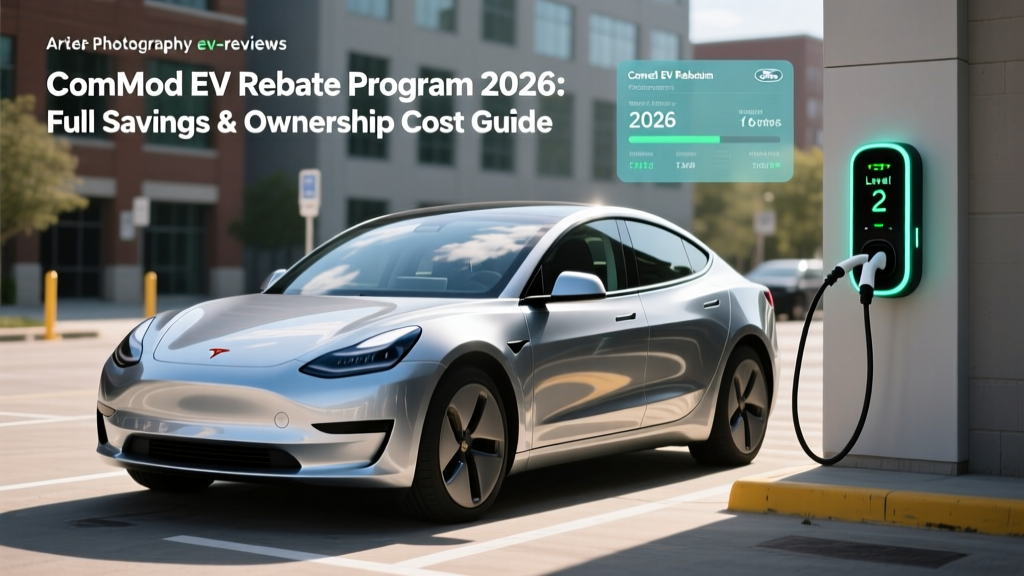
If you're shopping for an electric vehicle in northern Illinois, the ComEd EV rebate program is one of the most impactful regional incentives available. ComEd (Commonwealth Edison), the primary utility serving Chicago and surrounding areas, offers rebates that can stack with federal tax credits and state-level programs to significantly reduce the total cost of going electric.
But rebates are only one piece of the puzzle. Real EV ownership economics depend on charging costs, insurance premiums, maintenance savings, depreciation curves, and whether you actually qualify for the incentives advertised. This guide breaks down every dollar — from the ComEd rebate specifics to a full 5-year total cost of ownership (TCO) analysis — so you can make a numbers-driven decision.
Regional Incentive Disclaimer: Utility rebates, state incentives, and local programs vary significantly by jurisdiction and change frequently. The ComEd EV rebate program details below reflect the most current information available for 2026, but always verify eligibility directly with ComEd and the IRS before purchasing. Consult a tax professional for personal eligibility.
What the ComEd EV Rebate Program Actually Covers
ComEd's EV incentive structure focuses on two areas: helping you purchase the vehicle and helping you install home charging infrastructure. Here's how the program breaks down for 2026:
Vehicle and Charger Rebates
ComEd has historically offered rebates for residential customers who purchase or lease a new or used electric vehicle, as well as rebates for Level 2 home charging equipment. The utility also runs time-of-use (TOU) rate programs that reward EV owners for charging during off-peak hours — typically overnight when grid demand and electricity prices are lowest.
Key program elements to verify for your situation:
- Residential EV rebate: Available to ComEd residential customers for qualifying new or used BEVs and PHEVs (amounts vary by vehicle type and program year)
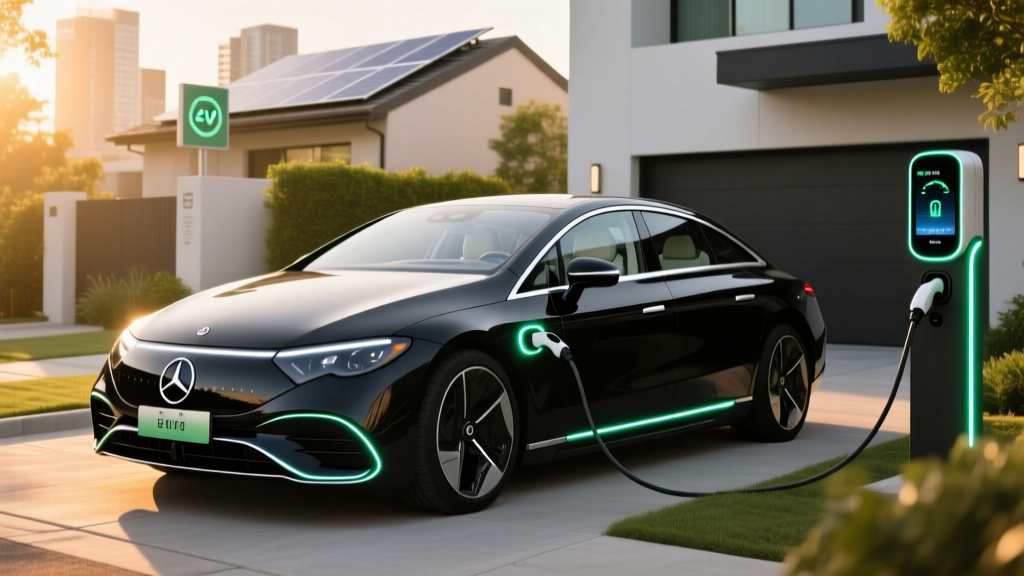
- Level 2 charger rebate: Partial reimbursement for purchasing and installing a qualified Level 2 (240V) home charging station
- Off-peak charging rewards: Enrollment in ComEd's EV TOU rate can save $0.03–$0.08 per kWh versus standard residential rates by shifting charging to overnight hours
- Income-qualified programs: Enhanced rebates may be available for income-eligible customers, sometimes doubling the standard rebate amount
Illinois State Incentives That Stack with ComEd
Illinois has offered the Charge Forward program (administered through the Illinois EPA), which provides rebates up to $4,000 for new EV purchases and up to $1,500 for used EVs, subject to funding availability and income-based tiers. These state rebates can be combined with ComEd utility rebates and the federal §30D tax credit — but funding caps and application windows mean timing matters. Check the Illinois EPA's current program status before relying on these figures.
Federal EV Tax Credit: The §30D Rules You Need to Know
The federal Clean Vehicle Credit under IRS §30D remains the single largest incentive for EV buyers — up to $7,500 for qualifying new vehicles and up to $4,000 for qualifying used EVs. But eligibility is anything but automatic. The rules changed significantly under the Inflation Reduction Act, and they continue to evolve.
2026 §30D Federal Tax Credit Eligibility Checklist:
- Income caps: Modified adjusted gross income (MAGI) must not exceed $300,000 (married filing jointly), $225,000 (head of household), or $150,000 (single filers)
- MSRP caps: New vehicles must have an MSRP at or below $80,000 (vans, SUVs, pickup trucks) or $55,000 (sedans and other body styles)
- Battery sourcing requirements: Increasing percentages of critical minerals and battery components must be sourced from the U.S. or free-trade-agreement partners — vehicles that don't meet these thresholds may qualify for only $3,750 (half credit) or nothing at all
- North American assembly: The vehicle must undergo final assembly in North America
- Point-of-sale transfer: As of 2024, eligible buyers can transfer the credit to the dealer at purchase, receiving the credit as an immediate price reduction rather than waiting to claim it on their tax return
- Used EV credit (§25E): Up to $4,000 or 30% of the sale price (whichever is less) for used EVs priced at $25,000 or below, subject to lower income caps ($150K joint / $112.5K HOH / $75K single)
Critical caveat: Battery sourcing requirements tighten annually. Several popular models that qualified in 2024 lost full eligibility by 2025–2026 as the critical-minerals threshold increased. Always check the current fueleconomy.gov qualifying list for the specific trim and model year you're considering — eligibility can vary even between trims of the same model.
5-Year Total Cost of Ownership: EV vs. Gas Vehicle
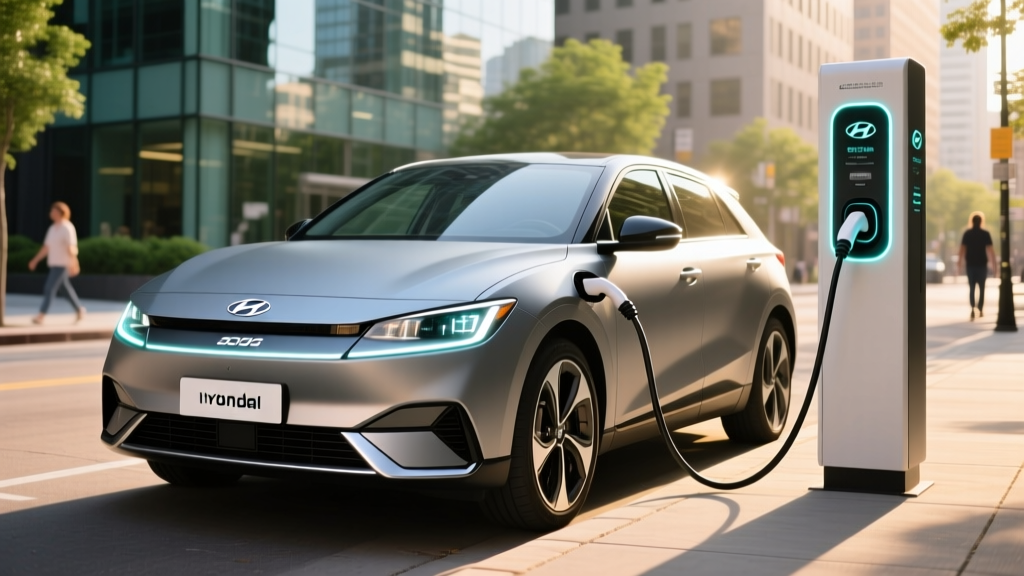
To make the economics concrete, let's compare a realistic 5-year / 75,000-mile ownership scenario. We'll use a popular EV — the 2026 Hyundai Ioniq 5 SEL (84 kWh usable battery, NMC chemistry, EPA-estimated 303 miles range, 168 kW peak DC fast charging, 0–60 mph in 7.2 seconds, 225 hp RWD) with an MSRP of approximately $47,500 — against a comparable gas-powered compact SUV averaging 28 MPG combined at $3.40/gallon.
| Cost Category | 2026 Ioniq 5 SEL (EV) | Comparable Gas SUV (28 MPG) |
|---|---|---|
| Purchase Price (MSRP) | $47,500 | $34,000 |
| Federal Tax Credit (§30D) | −$7,500 (if eligible) | $0 |
| ComEd + IL State Rebates | −$2,000 (est. combined) | $0 |
| Effective Purchase Price | $38,000 | $34,000 |
| Fuel / Charging (75K mi) | $3,938 (home + DCFC) | $9,107 (gas at $3.40/gal) |
| Maintenance (5 years) | $1,800 | $3,750 |
| Insurance (5 years) | $9,500 | $7,500 |
| Depreciation (est.) | $18,200 (48% of effective) | $14,280 (42% of MSRP) |
| Total 5-Year Cost | $71,438 | $68,637 |
| Cost Per Mile | $0.95/mi | $0.92/mi |
Key takeaway: The EV's fuel and maintenance savings of roughly $7,119 over five years are largely offset by higher insurance costs (+$2,000) and steeper depreciation (+$3,920). The net advantage swings in the EV's favor primarily when you maximize all available incentives and charge predominantly at home on off-peak rates. Without the federal tax credit or utility rebates, the gas vehicle is cheaper over 5 years in this scenario.
Charging vs. Gas: The Real $/Mile Math
The biggest variable in EV ownership cost is how you charge. Home charging on ComEd's off-peak EV rate is dramatically cheaper than relying on public DC fast chargers.
| Scenario | Rate / Price | Cost Per Mile |
|---|---|---|
| Home charging (ComEd off-peak EV rate) | $0.08/kWh | $0.024/mi |
| Home charging (standard ComEd residential) | $0.14/kWh | $0.042/mi |
| Public DC fast charging (national avg.) | $0.40/kWh | $0.12/mi |
| Gas vehicle (28 MPG combined) | $3.40/gallon | $0.121/mi |
| Gas vehicle (22 MPG city-heavy) | $3.40/gallon | $0.155/mi |
Assumptions: The Ioniq 5 achieves approximately 3.3–3.5 kWh/mile in mixed real-world driving (EPA combined efficiency is roughly 114 MPGe, or about 29 kWh/100mi). Cold-weather efficiency in Chicago winters can drop to 4.0+ kWh/mile due to battery heating demands and cabin climate use — a significant factor for Illinois EV owners.
At ComEd's off-peak rate of roughly $0.08/kWh, charging at home costs about $0.024 per mile — roughly 5x cheaper than gasoline at $3.40/gallon in a 28 MPG vehicle. But if you rely exclusively on public DC fast charging at $0.40/kWh, your per-mile cost essentially matches gasoline. The ComEd EV rebate program's emphasis on home charger installation and TOU rate enrollment is specifically designed to keep you in that lowest-cost tier.
Maintenance Savings: Where EVs Genuinely Win
EVs have far fewer moving parts than internal combustion vehicles — no engine oil, no transmission fluid, no spark plugs, no exhaust system, no timing belt. This translates to real, measurable maintenance savings over ownership.
| Service Item | EV (Ioniq 5) | Gas SUV |
|---|---|---|
| Oil changes | $0 (none required) | $350–$500 (5–7 changes) |
| Brake pads/rotors | $0–$200 (regen braking saves pads; often 100K+ mi life) | $600–$1,000 (1–2 replacements) |
| Transmission fluid | $0 (single-speed reduction gear) | $150–$300 |
| Coolant | $100 (periodic check/exchange) | $150–$250 |
| Cabin air filter | $100–$150 (every 15–20K mi) | $100–$150 |
| Tire rotation/replacement | $800–$1,200 (EVs wear tires faster due to weight + instant torque) | $600–$1,000 |
| 5-Year Total (est.) | $1,000–$1,650 | $1,950–$3,200 |
Important nuance: EVs tend to wear through tires faster than gas cars. The Ioniq 5 weighs approximately 4,300 lbs (RWD) to 4,600 lbs (AWD), and the instant torque delivery accelerates tread wear. Budget for premium EV-rated tires (like the Michelin Pilot Sport EV or Hankook iON evo) at replacement time — typically $200–$280 per tire.
The Hyundai Ioniq 5's battery and powertrain are covered by a 10-year/100,000-mile warranty, which provides long-term peace of mind against the single largest potential repair cost in EV ownership: battery replacement (typically $8,000–$18,000 out of warranty, depending on pack size and chemistry).
Insurance Reality: The Cost EV Owners Often Overlook
EV insurance premiums are typically 15–30% higher than equivalent gas vehicles. For the Ioniq 5 SEL, expect annual premiums in the $1,700–$2,100 range in the Chicago metro area, versus $1,400–$1,700 for a comparably priced gas SUV.
Why the premium?
- Higher repair costs: EV battery packs and high-voltage components require specialized repair facilities and certified technicians. Even minor collision damage near the battery enclosure can trigger expensive diagnostic protocols.
- Higher vehicle values: EVs typically carry higher MSRPs than comparable gas vehicles, which increases comprehensive and collision coverage costs.
- Specialized parts: Replacement parts for EV-specific components (inverters, onboard chargers, thermal management systems) are more expensive and sometimes have longer lead times.
- Total-loss thresholds: Insurers may total an EV more readily if battery damage is suspected, as battery replacement can exceed the vehicle's depreciated value.
Cost-saving tips: Shop quotes from insurers with dedicated EV programs (some offer discounts for home-charger installation, low annual mileage, or bundled home+auto policies). The ComEd rebate for home charger installation can indirectly help here if your insurer offers an EV home-charging discount.
Depreciation and Resale Value Trends
EV depreciation has been a moving target. After significant price cuts by Tesla and others in 2023–2024, used EV values dropped sharply, and the market is still normalizing. Here's what the data shows for 2026:
- Average 5-year EV depreciation: 45–55% of purchase price (varies heavily by brand, model, and battery health)
- Average 5-year gas vehicle depreciation: 38–48%
- Top-retaining EVs: Tesla Model Y, Hyundai Ioniq 5, and Ford F-150 Lightning tend to hold value better than luxury EVs from newer entrants
- Factors that accelerate EV depreciation: Rapid price cuts on new models, battery degradation concerns, evolving charging standards (CCS to NACS transition), and improving newer-model range making older models less desirable
The Ioniq 5 has held its value relatively well among non-Tesla EVs, retaining an estimated 50–55% of its effective purchase price after 5 years. However, buyers should factor in that the EV market moves fast — a 2026 model with 303 miles of range may seem dated by 2031 if solid-state battery vehicles with 500+ mile ranges reach the market at competitive prices.
Stacking Incentives: Maximizing Your Savings in ComEd Territory
The real power of the ComEd EV rebate program emerges when you layer it with other incentives. Here's a realistic stacking scenario for a qualifying buyer purchasing a 2026 Ioniq 5 SEL in the Chicago area:
- Federal §30D tax credit (point-of-sale): −$7,500 (if the specific model year and trim meet all battery-sourcing and assembly requirements)
- Illinois Charge Forward rebate: −$1,500 to −$4,000 (income-dependent; subject to funding availability)
- ComEd EV rebate: −$500 to −$1,000 (verify current program amounts)
- ComEd Level 2 charger rebate: −$200 to −$400 (for qualifying home charger purchase)
- ComEd TOU rate savings: −$300 to −$600/year in reduced charging costs vs. standard residential rate
Best-case total incentive value: $10,000–$13,500+ in the first year, with ongoing annual charging savings of $300–$600 from TOU rates. This can bring the effective purchase price of a $47,500 Ioniq 5 SEL down to approximately $34,000–$37,500 — putting it in direct competition with gas SUVs on upfront cost while delivering significantly lower per-mile operating expenses.
Frequently Asked Questions
How much does it really cost to own an EV over 5 years?
For a mid-range EV like the 2026 Hyundai Ioniq 5 SEL in ComEd territory, expect a 5-year total cost of ownership of approximately $68,000–$75,000 (75,000 miles), depending on incentive eligibility, insurance rates, and charging habits. That's roughly $0.90–$1.00 per mile all-in. With maximum incentives and home charging on off-peak rates, the EV can match or beat a comparable gas SUV on total cost.
Do I qualify for the federal EV tax credit?
You may qualify for up to $7,500 under §30D if your MAGI is within the income caps ($150K single / $300K joint), the vehicle's MSRP is under the cap ($55K sedans / $80K SUVs and trucks), the vehicle was assembled in North America, and the battery meets critical-mineral and component sourcing thresholds. The credit can now be transferred to the dealer at point of sale for an immediate price reduction. Check the current qualifying vehicle list on fueleconomy.gov — eligibility changes as sourcing rules tighten annually.
How much do I save on fuel and maintenance?
Charging at home on ComEd's off-peak rate ($0.08/kWh), you'll spend roughly $0.024 per mile versus $0.12 per mile for gasoline in a 28 MPG vehicle — a savings of approximately $5,170 over 75,000 miles. Maintenance savings add another $1,000–$1,500 over 5 years (no oil changes, reduced brake wear from regenerative braking, no transmission fluid). Combined fuel and maintenance savings: $6,000–$7,100 over 5 years.
Are EVs more expensive to insure?
Yes, typically 15–30% more expensive. Expect to pay $200–$400 more per year for EV insurance compared to a similar gas vehicle. Higher repair costs, specialized parts, and higher vehicle values drive the premium. Shop multiple insurers and ask about EV-specific discounts to minimize the gap.
How well do EVs hold their value?
EVs currently depreciate faster than gas vehicles on average — expect 45–55% value loss over 5 years versus 38–48% for gas vehicles. However, popular models like the Ioniq 5 and Model Y retain value better than niche or luxury EVs. Battery health, charging-standard transitions (CCS vs. NACS), and new-model competition all influence resale values. The 10-year/100,000-mile battery warranty on the Ioniq 5 provides some resale-value support.
Does the ComEd EV rebate program require a specific charger brand?
ComEd typically requires that the Level 2 charger be a qualified, UL-listed (or equivalent) smart charger capable of network connectivity and demand-response participation. Specific approved models and rebate amounts change — check ComEd's current EV program page for the approved equipment list before purchasing.
Can I stack the ComEd rebate with the federal tax credit?
Yes. Utility rebates, state incentives, and the federal §30D tax credit are generally stackable because they come from different entities and are treated differently for tax purposes. The federal credit reduces your tax liability (or purchase price via point-of-sale transfer), while utility and state rebates are direct payments or bill credits. Consult a tax professional to confirm how rebates interact with your specific tax situation — some state rebates may be considered taxable income.