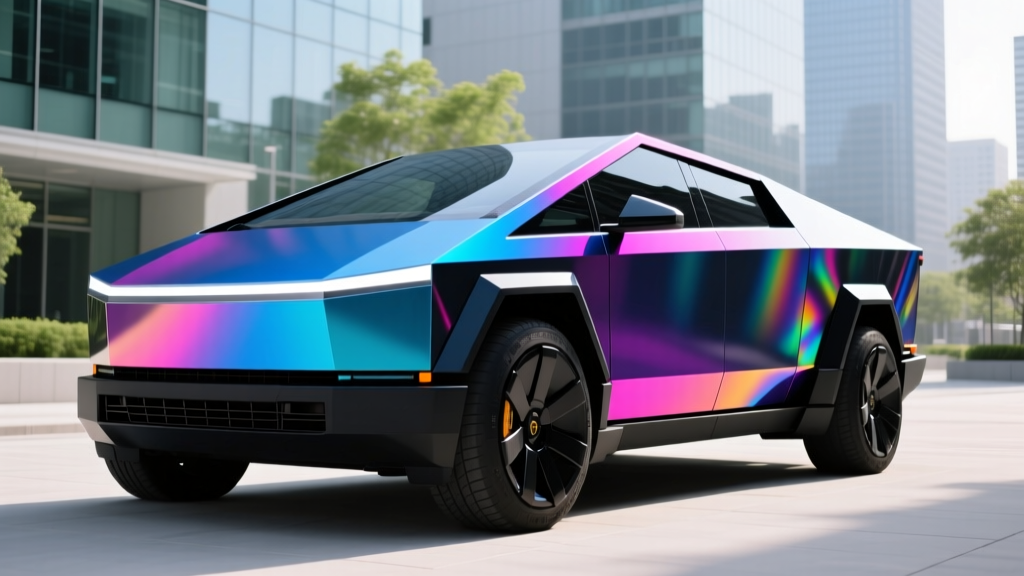
The Tesla Cybertruck launched in stainless steel — and only stainless steel. For a vehicle defined by its unpainted exoskeleton, the demand for a colorful Cybertruck has become one of the most searched customization topics in the EV world. As of 2026, Tesla still does not offer factory paint colors for the Cybertruck beyond its bare stainless-steel finish, but the aftermarket wrap and Paint Protection Film (PPF) industry has responded with an explosion of options. This guide covers everything you need to know about making a Cybertruck colorful — plus a complete review of the vehicle underneath the wrap.
Why the Cybertruck Has No Factory Paint (And What That Means for You)
Tesla's Cybertruck uses a cold-rolled stainless steel exoskeleton (30X-grade, approximately 1.4 mm thick) that serves as the vehicle's structural skin. Unlike conventional vehicles with stamped aluminum or steel panels coated in primer, paint, and clear coat, the Cybertruck's body panels are the structure. Painting stainless steel at the factory presents adhesion, durability, and cost challenges that Tesla chose to sidestep entirely.
This decision created an immediate customization gap. Owners who want a colorful Cybertruck have two primary paths:
- Vinyl wraps: Full-body color-change wraps using materials from 3M, Avery Dennison, or KPMF. Cost: $3,500–$6,500 installed.
- Paint Protection Film (PPF) with tint: Clear or color-infused PPF that protects the stainless steel while adding color. Cost: $5,000–$9,000 installed.
- Aftermarket paint: Professional automotive paint applied over the stainless steel. Cost: $8,000–$15,000+. Note: this requires specialized primers for stainless steel adhesion and may complicate future stainless restoration.
Importantly, wrapping or painting the Cybertruck does not void the vehicle's battery or powertrain warranty under the Magnuson-Moss Warranty Act, though any body-related warranty claims could face scrutiny if the modification is deemed causal.
2026 Cybertruck Full Specs: What's Under the Stainless Steel
Before choosing your wrap color, here's what you're wrapping. The 2026 Cybertruck is available in three trims: Long Range AWD, Dual Motor AWD, and the tri-motor Cyberbeast.
| Spec | Long Range AWD | Dual Motor AWD | Cyberbeast (Tri-Motor) |
|---|---|---|---|
| EPA Range | ~340 mi (est.) | 340 mi | 320 mi |
| Battery (usable) | ~123 kWh (NMC) | ~123 kWh (NMC) | ~123 kWh (NMC) |
| Drivetrain | Dual Motor AWD | Dual Motor AWD | Tri-Motor AWD |
| Horsepower | ~600 hp | 600 hp | 845 hp |
| 0–60 mph | ~4.8 sec | 3.9 sec | 2.6 sec |
| Top Speed | 112 mph | 130 mph | 130 mph |
| Max DC Fast Charge | 250 kW | 250 kW | 250 kW |
| 10–80% DC Charge | ~28 min | ~28 min | ~28 min |
| Level 2 (11.5 kW) | ~37 mi/hr | ~37 mi/hr | ~37 mi/hr |
| MPGe (combined) | TBD | ~68 MPGe | ~65 MPGe |
| Towing Capacity | 11,000 lbs | 11,000 lbs | 11,000 lbs |
| Base MSRP | ~$79,990 | $79,990 | $99,990 |
The Cybertruck uses a 48-volt electrical architecture — a first for a production Tesla — and a steer-by-wire system with no mechanical connection between the yoke and the wheels. Both are significant engineering departures from industry norms.
Real-World Range: What to Actually Expect
The Cybertruck Dual Motor AWD carries an EPA-estimated 340 miles of range. However, real-world results diverge significantly based on conditions:
- Highway driving (75 mph): Expect ~260–280 miles. The Cybertruck's angular, flat-panel design produces a drag coefficient (~0.34 Cd) higher than sleeker EVs like the Lucid Air (0.197 Cd) or Tesla Model S (0.208 Cd), meaning highway efficiency suffers disproportionately.
- City/suburban mixed driving: ~300–320 miles — regenerative braking recovers energy in stop-and-go conditions.
- Cold weather (below 32°F): Expect a 20–30% range reduction, dropping effective range to ~230–270 miles. The NMC battery chemistry is more cold-sensitive than LFP, and the stainless steel body adds mass that requires more energy to move.
- Towing: Range drops by 40–50% when towing near max capacity. Expect ~150–180 miles towing a heavy trailer.
For context, fueleconomy.gov data for the Cybertruck confirms the efficiency penalty of its truck-class weight (~6,600–6,800 lbs curb weight) and boxy aerodynamics compared to crossover-style EVs.
Charging Speed: DC Fast Charging and Home Setup
The Cybertruck charges via the NACS (North American Charging Standard) connector — Tesla's proprietary plug, now adopted industry-wide. It supports up to 250 kW on DC fast chargers (V3 and V4 Superchargers).
| Charging Level | Power | Speed (miles added) | Notes |
|---|---|---|---|
| Level 1 (120V, 12A) | ~1.4 kW | ~3–4 mi/hr | Emergency/trickle only |
| Level 2 (240V, 48A) | 11.5 kW | ~37 mi/hr | Full charge in ~9–10 hrs |
| DC Fast (V3 Supercharger) | Peak 250 kW | ~200 mi in 15 min | 10–80% in ~28 min |
| DC Fast (V4 Supercharger) | Up to 250 kW | Similar to V3 | Integrated CCS/NACS cabinet |
Charging curve reality: The Cybertruck peaks near 250 kW only between approximately 10–30% State of Charge (SoC). From 30–60%, expect sustained rates of ~150–180 kW. Above 80%, the rate tapers sharply to protect the NMC cells — typically below 50 kW. This is why Tesla's navigation system recommends charging to 80% on road trips; pushing to 100% at a Supercharger can add 20+ minutes for the final 20%.
Wrap consideration: A vinyl wrap or PPF does not affect charging. However, if you wrap the charge-port door area, ensure the installer uses a heat-resistant material near the port and does not impede the motorized door mechanism.
Popular Colorful Cybertruck Wrap Options in 2026
Based on installer demand and community trend data, here are the most requested Cybertruck wrap colors and finishes:
- Satin Chrome / Liquid Metal: Preserves the "steel" aesthetic while adding a subtle warm or cool tint. Most popular among owners who want differentiation without losing the Cybertruck's identity. ($4,000–$5,500)
- Matte Black / Stealth: Complete blackout including window tint and wheel wraps. Popular in the off-road and overlanding community. ($3,500–$5,000)
- Color-Shift / Chameleon: Films that shift between 2–3 colors depending on viewing angle (e.g., purple-to-green, blue-to-bronze). High visual impact. ($5,000–$6,500)
- Satin Colors (Blue, Green, Red, Orange): Traditional automotive colors in a satin finish. Satin is preferred over gloss because it hides the Cybertruck's panel seams and stamping lines more effectively. ($3,500–$5,000)
- Textured / Carbon Fiber PPF: Adds both color and a tactile surface texture. Offers genuine stone-chip protection for off-road use. ($5,500–$8,000)
Wrap lifespan: Premium cast vinyl (3M 2080 series, Avery SWF) lasts 5–7 years with proper care. PPF lasts 7–10 years. Budget calendered vinyl is not recommended for the Cybertruck's complex flat-panel geometry and sharp body creases.
Pricing, Tax Credits, and Total Cost
| Trim | Base MSRP | §30D Credit Eligible? | Effective Price (if eligible) |
|---|---|---|---|
| Long Range AWD | ~$79,990 | Yes — trucks capped at $80,000 MSRP | ~$72,490 |
| Dual Motor AWD | $79,990 | Yes — at MSRP cap threshold | $72,490 |
| Cyberbeast | $99,990 | No — exceeds $80,000 truck MSRP cap | $99,990 |
The IRS §30D federal tax credit offers up to $7,500 for qualifying new clean vehicles. For the Cybertruck, several rules apply:
- MSRP cap: Trucks, vans, and SUVs must have an MSRP at or below $80,000. The Dual Motor AWD at $79,990 qualifies; the Cyberbeast at $99,990 does not.
- Buyer income cap: Modified AGI must not exceed $300,000 (joint filers), $225,000 (head of household), or $150,000 (single).
- Battery sourcing: At least a minimum percentage of critical minerals must be sourced from the US or FTA partners, and battery components must be manufactured/assembled in North America. Tesla's US production helps here, but annual thresholds tighten — consult IRS guidance for the current-year requirement.
- Point-of-sale transfer: As of 2024, buyers can transfer the credit to the dealer for an immediate price reduction at purchase, rather than waiting for a tax refund.
Wrap cost on top: Add $3,500–$9,000 to your purchase for a professional wrap. This is not tax-credit-eligible as it's an aftermarket modification, not part of the vehicle MSRP.
Interior, Cargo, and Technology
The Cybertruck seats five (two front, three rear bench) with a 6-foot composite bed. Key dimensions:
- Bed length: 72 inches (6 ft) with the tonneau cover; extends to ~78 inches with the tailgate down
- Bed width: ~48 inches between wheel wells
- Bed cargo volume: ~67 cu ft (bed only, with cover closed)
- Frunk (front trunk): ~7 cu ft — lockable, with a drain plug for use as a cooler
- Rear legroom: ~38 inches — adequate for adults but the upright seatback angle limits long-distance comfort
- Towing: 11,000 lbs max (all trims)
The interior is minimalist Tesla: an 18.5-inch front touchscreen handles all vehicle controls (no physical buttons), with a secondary 9.4-inch rear screen for passengers. The yoke-style steering wheel is standard and non-optional. The Cybertruck uses Tesla's steer-by-wire system with variable ratio — lock-to-lock is under one full rotation at low speeds.
Driver assistance: The Cybertruck includes Tesla's Basic Autopilot (adaptive cruise + lane centering). Full Self-Driving (Supervised) is available as a $8,000 option or $99/month subscription.
Tesla's Autopilot and FSD (Supervised) are SAE Level 2 driver-assistance systems. The driver must remain fully attentive, hands on the yoke, and prepared to take over at any moment. These systems do not make the Cybertruck autonomous. Only SAE Level 4 services (like Waymo robotaxis) operate without a human driver.
Warranty Coverage
- Basic vehicle: 4 years / 50,000 miles
- Battery & drive unit: 8 years / 120,000 miles (whichever comes first), with minimum 70% capacity retention guaranteed
- Stainless steel body: Covered under basic warranty for corrosion/perforation; cosmetic surface rust ("tea staining") has been a reported issue and may or may not be covered depending on dealer interpretation
Wrap-related warranty note: If a wrap traps moisture against the stainless steel and accelerates surface corrosion, Tesla may deny body-related warranty claims. Use a reputable installer who breathes the wrap properly and avoids sealing moisture-prone seams.
Pros and Cons of a Colorful Cybertruck
Pros
- Unique, head-turning customization — no two wrapped Cybertrucks look alike
- Wrap adds paint protection and stone-chip resistance for the stainless panels
- Tri-motor Cyberbeast delivers supercar-level 2.6-second 0–60 mph
- 11,000-lb towing capacity leads the electric pickup segment
- Access to Tesla Supercharger network (17,000+ stalls in North America)
- 48V architecture enables thinner wiring, more interior space
Cons
- Real-world highway range significantly below EPA estimate due to aerodynamics
- Cyberbeast trim does not qualify for the $7,500 federal tax credit
- Steer-by-wire and yoke steering require a steep learning curve
- Rear-seat comfort is compromised by upright bench angle
- Stainless "tea staining" (surface rust) reported by owners in humid/salted-road regions
- $80,000+ starting price is steep for a pickup; wrap adds $3,500–$9,000 more
- No factory color options — every colorful Cybertruck requires aftermarket work
Is a Colorful Cybertruck Worth It vs. Competitors?
The Cybertruck competes with the Ford F-150 Lightning, Rivian R1T, Chevrolet Silverado EV, and GMC Sierra EV in the electric pickup segment. Here's how it stacks up for buyers who want visual customization:
- Ford F-150 Lightning: Available in 7 factory paint colors. More conventional truck experience, ~230–320 mi EPA range, starts ~$55,000. Best for buyers who want a normal-looking truck that happens to be electric.
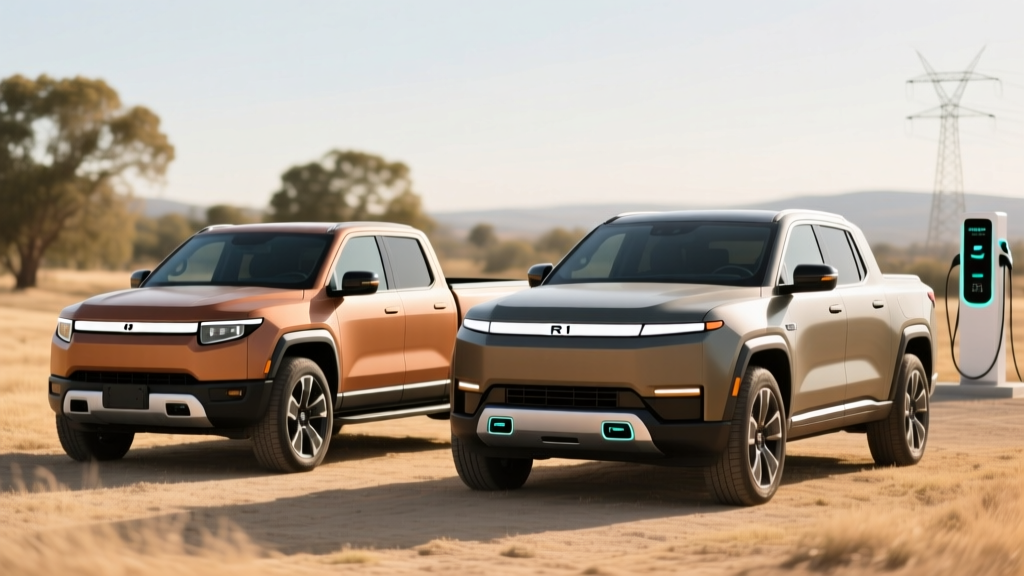
- Rivian R1T: 5 factory colors plus extensive customization packages. ~352–410 mi EPA range (Max Pack). Starts ~$69,900. Best for adventure-oriented buyers who want factory color options without wrapping.
- Chevrolet Silverado EV: Available in multiple factory colors. ~390–440 mi EPA range (largest battery option). Starts ~$57,000. Best for range-focused buyers.
- Cybertruck (wrapped): No factory color, but the most visually distinctive EV on the road when wrapped. Best for buyers who want maximum customization freedom and the Tesla Supercharger network.
- You want the most visually unique EV truck and enjoy the customization process
- Supercharger network access is a priority for road trips
- You need 11,000-lb towing and tri-motor performance (Cyberbeast)
- You're comfortable with yoke steering and steer-by-wire
- You want a warranty-friendly factory color without aftermarket modification
- Real-world highway range is your top priority (Rivian Max Pack or Silverado EV)
- You prefer a conventional steering wheel and traditional truck ergonomics
- Budget is a concern — the F-150 Lightning and Silverado EV start significantly lower
Frequently Asked Questions
What is the real-world range of the Cybertruck?
The EPA rates the Dual Motor AWD at 340 miles, but real-world highway driving at 75 mph yields approximately 260–280 miles. In cold weather (below freezing), expect 230–270 miles. City driving with regenerative braking recovers more energy and can approach 300–320 miles.
How fast does the Cybertruck charge?
The Cybertruck peaks at 250 kW on DC fast chargers, achieving a 10–80% charge in approximately 28 minutes. On a Level 2 home charger (11.5 kW / 48 amps), it adds about 37 miles of range per hour, requiring roughly 9–10 hours for a full charge.
How much does a colorful Cybertruck cost after tax credits?
The Dual Motor AWD starts at $79,990 and qualifies for up to $7,500 under IRS §30D (subject to income caps and battery-sourcing rules), bringing the effective price to ~$72,490. Add $3,500–$6,500 for a professional color wrap, making the total approximately $76,000–$79,000. The Cyberbeast at $99,990 does not qualify for the federal credit due to the $80,000 MSRP cap for trucks.
Does wrapping the Cybertruck void the warranty?
Under the Magnuson-Moss Warranty Act, a wrap alone cannot void your battery or powertrain warranty. However, if a wrap causes or contributes to a body-related issue (e.g., trapped moisture leading to corrosion), Tesla may deny that specific claim. Use a reputable installer experienced with the Cybertruck's stainless steel panels.
Does the Cybertruck qualify for the federal EV tax credit?
The Dual Motor AWD ($79,990) qualifies for up to $7,500 under IRS §30D, provided the buyer meets income requirements (under $300,000 AGI for joint filers) and the vehicle meets battery critical-mineral sourcing thresholds. The Cyberbeast ($99,990) exceeds the $80,000 MSRP cap for trucks and does not qualify. Always verify current rules at IRS.gov before purchasing.
What are the most popular Cybertruck wrap colors?
In 2026, the most requested wraps are satin chrome/liquid metal (preserves the steel look), matte black (stealth aesthetic), and color-shift chameleon films. Solid satin colors like deep blue, forest green, and burnt orange are also popular. Gloss finishes are less common because they highlight the Cybertruck's panel seams and flat-panel geometry.
Is the Cybertruck worth buying vs. the Rivian R1T or F-150 Lightning?
The Cybertruck wins on raw performance (2.6-sec 0–60 in Cyberbeast trim), towing capacity (11,000 lbs), and Supercharger access. The Rivian R1T offers better real-world range (up to 410 mi with Max Pack), factory color options, and a conventional steering wheel. The F-150 Lightning is the most affordable and practical for traditional truck buyers. Your choice depends on whether you prioritize performance and uniqueness (Cybertruck), range and adventure features (R1T), or value and familiarity (Lightning).